
A spring sailing with cherry blossoms may not be the Japan cruise that suits you best. The right choice among japan luxury cruises depends on more than a celebrated season or a list of ports. Consider the pace, time ashore, and onboard experience you want, then compare voyages against those priorities. With so many itineraries to choose from, it’s understandable to wonder whether a cruise will offer a meaningful connection to Japan or only a glimpse between port calls.
This guide explains how to compare cruise styles and itineraries, how spring, summer, autumn, and winter can shape the experience, and why ship size and time in port matter. You’ll also learn what to look for in onboard dining, cultural activities, and longer port stays. A practical comparison can help you choose a voyage that fits your interests and preferred pace, then coordinate cruise, air, and land arrangements as one trip.
Key Takeaways
- Start with the experiences you value most, such as culture, cuisine, history, seasonal scenery, or quieter coastal stops.
- Compare ship scale and onboard atmosphere alongside port lists to find an itinerary that matches your preferred pace.
- Look beyond destination names: time ashore and overnight stays can shape how deeply you experience each place.
- Compare japan luxury cruises by itinerary, season, and onboard experience, then narrow your options to voyages that fit your priorities.
- Coordinate cruise, air, and land arrangements as one trip to simplify planning around your chosen voyage.
What Makes a Japan Luxury Cruise the Right Way to Explore?
A Japan cruise can connect different parts of the country in one journey, with the ship serving as a comfortable base between days ashore. Instead of changing hotels at every stop, you unpack once and travel between ports as the scenery shifts from busy waterfronts to quieter coastal views. That convenience matters, but it doesn’t make every itinerary the right fit. The value depends on where the ship calls, how long it stays, and whether the onboard atmosphere suits your preferred pace.
A Japan luxury cruise pairs onboard comfort with time ashore to experience the country’s cities, history, and changing coastal landscapes. Luxury is more than a ship’s amenities or label. Start with the places and experiences you hope to encounter, then consider whether the ship and schedule support them. A refined onboard experience can make travel between ports feel restful, but it can’t replace meaningful time in a destination. The range of places and experiences that draw visitors to the country is reflected in this overview of Tourism in Japan.
What can travelers experience on a Japan cruise?
Port choices shape a voyage. Major urban ports can offer museums, dining, and lively neighborhoods, while other calls may emphasize history, coastal scenery, or a quieter pace. These experiences aren’t interchangeable, so look beyond the port list to understand what each stop adds. Check the arrival and departure times, where the port sits in relation to the sights you hope to see, and whether the scheduled stay gives you enough time to explore.
A visit centered on history may call for more time and context than a quick walk near the port. A scenic coastal call, by contrast, may make the journey itself part of the appeal. These differences show why a destination-led itinerary can be more useful than a list of names: each stop contributes a distinct mood and perspective.
Who is most likely to enjoy cruising around Japan?
Cruising can suit travelers who want to see several destinations while keeping a familiar, comfortable base. It can also reduce the number of separate hotel changes and travel arrangements to manage, especially when the itinerary links places that would otherwise require careful overland planning. The best match is a voyage whose port access and onboard rhythm feel enjoyable, rather than one chosen simply because it includes the most stops.
Travelers who prefer to settle into one place for an extended stay, explore independently at their own pace, or make spontaneous overland detours may find a land-based trip more flexible. A cruise offers a different balance: the schedule sets boundaries, and time ashore varies by call. Consider whether the itinerary gives you enough time for your priorities, whether that means a focused cultural visit or an unhurried day exploring a port. A longer voyage or an overnight call may allow a deeper visit than a brief stop, but no cruise can provide the same time in each place as a dedicated stay. Compare japan luxury cruises by pace and port time as carefully as by onboard comfort.
Which Japan Cruise Destinations and Seasons Match Your Interests?
A port list becomes more useful when you read it as a map of experiences rather than a collection of names. Ask what each stop adds to the voyage and how much time the schedule gives you to explore. Some itineraries emphasize large cities, while others may focus on history, food, coastal views, or smaller ports. Compare the actual ports and sailing dates for each voyage, rather than assuming that two cruises with similar labels offer the same experience.
Season and itinerary determine the Japan cruise experience: the calendar shapes the scenery, while the route decides which regions and interests you can explore. Use seasonal descriptions as a starting point, not a promise of specific blooms, colors, or weather.
How should you choose ports for culture, food, and history?
For a city-focused trip, look at the port’s range of cultural attractions and how much time you’ll have to visit them. If food is a priority, review whether the schedule leaves room to explore local dining rather than limiting you to a quick stop. A historically significant visit may benefit from time to learn about the place, not just see a landmark. Match the port to your interests and leave enough time for the kind of visit you want.
A port name alone doesn’t tell you how much of a place you’ll experience. Compare arrival and departure times, time ashore, and the distance between the port and the places you hope to visit. A shorter call can still be worthwhile, but it may call for a more focused plan than a full day or overnight stay.
When is the best season for a luxury cruise in Japan?
Spring sailings offer the possibility of cherry blossoms, and autumn voyages may bring fall foliage. Summer can pair green landscapes with seasonal festivals, while winter tends to offer a quieter atmosphere. These are broad patterns, not guarantees: bloom and foliage timing, weather, and visibility vary by date and region.
For a practical comparison, look at the route alongside the calendar:
- Spring: Compare the sailing dates and ports with your blossom interests, and be prepared for a popular travel period.
- Summer: Consider whether the itinerary’s ports and pace suit your interests in warmer weather and festival season.
- Autumn: Check which areas the ship visits and whether the dates align with the foliage experience you’re seeking.
- Winter: Weigh a quieter travel atmosphere against the specific destinations and shore time on offer.
Don’t select a voyage solely because it’s marketed around a season. Check the port sequence, time in each destination, and the areas covered. A route that visits different parts of the country may encounter different conditions along the way. For japan luxury cruises, those details can matter as much as the month of departure. Coordinated cruise planning can help connect the voyage with the rest of your trip.
How Do Japan Cruise Styles Compare, and Will a Cruise Feel Too Brief?
A cruise’s scale can influence the rhythm of a Japan voyage, but ship size alone doesn’t determine how much you’ll experience. Compare the itinerary, time in port, and onboard feel together. A larger vessel may suit travelers who value a broad onboard offering, while an intimate or expedition-oriented voyage may appeal to those drawn to a different atmosphere and style of exploration. Individual ships and routes vary, so treat these as general distinctions, not promises about a particular sailing.
What is the difference between a large ship and a small-ship Japan cruise?
The key difference is often how the journey feels, not simply how many places it reaches. A larger ship may make an expansive onboard experience part of the appeal; a smaller vessel may feel more personal, with coastal scenery playing a more prominent role. Neither style is automatically more immersive. The best fit depends on the balance you want between onboard variety, intimacy, and the destinations named on the route.
A small-ship voyage through an island-dotted inland sea is one example of a distinct coastal cruise style. It illustrates one way to experience Japan, not a template for every small-ship voyage or a substitute for comparing broader itineraries.
Can a cruise provide enough time to experience Japan?
It can, if the schedule matches your priorities. A brief daytime call may allow a focused visit, while a longer stay or overnight call can create more room to explore at a comfortable pace. Check the actual arrival and departure times, the port’s distance from the places you want to see, and whether the available excursion style suits you. A long list of stops isn’t necessarily better if each visit feels hurried.
For more time in a particular place, consider adding a land stay before or after the sailing. That extension can let you explore beyond the cruise schedule, though it adds planning across the trip’s components. As you weigh Japan luxury cruises, compare the ship and schedule against your own priorities. A guide to planning luxury cruise vacations can also help you think through the wider arrangements that support a well-paced voyage.
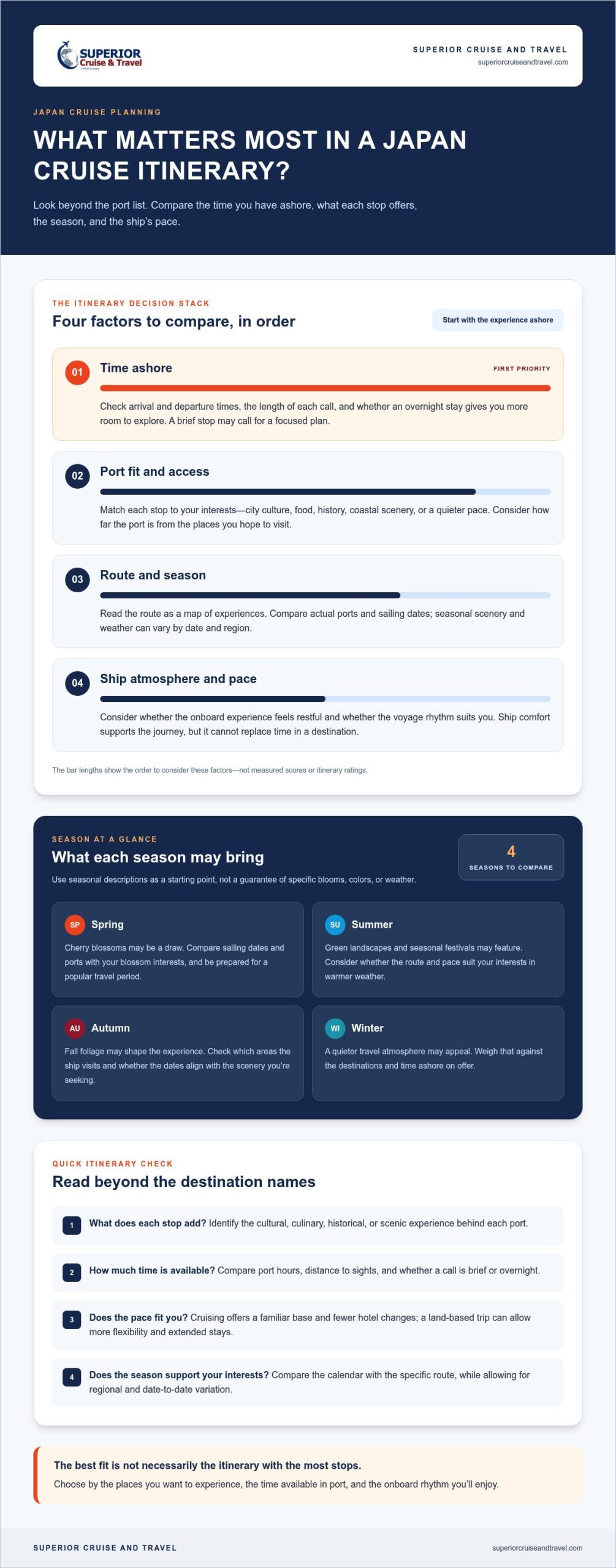
How to Compare Japan Luxury Cruise Itineraries Before You Book
A clear comparison starts with your priorities, not the longest port list. Two voyages may visit some of the same places yet feel quite different because of sailing dates, time ashore, embarkation plans, and the opportunities available in port. Use this process to narrow your choices and spot the practical details that could shape the experience.
- Rank your interests. Decide whether culture, cuisine, history, seasonal scenery, or quieter coastal experiences matter most. Choose a few priorities so you can compare itineraries against what you genuinely want to do.
- Shortlist ports. Identify the destinations that support those interests, then note which ports are essential and which would be welcome additions. A route that fits your priorities may matter more than one with the most stops.
- Compare sailing dates. Review the actual dates and route together. Seasonal labels can suggest the general character of a voyage, but the itinerary shows which areas you’ll visit and when.
- Assess time ashore. Check arrival and departure times, overnight calls, and the current shore-experience information. Consider whether each stop leaves enough time for your preferred pace.
- Review the logistics. Look at embarkation and disembarkation arrangements, how you’ll reach the port, and whether air or land plans need to connect with the sailing. This is especially useful when the cruise is one part of a longer trip.
Which itinerary details should you compare first?
Start with the port schedule, not the excursion headline. Check which destinations appear, how long the ship is scheduled to stay, and whether any calls are overnight. Then review current information about included and optional shore experiences, noting which fit your interests and how much independent planning they may involve. Finally, consider the journey to the embarkation port and allow a sensible buffer in your arrival plans, rather than making the ship’s departure day your only margin.
How can you match a Japan itinerary to your travel pace?
If you prefer unhurried days, choose fewer priorities for each port instead of trying to fit in every landmark. A longer voyage may offer a wider mix of destinations, but the actual ports and time ashore vary by sailing, so compare the published schedules. If one place deserves more time than a port call allows, consider adding a land stay before or after the cruise.
Coordinating a voyage with flights and land arrangements can make a multi-part trip easier to manage. If you’re weighing japan luxury cruises against your preferred dates, pace, and port priorities, plan your Japan cruise itinerary with support for the connected travel details.
Plan Your Japan Luxury Cruise with a Clear, Coordinated Next Step
A well-matched voyage begins with what you want from the trip, not with a ship name alone. First set your priorities, then compare itineraries for destination mix, season, ship style, and time ashore. Once you have a strong candidate, consider how flights and any time on land fit around embarkation and disembarkation. This sequence helps turn a complex set of choices into a plan with a clear purpose.
What can a travel advisor coordinate for a Japan cruise?
Superior Cruise and Travel can help compare luxury cruise options against your priorities, then consider the sailing alongside related air and pre- or post-cruise land arrangements. That wider view can bring important connections into focus, such as whether a land stay gives you more time in a place you’d otherwise see only during a port call, or whether your preferred itinerary aligns with the season you have in mind.
An advisor’s role is to support planning, not operate the cruise ship. By weighing itinerary details against your preferred pace and onboard atmosphere, an advisor can help you make a considered choice and coordinate the separate components of your vacation. For multi-component travel experiences, travel protection options can also be part of the planning process.
What should your next planning step be?
Start with a simple outline. Note your preferred season, the destinations or experiences that matter most, the pace you enjoy, and how much time you can give the trip. You don’t need to have every detail settled. A few clear priorities are enough to begin comparing Japan luxury cruises and the broader arrangements around a sailing.
If you’re considering a much longer regional journey, world cruises and grand voyages offer a broader planning context. For a Japan-focused trip, bring your preferred dates, interests, and travel pace together with the itinerary and its logistics.
Superior Cruise and Travel supports luxury cruises and complex leisure itineraries. Start planning your Japan luxury cruise with help comparing the voyage and coordinating the trip around it. With your priorities in view, the choices become easier to organize, and the journey can feel manageable from the first decision to the final travel details.
Turn Your Japan Cruise Ideas into a Thoughtful Travel Plan
As you move from browsing to planning, decide what you’d most regret missing, then leave room for discoveries that weren’t on your original list. That balance can help you shape a trip that feels personal without packing every day with plans. Your priorities can also guide decisions beyond the sailing, from the timing of your arrival to whether a land stay belongs in the itinerary.
For japan luxury cruises, Superior Cruise and Travel can help weigh cruise options and coordinate the wider journey. As a BBB-accredited full-service travel agency, it draws on a global supplier network to support cruise and leisure trip planning, including multi-component experiences with air and land arrangements. Travel protection options can also be considered as part of a multi-component trip.
Bring your preferred season, travel pace, and a few must-have experiences into the planning conversation. Explore luxury cruise planning with Superior Cruise and Travel and take the next step toward a Japan voyage that feels considered from the start. A clear plan can make a far-reaching journey feel more manageable.
Frequently Asked Questions
Is Japan a good destination for a luxury cruise?
Yes, Japan can be a rewarding destination for travelers who want to visit several places while keeping the same onboard base. A voyage can bring together metropolitan energy, cultural landmarks, historic sites, and coastal views without requiring a hotel change at every stop. The experience depends on the route and the time available in each port. Japan luxury cruises may suit travelers who enjoy a structured itinerary, while independent travelers may prefer longer stays on land.
When is the best time to take a luxury cruise to Japan?
The best time depends on which seasonal atmosphere you hope to experience. Spring is associated with cherry blossoms, autumn with colorful foliage, and summer with a different landscape and travel feel. These are general seasonal themes, not guarantees of particular conditions. Before choosing, compare the exact sailing dates with the areas and ports on the itinerary. That helps set realistic expectations if a specific seasonal highlight is important to you.
Can you see cherry blossoms on a Japan cruise?
Possibly, but a spring departure can’t guarantee blossom viewing. Bloom timing can shift with the year, location, and weather, and a ship’s route may pass through areas with different conditions. If blossoms are a priority, compare the sailing dates with each port’s location and the amount of time scheduled ashore. Treat the flowers as a welcome possibility, while choosing a voyage you’d enjoy even if bloom timing doesn’t align.
Which Japanese ports are worth visiting on a luxury cruise?
The most appealing ports depend on what you want from your time ashore. A major city can offer a varied urban experience, while other ports may appeal for food, history, or coastal scenery. Consider the port’s distance from your intended sights and the available time, since a destination name alone doesn’t show how much you can experience during a call.
Are small-ship cruises better for exploring Japan?
Not necessarily. A smaller ship may feel more intimate, while a larger vessel may offer a different onboard environment and range of experiences. Neither size guarantees a deeper visit or access to a particular port. Compare the actual route, scheduled time ashore, and shore activities for each voyage. For example, if you value a calm onboard atmosphere more than a broad selection of facilities, ship scale may matter, but it should still be weighed against the itinerary.
How many days should you spend in Japan before or after a cruise?
There’s no fixed number of days that suits every traveler. Consider what you want to do beyond the cruise: a land stay might allow a slower visit, while a shorter extension could make arrival or departure feel less rushed. Start with your must-see experiences and compare them with the ports and sailing schedule. Then coordinate flights, lodging, and transfers around the cruise dates to create a practical overall plan.
How do I choose between Japan luxury cruise itineraries?
Start by naming your top interests, then compare how each itinerary serves them. Look at port sequence, time ashore, sailing dates, and excursion choices, as well as how you’ll reach the ship. For instance, a traveler focused on one place may value a land extension more than an extra port. If flights or hotel stays are part of the trip, Superior Cruise and Travel can help coordinate those details with the cruise plan.