
The best trip plan starts with the experience you want, not just a destination. A complete vacation planning service can bring together options such as luxury cruises, resort stays, extended voyages, and private travel. The right fit depends on your priorities, travel style, and the kind of trip you have in mind.
It’s natural to want more than a list of places to go. You want a plan that feels personal and manageable. This article explains what kinds of trips can be arranged, how to choose a destination, and what to expect from planning conversations. You’ll see how your preferences shape the itinerary and its details, and how thoughtful planning can turn an initial idea into a trip that feels right for you.
Key Takeaways
- Match your trip plan to your budget, travel style, priorities, and preferred pace before narrowing down destinations.
- See how lodging, flights, transfers, and activities can be coordinated to make an itinerary feel cohesive.
- Compare destination options across Europe, Asia-Pacific, and the Americas by the experiences you want most.
- Use planning conversations to shape a trip around your preferences and understand practical travel considerations.
- Explore whether a luxury cruise, resort vacation, or longer voyage best fits the kind of getaway you’re imagining.
What Are Travel Planning Services?
Travel planning brings your interests, budget, and travel style together in a coordinated trip. A trip planner can help organize the options and practical details into one itinerary.
Itinerary Organization and Sharing
Start with a pre-trip survey or conversation about your preferred pace, destination interests, accommodation style, and budget priorities. These details help shape an itinerary around what matters to you. For example, a traveler who values quiet days might prefer fewer scheduled activities, while a food-focused traveler may prioritize local dining experiences.
Planning tools can gather trip details, such as lodging, transport, and activities, into a shared itinerary. Some platforms organize updates automatically when booking information is added; others rely on a planner to update the schedule. Look for clear dates, confirmation details, meeting points, and a format that each traveler can access. A well-organized itinerary makes it easier to see how each travel day fits together.
Travel Agent and Online Service Options
Travel agents can offer personal guidance and help coordinate choices across different parts of a trip. Online planning tools let travelers compare options and organize details themselves. The practical difference is how much support you want: self-directed tools suit travelers who prefer managing decisions independently, while an agent can help shape choices around your preferences.
A complete vacation planning service is useful when a trip involves connected arrangements, such as flights, hotels, cruises, tours, and excursions. Before planning, consider whether you want help refining the destination, comparing options, coordinating bookings, or keeping details in one itinerary. Full-service planning can connect these choices, rather than treating each reservation as a separate task.
Cancellation, Refund, and Travel Support
Cancellation and refund terms depend on each booking, so review the applicable conditions before committing. Note how changes are handled and where cancellation deadlines and refund terms appear in the booking information. Keeping those details with your itinerary makes them easier to find if plans change.
A vacation planner can help you consider travel protection and discuss passport and visa requirements and accessibility needs as part of trip planning. The U.S. Bureau of Labor Statistics says travel agents can explain required documents, including passports and visas, cross-border entry requirements, and health and safety protocols. Share mobility, sensory, or dietary needs early so they can inform destination and arrangement choices.
For international travel, account for entry documents, cross-border requirements, and the order of your itinerary. A planner can organize these considerations alongside your bookings, while you keep essential travel documents accessible. Clear preparation connects destination choices with the arrangements needed for your journey.
Booking hotels, flights, transfers, and activities
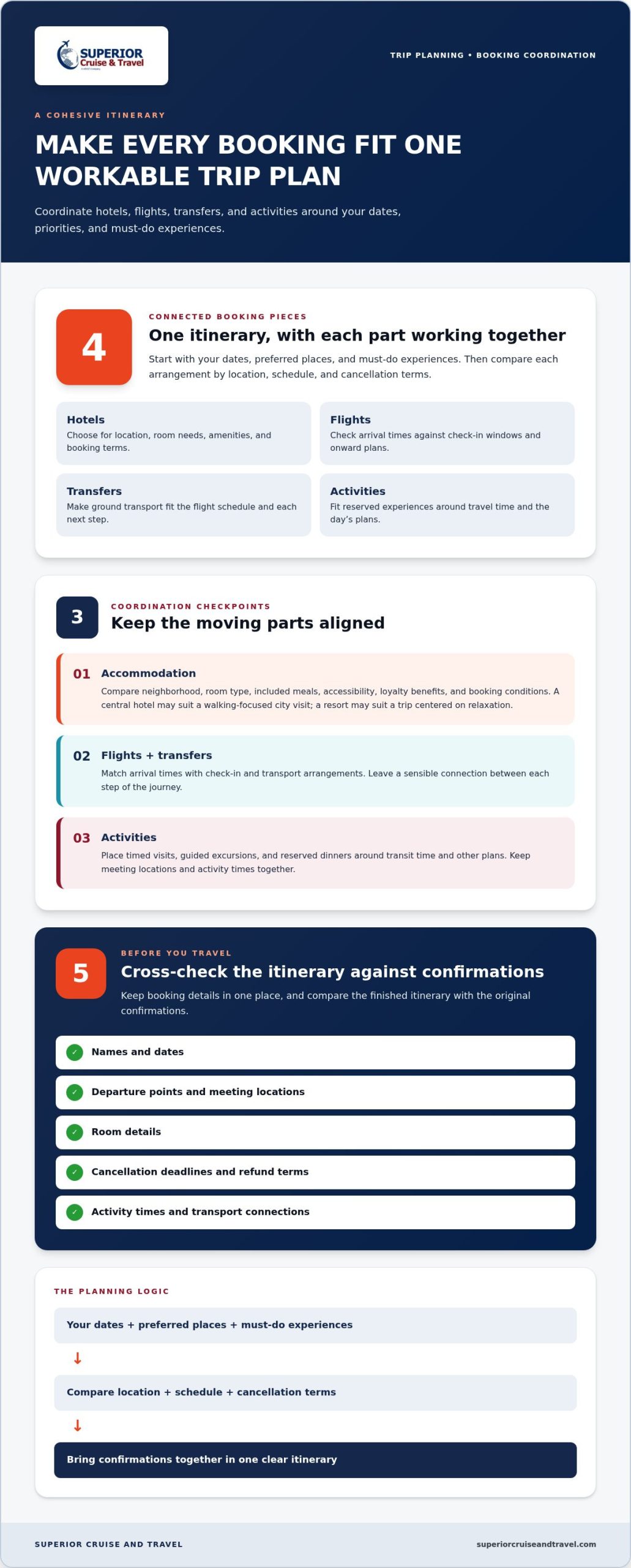
Coordinating hotels, flights, transfers, and activities means fitting separate bookings into one workable travel plan. Begin with your dates, preferred places, and must-do experiences. Then compare options by location, schedule, and cancellation terms. A hotel near a planned activity may reduce transit time, while a late-arriving flight may make an overnight stay near the airport more practical.
For accommodation, decide what matters most: neighborhood, room type, included meals, accessibility, or loyalty benefits. Search results become more useful when you apply those priorities before comparing properties. If you belong to a hotel loyalty program, review the eligible rates and benefits alongside the total booking terms. A saved-booking list can keep preferred hotels together while you compare locations and amenities, instead of relying on open browser tabs.
A planning conversation can help turn your shortlist into a hotel choice. Bring your travel dates, destination areas, room preferences, and any loyalty memberships. A planner can discuss how each property fits the itinerary and other bookings. For example, a central hotel may suit a walking-focused city visit, while a resort stay may better match days devoted to relaxation. Record the selected property and its booking conditions with the rest of your trip details.
Flights and ground transfers need to work together. Compare arrival times with check-in windows and transfer arrangements, then leave a sensible connection between each step. Activities also affect the schedule: a timed museum visit, guided excursion, or reserved dinner needs to fit around travel between places. Put confirmation details, meeting locations, and activity times in one itinerary so everyone can see the day’s sequence.
Sharing booking confirmations can help a planner organize reservations without retyping every detail. Provide the confirmation for each hotel, flight, transfer, and activity, and keep the original email for reference. Before travel, compare the itinerary against those confirmations. Check names, dates, departure points, room details, and cancellation terms. Correcting a mismatch during planning is easier than discovering it at hotel check-in or a transfer pickup.
- Accommodation: Compare location, amenities, booking terms, and applicable loyalty benefits.
- Flights and transfers: Match arrival times with check-in and onward transport.
- Activities: Place reservations around transit time and the day’s other plans.
If a resort-centered trip suits your plans, explore resort vacation options as part of your accommodation search.
How do you choose my destination?
A destination should fit the trip you want, not just a photo or trend. Compare places by your interests, preferred pace, travel style, and the experiences you value.
Regional Destination Selection
Across Europe, Asia-Pacific, and the Americas, begin by naming the experiences you want. A traveler drawn to museums and historic streets might compare Rome with Kyoto, while someone seeking dramatic landscapes could consider Patagonia. Then assess the pace, travel connections, and variety of places you want to include. A custom shortlist turns broad regional interest into a destination decision.
Local Expertise and Connections
Destination expertise can show how a place fits your interests beyond its familiar landmarks. A local guide can add context to a walking route, food experience, or cultural visit. Ask how suggested activities connect with your priorities and how much time each requires. A guided neighborhood visit may suit travelers who want local context, while independent exploration may better fit flexible plans.
A surprise-destination trip can still reflect your preferences. Share the details you want to control, such as climate, activity level, accommodation, and the kinds of experiences you enjoy. Then decide what should remain a surprise. You might choose the region but keep the city undisclosed, or agree on a cultural theme while keeping the daily itinerary under wraps.
Make the surprise practical by setting clear boundaries first. Identify destinations or activities you want to avoid, along with accessibility or dietary needs that affect the plan. A surprise works best when the essential trip conditions are settled, even if the destination name stays secret until later. Keep required travel documents and key schedule details available when needed.
Specialist destinations call for close attention to the trip’s purpose. For a wine-focused visit to Tuscany, consider how vineyard visits, dining, and time between towns fit together. For a wildlife-focused journey in the Galápagos, compare the experience you want with the pace and activities involved. These examples show why a destination should serve your main interest, rather than dictate it.
To narrow your choices, rank your priorities before selecting a place. Separate must-haves from preferences, then compare each destination against that list. Consider whether the experience depends on one location or benefits from visiting several. This makes it easier to choose a destination that feels personal and gives each part of the trip a clear purpose.
Human-planned, personalized trips
A human planner can turn inspiration into decisions that fit your priorities. The value lies in connecting individual choices, not simply assembling bookings.
Fully Managed Bespoke Trips
A custom trip begins with a conversation about your preferred pace, interests, and travel priorities. From there, a planner can shape the trip, recommend suitable options, and help coordinate arrangements. A traveler seeking quiet days might prefer a slower itinerary, while someone celebrating a milestone may want distinctive experiences built around the occasion.
Before booking, review the proposed itinerary to make sure it fits. Check how travel days, activities, and time to relax balance across the trip. A helpful plan makes the important choices visible, including where flexibility matters and which details are fixed. Share changes in your preferences early so the arrangements can be refined around your needs.
Personalization also means choosing what you want handled and what you prefer to decide yourself. One traveler may want support comparing cruise options; another may have a clear destination and need help organizing the experience. Set those expectations at the start to keep planning focused and give each conversation a clear purpose.
Supported Trip Types
Trip types range from a resort escape to an ambitious voyage. A luxury cruise may suit travelers who want to visit several places while staying aboard one ship. A resort vacation may better match guests seeking a settled base and time to unwind. World cruises and grand voyages offer a different scale of travel, with the itinerary itself central to the experience.
Match the trip format to the reason for travel. For a family celebration, consider how the schedule works for different ages and interests. For a restorative break, prioritize downtime over a packed list of activities. Travelers who value privacy may find private yacht or private jet arrangements align with their preferred style. Each trip calls for different planning priorities.
Travel protection is another consideration when shaping a trip, particularly if an unexpected change could affect several booked arrangements. Review its role alongside your plans and the terms that apply to individual bookings. Travel protection is a planning consideration, not a substitute for reading those terms.
To make your first planning conversation productive, bring a short list of must-haves, preferences, and open questions. Include the occasion, preferred trip style, and experiences that would make the journey feel personal. That gives a planner a useful starting point without forcing every detail into place before inspiration has room to develop.
Planning sessions and included services
A planning session turns preferences into decisions and records them in a practical trip plan. Bring a destination idea, travel dates, preferred pace, and any special needs. If your plans are still open, start with the experiences you want, such as visiting historic cities or enjoying a resort stay. The discussion can focus on choices that support those priorities.
Use the session to define what the planner will help organize. This may include comparing destinations, coordinating trip arrangements, and outlining an itinerary. Ask how recommendations will be shared and how changes can be incorporated. If you decide to add a city after reviewing the first draft, for example, discuss how that affects the route, timing, and other arrangements.
Clear preferences make the conversation more useful. Share what matters most, such as a quieter schedule, cultural experiences, or time to relax. Identify practical considerations too, including accessibility needs and dietary preferences. A traveler planning a global itinerary might prioritize fewer hotel changes, while someone focused on one city could prefer a fuller schedule of local activities.
Travel documents deserve attention during planning. According to the U.S. Bureau of Labor Statistics, travel agents can explain required documents such as passports and visas, cross-border entry requirements, and health and safety protocols. Use the session to identify destination-specific requirements for your preparation list. Keep responsibility for your documents clear, and include essential reminders alongside your trip details.
Ask how travel protection fits into the planning conversation. Consider it alongside your itinerary and booked arrangements so you can understand its role in your plans. Review the applicable terms and consider how a change might affect connected reservations. This discussion can help you make an informed decision, but it does not replace reading the details that apply to your arrangements.
Before ending the session, recap the decisions and next steps. Confirm the preferred destination, the arrangements still under consideration, and the details you need to provide. Request an organized summary of the agreed plan, including key dates and booking information. This gives you a clear reference point for reviewing the trip and sharing relevant details with fellow travelers.
- Prepare: Gather your preferences, travel dates, and questions.
- Prioritize: Separate essential experiences from optional ideas.
- Recap: Record decisions, open items, and next steps.
Ready to discuss how travel protection could fit your plans? Explore travel protection options as part of your trip preparation.
Superior Cruise and Travel: Luxury Cruises
Superior Cruise and Travel can help shape a vacation around luxury cruising, resort stays, or a longer voyage. Turn to the team when you’re weighing options such as a luxury cruise, a chartered cruise ship, or a world cruise and want your trip choices guided by your preferences.
If you’re drawn to a land-based escape, consider a resort vacation. Think about the experience you want, from time to unwind to a journey built around seeing more of the world. Sharing your priorities gives you a helpful starting point for discussing which option suits your plans.
To explore a trip that fits your travel style, contact Superior Cruise and Travel or visit superiorcruiseandtravel.com.
Let Your Next Trip Take Shape
Start with a decision that feels meaningful: the kind of experience you want to remember. It might be time at sea, a special celebration, or a journey that visits places you’ve long wanted to see. That choice gives your planning a clear direction while leaving room for your preferences to shape the details.
A complete vacation planning service can turn that starting point into a trip plan shaped around your priorities. If cruising is part of your vision, consider whether a luxury cruise, a chartered cruise ship, or a world cruise best matches the experience you have in mind. Focus on the pace and style that feel right, rather than trying to decide every detail at once.
Superior Cruise and Travel offers these cruise options for travelers ready to explore a memorable voyage. Contact Superior Cruise and Travel to begin a conversation about your travel plans. Your next journey can start with a simple idea.
Frequently Asked Questions
What types of trips do you offer?
Options include luxury cruises, chartered cruise ships, world cruises, grand voyages, and resort vacations. Private yachts and private jets are also options for travelers seeking a more private style of travel. Organizations planning a gathering can also arrange meetings and corporate events. Start by identifying the occasion and experience you want, then consider which trip type best fits those priorities.
What about flights?
Flights can be part of full-service vacation planning, alongside hotels, cruises, tours, and excursions. Share your preferred departure city, travel dates, and seating or schedule priorities, including any connections you want to avoid. Before travel, compare your flight confirmation with your itinerary, especially passenger names, departure airports, and arrival times. This helps keep air arrangements aligned with the rest of your trip.
What happens if something goes wrong during my trip?
Start by identifying the affected reservation and locating its confirmation details. Keep records of relevant updates and note how the disruption affects other bookings, such as a hotel arrival or scheduled excursion. Travel protection options are available for multi-component travel experiences. Review the applicable terms before travel so you understand what the selected protection addresses and what steps its documents describe.
What if I need help during my trip?
Keep your itinerary, booking confirmations, and relevant travel documents accessible during the trip. If plans change, these details help you identify the affected reservation and understand which other arrangements may need attention. A delayed arrival, for example, can affect hotel check-in or a planned activity. Save the contact information provided with each booking so you can refer to the appropriate reservation details.
Where to stay?
Choose lodging based on the experience you want from your destination. A resort vacation can suit travelers looking for a single base, while a city hotel may fit plans centered on museums, dining, or events. Consider how the property’s location relates to your priorities, and compare room preferences, amenities, and booking terms. The right choice supports your trip’s purpose and daily rhythm.
What does a complete vacation planning service include?
A complete vacation planning service can include itinerary design and coordination of flights, hotels, cruises, tours, and excursions. The mix depends on the trip you’re shaping. A cruise-focused vacation, for example, may combine a sailing with hotel arrangements and experiences before or after the voyage. Share your priorities early, then review the proposed arrangements together so the plan reflects what matters to you.
How much does a full-service vacation planner cost?
The total vacation cost depends on the destination, dates, lodging, flights, cruise or resort choices, and activities. There’s no single total that applies to every traveler. A quote provides a trip-specific amount based on the arrangements selected. To make it useful, outline your preferred travel style, essential experiences, and the parts of the itinerary you’re considering.
How do I choose a vacation destination and itinerary?
Begin with the experience you want most, such as relaxing at a resort, exploring cities, or visiting several destinations by ship. Next, identify practical preferences, including travel pace, departure point, and how much variety you want. Compare destinations against those priorities, then shape the itinerary around the trip’s main purpose. This approach helps you avoid choosing a place before deciding what you want from the journey.