
When comparing destination wedding packages all inclusive, the longest list of inclusions isn’t always the one that makes your wedding trip easiest. Your celebration matters, but so does the experience of getting there and settling in for the stay.
The phrase “destination wedding packages all inclusive” can make it sound as though every detail is covered, yet package terms vary by supplier. It’s understandable to wonder what’s part of the wedding arrangement, what belongs to the resort stay, and how flights and accommodations fit around both.
This guide gives you a practical way to compare package details, assess how a resort may suit your guests, and organize the travel around the celebration. You’ll learn how wedding arrangements and an all-inclusive stay fit together, and how a personalized itinerary can coordinate flights, hotels, tours, and excursions for you and your guests. With the right plan, the celebration and the journey can feel like parts of the same occasion, not separate projects.
Key Takeaways
- Understand how destination wedding packages all inclusive pair a supplier’s wedding offer with a resort stay, while keeping the two sets of inclusions distinct.
- Compare the venue, ceremony details, stated inclusions, conditions, guest considerations, and optional additions side by side.
- Set your priorities and guest needs before choosing a destination, then use them to guide your package comparison.
- Map flights, accommodations, ground arrangements, excursions, and wedding events separately so guests can follow the trip plan.
- Personalized vacation planning can bring flights, hotels, cruises, tours, and excursions together, with no service fees for full-service vacation planning.
What Destination Wedding Packages All Inclusive Usually Bring Together
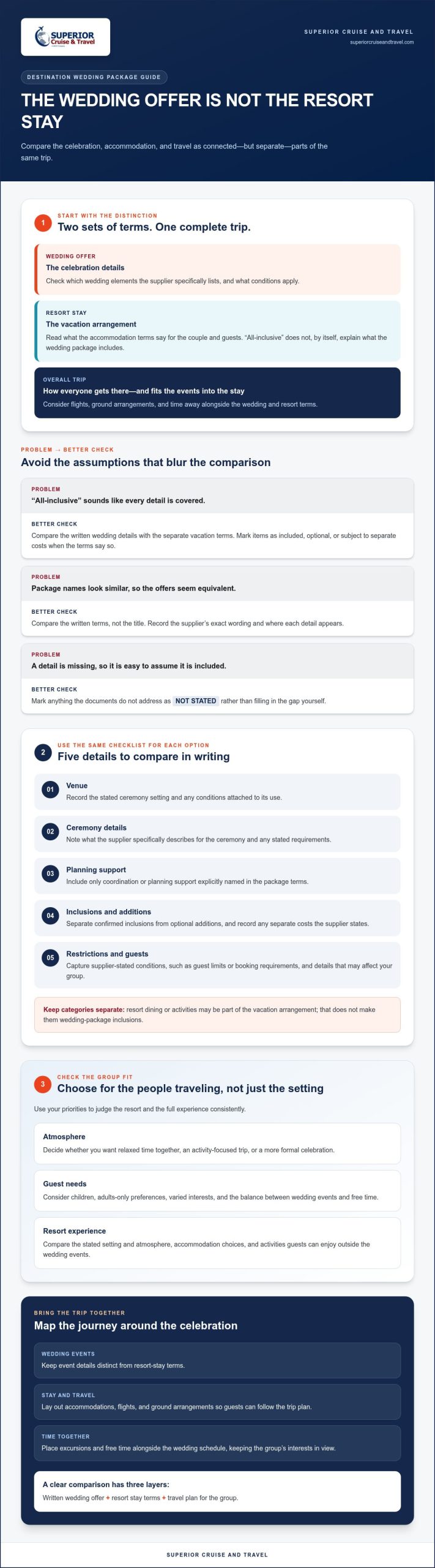
A destination wedding package is a supplier-specific offer for the celebration, paired with a resort vacation at the destination. The wedding offer and the resort stay are related, but they’re not interchangeable: each has its own inclusions, conditions, and terms. Compare them separately to avoid assuming that “all-inclusive” means every part of the wedding trip is covered.
A destination wedding brings the ceremony and travel experience together in one place. For a general overview of the concept, see What is a Destination Wedding? As you compare options, consider three connected parts: the celebration, where you and your guests will stay, and how everyone will get there. A resort may match the couple’s vision but be less convenient for some guests. A clear travel plan helps you weigh the complete experience, not just the ceremony setting.
Wedding package versus all-inclusive resort stay
An all-inclusive resort stay describes the vacation arrangement. It doesn’t, by itself, explain what the wedding package includes. For example, a supplier’s wedding offer might list use of a ceremony location, while separate resort terms describe what guests receive during their stay. That’s an example, not a standard inclusion. Compare the written wedding details with the vacation terms, and mark each item as included, optional, or subject to separate costs when the terms say so.
Keep the two categories side by side. A simple comparison can help:
- Wedding offer: What celebration elements does the supplier specifically list, and what conditions apply?
- Resort stay: What does the accommodation arrangement state for the couple and guests?
- Overall trip: How will flights, ground arrangements, and time away fit around the wedding events?
This distinction gives you a clearer view before choosing. The label “all-inclusive” isn’t a substitute for checking what the written terms cover in each category.
Which destination wedding style fits your group?
Start with the atmosphere you want. A relaxed celebration may leave more room for unstructured time together. An activity-focused trip may appeal to guests who want plenty to do, while a more formal celebration may call for a different setting and schedule. None is automatically the better choice. The right fit depends on what feels meaningful to you and comfortable for your group.
Think about who’s traveling, too. Children may affect which resort environment feels suitable, while adults-only preferences or guests with varied interests can shape the balance between wedding events and free time. Before narrowing your destination and resort options, write down the mood you want, the experience you hope guests will share, and any practical needs that could affect their stay. Use these priorities to judge each option consistently.
What to Compare in All-Inclusive Destination Wedding Packages
Compare the written terms, not just the package title. Similar names can describe different wedding details, conditions, and resort experiences. A consistent comparison helps you separate what the supplier describes as part of the wedding offer from optional additions, then assess whether the resort suits the people traveling with you.
Package comparisons are useful when you compare written terms, not package names alone. Record where each detail appears, such as in a written package description, and note anything the documents don’t address. The Wedding Industry Professionals Association provides broader context on the industry through its Wedding Industry Professional Standards resource.
| Compare | What to record |
|---|---|
| Venue | The stated ceremony setting and any conditions attached to its use. |
| Ceremony details | What the supplier specifically describes for the ceremony, and any stated requirements. |
| Planning support | Any coordination or planning support explicitly named in the package terms. |
| Inclusions and additions | Separate confirmed inclusions from optional additions, and record any separate costs the supplier states. |
| Restrictions and guests | Supplier-stated conditions, such as guest limits or booking requirements, plus details that may affect your group. |
Use one row for each shortlisted resort and copy the wording precisely. If a detail isn’t described, mark it “not stated” rather than assuming it’s included. Resort dining or activities may be part of the vacation arrangement, for example, but that doesn’t make them wedding-package inclusions. Keeping these categories separate makes it easier to see what the written offer actually covers.
Then assess the broader stay. Compare each resort’s stated setting and atmosphere, accommodation choices, and activities guests can enjoy outside wedding events. Consider your group’s preferences: a quiet retreat may suit some travelers, while others may value a wider choice of things to do. The all-inclusive resorts guide offers additional context for evaluating resort fit beyond the celebration itself.
- Capture the exact detail: Write down the supplier’s wording instead of relying on a package label.
- Track extras separately: Note optional additions and any separate costs the supplier states.
- Keep a question log: Record each open question, its answer, who provided it, and when, so your comparisons stay consistent.
- Include the guest experience: Add accommodation and activity notes alongside the wedding terms.
Once you’ve compared the celebration details, consider the travel arrangements alongside them. Personalized vacation planning can bring the wider trip into one itinerary.
How to Choose a Destination Wedding Package That Fits Your Priorities
Start with your priorities, not a resort label or an impressive-sounding package name. Agree on the kind of celebration you want, then weigh that vision against the needs of the people you hope will join you. This gives you a shared basis for comparing destination wedding packages all inclusive, rather than a collection of appealing but unrelated options.
Move from your celebration vision to guest needs, then destinations, package terms, and trip logistics.
Turn your wedding vision into selection criteria
Talk through the setting and atmosphere you picture, along with the parts of the celebration that matter most. If scenic backdrops and photography are central to your plans, exploring guides featuring wedding photo locations hampshire can offer visual inspiration for the kind of environment you want. Separate must-haves from nice-to-haves. A particular feel may be essential, while a specific activity or extra may simply be a bonus. Use your essentials to narrow destination and resort styles first. This keeps the comparison focused and helps prevent attractive extras from outweighing what matters to you.
Match the resort and package to the guest list
Consider how guests prefer to travel, what accommodation arrangements may suit them, and which resort activities they’d enjoy. A resort label alone can’t tell you what the experience will be like. Compare the setting, stay options, and activities described for each resort. For more context as you consider resort styles, explore luxury all-inclusive resort planning.
- Agree on your priorities. Each partner can name the celebration details they care about most, then identify shared essentials. If your lists differ, decide together what’s non-negotiable and where you’re comfortable being flexible.
- Define guest needs. Consider who you’re inviting and what could shape their comfort or participation, including travel preferences, accommodation needs, and interest in resort activities. You don’t have to meet every preference, but identify which ones should influence the shortlist.
- Shortlist destinations. Use your shared vision and guest considerations to identify destinations and resort styles that appear to fit. Focus on options that meet your essentials instead of adding possibilities simply because they’re popular or visually appealing.
- Compare package terms. For each shortlisted option, use the written details to assess the celebration offer against your priorities. Record stated inclusions and conditions as written, and distinguish them from optional additions. If the details don’t address an essential, note it as an open question rather than making an assumption.
- Plan the travel. Once you have a preferred direction, map the trip components around it, including flights, accommodation, ground arrangements, excursions, and wedding events. A coordinated plan helps you consider the couple’s arrangements and the guest journey as parts of the same occasion.
Keep your priorities visible throughout the process. If a package looks appealing but conflicts with an important guest need, revisit the destination or resort fit before settling on the celebration details. If it meets your essentials, focus next on the written terms and travel arrangements that make the overall plan work for your group.
How to Plan the Travel Details Around Your Destination Wedding
A wedding trip has several moving parts, and they don’t all belong to the resort package. Map each part separately so you can see how the dates, guest stay, and celebration fit together. A shared itinerary gives guests a clear reference point, even when their individual travel plans differ.
Coordinate flights, stays, and guest plans
Start by outlining the travel window around the wedding events. Arrival and departure dates influence how guests plan their time away, while accommodation choices shape where they’ll stay. Keep each detail distinct, then bring them together in an itinerary that’s easy to update and share.
A useful itinerary can organize:
- Flights: Travel dates and any flight details relevant to the shared plan.
- Accommodation: The stay information guests need to follow their own arrangements.
- Ground arrangements: Notes about how guests will get between travel points and scheduled events, as applicable to their plans—such as sharing local transfer and rideshare options like Ryde Go for guests arriving in destinations like Grenada.
- Excursions: Tours or activities being considered, with timing and participation information when available.
- Wedding events: Dates, times, and locations shared with guests.
Keep group-wide information separate from personal booking details. Guests can then understand the overall flow without assuming everyone has identical flights or accommodation. Personalized itineraries can bring flights, hotels, tours, and excursions into one plan. Professional travel planning can also help organize the wider vacation. Learn more about the benefits of professional travel planning.
Prepare for destination-specific requirements
Entry rules and marriage-document requirements depend on the destination and type of ceremony. Don’t rely on a general checklist or assume the rules are the same from one country to another. Use official government or destination authorities for current guidance, and review the travel-document and entry information for the place you plan to visit.
Keep this research separate from resort-package comparisons. The supplier’s wedding terms explain its offer; official authorities are the appropriate source for current legal and entry requirements. If you’re considering a legally recognized ceremony abroad, consult the relevant government or destination authority about the applicable process. A travel advisor can help organize travel components, but this isn’t legal advice.
For couples comparing destination wedding packages all inclusive, the itinerary matters because it connects the celebration with the journey guests will take. Keep one working document with the latest shared dates, event information, and travel notes. Make clear which details remain subject to each traveler’s own arrangements.
Bring the wider trip into focus with personalized destination wedding vacation planning.
Plan Your Destination Wedding Vacation With Superior Cruise & Travel
A destination wedding brings the celebration and vacation together, but the travel arrangements have their own moving parts. Superior Cruise & Travel helps couples plan the wider vacation around the wedding, bringing trip components into a personalized itinerary for the couple and their guests. The resort or supplier’s written terms define the wedding package’s inclusions; travel planning helps organize the vacation around those arrangements.
Bring the vacation itinerary together
Once you have a sense of the destination and celebration, consider how everyone will get there, where they’ll stay, and what they may want to do around the wedding events. Full-service vacation planning has no service fees and can include flights, hotels, cruises, tours, and excursions. Personalized itineraries bring these elements into a clearer overall trip plan, rather than leaving the couple and guests to piece together separate details.
Superior Cruise & Travel works with trusted suppliers and provides access to travel options that include resorts, cruise ships, and private islands worldwide. The right itinerary depends on your priorities and the vacation you want to share. Some guests may focus on attending the celebration, while others may want to add sightseeing or excursions to their stay. A coordinated plan helps everyone understand how the trip’s different parts fit together.
Keep one distinction clear as you plan: the resort or supplier sets the wedding package’s inclusions and conditions. Travel planning can organize the vacation around those arrangements, but it doesn’t change what the wedding package itself includes. Keeping the two sets of details separate helps everyone understand what relates to the celebration and what belongs to the wider trip.
Get started with a free quote
Share your destination ideas, preferred travel dates, and the trip components you’d like to bring together. A travel agent can help shape a personalized vacation itinerary around the wedding and the needs of your traveling group. Superior Cruise & Travel’s nationwide network of travel agents brings more than a century of combined travel industry experience.
Superior Cruise & Travel has a BBB A+ rating, an AAA+ rating, and 5-star client reviews. The agency’s experienced team can help you plan the wider vacation with confidence, tailoring the itinerary to the couple’s plans and guest journey.
Request a free quote by calling 1-800-992-8064 or through an online consultation. Share what you have in mind, and start bringing the travel details together. Plan your destination wedding vacation with support for the wider trip, from flights and accommodations to tours and excursions.
Give Your Wedding Trip a Clear Next Step
Your destination wedding can be the beginning of a shared travel experience, not just a date on the calendar. Before moving ahead, choose one detail that will shape the trip for your guests, such as the atmosphere you hope to create or the kind of time you’d like them to enjoy together. Let that choice guide your next planning conversation.
As you explore destination wedding packages all inclusive, keep your vision flexible enough to account for the people traveling with you. A thoughtful itinerary can show how the celebration fits into the vacation and help guests feel prepared for the journey. You don’t need every detail settled before taking the first step. A clear sense of what matters most is a helpful place to begin.
Superior Cruise and Travel can help shape the wider vacation around your wedding plans. Plan your destination wedding vacation with Superior Cruise and Travel and start turning your ideas into a trip you and your guests can look forward to.
Frequently Asked Questions
What is usually included in an all-inclusive destination wedding package?
Inclusions depend on the resort and package, and wedding arrangements may be described separately from vacation terms. One offer might list a ceremony setting or a particular service, but those are examples, not standard features. Compare the written inclusions and conditions, then note optional additions separately. This helps distinguish what the package explicitly covers from details that may be available another way.
Are flights included in destination wedding packages?
Flights aren’t automatically included in a resort wedding package; arrangements depend on the specific offer and booking. Treat the celebration and the wider vacation as separate parts of your planning, then account for flights, accommodation, and excursions in the overall trip. Superior Cruise & Travel’s full-service vacation planning can include flights and other travel components, helping you organize the journey without assuming they’re part of the resort’s wedding offer.
How do I compare destination wedding packages from different resorts?
Compare destination wedding packages all inclusive by recording each resort’s venue, stated ceremony inclusions, restrictions, accommodation context, and guest experience. Use the written terms, and list optional additions separately so they don’t blur the comparison. Then consider how each option matches your priorities. A package name alone isn’t enough: similarly named offers can have different terms, so focus on the details actually described.
How far in advance should I plan an all-inclusive destination wedding?
There’s no single planning timeline that fits every wedding; the destination, supplier, travel dates, and guest needs all affect the sequence. Begin once you have a general idea of the celebration and who may travel. From there, research destinations, compare package terms, and organize the trip details in order. Starting with those broad decisions gives you a useful framework without relying on an arbitrary lead time.
Can guests book their travel separately from the couple?
Whether guests can book separately depends on the resort’s and supplier’s arrangements. Share the relevant booking instructions and travel information with guests so they can plan around the wedding dates. A common itinerary can show the event schedule and general accommodation details while keeping each traveler’s individual arrangements distinct. Avoid assuming everyone will have the same room options or booking conditions; those depend on the applicable terms.
What documents do we need for a destination wedding abroad?
Document requirements vary by destination and may differ for entering the country and marrying there. Consult current official government and destination authority guidance for the specific place and ceremony type, then allow time to follow the stated process. Don’t rely on a universal checklist, since requirements aren’t the same everywhere. A travel advisor can help organize trip components, but official authorities are the source for legal requirements.
How can I get help planning the vacation around a destination wedding?
Superior Cruise & Travel offers personalized, full-service vacation planning with no service fees, including travel components such as flights, hotels, tours, and excursions. Couples can request a free quote by calling 1-800-992-8064 or using the online consultation option. Share your travel priorities and the trip elements you’d like to bring together to get started.