
A retreat is not easier to approve simply because it sounds enjoyable. A stronger case shows how the investment supports the work, what the full budget covers, and how everyone can participate. Knowing how to convince your boss on a corporate retreat starts with making those benefits clear and practical.
Your manager may reasonably ask whether the cost is justified. Build your request around a specific business objective, a considered cost estimate, and a plan to share useful outcomes with the team. Then tailor the proposal to your manager’s preferred format, whether that is a brief conversation, a detailed email, or a presentation.
This guide explains how to estimate travel, lodging, meals, activities, and other retreat expenses; communicate the professional value; and propose a balanced, inclusive agenda with time for focused work and shared experiences. You’ll also learn to account for team needs and set out a clear next step, making your request thoughtful, credible, and easier to assess.
Key Takeaways
- Shape your request around your manager’s preferred format, with a clear objective, proposed attendees, timing, agenda, and estimated costs.
- Build a practical budget that accounts for travel, lodging, meals, activities, and any equipment or facilitation the retreat needs.
- Connect the retreat to current team projects and business goals, then explain how you’ll share useful outcomes afterward.
- Balance focused work with shared experiences, and choose activities that give everyone a comfortable way to participate.
- For help planning a company gathering or exploring cruise-based event options, consider Superior Cruise and Travel’s Meetings & Corporate Events offering.
Adapting the request to a manager’s communication style
Your employer’s current travel, expense, and event policies set the approval requirements. They determine who approves a retreat, what documents are needed, and how spending is handled. Follow those internal steps before asking your manager to approve the plan.
If you’re considering how to convince your boss on a corporate retreat, start by matching your request to their decision-making style. Choose a format that makes the business purpose, approval needed, and next step easy to understand.
- Choose the format your manager uses for decisions. If your manager prefers direct conversations, request a brief meeting and bring a one-page summary. If they usually review details by email, send a written proposal. If they compare options visually, prepare a short presentation covering the objective, proposed attendees, timing, agenda, and estimated costs.
Consider how your manager prefers to receive information, too. A detail-focused manager may want the cost categories and schedule upfront, while a strategic manager may first want to understand the business purpose and intended actions. A quick conversation can help you choose the right approach for your request.
- Make the approval decision explicit. Open with the specific action you want: approval to plan a retreat for a named team or project. Then summarize its relevance, who would attend, when it could happen, and what the proposed investment covers. Your manager should be able to distinguish the request from a general suggestion to hold an event.
End with a clear next step, such as asking whether the proposed objective and planning approach are ready for review. If another approval is needed before committing, state that the proposal is for consideration, not authorization to spend. This keeps the request aligned with company policy.
- Use a request letter when a written record helps. A letter can suit a formal approval process, document your rationale, or give your supervisor time to consider the details. Address it to the decision-maker by name, identify the retreat’s business objective, and connect it to a current team priority.
Tailor the letter to your role and goals. For example, if you’re leading a project with unresolved handoffs, explain how a focused working session could clarify responsibilities. Don’t present the retreat as a reward alone. Show how the gathering supports specific work.
- Build the letter around evidence and follow-through. Use a concise sequence: request, business reason, participants, draft programme, timing, estimated costs, and planned outcomes. Explain what the team could do afterward, such as document decisions and assign owners to next steps. This makes the professional value easier to assess.
To make a persuasive case for how to convince your boss on a corporate retreat, make the proposal easy to evaluate and keep supporting details relevant to the decision. A manager weighing the investment needs a readable proposal, not a long account of every activity idea. Invite feedback on the objective or format so the next conversation can refine the plan without obscuring the approval you’re seeking.
Estimating travel, lodging, meal, and registration costs
Estimate the retreat’s actual components, and explain how each supports its purpose. Include direct expenses as well as the work coverage needed while attendees are away.
-
Estimate and Explain Event Costs
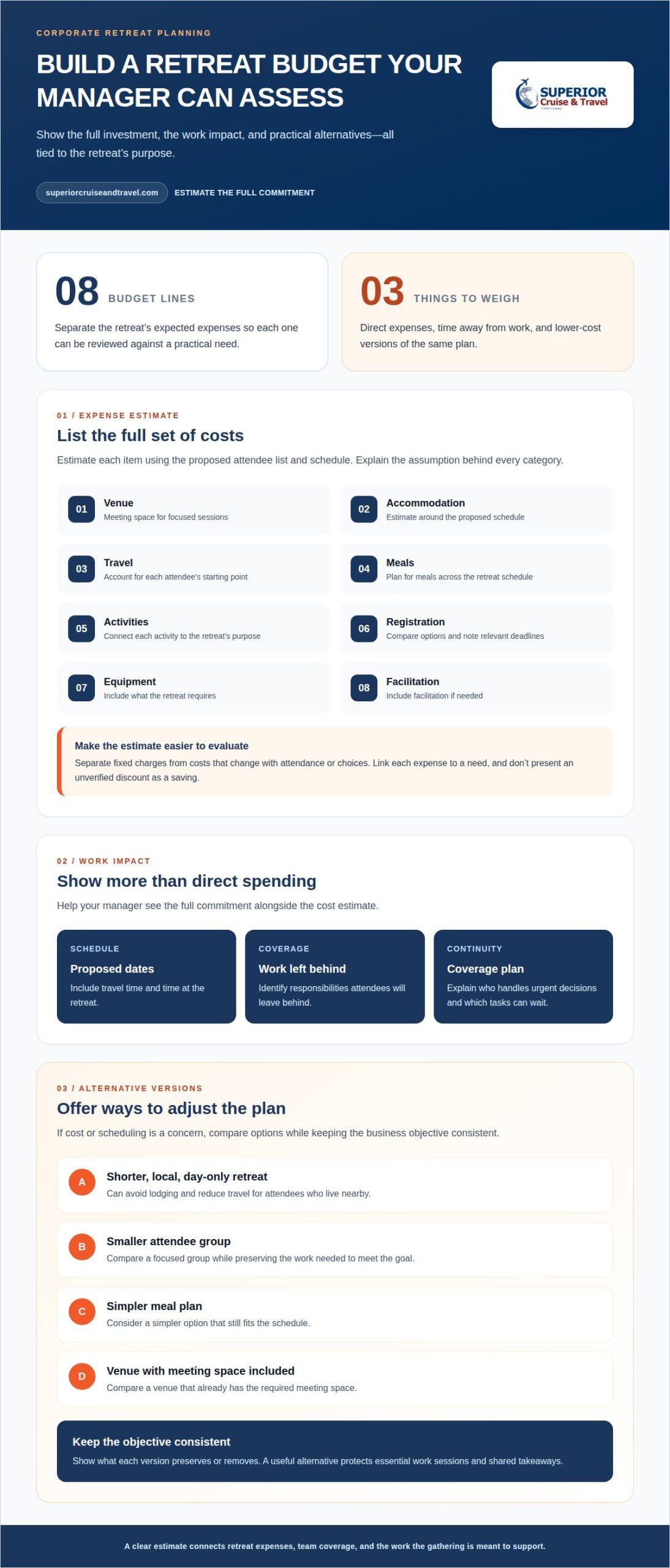
List expected expenses separately: venue, accommodation, travel, meals, activities, registration, equipment, and facilitation. For travel, account for each attendee’s starting point and likely transportation needs. Estimate lodging and meals based on the proposed schedule and attendee list.
Show the assumptions behind each category, distinguishing fixed charges from costs that change with attendance or choices. If registration applies, compare available options and note any early registration deadline that could affect the estimate. Don’t present an unverified discount as a saving. Link each expense to a practical need, such as meeting space for focused sessions or meals that keep the schedule workable.
-
Address Costs and Time Away
Show the work impact alongside direct spending. Include the proposed dates, travel time, time at the retreat, and responsibilities attendees will leave behind. Your manager can then weigh the full commitment, not just venue or registration costs.
Set out coverage arrangements for active projects and customer or team responsibilities. For example, explain who will handle urgent decisions while a project lead attends and which tasks can wait until the team returns. Account for transportation, lodging, and time away from work as well as registration. This helps surface scheduling challenges early and shows how the retreat can fit current priorities.
-
Consider Lower-Cost Alternatives
If an overnight stay creates the main budget or scheduling challenge, offer a shorter, local, day-only retreat. A focused off-site meeting can still provide dedicated planning time while avoiding lodging and reducing travel for attendees who live nearby.
You could also compare a smaller attendee group, a simpler meal plan, or a venue that already has the required meeting space. Keep the business objective consistent across options, then show what each version preserves or removes. An alternative is useful when it protects essential work sessions and shared takeaways, not when it cuts what the team needs to meet its goal.
For help shaping a retreat proposal around event logistics, corporate event planning can be a practical next step.
Explaining the professional-development value of attending
Connect the retreat to a current business priority, then show what attendees will learn, decide, or deliver. A focused proposal links employee development to practical value for the organization.
- Link the retreat to a specific organizational goal. Name a current priority, such as improving project handoffs, preparing for a product launch, or aligning teams around a strategic plan. Explain how the retreat’s working sessions would address that need, rather than describing attendance as a general opportunity to get away from daily work.
Make the connection concrete: if a project depends on decisions from several departments, a shared planning session could clarify responsibilities and next actions. Describe the work product the group intends to leave with, such as a decision log, revised project plan, or agreed ownership of key tasks. This gives your manager a practical basis for weighing approval.
- Show what attendees will develop and apply. Identify skills the planned sessions can strengthen, such as giving useful feedback, resolving cross-team issues, or communicating project risks. Tie each skill to a real responsibility. For example, a team lead who develops facilitation skills could use them to run more focused project meetings afterward.
Be precise about how learning connects to work. Name the upcoming project, recurring challenge, or team process where each skill can be applied. Don’t claim the retreat will automatically improve performance. Explain instead what actions attendees can take to put their learning into practice. This makes the professional-development case specific and credible.
- Explain the value across teams. Describe how colleagues from different functions can share knowledge that might otherwise stay within separate groups. For example, product and customer-support employees could compare launch assumptions with recurring customer questions, then identify what information each team needs from the other.
Show how those relationships support the work, not just morale. Stronger working connections can help people find the right colleague, clarify a handoff, or raise an issue early. If only some employees attend, explain how they’ll share relevant takeaways with the wider team so the benefits reach beyond the people in the room.
- Define what the team will deliver afterward. Propose a simple follow-through plan tied to the retreat’s objective. For a planning retreat, that could mean documenting decisions, assigning owners, and sharing agreed next actions with affected teams.
Assess progress through the work itself: whether the team implements agreed decisions, advances milestones, and avoids reopening settled questions. This gives your manager a way to judge whether the gathering served its purpose. The request is stronger when it identifies both the development employees gain and the practical outcomes they’ll deliver.
Plan an agenda balancing work and shared experiences
Present an agenda with focused work time, useful learning, and room to connect. Address productivity concerns with a clear coverage plan and specific outcomes for the retreat.
-
Build the agenda around the retreat’s purpose
Schedule the most important work sessions when attendees can focus, and give each a clear outcome. For a project-planning retreat, the agenda might move from reviewing current priorities to resolving handoffs and recording decisions. This helps your manager see how the gathering supports work rather than disrupting it.
Leave space between work sessions for meals, informal conversation, and shared experiences. A packed schedule can make it harder to absorb learning or discuss ideas with colleagues. Label the purpose of each agenda block in your proposal so your manager can see how structured work and connection support the same objective.
-
Arrange Work Coverage and Handovers
Prepare a handover for each responsibility that can’t wait until attendees return. Name the task, its current status, the colleague covering it, and the next action. For example, a project owner could share open decisions and key contacts with a teammate before leaving.
Also identify work that can wait. Don’t assign a cover colleague every task without agreeing on priorities, since that may simply shift the workload. A clear handover lets your manager assess how the team will maintain essential operations during the retreat.
-
Address Productivity Concerns
Explain how the retreat’s agenda protects time for current work while creating dedicated space for decisions. If urgent team calls may be needed, include 30-minute windows each day during the conference. That gives attendees a planned opportunity to handle essential communication without letting calls take over the programme.
Address time away directly: state the proposed dates, identify the work that needs coverage, and connect the retreat sessions to a defined result. For instance, a meeting focused on project ownership should end with recorded decisions and assigned next actions. This helps your manager weigh the time commitment against the work the team expects to deliver.
- Submit the agenda early and invite practical feedback. Make the approval request about two months before the trip so the company can plan coverage and budget. Include the draft agenda, handover approach, and key outcomes in the same proposal.
Ask your manager to flag scheduling conflicts, essential meetings, or coverage needs before plans are finalized. If a busy period overlaps with the proposed dates, offer an alternative that preserves the main work sessions. This turns productivity concerns into specific planning decisions.
Choose inclusive group activities
Choose activities that support the retreat’s purpose without assuming everyone has the same interests, abilities, or comfort level. Consider accessibility needs and practical risks, including mobility, sensory preferences, dietary requirements, travel between locations, and whether someone can participate without joining every activity.
- Start with the group’s needs, not a default activity. Use the retreat objective and attendee mix as your starting point. If the goal is stronger collaboration, a small-group problem-solving session may be more suitable than a physically demanding challenge. Offer different ways to contribute, such as speaking, writing ideas, or taking notes, so participation doesn’t depend on one communication style.
Ask attendees about relevant access or participation needs during planning, and explain how you’ll use that information. For example, someone who prefers quieter settings may contribute more comfortably in a small discussion than in a loud, competitive game. Don’t make assumptions about an employee based on role, age, or perceived ability.
- Check the activity’s practical demands. Before adding an activity, review its location, movement, noise, timing, equipment, and food requirements. A walking activity, for instance, needs a route suited to participants’ mobility and a clear alternative for anyone who prefers not to walk. A food-focused session should account for dietary needs with suitable choices.
Consider the setting as well as the activity. A crowded room, long transfer between venues, or unclear instructions can create avoidable barriers. Include relevant details in the plan, and choose an alternative if an activity’s demands could make participation difficult for part of the group.
- Offer more than one way to join in. Pair collaborative sessions with options that suit different energy levels and interests. For example, after a structured team exercise, let participants share ideas in a group conversation or submit written takeaways. Make the purpose clear so each option contributes to the same shared outcome.
Make it comfortable to opt out. Employees shouldn’t need to explain personal circumstances to skip a recreational activity. Provide an equally welcoming alternative, such as a quiet space or informal conversation, rather than leaving nonparticipants without a place in the programme.
- Explain inclusion as part of the retreat’s value. In your proposal, show how varied activities help employees build relationships and contribute in ways that suit them. For instance, a mix of small-group discussion and shared problem-solving can offer several ways into the conversation.
Describe how the plan will be communicated: activity expectations, participation options, access considerations, and the person coordinating questions. This gives your manager a concrete basis for reviewing the agenda and helps the group understand what to expect.
Plan an inclusive corporate event with activities shaped around your group’s needs and goals.
Superior Cruise and Travel: Meetings & Corporate Events
Superior Cruise and Travel offers Meetings & Corporate Events for organizations planning an upcoming retreat or company gathering. Turn to the team when you’ve established the business purpose and need help shaping the event around your group’s priorities, preferred setting, and agenda.
For teams considering a cruise-based gathering, Chartered Cruise Ships may offer another setting to explore. The right format depends on the retreat’s purpose, from focused meetings to shared experiences. A clear objective, draft schedule, and understanding of attendee needs give the planning conversation a practical starting point.
When your proposal is ready to move from approval to planning, contact Superior Cruise and Travel to discuss your corporate event.
Give your next retreat a setting worth remembering
Your next retreat can do more than bring colleagues together. A distinctive setting can mark a new direction, celebrate a team milestone, or make room for important conversations. If you’re weighing how to convince your boss on a corporate retreat, consider how the experience can reflect the gathering’s purpose, not just where it happens.
For teams exploring a different kind of company gathering, Superior Cruise and Travel offers Luxury Cruises, Chartered Cruise Ships, and World Cruises. These options may suit organizations seeking a cruise setting for an upcoming event. The right choice depends on your team’s goals and plans.
Take the next step by turning your preferred direction into a planning conversation. Contact Superior Cruise and Travel to discuss your upcoming corporate event and explore a suitable setting. A thoughtful proposal can open the door to a retreat your team is excited to attend.
Frequently Asked Questions
How do I justify the cost?
Justify the cost by explaining what the retreat is meant to change and how you’ll recognize progress. For example, if project decisions keep stalling between departments, propose a session to resolve ownership and record decisions. Then explain how the team will track whether those decisions move forward. This frames the expense as a deliberate response to a work challenge, not spending on an event without a defined purpose.
How do you build a business case for a company retreat?
Build your case around a business need, an intended outcome, and a way to assess follow-through. Start with a current challenge, such as unclear priorities after a team reorganization. Explain why bringing the relevant people together suits the need, and identify who will sponsor the plan. End with a simple evaluation approach, such as reviewing agreed actions at a regular team meeting and noting what remains unresolved.
What are the business benefits of a corporate retreat?
A corporate retreat can give colleagues dedicated time to address issues that routine meetings leave unresolved. For example, a cross-functional group can clarify how one team’s decisions affect another’s work. Retreat sessions can also help teams align on priorities and establish shared ways to communicate. The benefit depends on the work the group does together and whether participants apply decisions afterward.
What if my company says no?
Ask what prompted the decision before revising the proposal. Your manager may be concerned about timing, team coverage, scope, or whether the objective requires an off-site gathering. Respond to the specific concern with a practical alternative, such as changing the timing or narrowing the participant group. If approval still isn’t possible, document the underlying need and suggest revisiting it during the next planning cycle.
How do you make a business case for a corporate retreat to your boss?
Make a direct request that connects a current team need to a specific retreat outcome. For example: “I’m asking for approval to plan a working retreat so the launch team can agree on decision ownership and next steps.” Add why this work would benefit from focused group time, then explain how you’ll report progress afterward. Use your manager’s preferred format and make the decision you need unmistakable.
What are the benefits of corporate retreats for employee engagement and productivity?
Retreats can support engagement by giving employees a structured opportunity to contribute ideas and understand shared priorities. They can support productivity when a team uses focused sessions to settle decisions, clarify dependencies, or improve a handoff. For example, invite participants to identify a recurring obstacle and agree on an owner for the next action. Follow-through matters: an activity without workplace application won’t address the underlying work issue.
How do you calculate the ROI of a corporate retreat?
Compare the retreat’s total cost with outcomes the organization can measure, rather than treating attendance or positive feedback as financial return. A simple calculation is: ROI = (measured benefit minus total cost) divided by total cost. Choose the measure before the event, such as progress on a delayed project or reduced rework, and define how you’ll assess it afterward. Include indirect costs, such as time away from regular duties.
How do you create a corporate retreat budget and compare venue options?
Create one budget that groups expenses by category, then compare venue options using the same agenda and attendance assumptions. Look beyond the venue charge: consider transportation, accommodation if needed, meals, meeting requirements, activities, and facilitation. Note what each option includes and what needs separate arrangements. A consistent comparison helps your manager see how the setting affects the overall plan without conflating different event formats.