The best enrichment lecture may be the one that brings tomorrow’s port into sharper focus, not simply the one with the most impressive speaker. Luxury cruises with enrichment lectures commonly feature destination experts and guest lecturers, and the most rewarding programs connect talks to the places and experiences on the itinerary.
Look beyond a ship’s overall reputation: a thoughtful program can add context to a visit, from local history and architecture to regional traditions. Topics, presentation style, and chances to engage with a subject all shape how enriching the experience feels.
This guide explains how to compare destination-focused talks with broader historical and cultural subjects, what to look for in lecture quality, and how onboard programming fits around port days and time at sea. You’ll have a clearer way to judge whether a voyage’s lectures complement the journey you want to take.
Key Takeaways
- Compare talks with the destinations on the itinerary to see whether onboard learning adds context to upcoming port visits.
- Look for a balance of local history, cultural traditions, and broader subjects that match your interests.
- Assess lecture quality by considering clear, engaging presentations and how well the program invites deeper interest in each destination.
- Consider how talks fit around port days and time at sea, so enrichment complements rather than competes with the itinerary.
- Compare cruise-line programs by their destination focus, speaker approach, and the way their topics support the overall voyage.
1. Destination history and culture talks
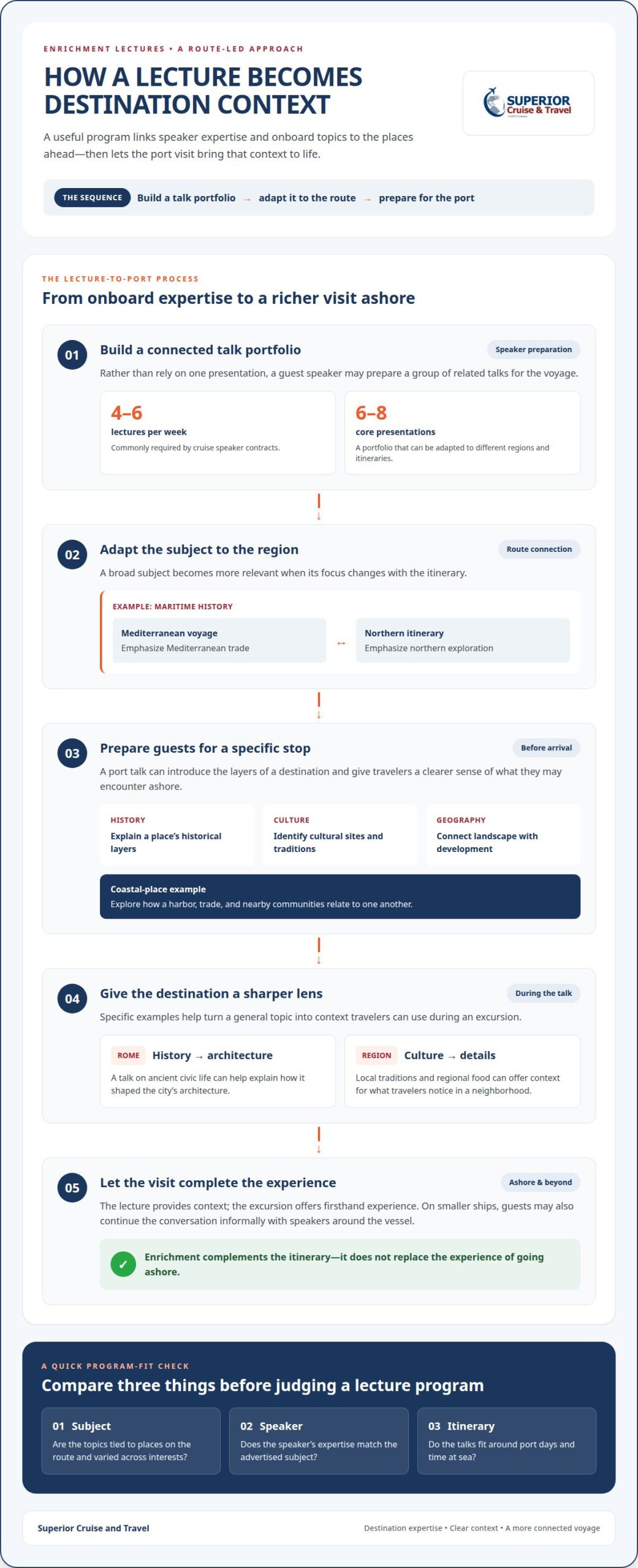
Luxury cruise lines commonly offer destination experts and guest lecturers, including historians and scientists. The best talks connect a place’s past, culture, or landscape with the ports ahead. Destination-focused lectures can also prepare guests for shore excursions by introducing local context before they go ashore.
A history talk can make a familiar landmark more meaningful. Before a port call in Rome, for example, a lecturer might explain how ancient civic life shaped the city’s architecture. A cultural talk could introduce local traditions, regional food, or influences visible in a neighborhood. This context helps travelers notice details during an excursion instead of seeing a historic site as just a photo stop.
Science topics can also add a destination perspective. Astronomy talks might introduce constellations visible along a sailing route, explain how sailors used the night sky, or explore astronomy’s role in a region’s history. Stargazing may complement a talk when conditions and the ship’s setting allow, but the lecture itself can still provide context. A discussion of navigation, for instance, connects the sky with the practical challenges of sea travel.
Port talks are most useful when they prepare guests for a specific stop. A lecturer can outline a destination’s historical layers, identify cultural sites, and explain how geography shaped its development. For a coastal visit, that might mean exploring the relationship between a harbor, trade, and nearby communities. The talk should clarify what travelers may encounter ashore while leaving the excursion to provide the firsthand experience.
Strong programming also needs a well-planned portfolio. Cruise speaker contracts commonly require 4-6 lectures per week, so a speaker may prepare a group of related talks instead of relying on one presentation. A portfolio of 6-8 core presentations can be adapted to different regions and itineraries. For example, a broad talk on maritime history could emphasize Mediterranean trade on one voyage and northern exploration on another.
Adaptation matters because a lecture should serve the itinerary, not simply repeat the same material at every stop. A useful sequence might introduce a region’s history before arrival, then explore a specific port’s architecture before guests go ashore. On smaller ships, passengers may also meet guest speakers around the vessel and continue the conversation informally, making a focused question about a lecture’s subject part of the experience.
When comparing programs, travelers booking through Superior Cruise and Travel should look for clear links between the lecturer’s expertise, the talk topics, and upcoming destinations. Chris Hadfield, a former commander of the International Space Station, has spoken about his military and space-program experiences. His example shows how a speaker’s firsthand knowledge can bring a subject to life. The same principle applies to destination talks: expertise matters most when it deepens understanding of places on the route.
Planning your next voyage with Superior Cruise and Travel ensures you experience these enriching itineraries firsthand. Cruise ships visit more than 50 ports and destinations across the UK.
Of the 84 ships the cruise industry had committed to building over a 14-year period, 50 were assigned to Italian shipbuilders as of April 2026. Joel Comm says he has delivered talks across four decades.
2. Historical and cultural topics
Luxury cruise enrichment programs can feature historians, scientists, and other guest experts. Their subjects may include regional history, architecture, art, music, food, and local traditions. The strongest topics reflect the itinerary and give travelers a clearer lens for understanding the places they visit.
History lectures can follow a period, an idea, or a destination’s changing identity. For an Italy itinerary, a program might connect ancient sites with later artistic movements, then consider how those periods shaped modern cultural life. Italy is home to more than 60 UNESCO World Heritage Sites, giving travelers a wide range of heritage themes to explore. A useful talk explains why a site matters, rather than simply naming its age or architectural style.
Cultural subjects can be highly specific. A lecture about regional cuisine might explore ingredients, migration, and how food traditions vary across a route. A music talk could introduce styles associated with a region, while an art lecture might examine how materials and patronage influenced local works. These examples distinguish a destination-led subject from a broad presentation with little connection to the voyage.
Special-interest themes can also shape a cruise program. Art, beer tasting, culinary experiences, golf, history, music, wellness, and wine appreciation are among the interests featured on themed voyages. For travelers drawn to one subject, a themed itinerary can create a shared focus across onboard programming and destination experiences. The key is fit: a wine talk feels more relevant on a route through celebrated wine regions than on an itinerary with little connection to the topic.
A speaker’s background adds another dimension. A historian can explain how political change influenced a city, while a scientist might clarify the natural forces behind a landscape. Guest experts bring different kinds of knowledge, so compare their expertise with the advertised topics. A lecture title should suggest a clear idea, such as how trade shaped a port’s growth, rather than rely on a vague promise of “local culture.”
To assess a program, consider three things: subject, speaker, and itinerary. Look for topics tied to places on the route, check whether the speaker’s expertise suits the subject, and consider whether the program offers varied perspectives, such as history alongside food or art. This simple comparison helps you choose luxury cruises with enrichment lectures that match your interests without assuming every voyage offers the same curriculum.
Choose topics that deepen your curiosity without turning every port into a classroom. A well-balanced program can pair a focused lecture with time to experience a destination independently, leaving room for informed discovery and personal exploration.
3. Lecture quality and guest feedback
Lecture quality depends on more than a speaker’s credentials. Clear explanations, a well-structured presentation, useful examples, and a strong connection to the voyage all matter. Guest feedback can offer another perspective, especially when it discusses the lectures rather than the ship experience overall.
One set of enrichment-program responses offers a positive signal: 88% of respondents gave lecture quality the top score of 10. All respondents rated every program dimension at least 8 out of 10, with zero detractors. These results indicate strong satisfaction among those respondents, but they don’t establish that every sailing or lecture receives the same response.
For Regent Seven Seas, Silversea, Seabourn, and Oceania, compare the program for the specific sailing. Luxury cruise lines commonly offer destination experts and guest lecturers, but a line-wide label doesn’t reveal the speakers, subjects, or schedule for a particular voyage. Review advertised lectures alongside the itinerary and your interests instead of assuming one brand’s program is consistently stronger.
Look for substance in the program descriptions. A focused topic, a clear connection to a destination, and a speaker whose expertise fits the subject can help you judge whether a lecture offers more than a general overview. For example, a talk about a port’s maritime past should explain what shaped its development, not just list nearby landmarks. A lecture on regional art should give listeners a useful lens for interpreting works they may encounter ashore.
Guest feedback is more useful when it describes specific qualities. Comments about a speaker’s clarity, pace, depth, or ability to explain complex ideas can reveal more than broad praise. Notice whether guests mention the same strengths across different talks. One enthusiastic reaction may reflect personal taste; recurring comments about engaging delivery or practical insight offer a clearer pattern.
The schedule also affects perceived quality. A compelling lecture may be less useful if it conflicts with an excursion or feels disconnected from the day’s destination. Check how the onboard program fits around port calls and time at sea. On a sailing with several consecutive port visits, a concise preview before arrival may suit the pace better than an extended series during busy shore days.
Finally, match the program’s approach to your preferred learning style. Some travelers value specialist depth; others prefer accessible introductions and lively discussion. Compare speaker backgrounds, topic descriptions, guest comments, and timing together. This gives you a more balanced basis for choosing among Regent Seven Seas, Silversea, Seabourn, and Oceania than relying on a single rating or brand reputation.
Some travelers value specialist depth, while others prefer an accessible overview or a practical link to what they will see ashore. Use the advertised topics and speaker descriptions to decide which approach suits you, and consider whether the program leaves room for questions or discussion if that matters to you. The reported result was 100%: all respondents rated every dimension of the enrichment program at least 8 out of 10, with zero detractors. Treat that as a positive signal, while weighing the specific program against your own interests.
4. Matching lecture topics to cruise itineraries
Match the program to the route, not just the ship. A lecture about Renaissance art has more immediate relevance on an itinerary featuring Italian cities than on a voyage with no related port visits. Compare the route, days at sea, advertised subjects, and timing to see whether talks prepare guests for destinations or offer broader onboard interest.
River and ocean cruises can both support destination-focused learning, though their itineraries create different opportunities. River cruise lines often offer themed voyages centered on travelers’ interests and shared passions. An art- or wine-themed river sailing can connect onboard talks with places along the route. Ocean itineraries may span more varied destinations, so look for talks that explain a region or introduce individual ports.
Choose themes that suit the route’s character. A history-focused voyage can explore how trade shaped port cities, while a music theme can introduce regional traditions before guests go ashore. Culinary experiences, golf, wellness, beer tasting, and wine appreciation are other examples of special-interest themes. The connection should feel intentional: a lecture about local food has more context when the itinerary visits places tied to that cuisine.
Lecture access and shore excursions are separate parts of a cruise experience. The fare’s stated inclusions determine whether onboard talks are included, while excursion arrangements cover activities ashore. A lecture about a historic district does not, by itself, mean a guided visit there is part of the fare. Compare each inclusion separately to understand what the sailing provides.
A travel advisor can narrow options by starting with your subject interests, preferred regions, and travel dates. They can compare upcoming itineraries with published program descriptions, looking for named speakers or relevant topics. If you’re interested in astronomy, for example, prioritize routes whose descriptions include science or night-sky talks. The route and stated lecture details should align before a sailing becomes a leading match.
Timing matters, too. A port-heavy itinerary leaves less time onboard than a sailing with several days at sea, so the lecture schedule should suit the pace of travel. A destination preview before arrival can build context; a broader cultural talk on a sea day can allow for a deeper subject. Compare lecture timing with port calls and excursions, then favor programs that complement rather than crowd the itinerary.
5. Which luxury cruise lines offer enrichment lectures?
Luxury cruise lines commonly include destination experts and guest lecturers in their enrichment programs. Regent Seven Seas, Silversea, Seabourn, and Oceania are useful examples to consider when comparing upcoming sailings. The lecture mix can vary by itinerary, so compare the specific voyage’s program rather than assuming every ship offers identical speakers or subjects.
Start with the advertised topics. One sailing might highlight regional history, while another emphasizes food, art, or natural sciences. A Mediterranean itinerary, for example, could pair talks about local architecture with discussions of regional culture. A voyage with several days at sea may offer more opportunities for longer presentations. The itinerary provides useful context for judging each program.
Next, consider who presents the lectures and how their expertise fits the subject. A historian discussing a port’s past brings a different perspective from a scientist explaining its coastal environment. Speaker credentials and topic descriptions can show whether a program offers specialist depth, accessible introductions, or a blend. Look for a clear connection between the presenter’s background and the advertised talk.
Compare the schedule as well as the subject matter. A port-focused lecture before arrival can help guests understand the destination, while a broader cultural presentation may suit a sea day. If the sailing includes several consecutive port visits, timing matters: a talk scheduled during a busy excursion period may be less convenient. The daily program shows how lectures fit with time ashore and other onboard activities.
For Regent Seven Seas, Silversea, Seabourn, and Oceania, use the same comparison points: destination relevance, speaker expertise, subject variety, and schedule. Weigh those details against your interests. A traveler drawn to history may value regional context; someone interested in astronomy may prefer science talks. This approach compares the actual experience rather than relying on brand reputation alone.
Programs can also change between itineraries and future seasons. For a 2027 or later sailing, compare the current itinerary and available lecture descriptions as part of the overall voyage decision. A world cruise, for example, may pass through regions with varied histories and cultures, making broad subject variety especially appealing. A shorter route may suit travelers seeking a concentrated focus on one region.
Choose the line whose upcoming voyage best matches your interests, route preferences, and desired pace. The strongest fit connects relevant speakers and subjects with the itinerary you want to experience. Compare the sailing itself, then consider how its lectures support your plans for time in port and at sea.
Regent Seven Seas, Silversea, Seabourn, and Oceania can be compared using the same criteria: destination relevance, speaker expertise, subject variety, and schedule. Programs vary by itinerary, so compare the specific voyage’s lecture topics and timing rather than relying on brand reputation.
Superior Cruise and Travel: Luxury Cruises
Superior Cruise and Travel helps travelers plan luxury cruises around the routes, destinations, and onboard experiences that matter to them. If enrichment is a priority, share your preferred subjects, regions, and travel dates so your options can be considered with those interests in mind.
For a wider itinerary, a world cruise can bring together varied destinations and cultural perspectives. Chartered cruise ships also offer a distinct way to plan a voyage for a group. The next step depends on the journey you want and how lectures fit alongside ports and time at sea.
Contact Superior Cruise and Travel to discuss your upcoming cruise plans.
Plan a Voyage That Inspires Your Curiosity
Your next voyage can be shaped around more than a destination. For travelers drawn to learning, the right sailing should leave room for curiosity as well as unplanned discoveries. When considering luxury cruises with enrichment lectures, keep your preferred subjects and travel pace at the center of the decision.
Before settling on an itinerary, note which topics you hope to explore and which destinations inspire you. A conversation about those priorities can bring the route and onboard experience into focus, whether you’re planning an extended voyage or a tailored sailing. Plans can evolve, so leave room for the next idea that captures your imagination.
Superior Cruise and Travel offers luxury cruises, chartered cruise ships, and world cruises. These options provide a starting point for shaping a future journey around the scope and style of travel you have in mind.
Contact Superior Cruise and Travel to discuss your upcoming cruise plans. Your next journey can begin with a clear sense of what you want to discover.
Frequently Asked Questions
Which luxury cruise ships have the strongest onboard lecture programs?
No single ship is strongest for every traveler; Regent Seven Seas, Silversea, Seabourn, and Oceania are useful starting points for comparison. Focus on the specific ship and sailing, since program quality depends on its speakers and subjects. If you’re choosing between two voyages, compare their lecture schedules with your interests, then consider whether the route gives those talks useful context.