
A luxury travel advisor’s income usually comes from travel suppliers, not from quietly marking up your trip. To understand how luxury travel advisors get paid, start with commissions: suppliers generally pay them on eligible bookings, while some advisors also charge clients separate planning fees.
It’s reasonable to wonder whether expert help means paying more. In many cases, a hotel, cruise line, or tour operator pays the advisor a commission when a booking is completed. Commission terms depend on the supplier and booking, while any client fee depends on the advisor’s business model. A host agency may also receive a share of an advisor’s commission.
This guide explains how supplier relationships, host-agency splits, planning fees, experience, and business structure affect an advisor’s income. You’ll also see why sales volume alone doesn’t tell the whole story, and how the way an advisor is paid can shape the support and expertise they bring to planning a luxury trip.
Key Takeaways
- Understand why commissions vary across cruises, hotels, tours, and flights, and how the booking type shapes an advisor’s income.
- See how host-agency splits and business expenses affect what an advisor keeps from a commission.
- Learn why planning fees may apply to complex or highly customized trips, and how they differ from supplier commissions.
- Discover how preferred supplier relationships can influence the perks and offers available through an advisor.
- Recognize how experience, repeat clients, referrals, and business structure all contribute to an advisor’s earning potential.
How Do Travel Agents Make Money?
Travel advisors generally earn commissions from suppliers on eligible bookings. The commission is usually built into the travel price, so clients typically pay about the same whether they book independently or through an advisor.
Commissionable Travel Suppliers
Commissionable suppliers are travel companies that pay advisors for eligible bookings, including hotels, cruise lines, and tour operators. The supplier, rather than the traveler, typically pays the commission after the reservation is completed.
The type of trip affects which suppliers may pay commission. A cruise booking may earn commission from its cruise line, while a resort stay may earn commission from its hotel. A trip combining lodging, a cruise, and guided touring can involve several suppliers, each with its own commission terms. Flights alone often work differently.
Commission Rates by Booking Type
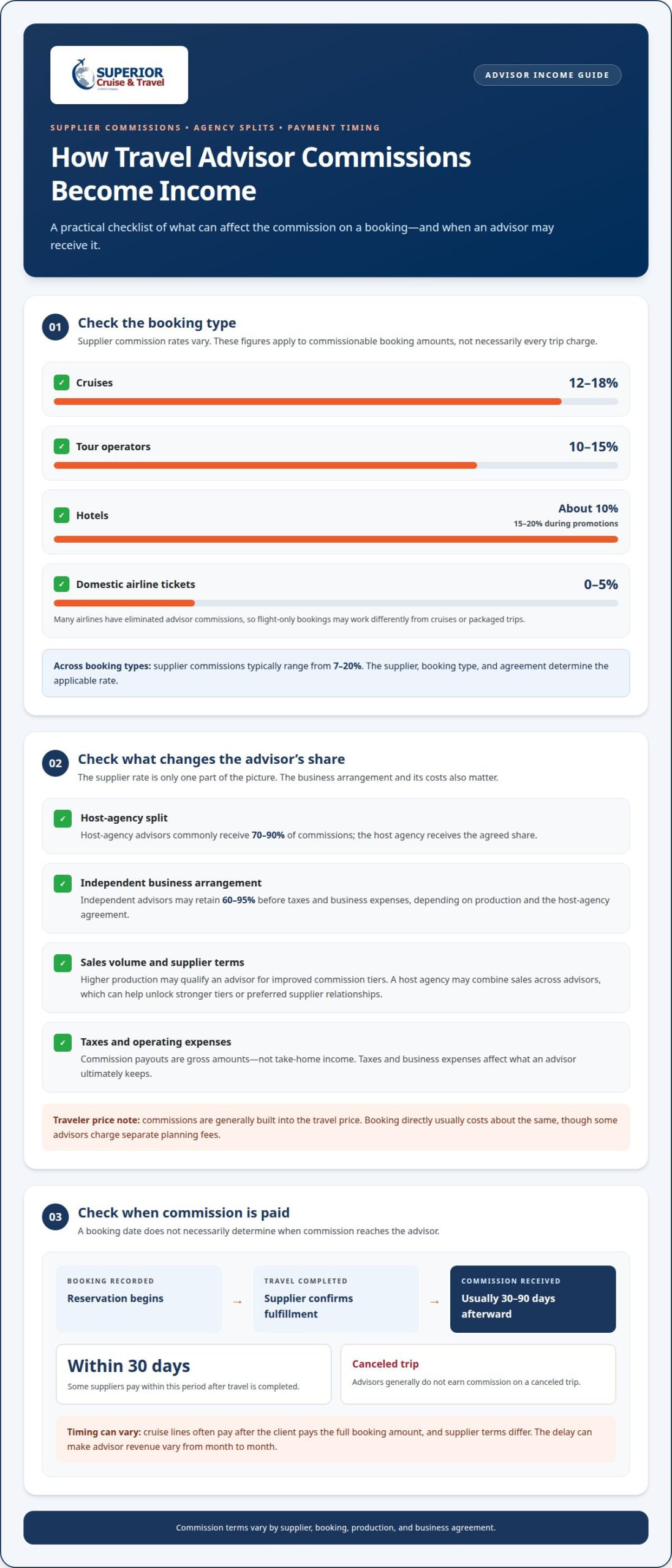
Commission rates vary by supplier and booking type, rather than following one standard rate across travel. Advisors typically receive 12-18% commission on cruises and 10-15% from tour operators. Hotel commissions average about 10%, and can reach 15-20% during promotions.
Across booking types, supplier commissions typically range from 7-20% of booking cost. Domestic airline commissions are generally 0%-5%, and many airlines have eliminated advisor commissions. That contrast helps explain why a cruise or packaged trip may produce more predictable commission than a flight-only booking. The rates apply to the supplier’s commissionable booking amount, not necessarily every charge in a trip.
For clients, commission is generally part of the travel price, not an added markup imposed by the advisor. Booking directly usually costs about the same, although some advisors charge separate planning fees.
Commission Tiers and Sales Volume
Tiered commissions are supplier arrangements in which higher sales volume can lead to improved commission rates. A supplier may assess an advisor’s production over time and apply a different rate when sales reach a qualifying level.
For example, a cruise advisor with growing booking volume may qualify for a higher tier than one with fewer sales. Host agencies can also combine sales across advisors, which may help unlock stronger commission levels or preferred supplier relationships. These arrangements affect advisor income, but they don’t mean every booking earns the same percentage. The supplier, booking type, production, and agreement all matter.
Commission Processing and Payment Timing
Commission processing begins when the supplier records a booking and later confirms the reservation was fulfilled. Suppliers typically issue commission after the client completes travel; advisors usually receive it about 30-90 days afterward. Some suppliers pay within 30 days after travel is completed.
Cruise lines often pay commission after clients pay the full booking amount, so timing can vary by supplier and reservation terms. If a trip is canceled, advisors generally don’t earn its commission. For a future booking, the commission may not arrive until after travel, meaning the booking date alone doesn’t determine when income is received. This gap is one reason advisor revenue can vary from month to month.
How does a host agency affect commission rates?
A host agency can affect how much commission an advisor keeps, even when the supplier rate stays the same. Independent, host-agency, and franchise models also differ in how advisors manage expenses and supplier relationships.
Three business models, different responsibilities
An independent advisor works directly with suppliers and retains 100% of commissions, while covering business expenses and managing supplier relationships. That can mean greater control over each booking, alongside more responsibility for the business behind it.
A host-agency advisor books through an established agency and shares commission according to an agreed split. The host may provide access to supplier relationships and combine sales volume across advisors. That collective volume can help unlock higher commission tiers or preferred supplier relationships.
Franchise owners and independent agents both earn supplier commissions, but their business models differ in how income is supported and managed. The label alone doesn’t determine take-home pay. Sales, costs, supplier terms, and the specific business arrangement all shape the result.
How host-agency commission splits work
A split divides the supplier commission between the advisor and host agency. Host-agency advisors commonly receive 70-90% of commissions, while independent advisors may retain 60%-95% before taxes and business expenses, depending on production and their host-agency agreement.
The booking price and supplier rate are identical, but the advisor payout changes with the agreement.
These amounts are gross commission payouts, not take-home income. Taxes and operating expenses affect what an advisor ultimately keeps. A higher split may leave more commission per booking, while a host’s supplier access or support can also affect the business model’s value.
What the arrangement means for earnings
Reviewing a split means looking beyond its headline percentage. Production-based terms, supplier access, business expenses, and payment processes all affect the final return. For example, sales combined through a host may help reach a higher supplier tier, changing commission on eligible bookings.
For travelers planning a future trip, the split is an advisor-business arrangement. It doesn’t automatically mean the traveler pays a different supplier price. If cruise planning is part of your next journey, explore options for your next travel plans with the commission structure in mind.
Planning and service fees
Planning fees compensate advisors for research and itinerary work, while supplier commissions relate to completed bookings. Over 50% of travel advisors charge planning fees, especially for comprehensive trips. A fee may matter when a request involves several destinations, multiple travelers, or extensive customization, because the work can extend beyond making reservations.
What planning and service fees cover
Some advisors charge planning fees for complex itineraries, group travel, or highly customized trips. The fee is separate from supplier commission: it pays for planning work rather than changing the commission rate. For example, coordinating a multi-stop itinerary may involve research, scheduling, and adjustments across several travel components.
Planning may also include evaluating suppliers and supporting travelers before, during, or after a trip. If a disruption requires troubleshooting or a revised plan, the advisor’s work may continue beyond the original booking. A planning fee can clarify how that support is compensated, especially when an itinerary requires substantial coordination.
Fee structures vary by advisor and scope of work. Some charge a flat planning fee; others base it on the itinerary or time involved. The key is understanding what the fee covers. A detailed trip plan and ongoing assistance involve different work from placing a straightforward reservation, so the fee arrangement should reflect the requested service.
Client concierge fees
A concierge fee is a charge for tailored travel planning. That example describes an industry starting point, not a universal rate; the itinerary’s complexity and the advisor’s fee structure affect the amount.
Advisors typically collect concierge fees upfront or at booking. Upfront payment compensates the advisor for planning work that begins before suppliers finalize a reservation. Payment at booking aligns the fee with the point when trip arrangements move forward. Either way, the timing is distinct from supplier commission, which is generally paid after travel is completed.
For example, a traveler requesting a customized week-long trip may encounter a concierge fee alongside supplier-paid commission. The fee pays for the advisor’s planning service, while commission comes from eligible supplier bookings. These are separate income sources, and one doesn’t automatically replace the other.
Before planning begins, a clear explanation of any fee helps travelers understand the service provided and when payment is due. The itinerary’s complexity, group needs, and requested level of customization help determine whether a planning fee applies and what work it covers.
Preferred supplier relationships
A preferred supplier relationship is an ongoing partnership between a travel advisor and a company such as a cruise line, hotel, or tour operator. It can affect an advisor’s earnings and the offers or added benefits available to a traveler. The relationship matters most when the supplier’s travel experience fits the trip’s priorities.
How preferred partnerships influence advisor income
Preferred suppliers may offer advisors higher commission tiers, bonus incentives, or exclusive offers. These benefits can provide income beyond the commission on an individual reservation. For example, an advisor who books eligible trips with a partner cruise line could receive a bonus tied to that relationship, depending on the supplier’s terms.
These arrangements can reward repeat business and production with a supplier. They don’t mean every booking earns a bonus or that the same terms apply across hotels, cruise lines, and tour operators. The supplier and booking determine which incentives apply. A preferred relationship can also make commission income less dependent on a single booking’s base rate.
What travelers may receive
Supplier partnerships can also offer value to travelers. Preferred-partner perks may be worth hundreds or even thousands of dollars per trip. Advisors may also provide supplier promotions or perks. The exact benefit depends on the offer and booking; a partnership doesn’t make every trip eligible for every extra.
For instance, a traveler considering a cruise could receive an offer available through an advisor’s supplier relationship. Another cruise booking might qualify for a different promotion, or no added perk. The value lies in matching an eligible offer to the traveler’s plans, not assuming every preferred booking includes the same benefits.
How to understand the relationship’s role
Advisor recommendations involve more than commission: the destination, timing, travel style, and supplier fit all matter. A preferred supplier can be a useful option when its itinerary or property suits the traveler’s priorities. For a chartered cruise ship, for example, the scale and nature of the experience make supplier fit especially relevant.
It helps to distinguish a supplier perk from an advisor’s planning fee. A supplier promotion is attached to an eligible booking, while a planning fee pays for the advisor’s work. They serve different purposes, even when both appear in the same trip plan.
For an upcoming journey, treat partner benefits as one part of the overall value. Consider the itinerary, available supplier offers, and your travel priorities together. This keeps a bonus or exclusive promotion in perspective and helps you understand how preferred relationships can shape both advisor income and your trip.
Travel advisor income by experience and business model
Luxury and general travel advisors can both earn supplier commissions, while planning fees may provide income for customized work. Online booking sites operate differently, and a booking page alone doesn’t show whether an advisor receives commission or charges a separate fee.
Experience changes income, but not by itself
Full-time travel advisors in their first 3-5 years earned an average of $44,127 per year. Mid-experience full-time advisors earned an average of $79,000 per year. These averages show how earnings can differ across career stages, but they don’t mean experience alone determines an individual advisor’s income.
Established advisors with luxury clientele or a strong niche can earn $100,000 or more annually. A focused specialty may help an advisor build repeat clients and referrals, while booking volume and the types of trips sold shape commission income. For example, a luxury cruise specialist may build a business around cruise bookings, while another advisor may serve a different travel niche.
Sales volume is not the same as take-home pay
Advisors with seven figures in annual sales are described as earning six-figure income on average, assuming a 10% average commission rate. That estimate is before host-agency splits, taxes, and business expenses, so gross sales should not be mistaken for personal income.
For example, a high booking total can produce substantial commissions, but a host-agency share and operating costs reduce what the advisor retains. Independent advisors and franchise owners also earn supplier commissions, yet their business models differ in how income is supported and managed. The business structure affects the path from commission earned to income kept.
Full-time and part-time models
Full-time travel advisors earned more than twice as much as part-time advisors, according to the cited report. That comparison reflects different amounts of time devoted to bookings and business operations, not a guaranteed pay gap for every advisor. Part-time work may bring lower total income when it involves fewer bookings or less time for marketing.
Many advisors begin earning within their first few months, especially with active marketing and outreach to personal networks. Early earnings still depend on completed bookings, supplier commission terms, and whether trips lead to repeat business. A first booking can generate income, but a steady business needs continued sales and client relationships.
The practical takeaway is to compare an advisor’s business model, not just sales totals. Luxury clientele, a clear niche, repeat travelers, and efficient operations can support stronger earnings, while splits and expenses affect retained income. For help planning a future cruise, explore luxury cruise options.
Superior Cruise and Travel: Luxury Cruises
Superior Cruise and Travel can help turn your next luxury cruise idea into a thoughtfully planned journey. If you’re weighing cruise options, considering a chartered cruise ship, or imagining a world cruise, its travel planning can bring the experience together. Resort vacations are another option for travelers seeking a land-based escape.
Turn to Superior Cruise and Travel when you’re ready to discuss the kind of trip you want, from the overall experience to the details that matter most. A conversation can help shape the next step around your travel goals.
Contact Superior Cruise and Travel to discuss your upcoming travel plans.
Shape your next journey around what matters most
Understanding how luxury travel advisors get paid gives you useful context for your next planning conversation. The next step is deciding what kind of journey feels right and which details you’d like expert help bringing together. Consider the pace, setting, and scale of the experience you’re imagining. Those priorities can turn an early idea into a travel plan that feels distinctly yours.
Superior Cruise and Travel offers Luxury Cruises, Chartered Cruise Ships, and World Cruises for travelers considering a voyage. Whether you’re picturing time at sea or a more ambitious itinerary, share the experience you have in mind and explore options that fit your plans.
When you’re ready to discuss your next trip, contact Superior Cruise and Travel. Your future journey can start with a simple conversation about what you’d love to experience.
Frequently Asked Questions
How Do Travel Advisors Get Paid?
Travel advisors commonly earn commissions from suppliers when clients book eligible travel. Some also charge planning fees for work such as building a complex itinerary. For example, an advisor arranging a multi-stop trip may receive supplier commission on eligible bookings and a separate planning fee. The advisor’s business model, supplier terms, and services provided determine which income sources apply.
How do suppliers know to pay the right advisor?
Suppliers use reservation details and the booking channel to associate a completed booking with the responsible advisor or agency. The supplier then processes commission according to its terms and confirms that the reservation was fulfilled. If an advisor works through a host agency, the agency may receive the supplier payment and allocate the advisor’s share under their agreement.
How do luxury travel advisors earn money?
Luxury travel advisors can earn supplier commissions on eligible bookings, alongside planning fees when their business charges for customized work. Preferred supplier arrangements may also include incentives or traveler-facing offers. Understanding how luxury travel advisors get paid means distinguishing gross commission from retained income: host-agency splits, taxes, and business expenses can affect what the advisor ultimately keeps.
What commission rates do luxury travel advisors receive from hotels, cruise lines, and tour operators?
Rates depend on the supplier and booking. Hotel commissions average about 10% and can reach 15-20% during promotions. Cruise commissions typically range from 12-18%, while tour operators typically pay 10-15%. These are general market figures, not a guaranteed rate for every reservation. The supplier agreement and eligible booking amount determine the commission for a specific trip.
Do luxury travel advisors charge clients planning or consultation fees, and how much?
Some advisors charge planning fees, especially for complex, customized, or group itineraries, and the amount depends on their fee structure and the work involved. There is no single standard charge for every advisor. Superior Cruise and Travel provides full-service vacation planning with no service fees, so its planning does not add an agency service fee.
How are travel advisor commissions calculated and paid?
A commission is generally calculated by applying the supplier’s rate to the eligible booking amount. If an advisor works through a host agency, the agreed split determines the advisor’s portion. Suppliers typically issue payment after travel is completed and the reservation is confirmed as fulfilled. The booking date and payment date can therefore fall in different periods.
Do luxury travel advisors earn more through host agencies or by working independently?
Neither model guarantees higher earnings. Independent advisors may keep all supplier commissions while paying their own business expenses and managing supplier relationships. Host-agency advisors share commissions under an agreement, but may benefit from supplier access or combined sales volume. The better fit depends on production, costs, support, and the structure of the advisor’s business.
How do travel advisor commission splits and host agency fees work?
A commission split divides supplier earnings between the advisor and host agency; the agreement sets the advisor’s share. Host-agency fees are separate business costs and may be charged in addition to a commission split. These expenses affect the advisor’s net income, not automatically the traveler’s booking price. The precise arrangement depends on the host-agency contract and the advisor’s business expenses.