
A cruise can make a family reunion easier to organize when the destination, sailing date, budget, and trip length suit the group. A cruise planner for family reunions can help coordinate these choices. Start by listing who’s coming, then compare destinations and sailing lengths before booking. It’s wise to plan at least a year ahead.
It’s natural to wonder whether a cruise will suit relatives with different schedules, budgets, and vacation styles. The key is to choose a trip that brings the family together without requiring everyone to follow the same plan. Shared meals and onboard activities can fit alongside separate excursions and downtime.
This guide takes you through the decisions in order: whether a cruise suits your reunion, how to shape a flexible budget, how to agree on a vacation style and destination, and how to choose sailing dates and trip length. Use these practical steps to narrow the options and make planning more manageable for the whole family.
Key Takeaways
- Decide whether a cruise suits your family’s different ages, needs, and preferred pace before narrowing the options.
- Build a flexible budget around the full trip, then identify which costs and choices matter most to your relatives.
- Use a family conversation to align on vacation style and destination while leaving room for different interests.
- Start date planning at least a year ahead, and compare holiday timing with the group’s work and school schedules.
- Choose a cruise length that fits the reunion’s priorities, from a short sailing to a longer trip with more time to explore.
Is A Cruise A Good Idea For A Family Reunion?
A cruise can suit a reunion when relatives want shared time, varied activities, and one trip to coordinate. Compare the practical details below before choosing a ship, itinerary, and date.
-
Compare ship and itinerary budgets
Compare ships and itineraries by the full experience, not just the starting fare. Check what each option includes, such as meals, onboard activities, and port visits, then consider which shore excursions or other extras relatives may choose. A simpler itinerary may suit one family’s priorities, while a ship with more onboard choices may work better for relatives with varied interests. List the group’s must-haves before comparing options.
-
Compare cruise and land reunion costs
Compare the same trip elements for a cruise, an all-inclusive resort, and a land-based reunion: lodging, meals, activities, transportation, and shared gathering arrangements. Each format groups costs differently. A cruise combines lodging with travel between ports, while a land reunion may require separate bookings for meals and activities. The best fit depends on which inclusions matter to your family and how relatives want to spend their time.
-
Review group booking requirements and terms
Ask for the cruise line’s written group terms before collecting deposits. There’s no universal cabin count for group rates, and eligibility, discounts, and perks vary by cruise line and sailing. Compare deposit amounts, cancellation rules, payment deadlines, and what happens if a relative leaves the group. Set the reunion date at least a year ahead, then review the terms alongside each household’s budget and schedule.
-
Coordinate cabins, dining, activities, and excursions
Use a shared spreadsheet to track relatives, cabin requests, deadlines, dining preferences, and excursion plans. Request nearby cabins together, then distinguish shared events from optional small-group activities. This lets relatives choose different shore excursions without requiring everyone to follow the same plan. A cruise planner can coordinate these details; choose one who explains terms clearly, provides written information, and keeps group decisions easy to follow.
- Choose a destination and embarkation port by weighing travel time, the route, and the ports your family wants to visit. A port that’s convenient for most relatives can simplify arrival plans. Look for an itinerary that balances time aboard with shore excursions.
- Match the reunion date to family calendars and the cruise line’s sailing options. For health concerns or destination-specific needs, schedule an appointment with a healthcare provider or travel health specialist at least 4-6 weeks before departure, according to the Centers for Disease Control and Prevention (CDC).
- Consider children, older relatives, and accessibility needs when selecting ships and ports. The Centers for Disease Control and Prevention (CDC) says most cruise ships can accommodate travelers with disabilities; confirm needed accommodations with the cruise line before booking. Plan in order: gather attendee preferences, set a budget, compare destinations and trip length, review group terms, then book.
Setting a flexible family cruise budget
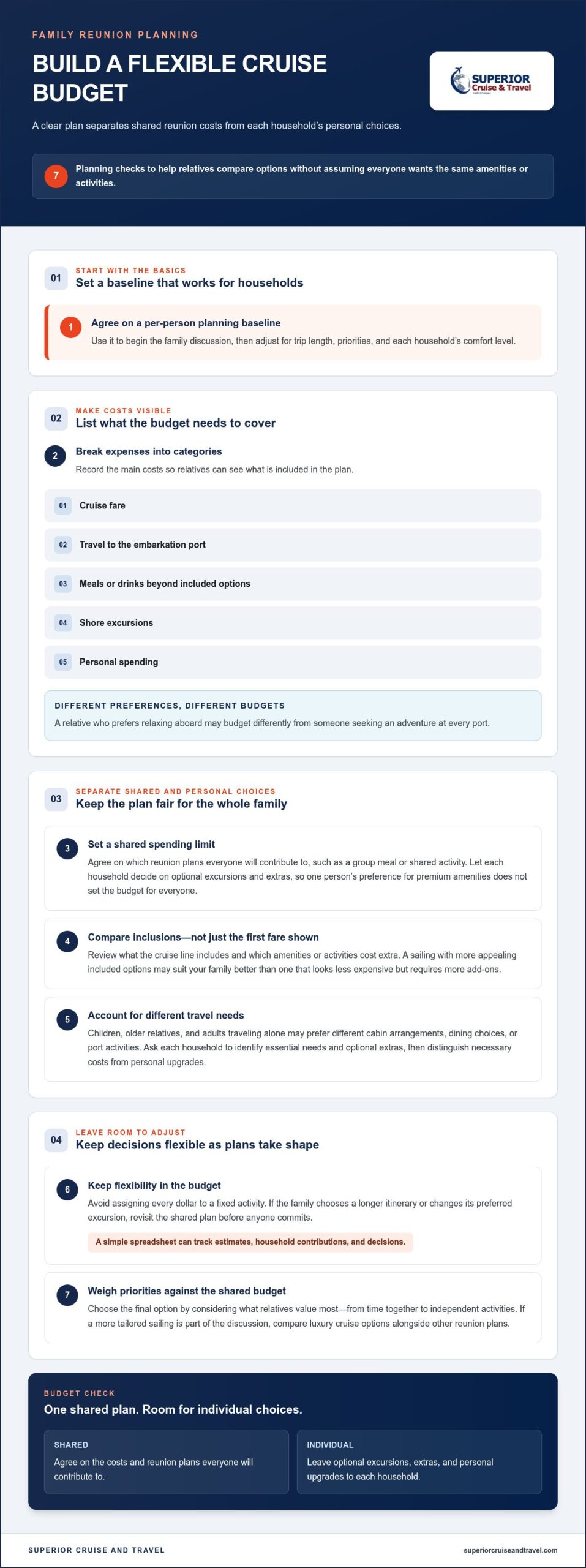
Build the reunion budget around what each household can comfortably spend, then separate shared costs from personal choices. A clear plan helps relatives compare vacation options without assuming everyone wants the same amenities or activities.
- Set a per-person planning baseline before comparing sailings. Use it to start a family discussion, then adjust for trip length, priorities, and each household’s comfort level.
- List expenses by category so relatives can see what the budget covers. Record the cruise fare, travel to the embarkation port, meals or drinks beyond included options, shore excursions, and personal spending. For example, a relative who prefers relaxing aboard may budget differently from someone seeking an adventure at every port.
- Set a shared spending limit while leaving room for individual choices. Agree on which reunion plans everyone will contribute to, such as a group meal or shared activity, then let each household decide on optional excursions and extras. This keeps one person’s preference for premium amenities from setting the budget for the entire family.
- Compare cruise options by their inclusions, not just the fare shown first. Review what the cruise line includes and which amenities or activities cost extra. A sailing with more appealing included options may suit your family better than one that looks less expensive but requires more add-ons.
- Plan for different travel needs within the family. Children, older relatives, and adults traveling alone may prefer different cabin arrangements, dining choices, or port activities. Ask each household to identify essential needs and optional extras, then distinguish necessary costs from personal upgrades.
- Keep some flexibility in the budget instead of assigning every dollar to a fixed activity. If the family chooses a longer itinerary or changes its preferred excursion, revisit the shared plan before anyone commits. A simple spreadsheet can track estimates, household contributions, and decisions in one place.
- Choose the final option by weighing the group’s total priorities against its shared budget. If a more tailored sailing is part of the discussion, explore luxury cruise options alongside other reunion plans. Keep the decision grounded in what relatives value most, from time together to independent activities.
As planning continues, list attendees, set a budget, choose a destination and cruise length, then book. Virgin Voyages recommends setting a family reunion cruise date at least a year in advance, giving households time to compare priorities and coordinate contributions before making shared commitments.
Agreeing on vacation style and destination
Hold a family meeting before comparing destinations. Identify the kind of vacation relatives want, then narrow the choices together.
- Ask each household to describe its ideal reunion day. One family may want a relaxed pace and shared meals, while another prefers active outings and time ashore. Record the answers in a shared document, then look for common priorities rather than expecting every relative to want the same schedule.
- Separate essential preferences from nice-to-have extras. Ask relatives how they want to balance time together, independent activities, and quiet time. For example, a grandparent might prioritize easy access to gathering spaces, while cousins may be eager for an adventure. Use the answers to compare vacation styles.
- Compare destinations by the experiences relatives hope to share. Put Alaska on the shortlist if it appeals to the family, and compare it with other destinations under consideration. Write down what the family wants from each option, such as scenery, cultural visits, or shore excursions. Don’t choose a destination only because one person has visited before.
- Consider how each destination supports the group’s preferred pace. Review the itinerary’s balance of days at sea, port visits, and opportunities to explore independently. A family seeking a quieter reunion may prefer fewer planned outings; relatives hoping for an active vacation may value more excursion options. Discuss these differences before choosing a route.
- Agree on the atmosphere the family wants, including whether a private-feeling gathering matters more than a broad mix of shared activities. Ask relatives what would make the reunion feel personal: a planned meal, a group photo, or time set aside for conversation. Use their answers to identify meaningful priorities and details that can stay flexible.
- Create a shortlist and compare the same criteria for each option: destination, itinerary pace, embarkation convenience, family interests, and independent time. A shared table helps ensure one person doesn’t decide for everyone. Give each household room to explain its preferences, then identify the option that best fits the group overall.
- Once the family agrees, record the decision and its reasons. Note which preferences shaped the choice and which remain optional, such as individual excursions or onboard activities. This makes it easier to revisit the plan without reopening every discussion and gives the next planning steps a clear starting point.
Cruise options for adult family reunions
Compare adult relatives’ destination interests, preferred trip length, and plans for spending time together. Specific itinerary examples can turn broad preferences into practical choices.
- Ask each household what mix of port visits, time aboard, and group activities it prefers. One group may want several destinations, while another prefers a slower pace. Record priorities before comparing sailings. This keeps the reunion inclusive without assuming everyone wants the same schedule or excursions.
- Compare routes by their destinations and sailing length. An Aruba, Curaçao, and Bonaire itinerary runs for 8 nights. Use that example to discuss island visits, travel time, and whether the cruise duration suits relatives’ calendars and vacation preferences.
- Consider a 7-night route visiting Key West, Grand Cayman, and Mexico. Discuss which stops interest the group and whether relatives prefer exploring ashore or enjoying time aboard. Use those answers to identify likely excursion interests without expecting every adult family member to book the same activity.
- Compare another 7-night option, the Bahamas and Mexico Holiday itinerary. Its destination mix gives relatives a different route to consider alongside the Key West, Grand Cayman, and Mexico sailing. Ask the group to rank the destinations, then weigh that ranking against travel arrangements and everyone’s available vacation time.
- Review the 7-night itinerary visiting Puerto Plata and St. Maarten. Ask whether those ports match the group’s interests better than Mexico or the Bahamas. Destination preferences can guide the decision, while separate excursion choices let relatives shape their own days rather than making one plan mandatory.
- Plan a few shared reunion moments, not a full schedule. Choose a meal or gathering as the group’s anchor, then leave room for independent plans. For instance, relatives can meet before an evening show while others spend the day on different excursions or relaxing aboard.
- Make the final comparison with a simple table: itinerary, sailing length, destinations, and group priorities. Include each option’s strongest appeal, such as visits to Mexico or Caribbean islands. Then ask adult relatives to select their preferred route and note any concerns, giving the family a clear basis for its decision.
A Royal Caribbean guest reported attending a family reunion cruise with a group of 50 people. A group on that scale can use an early head count to make planning more manageable: ask who expects to join, collect broad preferences, and identify any needs that could affect shared plans. Keep the process open to relatives who are still deciding, so early choices do not become a barrier to taking part. A designated organizer can gather responses and circulate the options, while households discuss their own travel arrangements.
For a large reunion, agree on a few moments when everyone is invited to gather, and keep the rest of the schedule flexible. Share meeting details clearly, including where to meet and how relatives can get updates if plans change. Let each household choose excursions and onboard activities that suit its interests, without making every group event mandatory. Before finalizing plans, make sure relatives understand the shared arrangements and know which decisions remain individual. This balance helps coordinate the reunion while giving adults room to enjoy the trip their own way.
Selecting sailing dates and cruise duration
Start with the family calendar, then compare sailing lengths with the time relatives can set aside. Choosing a reunion date at least a year ahead gives households time to coordinate schedules and consider itinerary options.
- List important family dates before looking at sailings. January may suit relatives gathering around New Year’s, while May could align with Mother’s Day. June and July offer Father’s Day and Independence Day possibilities. Add work, school, and existing family commitments so the group can compare dates realistically.
- Consider September for a Labor Day reunion, November for Thanksgiving, or December for Christmas. A holiday can make the gathering easier to remember, but may not suit every household. Ask relatives to identify dates they can’t travel, then compare the remaining options rather than assuming one holiday works for everyone.
- Choose the cruise duration by matching travel time with the group’s available vacation days. Sailings can range from 3 to 5 nights to a week or longer. A shorter trip may fit relatives with limited time away, while a longer itinerary allows more days for onboard activities and destination visits.
- Discuss the shortest and longest trip each household can manage before settling on a sailing. Family reunion cruises can be as short as two days, while some last over a week. Compare those options with the group’s schedule and priorities, including how much time relatives want for shared meals, port visits, and rest.
- Review each itinerary’s day-by-day rhythm, not just its total nights. Note when the ship is at sea, when it visits ports, and how those days fit the reunion plans. If relatives want plenty of time together aboard, consider how dining and group activities fit around port calls and independent excursions.
- Keep a first-choice date and a backup in the family’s shared planning document. Record each option’s sailing length, departure port, and itinerary, then ask households to share their preferences. This gives the group a clear comparison and makes the next booking decision easier to coordinate.
- Once the family agrees on timing and duration, explore cruise options for your reunion that fit those priorities. Bring the preferred dates, backup dates, and desired trip length into the planning conversation, so the next step stays focused on the family’s schedule and itinerary.
Superior Cruise and Travel: Luxury Cruises
Superior Cruise and Travel helps families explore luxury cruise options for reunions, from comparing itineraries to considering a chartered cruise ship. Turn to the team when your relatives have chosen a preferred destination, travel dates, and trip style, but want help weighing cruise options. A cruise planner for family reunions can bring those priorities together in a coordinated plan, while the right choice depends on what your family wants from the trip. If a cruise isn’t the best fit, resort vacations offer another way to gather. Families considering an extended voyage can also explore world cruises.
Contact Superior Cruise and Travel to discuss your family reunion plans.
Make the Reunion Plan Your Family’s Own
Before your next planning conversation, invite each household to name one moment it hopes to share. It might be a relaxed meal, a family photo, or simply time together without a packed schedule. These personal intentions give the reunion meaning beyond the travel arrangements and help relatives see themselves in the plan.
Turn the family’s shared vision into a concise planning brief: what matters most, what can stay flexible, and which decisions still need agreement. A cruise planner for family reunions can use those priorities to guide the next conversation and keep the focus on the people gathering, not just the itinerary.
When you’re ready to explore options with a travel professional, contact Superior Cruise and Travel. Start with the kind of reunion your family wants to remember, and let that shared purpose guide the journey ahead.
Frequently Asked Questions
What does a cruise planner do for a family reunion?
A cruise planner turns a family’s shared priorities into an organized trip plan. They can compare itineraries, coordinate booking details, and keep decisions, deadlines, and traveler preferences together. For example, they can help the family decide which arrangements to share and which to leave individual, such as optional excursions. A cruise planner for family reunions can also make complex group decisions easier to communicate across households.
Which cruise lines are best for family reunion groups?
No single cruise line suits every reunion; choose based on the group’s priorities. Compare itineraries, embarkation ports, onboard activities, dining arrangements, accessibility features, and group booking terms. Relatives who value destination visits, for example, may prefer a different sailing from those who want more time aboard. Focus on the ship and route that match the family’s travel style, not the brand name alone.
How do you find and verify a reputable cruise planner or travel agent?
Choose a cruise planner who explains terms clearly, provides written details, and keeps group decisions easy to follow.