
A great cruise advisor turns a long list of ships, routes, and cabin choices into a trip that fits your priorities. Cruise consultant services can include matching you with a sailing, arranging the cruise, and coordinating hotels, tours, transportation, or a custom itinerary around it. The cruise-line commission is built into the fare whether you book through an advisor or directly, so the fare does not change based on that choice.
It’s reasonable to want more than a reservation. Clear guidance can help you compare options and understand the details before you set sail. A skilled advisor listens first, explains the trade-offs, and keeps the planning focused on the experience you want.
This article explains the knowledge and service that distinguish a strong cruise advisor, how cruise bookings work, and what travelers value in consultant support. You’ll also learn how Superior Cruise and Travel’s cruise offerings can fit into a more involved vacation plan.
Key Takeaways
- Look for an advisor who understands your travel priorities and can explain the trade-offs between cruise options clearly.
- Learn the main steps in a cruise booking, from sharing your preferences to reviewing the reservation details.
- Use client testimonials to understand what travelers value in consultant support and how that support shaped their planning experience.
- Compare ships and itineraries by considering the onboard experience, destinations, schedule, and what matters most to your group.
- Prepare your travel dates, preferences, and practical needs to help a consultant shape a cruise plan that feels right for you.
Cruise advisor skills and expertise
A skilled cruise advisor connects your priorities with practical booking choices. Strong guidance combines destination knowledge, careful comparisons, and clear explanations at each planning step.
Experienced Travel Agent Guidance
Travel agents draw on booking knowledge to explain how a cruise fits your wider trip. They can coordinate hotels, tours, transportation, and custom itineraries alongside cruise reservations. That can be especially useful when your sailing includes a pre-cruise stay or several destinations.
In the United States, cruise travel advisors don’t need a degree or certification to start. To assess experience, ask for specific examples of how an advisor handles itinerary trade-offs, cabin preferences, or changes to a travel plan. A thoughtful answer connects your priorities to practical options instead of simply reciting ship features.
Notice the planning process. An advisor should first understand your preferred pace and destinations, then explain choices in straightforward terms. For example, a traveler who wants extra time ashore may prefer a different itinerary from someone focused on onboard activities. Clear reasoning helps you see why a recommendation fits.
Cruise Option Comparisons
Good comparisons look beyond a cruise line’s name. An advisor can weigh the ship’s atmosphere, itinerary, port schedule, and onboard experience against your preferences. For example, compare how much time each sailing allows in port and whether its route matches your destination priorities.
Ask about the differences that affect your decision. These may include cabin location, included features, departure dates, and the terms attached to each option. Compare prices on the same basis, such as matching travel dates and comparable cabin categories. That makes the trade-offs easier to understand.
A useful recommendation explains what you gain and give up with each choice. A sailing with your preferred route may have a different schedule from one that offers more time onboard. When an advisor lays out those distinctions, you can choose based on your priorities rather than the headline fare alone.
Support for Different Traveler Needs
Yes. A cruise consultant can help special-needs travelers, families, groups, and first-time cruisers organize their priorities and compare trip details. Share your needs early so the planning conversation can focus on relevant questions and logistics.
For families, discuss sleeping arrangements, daily routines, and activities that matter to each traveler. For a group, identify shared priorities, preferred dates, and where individual preferences may differ. These details help an advisor structure comparisons around the people traveling, rather than choosing a cruise based on destination alone.
First-time cruisers can benefit from a step-by-step explanation of booking choices, including itinerary, cabin category, and what to review before confirming. Travelers with special needs can describe their requirements and ask how those details affect planning. An advisor can help organize the discussion around those needs, while the cruise line’s own information guides specific onboard arrangements.
Bring your questions and priorities to the first discussion. A clear list helps an experienced agent turn broad ideas into a focused set of cruise options and explain the reasoning behind each recommendation.
How cruise bookings work
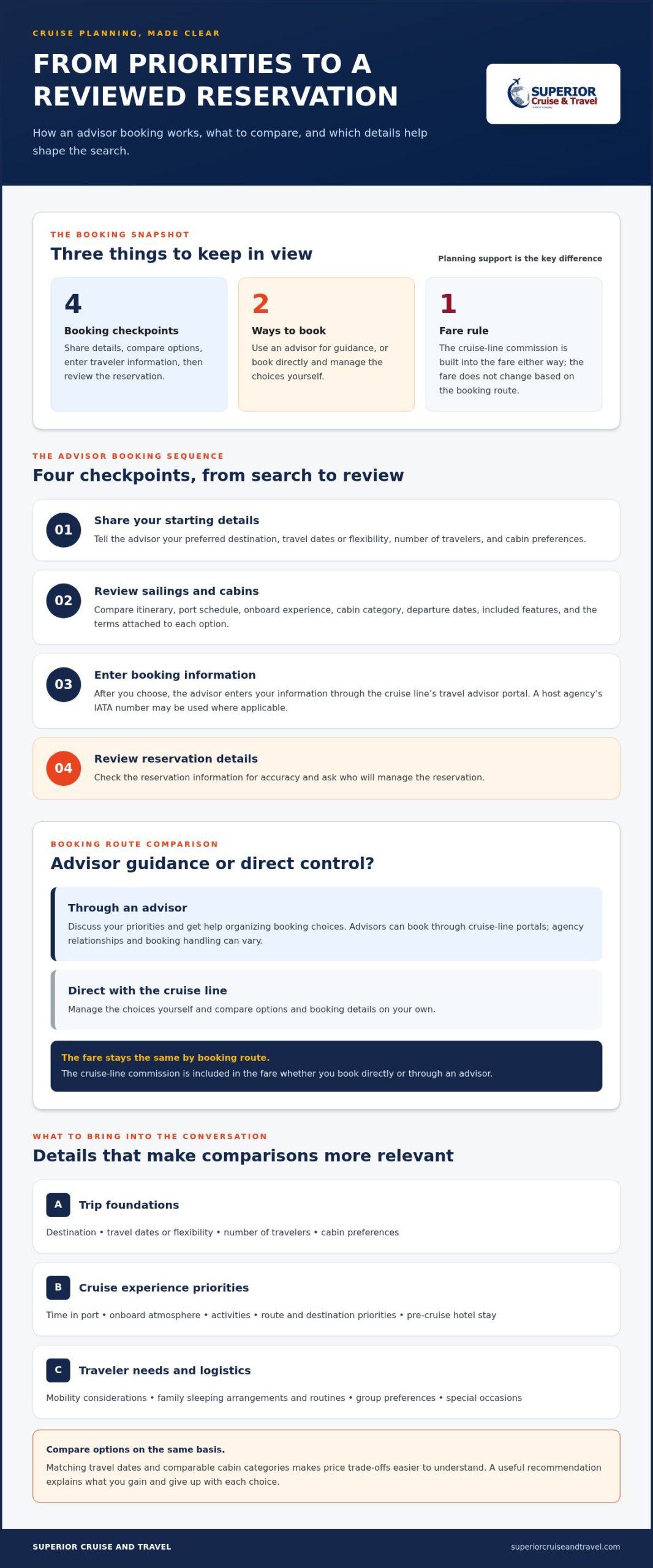
Using an advisor brings guidance, while booking directly lets you manage the choices yourself. The cruise-line commission is built into the fare either way. Advisors can book through cruise-line portals, and agency relationships may differ; a host-agency booking can use its IATA number.
Consultant and Direct Booking Trade-Offs
With an advisor, you can discuss your priorities and get help organizing booking choices. Booking directly gives you control of each step, but leaves you to compare options and manage the details yourself.
Either route can lead to a cruise-line reservation. Because the commission is included in the fare whether you book directly or through an advisor, focus on the planning support you want rather than an added advisor charge.
An advisor booking typically follows a clear sequence. First, share your preferred destination, dates, and travel party. Next, review sailing and cabin options together. Once you choose, the advisor enters your information through the cruise line’s travel advisor portal, using the host agency’s IATA number where applicable. Then review the reservation details for accuracy.
Planning Information to Provide
Start with the details that shape the search: destination, travel dates or flexibility, number of travelers, and cabin preferences. Add priorities such as time in port, onboard atmosphere, or a pre-cruise hotel stay. For example, someone with flexible dates can consider more sailings than someone tied to one departure day.
Share practical needs early, including mobility considerations, family arrangements, group preferences, or special occasions. These details help the advisor focus the search and explain relevant differences before you select a sailing.
Advisor relationships vary. Some bookings go through a cruise line’s travel advisor portal, where the advisor enters traveler details and the host agency’s IATA number. This process doesn’t mean the advisor represents only one cruise line. Ask how your booking will be handled and who will manage the reservation.
Work schedules can also shape how an advisor builds a business. New cruise advisors often begin part-time, then continue as a side business or grow toward full-time work as their client base develops. For travelers, this is a reminder to establish how planning and follow-up will fit your needs.
Before confirming, compare the itinerary, cabin category, dates, and reservation details side by side. If you want help shaping a more tailored cruise plan, explore luxury cruise planning.
Consultant testimonials
Testimonials can show how an advisor supports travelers beyond selecting a sailing. Look for concrete details, such as help comparing cabin options, coordinating a hotel stay, or explaining reservation steps. A useful review describes what the traveler needed and what the advisor did, rather than relying only on broad praise.
Look for examples that resemble your own trip. A first-time cruiser may value clear explanations of embarkation and cabin choices, while a family may focus on coordinating different preferences. Reviews describing a specific planning challenge help you judge whether the advisor’s approach matches the support you want.
What a Helpful Review Reveals
Notice the actions behind the praise. Did the advisor listen to the traveler’s priorities, explain why one itinerary fit better, or keep details organized? For example, a review about comparing departure dates gives more useful context than a simple statement that booking felt easy.
Pay attention to communication details, too. A traveler might mention receiving a clear explanation of a cabin category or knowing what information to provide before confirming. These examples show how an advisor makes decisions understandable, especially when cruise options appear similar.
Read Testimonials in Context
Compare reviews across different trip types and planning needs. A review about a large group may reveal a different kind of support from one about a couple’s getaway. Look for consistent descriptions of responsiveness, clear explanations, and attention to travelers’ stated priorities.
Check whether a review explains both the outcome and the process. “The itinerary suited our port preferences” gives a reason for the traveler’s satisfaction. “Everything was perfect” expresses enthusiasm, but says little about the advisor’s contribution or how the trip was planned.
Use testimonials as one input, not a substitute for a useful planning conversation. Bring a review’s specific point into your discussion: if a traveler praised help with cabin selection, ask how cabin location affects your priorities. The advisor’s explanation can show whether that careful reasoning applies to your plans.
Separate Useful Detail from General Praise
Give more weight to reviews that describe a real planning task, such as coordinating a pre-cruise hotel with sailing dates. That detail helps you assess the service. Broad compliments can still reflect a positive experience, but they don’t explain what happened during booking.
Finally, consider the reviewer’s perspective. A traveler who values quiet evenings may judge a ship differently from someone seeking lively onboard activities. Read each testimonial alongside the reviewer’s priorities, then identify which details matter to your own trip. This keeps other travelers’ preferences from becoming assumptions about yours.
How do cruise consultants compare cruise lines, ships, itineraries, and prices?
A consultant starts with your priorities, then compares sailings on a consistent basis. The key is to understand what each option includes and how it fits your travel plans.
Start with Your Priorities
First, identify what matters most: destination, onboard atmosphere, time ashore, or cabin comfort. A traveler seeking quiet days at sea may value different features from someone eager to explore ports. This gives the comparison a practical focus.
Next, separate essential preferences from flexible ones. If your departure date is fixed, the search centers on that sailing window. If your dates can shift, the consultant can compare more itineraries and explain the differences that matter to you.
Compare Cruise Lines and Ships
Cruise lines and ships can offer different onboard experiences. A consultant can compare dining, entertainment, public spaces, and the general pace of a voyage against your preferences. For example, travelers who prioritize calm evenings may weigh onboard entertainment differently from guests seeking a lively schedule.
Ship details matter, too. Compare cabin categories and locations, including access to the areas you expect to use. A traveler who values easy access to dining may prefer a different cabin location from someone prioritizing a quieter setting. A useful comparison explains the trade-offs, not just the ship’s headline features.
Assess Itineraries and Port Time
Review each itinerary stop by stop. Compare arrival and departure times, the sequence of destinations, and how much time the schedule allows ashore. For example, a sailing that visits a preferred port may offer a shorter stay there than another route.
Consider the whole travel plan, too. A departure city, hotel stay, or transfer can affect how smoothly the cruise fits your schedule. If you want to spend time in a city before embarkation, comparing the sailing alongside that stay gives a more useful picture than looking at ports alone.
Make Price Comparisons Fair
Compare like with like: the same dates, similar cabin categories, and the same number of travelers. Then review what each quoted fare includes, such as listed onboard amenities or other components. A lower headline fare may not represent the same overall package, so the details matter.
The total depends on the sailing, cabin selection, travel dates, and included features. Ask the consultant to explain how those factors affect each option and present the quote terms clearly. That lets you weigh the overall value without assuming the lowest figure is automatically best.
Finally, ask for the reasoning behind the recommendation. A useful comparison connects a specific ship, itinerary, and cabin choice to your priorities. If a port visit matters most, the consultant should show how each route serves that goal and what you trade off elsewhere.
What information should I provide when planning a cruise with a consultant?
Start with your destination ideas, preferred travel dates, and who’s traveling. Specific examples, such as wanting quiet sea days or longer port visits, help shape a useful search.
Share Your Travel Priorities
Separate must-haves from preferences. A fixed departure date narrows the sailing options, while flexible dates can open up different routes. Name the destinations you’re drawn to and any ports you especially want to visit. If you’re unsure of the route, describe the experience you have in mind, such as exploring several cities or spending more time onboard.
Explain what matters aboard the ship. You might prioritize dining choices, entertainment, a quieter atmosphere, or easy access to particular public spaces. If cabin comfort matters, describe your preferences for location and category. These details help the consultant compare options based on your daily experience, not just the ship’s name.
Describe Your Travel Party
Give the number of travelers and explain how they’re connected, such as a family, couple, or group of friends. Share preferences that could affect the plan: a family may need sleeping arrangements that work for everyone, while a group may have different ideas about ports and onboard activities.
Mention special needs or mobility considerations early. You don’t need every answer before the conversation begins. A clear description of the practical need helps focus the planning discussion and identify which details deserve closer attention.
Include Trip Logistics
Tell the consultant where you’d like to depart from and whether you’re considering a hotel stay before or after the sailing. For example, if you want to arrive in the departure city ahead of embarkation, include that in your trip outline. Share any schedule limits that affect your travel dates or departure choices.
Explain your preferred pace and priorities for time ashore. Someone hoping to visit museums may value different port days from a traveler seeking relaxed beach time. If a special occasion is part of the trip, mention it so the proposed itinerary reflects that purpose.
Prepare for the Booking Conversation
Before the discussion, gather travelers’ names as they should appear on reservation records, along with your current preferences and questions. Keep personal details secure and provide booking information through the appropriate process. Before a reservation is finalized, carefully review the selected sailing, cabin, dates, and traveler information.
Use your notes to distinguish firm requirements from open choices. A concise list helps the consultant explain relevant options without losing sight of your priorities. To put those preferences toward a tailored sailing, plan your cruise with an advisor.
Superior Cruise and Travel: Luxury Cruises
Superior Cruise and Travel helps travelers explore luxury cruises and choose an experience suited to their plans. Turn to the agency when comparing a sailing, considering an extended voyage, or planning a trip for a larger group. Its offerings include luxury cruises, chartered cruise ships, world cruises, and resort vacations.
For example, a traveler weighing a traditional cruise against a world voyage can discuss which journey better matches their preferred pace and destinations. Those planning a shared celebration or event can explore a chartered ship. Bring your priorities, preferred destinations, and important dates to focus the conversation.
For a welcoming next step, contact Superior Cruise and Travel or visit superiorcruiseandtravel.com to discuss your travel plans.
Give Your Next Voyage a Clear Direction
The best next step is to turn your ideas into a brief that reflects how you want to travel. Think about the feeling you want to bring home, the destinations that draw you in, and how much planning you’d like help coordinating. Those priorities can guide a conversation about cruise consultant services and help make the options feel more personal.
Superior Cruise and Travel offers luxury cruises, chartered cruise ships, and world cruises for travelers considering different ways to experience a voyage. Whether you’re imagining a special sailing, a ship planned around a group, or a longer journey, start with what matters most to you. A thoughtful conversation can give your plans direction without rushing your decision.
Contact Superior Cruise and Travel to discuss the kind of cruise you have in mind. Your next journey can begin with a simple idea and a clear first step.
Frequently Asked Questions
What makes a great cruise advisor?
A great cruise advisor listens carefully, explains choices clearly, and connects recommendations to your priorities. In an initial conversation, notice whether they ask about your preferred pace, destination interests, and onboard expectations before suggesting a sailing. You should understand why an option fits, what trade-offs it involves, and which details you’ll need to decide. Clear, specific explanations are more useful than broad promises.
What types of cruises can I book?
You can explore options such as luxury cruises, chartered cruise ships, world cruises, and grand voyages. The right format depends on the journey you’re planning. For example, a chartered ship may suit a group seeking a shared voyage, while a world cruise offers an extended itinerary. You can also consider private yachts for a different style of cruise experience. Compare the journey’s purpose and pace before choosing.
What services does a cruise consultant provide?
A cruise consultant can help match your preferences to a sailing and coordinate trip elements around it. Depending on your plans, that can include hotels, transportation, tours, and a custom itinerary alongside the cruise. For example, a traveler who wants to explore the departure city before embarkation can discuss how those arrangements fit the overall trip. The value of cruise consultant services is having the separate choices considered together.
Are cruise consultant services free, and how do they earn commissions?
Using an advisor doesn’t add a separate charge to the cruise fare. Cruise-line commission is built into the fare whether a traveler books directly or through an advisor. Cruise travel agents typically earn commissions of 10-20% of the cruise fare, with the rate varying by cruise line and agency relationship. If you’re comparing booking routes, focus on the planning support you want and the reservation details you receive.
Can a cruise consultant book shore excursions, flights, hotels, and travel insurance?
Consultants can coordinate hotels, tours, transportation, and custom itineraries alongside cruise arrangements. Shore excursions may be planned as part of those trip components. Travel protection is a separate consideration: Superior Cruise and Travel offers travel protection for multi-component travel experiences, but doesn’t underwrite travel insurance. If you’re planning a cruise with a hotel stay and excursions, bring all those elements into the same planning conversation.
How do I choose a reputable cruise consultant or travel agency?
Choose an advisor who explains recommendations clearly and provides specific booking details for you to review. Look for reviews describing actual planning experiences, not only general praise. Ask how the advisor communicates reservation information and who handles booking requests. You can also review an agency’s public accreditation and ratings, then compare those signals with the clarity and care you experience during your own planning discussion.
Can a cruise consultant change or cancel a booking and help resolve problems?
A consultant can help submit a change or cancellation request and communicate with the cruise line about a booking issue. The cruise line applies the terms attached to the reservation, so review those terms before confirming and keep your booking documents accessible. If a problem arises, gather the reservation details and a concise description of the issue. That gives the consultant clear information to relay and helps keep the discussion focused.