
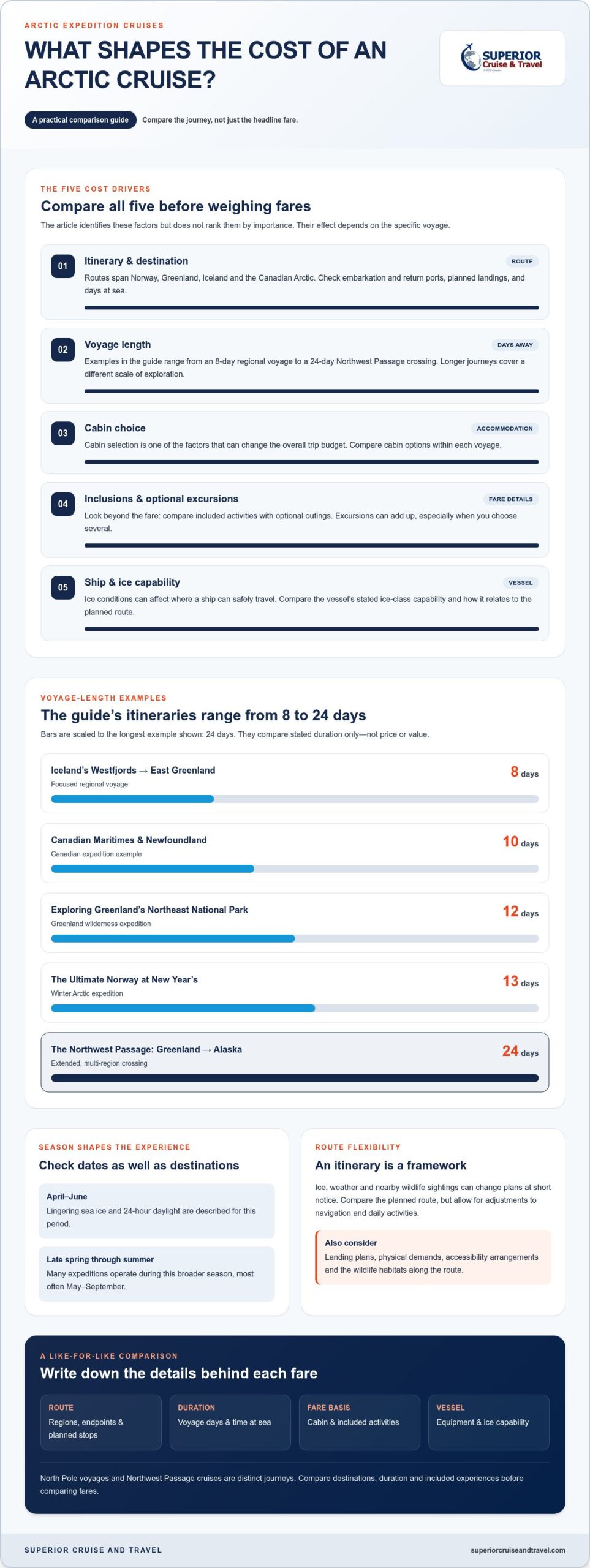
The cost of expedition cruises to the Arctic depends on the itinerary, voyage length, cabin, inclusions, and ship. Trips can vary widely in duration: itineraries include an 8-day voyage from Iceland’s Westfjords to East Greenland and a 24-day Northwest Passage crossing from Greenland to Alaska. The vessel matters, too, because ice conditions can affect where a cruise can safely travel.
Look beyond the headline fare: what’s included and how the ship is equipped can shape the experience as much as the route. This guide covers key cost factors, typical itinerary lengths and destinations, wildlife you may encounter, and what ice-capable ships mean for an Arctic voyage. Use it to compare options and find a journey that fits your priorities.
Key Takeaways
- Compare Arctic routes by the regions they visit and the time you want to spend exploring, not by trip length alone.
- Look beyond the fare to understand how cabin choice, inclusions, and optional excursions affect the overall trip budget.
- Set wildlife expectations around the places on your itinerary, while allowing for plans to shift with ice, weather, and sightings.
- Learn what a ship’s ice-class capability means for its route options and how it differs from a general claim that a vessel can navigate ice.
- Use your priorities for comfort, exploration, and flexibility to narrow down the cruise that suits you.
Arctic cruise destinations and itineraries
Expedition cruises to the Arctic connect destinations across Norway, Greenland, Iceland, and the Canadian Arctic. Routes range from coastal voyages to remote, multi-region crossings, so start by matching the destination to your interests. An 8-day itinerary can travel from Iceland’s Westfjords to East Greenland, while Exploring Greenland’s Northeast National Park lasts 12 days. These examples show how a focused regional voyage differs from a longer wilderness expedition.
Norway offers a distinct winter itinerary, including The Ultimate Norway at New Year’s Arctic expedition cruise, which lasts 13 days. A route may combine coastal scenery and fjords, with Lyngenfjord stretching about 50 miles. The season and route shape the experience: Arctic cruises described for April through June bring lingering sea ice and 24-hour daylight, while many expeditions operate from late spring through summer, most often May through September. Look at both the sailing dates and the places visited before choosing.
For a wider journey, The Northwest Passage: Greenland to Alaska lasts 24 days. Other options include a 10-day Canadian Maritimes and Newfoundland expedition, or voyages around Svalbard focused on Arctic wildlife. Compare itineraries by their embarkation and return ports, days at sea, and planned landings. Arctic expedition cruise itineraries can change at short notice because of ice, weather, and nearby wildlife sightings, so the route is a framework rather than a fixed sequence of stops.
Physical demands depend on the planned activities and landing conditions. Shore visits may involve uneven ground, outdoor walks, and boarding small landing craft. Accessibility arrangements vary by ship and itinerary, so compare the planned activities with your mobility and fitness needs before choosing a voyage.
Ice, weather, and wildlife can affect navigation and daily plans. Follow expedition staff instructions during landings, keep the recommended distance from wildlife, and respect local environmental guidance. These practices help protect both visitors and fragile Arctic habitats.
For travel documents and flights, map every country and port on your itinerary, including Norway, Greenland, or Canada. Passport and visa requirements depend on your nationality and route. Arrange flights to the named embarkation port and leave time for connections.
Wildlife varies by destination. Svalbard is known for polar bears, reindeer, and Arctic foxes, while Greenland and the Canadian Arctic have different coastal and marine habitats. The Arctic is also home to a couple hundred bird species, so bring binoculars and follow your guide’s instructions during sightings.
Pack for changing conditions with insulating layers, merino wool base layers, waterproof outer pants, a warm parka, and sturdy boots suited to Arctic weather. Keep gloves and a hat handy for time on deck and shore landings. Check the itinerary’s activity plan, and organize clothing so you can add or remove layers as conditions change.
How Much is a Cruise to the North Pole?
A North Pole voyage and a Northwest Passage cruise are distinct journeys, with different routes and costs. Compare the destination, duration, and included experiences before weighing the headline fare.
Northwest Passage Cruises
A Northwest Passage cruise crosses the Canadian High Arctic, connecting Greenland and Alaska through a remote island region. Check the route’s endpoints, planned stops, and time at sea to understand what this extended journey covers.
The route has a long history. The idea of a maritime passage through northern Canada linking the Atlantic and Pacific was formulated in 1497; Roald Amundsen completed the crossing in 1906. Inuit communities across Greenland, Alaska, and Canada have perpetuated their traditions for over 4,000 years. Give cultural experiences and community visits careful attention when comparing itineraries.
Weather and ice shape passage plans, so an itinerary can change as conditions develop. April through June brings lingering sea ice and 24-hour daylight, a very different setting from a voyage timed around northern lights. For example, Northern Lights & Wild Isles: Iceland, Greenland to Scotland is scheduled for September 2028. These routes serve different travel priorities, so compare the season and destinations rather than treating them as interchangeable.
North Pole Cruise Costs
Treat these as distinct trip types, not directly comparable fares. An expedition’s cost depends on its destination, duration, and what the fare includes.
Budget beyond the cruise fare, too. Excursions can add up, especially when you choose several, so compare included activities with optional outings before setting your budget.
For a practical comparison, note each option’s route, voyage length, fare basis, and included activities. Separate North Pole voyages from Northwest Passage crossings, then check whether additional excursions fit your plans. This makes it easier to weigh the cost against the journey you actually want.
Arctic wildlife
Wildlife viewing varies by destination, season, and the habitats visited. Compare locations and landing plans, bring binoculars, and follow expedition staff guidance during encounters.
Whales and Polar Bears
The Arctic polar bear population is estimated at 20,000 individuals. That figure describes the wider Arctic, not the number visible on any particular voyage. Polar bear viewing depends on where a ship travels and what conditions are like along its route.
Whales may also be a highlight in Arctic waters. Check which marine habitats the itinerary visits and whether it allows time for wildlife watching from the deck or a Zodiac. A quiet approach and patience help you observe animals without crowding them.
Follow the expedition team’s instructions whenever wildlife appears. Keep a respectful distance, stay with the group during shore visits, and never draw animals closer with food or noise. These choices support safer viewing and protect wildlife.
Svalbard Wildlife and Landscapes
Svalbard combines rugged Arctic landscapes with wildlife adapted to a stark environment. On Spitsbergen, reindeer and Arctic foxes are the only other terrestrial mammals that share polar bear territory. The wider Arctic is also home to a couple hundred bird species, making coastal cliffs and shorelines rewarding places to watch for birdlife.
Compare Svalbard itineraries by their planned sailing areas and opportunities to explore from the ship. Some days may focus on distant scenery viewed from the deck; others may include Zodiac outings or guided shore visits. The route’s variety matters as much as its wildlife focus, especially if you want time for both landscapes and animal watching.
Bring binoculars and keep your camera ready, but take in your surroundings before framing a shot. Along Svalbard’s exposed coast, changing light can make distant animals easier to spot one moment and harder the next.
Wildlife and Nature Landings
Nature landings take travelers ashore in small groups, often by Zodiac from the expedition ship. The landing site determines what you can explore, from coastal terrain to bird habitat, while local conditions affect how long you stay ashore.
Before leaving the ship, listen to the landing briefing, dress for wind and wet ground, and carry only what you can manage comfortably. Follow your guide’s route and instructions around wildlife. Staying together helps everyone remain aware of animals and terrain.
Arctic itineraries can change at short notice because of ice, weather, and nearby wildlife sightings. Treat each landing as one part of a flexible journey, and compare itineraries by their balance of Zodiac excursions, shore exploration, and wildlife viewing from the ship.
Voyage durations and starting prices
Arctic expedition fares and voyage lengths vary by route, cabin, and inclusions. To compare options, match each starting price with its duration and destination, then review which costs are extra.
Arctic Cruise Price Ranges
That range is a useful starting point, not a like-for-like comparison: a shorter Iceland voyage and a longer Greenland expedition visit different regions and offer different experiences.
Examples show how starting prices vary. Compare the cabin basis and inclusions alongside each fare.
Voyage Duration Options
Voyages range from focused regional trips to extended crossings.
Compare days aboard with the regions visited, not just the fare.
How much do Arctic expedition cruises cost, and what is usually included? Inclusions vary by voyage, so compare the fare’s stated components and optional extras before setting your budget.
Use this practical comparison when reviewing options:
- Match the trip length to your plans. A 10-day Svalbard itinerary differs from a 17-day Greenland-to-Newfoundland journey.
- Compare the same fare basis.
- Separate included items from extras. Excursions, onboard services, and other trip components can affect the total.
- Consider the destination. Iceland, Greenland, Svalbard, and Baffin Island offer distinct routes and landscapes.
An expedition team can also shape the experience through its planned activities and daily schedule. If the northern lights are a priority, compare the itinerary’s season and route; the Northern Lights & Wild Isles: Iceland, Greenland to Scotland cruise is scheduled for September 2028. Choose a voyage whose length, destination, and fare structure align with the experience you want.
Arctic expedition ships and ice-class capabilities
Itinerary, vessel size, and onboard activities shape the Arctic experience in different ways. Compare each ship’s ice capability with its route before choosing a voyage through fjords, past icebergs, or into remote waters.
Ice-Class Capabilities
Ice class describes a vessel’s capability to operate in ice conditions. It doesn’t automatically mean the ship can break through thick ice, or that every ice-class ship can follow the same route. The key question is whether the vessel’s stated capability suits the itinerary’s waters and planned season.
Compare the ship’s ice-class designation with its operating limits and itinerary. Consider how its capabilities relate to expected ice conditions along the route, including narrow fjords or waters near icebergs. A ship’s ability to navigate ice affects where it can travel, but ice, weather, and wildlife can still change plans at short notice.
For a useful comparison, consider the vessel and its intended route together. A journey through open coastal waters may call for different capabilities than a route through ice-prone channels. Look for a clear match between the ship’s specifications and the destinations, rather than treating “ice-capable” as a complete description.
Ship Size and Onboard Experience
Passenger capacity also shapes expedition days. Passenger capacity varies across Arctic expedition ships and luxury offerings. Arctic expedition ships usually carry fewer than 150 guests as well, illustrating the range of vessel sizes travelers may encounter.
A smaller passenger group can mean a different rhythm for briefings, landings, and time on deck. Compare the ship’s capacity with its planned activities, including Zodiac outings and guided shore visits. The itinerary and landing approach explain how guests spend time beyond the ship.
The onboard experience matters between landings. Consider the balance of expedition briefings, observation opportunities, and leisure time, and whether it suits your preferred pace. If you’re drawn to polar bears or iceberg-filled waters, check whether the itinerary allows time for wildlife observation from the deck as well as shore activities.
Use this three-step comparison:
- Match ice capability to route. Compare the ship’s stated ice limits with the itinerary’s waters and season.
- Compare passenger capacity. Relate the guest count to the planned landing and Zodiac activities.
- Review the daily experience. Check how the schedule balances briefings, wildlife watching, and time ashore.
For help comparing vessels and itineraries, explore Arctic cruise options with your preferred route and onboard experience in mind.
Superior Cruise and Travel: Luxury Cruises
Superior Cruise and Travel can help you shape a luxury cruise plan around your travel priorities. Once you’ve narrowed down preferred regions, ship size, ice capability, and onboard style, its luxury cruise offering provides a natural next step for considering the experience you want. Chartered cruise ships may suit travelers planning a group voyage, while world cruises offer a different kind of extended journey. Your preferred route, pace, and onboard experience can guide the planning conversation. A clear shortlist makes it easier to focus on the details that matter most. Contact Superior Cruise and Travel or visit superiorcruiseandtravel.com to discuss your cruise plans.
Shape Your Next Arctic Journey
Planning expedition cruises to the Arctic starts with deciding how you want the journey to feel: exploratory, comfortably paced, or part of a larger travel occasion. That preference can guide your planning and help turn a long list of possibilities into a trip shaped around what matters to you. Keep your travel style, companions, and broader plans in view as you move from research to planning.
Superior Cruise and Travel offers luxury cruises, chartered cruise ships, and world cruises, giving travelers different ways to consider a cruise-led holiday. If you’re planning an Arctic journey alongside another major trip, bring those priorities into one conversation so the overall experience feels coherent. Contact Superior Cruise and Travel to discuss the kind of journey you have in mind. A thoughtful plan is a promising beginning.
Frequently Asked Questions
How Much Does It Cost to Go to the Arctic?
Treat these figures as planning context, then compare the specific itinerary, cabin basis, and fare inclusions. Your total budget also depends on extras such as optional excursions and travel to the departure port.
What’s included?
Inclusions depend on the cruise and fare, so compare each itinerary’s terms before booking. Look for a clear breakdown of accommodation, meals, expedition activities, shore visits, and transport arrangements. Then identify any additional costs, such as optional excursions or onboard purchases. If a landing or guided outing is central to your plans, confirm whether it’s part of the scheduled program or an optional addition.
Who is AECO and why is it important?
AECO is the Association of Arctic Expedition Cruise Operators, established by eight operators in 2003. It is an industry association connected with expedition cruising in the Arctic. For travelers, its name can provide context when comparing operators, but it shouldn’t replace a close look at an itinerary. Consider how the voyage approaches visitor conduct, wildlife encounters, and local communities, and how expedition staff brief guests before activities ashore.
What Arctic regions and destinations do expedition cruises visit?
Expedition itineraries visit destinations including Svalbard, Greenland, Iceland, Norway, and the Canadian Arctic. Some journeys focus on one region, while others connect several, such as Greenland and Newfoundland or Iceland and East Greenland. Alaska also features on Northwest Passage itineraries. Compare departure and return ports, planned landing areas, and time at sea to understand how each route explores the Arctic.
When is the best time of year to take an Arctic expedition cruise?
Arctic expeditions most often operate from May through September, with the right timing depending on your priorities. April through June brings lingering sea ice and 24-hour daylight, while a September itinerary may suit travelers interested in northern lights. Match the sailing dates to the experience you want, then consider how seasonal ice, weather, and daylight influence the route and planned activities.
Which cruise lines and ships offer Arctic expedition cruises?
Specialist expedition operators sail Arctic routes aboard ships designed for expedition travel, but the vessel matters as much as the operator. Compare the named ship’s ice-class capability with its planned route, and consider passenger capacity, Zodiac access, and onboard activities. A ship suited to coastal exploration may not have the same capabilities as one intended for ice-prone waters, so assess the vessel and itinerary together.
How far in advance should travelers book an Arctic expedition cruise?
Book when your preferred route, travel dates, and cabin needs align, since these choices determine which departures suit you. A popular itinerary or specific cabin preference can narrow the options as bookings progress. Start by comparing routes and sailing seasons, then coordinate flights around the departure port. Base your decision on the journey you want, rather than choosing a sailing date first and adapting everything else.
What are the physical fitness, age, and accessibility requirements for Arctic cruises?
Physical demands depend on the activities and landing conditions; shore visits may involve uneven ground, outdoor walks, and boarding small landing craft. Age and accessibility arrangements vary by ship and itinerary, so compare the planned activities with your mobility and fitness needs.