
The client experience starts before the meeting, often with the journey there. To impress clients with corporate travel, make transportation part of the welcome: clear arrangements, comfortable timing, and a straightforward route set a thoughtful tone before business begins.
It’s easy to focus on the meeting agenda and treat travel logistics as background. But a confusing pickup, transfer, or event arrival can distract from the conversation you’ve worked hard to arrange. Thoughtful planning brings the practical details together and gives clients more room to feel welcome and at ease.
This guide covers how to coordinate transportation for corporate events, tailor hospitality to clients, and make business travel marketing more relevant. It also shows how event logistics and thoughtful experiences can support a polished visit without losing sight of its purpose.
Key Takeaways
- Plan transportation as part of the client welcome, with clear arrival details and routes that make the visit feel considered from the start.
- For large corporate events with multiple passengers and vehicles, arrange transportation at least one to two weeks in advance.
- Shape travel information around corporate policies, preferred accommodations, and the sustainability priorities of decision-makers.
- Make hospitality personal by choosing comfortable settings and experiences that help clients feel welcome beyond the meeting room.
- Connect event logistics and travel experiences to the purpose of the visit so every detail supports a more valuable client relationship.
1. How corporate transportation shapes client first impressions
In the United States, business travel and client entertainment are not automatically deductible just because they happen during a work trip. Document each expense’s business purpose, date, participants, and amount, then classify it under the applicable tax rules.
Transportation is part of the client’s experience, not just a way to reach the meeting. To impress clients with corporate travel, make arrival details clear, comfortable, and easy to follow. A visitor at an unfamiliar airport benefits from a named pickup point and a transfer timed to the meeting. Sharing the driver’s name and vehicle location in advance can prevent confusion at the curb after a flight.
Build the itinerary around the client’s actual arrival details. If flights land at different times, arrange separate pickups or a shared departure that gives everyone a comfortable arrival. Leave time between arrival and the first meeting, especially when travelers need to collect luggage or cross a busy airport. A calm arrival gives hosts and guests more room to begin the conversation naturally.
Make booking choices consistent with company policy. Some policies specify which airlines employees may use, while others direct travelers to an internal booking platform. When a company platform is available, booking through it helps keep reservations together and supports policy compliance. Before confirming a client’s itinerary, align the flight, ground transport, and meeting location in one clear schedule.
Prepare a simple arrival plan that answers practical questions without requiring the guest to chase details. Include the pickup location, destination address, meeting time, and a contact person. If a flight is delayed by 30 minutes, the transportation plan may need adjustment. A designated host can follow the updated arrival time and communicate the revised pickup arrangement promptly.
Company spending rules also shape travel decisions. Review the approved budget and reimbursement requirements before booking, then keep receipts for relevant costs. For a client dinner, record the attendees and business purpose alongside the receipt. Separating personal spending from business expenses makes reporting clearer and supports accurate tax classification.
Personal time requires the same care. A bleisure trip combines business travel with leisure, but employees should follow company policy when adding personal days. Keep business and personal bookings distinct where practical, and document which costs relate to each part of the itinerary. Clear records help the traveler, finance team, and client-facing host understand the arrangements.
Thoughtful transportation planning shows in small details: an easy-to-find pickup, a sensible route, and a schedule that respects the client’s time. Companies can impress clients with corporate travel when these details support the meeting agenda and make the journey feel like a considered welcome.
2. Planning transportation for corporate events
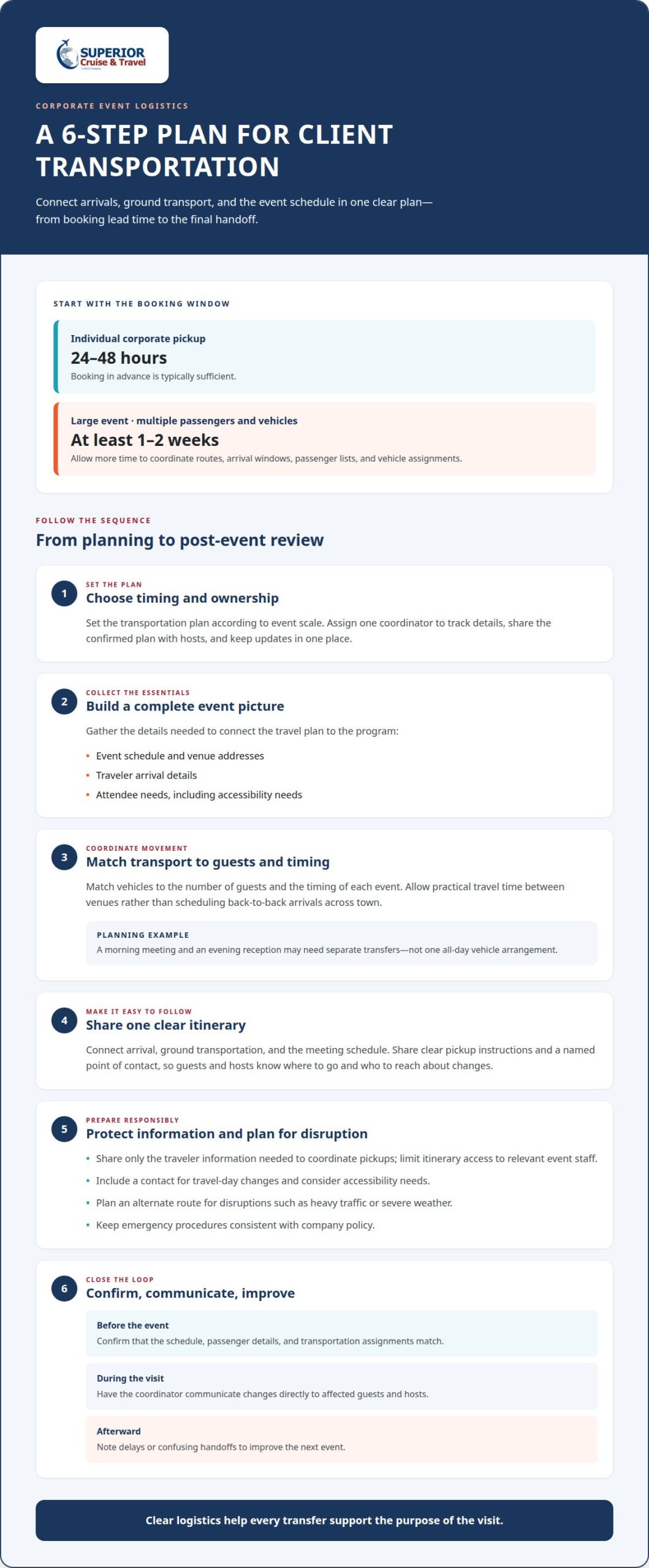
A seamless client visit starts with one itinerary connecting arrival, ground transportation, and the meeting schedule. Assign one coordinator to track the details, share the confirmed plan with hosts, and keep updates in one place. For a business trip with several meetings, allow practical travel time between venues instead of scheduling back-to-back arrivals across town.
Set the transportation plan according to the event’s scale. For an individual corporate pickup, booking 24 to 48 hours in advance is typically sufficient. For a large corporate event involving multiple passengers and vehicles, book at least one to two weeks in advance. That earlier planning gives organizers more time to coordinate routes, arrival windows, passenger lists, and vehicle assignments.
To plan the visit, gather the event schedule, venue addresses, arrival details, and attendee needs. Then match transportation to the number of guests and the timing of each event. Finally, share clear pickup instructions and a named point of contact. For example, a client attending a morning meeting and an evening reception may need separate transfers, not one all-day vehicle arrangement.
Personalization works best when it meets a real need rather than adding unnecessary luxury. Tailor the route to the client’s arrival time, choose a pickup point that reduces confusion, and leave a comfortable buffer before the first appointment. A preference for a quiet ride or direct route can shape the experience without elaborate extras. Keep the itinerary aligned with company policy and the visit’s purpose.
Safety, privacy, and duty of care deserve attention in every event plan. Share only the traveler information needed to coordinate pickups, and limit itinerary access to relevant event staff. Include a contact for travel-day changes, consider accessibility needs, and plan an alternate route for disruptions such as heavy traffic or severe weather. Keep emergency procedures consistent with company policy, and avoid promising a specific response unless the arrangement supports it.
Before the event, confirm that the schedule, passenger details, and transportation assignments match. During the visit, have the coordinator communicate changes directly to affected guests and hosts. Afterward, note any delays or confusing handoffs to improve the next event. For a program with several moving parts, corporate event planning can bring the travel schedule and event logistics into a more coordinated plan.
These elements work together, helping organizers keep each transfer connected to the program rather than treating transportation as a separate task. AI-powered travel assistance can suggest options based on company policy, past behavior, and travel patterns. Those suggestions can support a coordinator’s review while keeping the confirmed itinerary clear to hosts and travelers. Corporate travel packages can include airport shuttles or discounted car rentals. When considering those options, compare them with the event schedule, passenger needs, pickup instructions, and company policy guiding the visit. A useful plan keeps relevant details easy to share, leaves room to communicate changes, and reflects what the trip requires. In this way, transportation choices can complement the meeting and reception schedule without adding unnecessary complexity to the effort to impress clients with corporate travel.
3. Marketing to corporate travel decision-makers
Corporate travel marketing should speak to the people balancing employee needs, company policy, and business goals. A travel manager may prioritize policy fit, while an event planner needs workable logistics. Identify the decision-maker and the problem they need to solve, then make the relevant information easy to find.
Show how an itinerary can fit a company’s booking rules. Corporate policies may restrict hotel choices or require employees to stay at a specific property. A clear example can explain how a proposed stay meets those requirements, without suggesting that every company follows the same policy.
Make content useful before promoting an offer. A guide to a business district can cover meeting locations, networking events, and accommodation options. Organize it around where business travelers are likely to work or stay, so decision-makers can use it quickly when planning a visit.
Location-focused content can connect travel information with a destination. For example, a page about a city’s central business area can explain how meeting venues, hotels, and local transport relate to one another. Keep details practical and tailor each page to its destination instead of repeating generic advice.
Sustainability can be part of the message when it reflects a company’s priorities. Describe relevant practices such as renewable energy use, water conservation, or plastic reduction. Businesses can also explain partnerships with eco-friendly hotels or transportation providers plainly, without making broad environmental promises.
Frequent flyers and long-term business travelers may need different arrangements from employees who travel occasionally. Present customizable packages around practical needs, such as recurring travel patterns or extended stays. A company planning regular visits to one destination, for instance, may value an itinerary that brings accommodation and meeting needs together.
Personalized communication makes follow-up more relevant. Use past travel patterns to shape email recommendations for future trips, and connect each message to a clear business need. A recommendation based on a traveler’s previous destination is more useful when it explains what has changed or which planning detail it addresses.
Finally, make the next step clear in each piece of marketing. An event planner reading about meeting logistics needs details that support event planning, while a travel manager may want policy-aligned options. Review which pages lead to inquiries and which questions decision-makers raise, then refine the content to answer those needs directly.
Make the next step useful and specific: invite the decision-maker to discuss the requirements that shape a trip, such as meeting logistics, recurring travel patterns, or an extended stay. Keep the invitation consistent with the information on the page, and explain what details to prepare before a conversation. This helps a travel manager or planner move from reviewing options to considering a workable arrangement without implying that one package suits every company.
Travel businesses can promote partnerships with eco-friendly hotels or transportation providers to address corporate sustainability goals. They can also offer customizable packages for long-term business travelers or frequent flyers. Relate these options to the needs already described, and make it easy for corporate contacts to ask about a relevant itinerary or package.
4. The role of comfort in client hospitality
Comfort helps clients arrive ready to focus, especially after a demanding business trip. Useful perks can include early check-in, late checkout, access to a hotel business centre, and reliable in-room technology. Choose options around the client’s schedule rather than adding upgrades that don’t serve the visit.
Compare business-class flights, premium hotels, and executive transportation by the problem each solves. A flight upgrade may support rest on a long journey, while a centrally located hotel can reduce transfers between meetings. Executive transportation may simplify arrivals across several venues. Choose within company policy, prioritizing the client’s itinerary, comfort, and actual needs.
At the airport, make the welcome clear and personal. Share the meeting point and host’s name, then greet the client at the agreed location. If the guest’s flight is delayed, adjust the pickup and communicate the change directly. Avoid sharing itinerary details with people who aren’t involved in the visit.
At the hotel, make arrival straightforward and explain the next step, such as where to meet for the first appointment. Early check-in can help a client settle before a meeting, while late checkout can ease departure after a full schedule. A hotel business centre or coworking space may also provide a quiet place to work.
Thoughtful hospitality also means offering choices without making clients feel obliged. Present a relaxed dinner, a local activity, or time to rest as options, then respect the guest’s preference. A quiet downtown bar may suit someone looking for an informal conversation, while another client may prefer a calm meal and an early evening.
International guests may have different expectations around greetings, conversation, dress, and dining. Don’t assume nationality determines an individual’s preferences. Ask politely about practical needs, use the client’s preferred form of address, and consider local cultural dress norms when choosing professional clothing. Hosts can also explain the setting and schedule in advance.
Make each comfort choice purposeful. An employee hosting a client can consider travel fatigue, meeting timing, accessibility, and company spending policy before arranging perks. A premium option may be appropriate when it solves a real travel challenge, but a thoughtful welcome and a well-paced itinerary can matter just as much.
After the visit, note which arrangements the guest appreciated, such as a later hotel departure or a quieter setting. Use that feedback to personalize future hospitality, while keeping preferences private and relevant. This makes comfort part of attentive planning rather than a display of extravagance.
5. How can businesses make corporate travel feel impressive for clients?
Start with the client’s purpose for visiting, then shape an experience around it. A guest with limited free time may appreciate a short visit to a local landmark, while a client interested in regional culture might enjoy a longer outing. Offer options that fit the schedule instead of filling every open hour.
Choose activities that complement the business agenda. A Japanese teppanyaki restaurant can combine dinner with an engaging meal, while a guided visit to a local sight offers a change of pace. To impress clients with corporate travel, let guests enjoy the experience without turning every moment into another sales discussion.
For international visitors who want to see more of the United States, consider adding a destination such as Texas to a broader itinerary. Match the idea to the client’s interests and available time, and keep business commitments distinct from optional leisure plans. Clear choices help guests decide what suits them.
A thoughtful keepsake can make a visit memorable without feeling excessive. Choose a small souvenir connected to the host city or meeting’s purpose, such as a locally made item. Present it with a brief explanation so the gesture feels personal rather than like a routine corporate giveaway.
Comfort-focused upgrades can also support a demanding itinerary. A company might upgrade an employee’s accommodation or flight class as a bonus, while a business-focused travel package could include early check-in or late checkout. Consider the schedule and company policy before choosing an enhancement.
Work needs matter, too. Complimentary or discounted access to a coworking space or hotel business centre can give a client room to prepare between meetings. Free high-speed Wi-Fi and in-room technology can also support work during a stay. Mention these practical details when they suit the guest’s plans.
For clients who travel regularly, loyalty programs may offer tiered benefits such as room upgrades or priority check-ins. Explain relevant benefits clearly, without implying every traveler will qualify for every perk. A specific, useful option is more welcoming than a long list of features unrelated to the guest.
Before confirming an itinerary, connect each extra to a client preference, a business objective, or a practical need. Businesses can impress clients with corporate travel through a local outing, useful work space, or small keepsake, without overloading the schedule. To coordinate a client-focused corporate event, plan your corporate event around the experience you want guests to have.
Superior Cruise and Travel: Meetings & Corporate Events
Superior Cruise and Travel helps businesses plan Meetings & Corporate Events when client travel involves more than a meeting room and a calendar invitation. Bring event goals, guest needs, and the preferred setting together early, so the travel experience supports the purpose of the gathering.
For a distinctive client event, Luxury Cruises or Chartered Cruise Ships can provide an alternative setting for shared time and conversation. World Cruises may suit broader travel plans built around an extended voyage. The right format depends on the event’s objectives and the experience you want to create, not simply on adding more travel.
When you’re ready to discuss a client-focused meeting or event, contact Superior Cruise and Travel.
Make the Next Client Journey Count
Each client visit can set the stage for a stronger working relationship. As you plan future meetings, choose an experience that reflects the visit’s purpose and feels considered from the first arrival to the final goodbye. That’s a practical way to impress clients with corporate travel without making hospitality feel overdone.
For a distinctive gathering, Superior Cruise and Travel offers Luxury Cruises, Chartered Cruise Ships, and World Cruises. These options can shape an event around shared time and a memorable setting, while the right choice depends on your meeting goals and the experience you want guests to have.
Bring your ideas for a client event or corporate gathering, and take the next step at a pace that feels right for your organization. Contact Superior Cruise and Travel to discuss your plans and explore a thoughtful approach to the experience. A well-planned journey can give your next meeting a welcoming start.