
A luxury trip brings together comfortable stays, distinctive experiences, and an itinerary shaped around your interests. Planning how to travel the world in luxury means balancing those priorities with practical details that affect the overall cost, including transportation, meals, and activities.
It’s natural to want every part of a journey to feel special, but luxury doesn’t mean choosing the most expensive option at every turn. A thoughtful plan prioritizes the comforts and experiences that matter most to you, while keeping the trip coherent and the budget realistic.
This guide explains what luxury travel can include and how a professional planner can shape a tailored itinerary, from private excursions and cultural experiences to cruises, resorts, and other comfortable stays. You’ll also learn which costs to consider beyond accommodation and how to make thoughtful choices about where to spend more. With a clear sense of your priorities, you can turn a far-reaching travel idea into a well-planned next adventure.
Key Takeaways
- Luxury travel is shaped by the comfort and experiences that matter to you, not simply by choosing the most expensive options.
- A travel professional can weigh exchange rates alongside your interests when helping select destinations for your upcoming trip.
- Prioritize distinctive experiences, then build an itinerary around your pace, interests, and preferred way to travel.
- Plan for transportation, meals, activities, and unexpected expenses as well as accommodations to keep your budget realistic.
- Choose stays for the comfort, setting, and services that best support the experience you want from each destination.
1. What is luxury travel?
Luxury travel is shaped around comfort, personal interests, and distinctive experiences, not simply the highest price. Planning how to travel the world in luxury starts with deciding which moments matter most, then building a journey around them.
What are the best luxury travel destinations around the world? Italy offers cultural attractions, wine, and cuisine, while Japan blends ancient traditions with modern life, luxury hotels, and ryokans. The Maldives and French Polynesia appeal to travelers seeking overwater stays, marine life, and picturesque lagoons.
To compare destinations with favorable exchange rates, a travel advisor can consider current currency values alongside local prices, accommodation, and planned activities. They can compare what your budget may cover in each place based on your priorities. Exchange rates are only part of the picture: transportation and activity costs also affect overall value.
A professional can suggest lower-cost alternatives that preserve the feel of a trip. Montréal offers an alternative to Paris, while Frankenmuth, Michigan, has a German-inspired atmosphere without a trip to Germany. The right comparison depends on whether architecture, food, shopping, or seasonal events matter most.
For a less crowded itinerary, advisors can look beyond a destination’s main city to regional towns, coastal areas, and countryside stays. These places may offer lesser-known attractions and accommodations at better prices. A regional stop can also create a gentler pace between busy city visits.
Luxury value depends on how well a stay supports the journey. A travel advisor can compare location, services, views, and access to experiences, then weigh those features against your preferred activities and pace to help you decide how to travel the world in luxury.
Choose clothing to suit the destination’s climate, dress codes, and planned activities. An advisor can identify whether your itinerary includes cultural events, formal dining, or outdoor excursions. A day visiting historic sites, for example, may call for different clothing than an evening event.
What visas, entry rules, and health requirements apply to popular luxury destinations? Requirements vary with your passport, destination, transit stops, and planned activities. An advisor can map the countries and connections in your itinerary so these considerations are accounted for during planning.
How can a travel professional advise on rewards, credit cards, and loyalty programs? They can review programs you already use and compare redemption options with your preferred dates, flights, and stays. That helps you see whether existing rewards fit your plans before they shape the itinerary.
What are the risks of luxury travel, including scams, theft, and medical emergencies? Unfamiliar payment requests, misplaced valuables, or a medical emergency can disrupt a journey. A professional can help plan sensible transfers and discuss travel protection for cancellations, medical emergencies, and lost or stolen possessions.
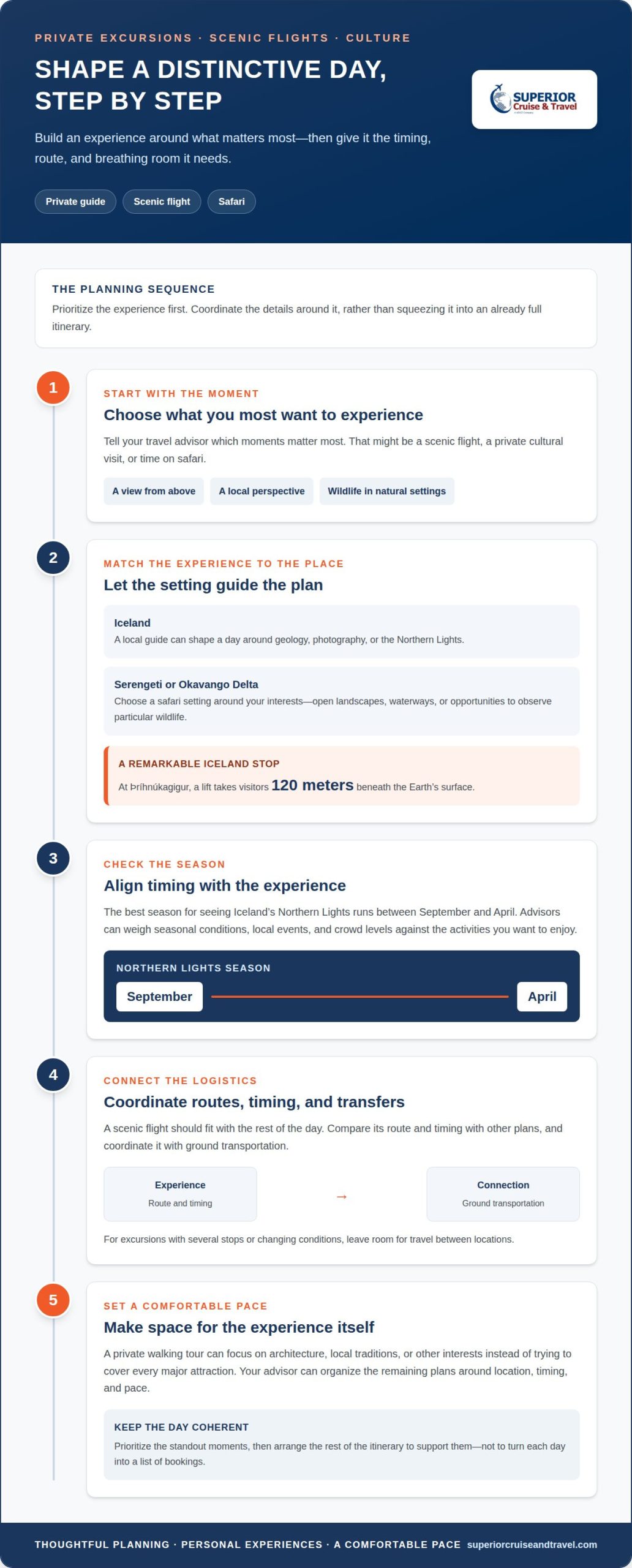
When is the best season to visit top luxury destinations? It depends on the destination and experience. Iceland’s Northern Lights season runs between September and April. Advisors can weigh seasonal conditions, local events, and crowd levels against the activities you want to enjoy.
2. Private excursions, scenic flights, and cultural experiences
A private excursion can give a destination a more personal rhythm. In Iceland, a local guide can shape a day around geology, photography, or the Northern Lights, rather than a fixed group itinerary. The best season for seeing the lights runs between September and April. A travel advisor can align the timing, route, and experiences with your interests.
Iceland also offers a striking volcanic experience at Þríhnúkagigur. A lift takes visitors 120 meters beneath the Earth’s surface, bringing the scale of the volcano into focus. A travel professional can place this visit alongside other activities, leaving room for travel between locations and a comfortable pace. That matters when an excursion involves several stops or changing conditions.
Scenic flights offer another way to experience a landscape, from a coastline to a broad mountain range. A travel advisor can compare the route and timing with your other plans, then coordinate the flight with ground transportation. Planning around the experience, rather than squeezing it into an already full day, can make the outing feel more considered.
Africa’s Serengeti and the Okavango Delta are popular safari destinations where visitors can see wildlife in natural environments. A travel professional such as A&S Leisure Travel can help match a safari setting to your interests, whether you’re drawn to open landscapes, waterways, or opportunities to observe particular wildlife. They can also fit the experience into the wider journey, including travel time between destinations.
Cultural experiences can add depth beyond sightseeing. A private guide, for example, can tailor a walking tour to your interests, share local knowledge, and introduce less familiar places. In a city with historic neighborhoods, that might mean focusing on architecture and local traditions rather than trying to cover every major attraction. Travel advisors can shape the day around your interests and available time.
Expert guidance is useful when several experiences compete for space in one itinerary. Tell your travel advisor which moments matter most, such as a scenic flight, a private cultural visit, or time on safari. The advisor can prioritize them, then organize the remaining plans around location, timing, and pace. This keeps a trip distinctive without turning each day into a list of bookings.
What are the best luxury airlines, first-class cabins, and private jet options? The right choice depends on your route, preferred cabin experience, airport connections, and schedule. A travel professional can compare those priorities and help fit private jet travel into a broader itinerary.
For a journey where private flights are central to the experience, private jet travel planning can be a natural part of shaping the next trip.
3. Bespoke travel itineraries
A bespoke itinerary connects destinations at a pace and with a purpose that suit your vacation. A travel professional starts with the experiences you value, such as time in London, a countryside retreat, or a resort stay. Those priorities shape the route, the length of each stop, and the balance between planned activities and unstructured time.
How does a travel professional plan a luxury trip around the world step by step? First, an advisor gathers your preferred destinations, dates, interests, and comfort priorities. Next, they build a route around those choices and coordinate stays, transportation, and experiences into one connected itinerary. The plan can be refined with your feedback before bookings are arranged.
Route design matters when a trip includes distant destinations or several types of travel. An advisor considers how each leg connects, how much time transfers require, and whether the sequence leaves room to enjoy each stop. A city stay followed by a quieter resort visit, for example, creates a different rhythm from consecutive city breaks.
Local guides can add context to an itinerary built around a particular interest. In London, a traveler focused on architecture might visit historic landmarks, while a food-focused visit could prioritize markets and dining. An advisor can shape the schedule around those preferences and leave room for discoveries along the way.
Dining can also shape an itinerary. A traveler interested in Michelin-starred restaurants may want reservations to anchor certain evenings, while a private-chef experience can suit a more intimate setting. A professional can align dining plans with neighborhoods, activities, and travel times instead of leaving meals as last-minute additions.
For broader journeys, ultra-luxury round-the-world cruises and global jet expeditions can connect multiple continents on a single ticket. A travel professional can help assess whether that format fits your preferred pace and destinations, or whether separate stays better suit your interests. The choice affects how the itinerary moves between experiences.
Share the details that will shape your next trip, including preferred destinations, important experiences, and the pace you enjoy. An advisor can use those priorities to develop a practical itinerary, coordinate its moving parts, and refine the plan as your preferences take shape. The result is a connected journey, not simply a collection of reservations.
The result is a journey designed as a coherent whole, with room for personal interests to guide each day. A private tour guide can customize an itinerary to a traveler’s interests and provide local knowledge and access to hidden gems. Travel advisors can provide personalized recommendations and may secure special perks and amenities, helping tailor the experience while keeping the trip aligned with the traveler’s priorities.
4. Setting a realistic trip budget
A travel professional can turn a broad spending limit into a practical plan by mapping costs across the full itinerary. They consider transportation, accommodations, meals, activities, private transfers, and exclusive experiences, then compare those choices with your priorities. A European itinerary with several city stays has different cost drivers from a safari focused on remote landscapes.
Start with the experiences that matter most. If you prefer a private safari in Africa, an advisor can weigh that priority against your preferred accommodations and transportation. If fine dining matters more, they can build those meals into the plan and balance them with simpler options elsewhere. This makes trade-offs visible before bookings shape the trip.
Destination comparisons should account for more than the exchange rate. An advisor can consider local costs, transportation between regions, seasonal demand, and how far your preferred experiences are from your hotel. Comparing two destinations in the same country can also reveal different value: a central city stay may cost more than a regional base but save time getting to activities.
Set aside part of the budget for meals and activities instead of treating accommodation as the whole cost. An included hotel breakfast can reduce meal spending, leaving room for dinner at a restaurant you’ve chosen for the experience. A high-end restaurant’s lunch tasting menu may offer another way to enjoy its cuisine while managing the overall budget.
Timing can affect both cost and convenience. Booking hotels early can save around 15% compared with the regular rate. A travel advisor can also consider festivals, sports games, conferences, or carnivals, since major events can raise rates and make transport or restaurant reservations harder to arrange.
Choose each stay to suit the day around it. If your flight arrives late or leaves early, an airport hotel may be more practical than paying for an upscale room you’ll barely use. For a family, choosing a suite for part of the trip can add comfort while keeping other stays more restrained.
A realistic plan also sets aside part of the budget for unexpected costs. Your advisor can account for the trip’s moving parts and identify where flexibility matters, such as changing transportation needs or added activities. Travel protection can be considered alongside plans for cancellations, medical emergencies, and lost or stolen possessions.
Review the budget as a whole before finalizing bookings. A professional can show how each choice affects the balance between comfort, experiences, and flexibility, then adjust the itinerary to suit your preferences. Whether you’re planning a city stay in America, a route across Europe, or a safari, this discussion turns priorities into a clear spending plan without assuming every day needs the same level of expense.
5. Choosing luxury accommodations
A travel professional matches hotels and resorts to the purpose of each stop, not just a room category. For a culture-focused visit, a location near galleries or historic places may matter most; a restorative stay may call for spa amenities and room to unwind. Sharing what you value helps an advisor compare options by setting, comfort, and how each property supports your journey.
Look beyond the word “luxury” in a hotel description. Distinctive decor, views, and personalized services can shape a stay, but the useful comparison is how those features fit your plans. An advisor can weigh a property’s location against your activities, transfer needs, and preferred pace, then help select an option that gives each part of the itinerary a clear purpose.
For a resort stay, the surrounding landscape can matter as much as the room. French Polynesia is known for picturesque lagoons and opulent resorts, while the Maldives are associated with overwater accommodations and marine life. A travel professional can consider whether a resort suits your interests, how it complements nearby experiences, and whether you want a quiet retreat or an active base.
Some properties stand out through their setting and character. The Farm at Cape Kidnappers in New Zealand is set on a 6,000-acre working sheep and cattle farm, while high-end wilderness retreats featuring custom canvas lodges by Exclusive Tents blend five-star comfort directly into remote natural settings. These examples illustrate why a travel advisor looks at more than amenities: a distinctive landscape or local atmosphere can make the accommodation part of the experience itself.
Wellness facilities may also influence your choice. Luxury spa and wellness options can include massages, facials, and holistic wellness programs. An advisor can compare these features with your priorities, so a spa-focused stay feels purposeful rather than simply adding amenities you may not use.
Timing matters for popular places and preferred rooms. Booking flights and accommodations well in advance, especially during peak travel seasons, can help travelers secure preferred options. A professional can factor the season and itinerary into hotel selection, then coordinate stays across destinations for a comfortable flow.
Before a booking is finalized, an advisor can review how each property fits the route, planned experiences, and comfort preferences. If your trip includes a cruise, the ship itself becomes part of the accommodation decision, with the overall journey shaped by its itinerary and onboard stay. For a cruise-centered next trip, explore luxury cruise options as part of your accommodation planning.
Superior Cruise and Travel: Luxury Cruises
Superior Cruise and Travel can turn your travel priorities into a cruise-focused plan. Its Luxury Cruises and World Cruises suit travelers who want a voyage to shape their journey, while Chartered Cruise Ships offer another option for group travel. Resort Vacations can complement a cruise or provide a different kind of getaway.
Consider this next step if you’re weighing a cruise against a multi-destination itinerary or want help choosing a format for your plans. Sharing your preferred destinations, travel style, and valued experiences gives the planning conversation a clear starting point. From there, the options can be considered in the context of your broader trip goals.
For a conversation about your next trip, contact Superior Cruise and Travel.
Give your next journey a clear starting point
Your next trip can begin with one decision: what do you most want to experience? A meaningful place, a particular way of traveling, or more time to relax can guide the choices that follow. With that priority in focus, it becomes easier to shape a journey that feels personal rather than packed with every possible option.
Knowing how to travel the world in luxury is less about following a set formula and more about matching thoughtful planning to your priorities. As your travel plans take shape, consider which experiences deserve the most time and attention. That gives the planning conversation a useful direction, whether you’re imagining a far-reaching voyage or a restorative escape.
When you’re ready to discuss your next trip, contact Superior Cruise and Travel. A conversation can help turn your ideas into a considered plan, with room for the experiences you’re looking forward to most.
Frequently Asked Questions
What is luxury travel?
Luxury travel is a journey shaped around the level of comfort, personal service, and experiences you value. It can mean a private guide in a historic city, a resort stay focused on relaxation, or a thoughtfully planned combination of different travel styles. The defining feature is how well the trip fits your priorities, not whether every choice is the most expensive one available.
How much does luxury world travel cost per day or per year?
There’s no single daily or annual cost for luxury world travel. The total depends on your destinations, trip length, accommodation, transportation, dining, and activities. A travel professional can build a budget around those factors and show how changing one choice affects the overall plan. Extending a stay in one country, for example, differs from adding several long-distance transfers or exclusive experiences.
What are the best luxury cruises and around-the-world cruise itineraries?
The best cruise itinerary suits your preferred destinations, travel pace, and time away. A World Cruise may appeal if you want a voyage connecting destinations across a broader journey, while a Luxury Cruise can suit a more focused trip. Superior Cruise and Travel also offers Chartered Cruise Ships. An advisor can help you choose the format that fits your plans and priorities.