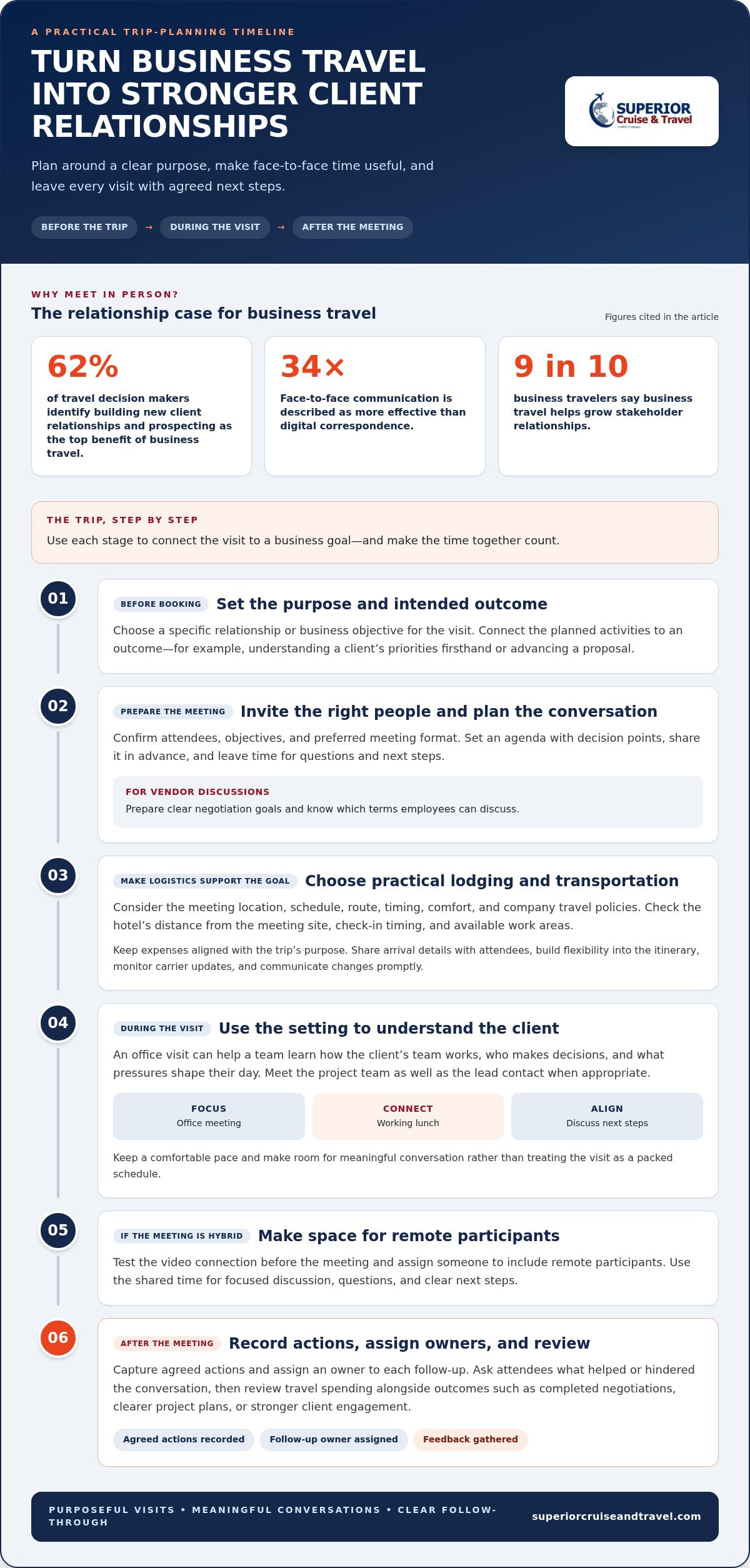
62% of travel decision makers identify building new client relationships and prospecting as the top benefit of business travel. To impress clients with corporate travel, make the journey serve a clear purpose: bring people together, create room for meaningful conversation, and connect each meeting to a wider business goal. Modern travel can also include professional development, corporate events, and hybrid meetings that make in-person time count.
A business trip can be more than a packed schedule. A thoughtfully planned experience gives clients and colleagues time to exchange ideas face to face, while a well-organized event brings a group together around shared priorities. The details matter: a relevant setting, a comfortable pace, and space for genuine conversation can make a meeting feel considered rather than routine.
This article explores how client meetings, learning opportunities, events, and personalized experiences shape business travel. Learn how to align a trip with its purpose, include remote participants, and create a more rewarding experience for everyone involved.
Key Takeaways
- Give every trip a clear business purpose, then shape the schedule around the conversations and outcomes that matter most.
- Use client meetings, professional development, and corporate events to make in-person time useful and inclusive of hybrid participants.
- Personalize the experience around attendees’ needs, meeting goals, and preferred pace to create more meaningful interactions.
- Choose hotels and transportation based on location, schedule, comfort, and clear travel policies so logistics support the meeting rather than distract from it.
- Consider luxury cruises, chartered cruise ships, world cruises, or resort vacations when they suit the goals and format of a corporate gathering.
Building client relationships through travel
Business travel can turn a scheduled meeting into time for listening, context, and trust. 62% of travel decision makers identify building new client relationships and prospecting as the top benefit of business travel. That makes the purpose of a trip more than reaching a destination. A visit can help a team understand a client’s priorities firsthand, respond to concerns, and build a working relationship beyond email exchanges.
Face-to-face communication is 34 times more effective than digital correspondence. Use an office visit to learn how the client’s team works, who makes decisions, and what pressures shape their day. For example, a sales representative visiting a client’s office can meet the project team as well as the lead contact. That context can make later proposals more relevant and help employees coordinate follow-up without relying on assumptions.
Nine in ten business travelers say business travel helps grow stakeholder relationships. That benefit matters in vendor negotiations, where people need to discuss priorities, timelines, and concerns directly. An in-person conversation can make it easier to clarify a proposal or understand a supplier’s position. Preparation still matters: employees should arrive with clear objectives and know which terms they can discuss.
Supplier and vendor relationships also develop through consistent, practical contact. A visit to a supplier’s office, for example, gives both teams dedicated time to review service expectations and upcoming work. Before traveling, set an agenda with decision points, invite the right contacts, and record agreed actions. After the meeting, assign an owner to each follow-up. These steps help turn a single visit into a more dependable working relationship.
A travel program can support these relationships while keeping expenses aligned with business goals. Policies should explain which trips need approval, how employees document expenses, and what each visit should achieve. Review travel spending alongside outcomes, such as completed negotiations, clearer project plans, or stronger client engagement. This helps distinguish purposeful visits from travel that adds little value, while giving employees consistent guidance.
To impress clients with corporate travel, focus on how the experience supports the relationship, not on appearances. A well-paced visit might include a focused office meeting, a working lunch, and time to discuss next steps. Consider the client’s schedule and preferences when planning. Afterward, ask attendees what helped or hindered the conversation. Their feedback can improve future trips and support employee satisfaction.
- Set a specific relationship or business objective for each visit.
- Use office meetings to understand the client’s team and priorities.
- Prepare for vendor discussions with clear negotiation goals.
- Connect travel policies and expenses to trip purpose and outcomes.
- Capture follow-up actions and attendee feedback after each meeting.
Business travel for client meetings and professional development
Business travel can connect client conversations with employee learning and company priorities. Plan each trip around a clear outcome, then use time together for focused discussion and shared development.
Build flexibility into the itinerary: leave time between appointments, monitor carrier updates, and communicate changes promptly. For client meetings, choose polished, comfortable clothing and bring the agenda, presentation materials, identification, chargers, and relevant notes.
Planning Client-Focused Trips
A client-focused trip organizes meetings, learning, and travel around the client’s needs. A well-prepared visit makes limited in-person time more useful. Confirm attendees, objectives, and preferred meeting format before booking. Share an agenda in advance, then leave time for questions and next steps. For a hybrid meeting, test the video connection and assign someone to include remote participants.
Choosing Hotels and Transportation
Choose hotels and transportation to support the meeting schedule and make arrival straightforward. A practical location can reduce transfers and help employees arrive prepared. Compare the lodging’s distance from the meeting site, check-in timing, and available work areas. Choose transportation based on the route, timing, and company travel policies. Share arrival details with attendees so delays or changes don’t leave clients waiting.
Aligning Trips with Business Goals
Aligning a trip with business goals means connecting its activities to a specific outcome. This helps leaders assess whether travel spending supports company priorities. A sales visit might focus on advancing a proposal, while a conference trip could target professional learning and new connections. Set the intended outcome before approval, then review meeting notes and follow-up actions afterward.
Business travel can also support workplace culture when employees see how travel connects to their work. In a 2024 survey of more than 4,000 business travelers, 40% said travel supported personal and professional growth. Another 31% said it made them feel more passionate about their jobs. Use those findings as context, not as a substitute for listening to employees’ experiences.
Client success stories are most useful when they show a clear link between travel and action. For example, a team might document how an in-person product review clarified requirements, then record the decisions that shaped its next proposal. Keep the account specific: note the original objective, key discussion, and follow-up. This creates a practical record for evaluating the travel program and refining future trips.
For professional development, match the event to a skill or business need. Collaboration and networking are the main draws of conference travel for 64% of respondents, while professional learning is the main draw for 53%. Employees can share useful takeaways afterward through a short team briefing or training session. That addition helps translate event attendance into broader workplace value.
Software can help employees access itineraries, meeting details, and approved travel policies in one place. Before departure, store key documents and contact details where travelers can find them. During a disruption, follow the company’s communication process to update colleagues and clients, then adjust meeting plans. A clear response protects the schedule and keeps expectations realistic.
For a larger gathering that combines client meetings with shared learning, corporate meetings and events can provide a setting for structured discussions and networking.
Personalized corporate travel experiences
Personalized corporate travel adapts arrangements to the traveler, trip purpose, and company policies. A client meeting may call for a quiet hotel near the venue, while a global team visit may need coordinated schedules and clear arrival details. Tailoring these choices helps employees focus on work instead of preventable logistics. It also helps travel managers balance individual needs with consistent oversight.
The best corporate travel booking tools make reservations simple and quick. Compare software features, customer support, integrations with financial or accounting tools, and ease of use. For example, a company that needs expense reports to flow into its accounting process should prioritize that integration. Choosing a tool that fits the workflow can reduce manual steps and help employees follow policies.
Concierge support adds a human response when plans change. Travel management companies may offer personalized 24/7 on-trip assistance and disruption management. That can help a traveler respond to a canceled connection or a changed meeting time, while keeping colleagues informed. Before choosing a service, identify where human help would matter most, such as complicated itineraries or trips involving several employees.
Personalization should reflect traveler preferences without weakening the travel program. Employees may value different departure times, hotel settings, or time to rest between meetings. A company can collect preferences and apply them within its policies, making exceptions clear. This gives travelers useful choices while helping managers keep spending visible and decisions consistent.
For a global trip, location and timing can shape the experience as much as the booking itself. A traveler attending meetings in several cities needs a schedule with realistic transfer time and accessible itinerary details. Share essential information in one place, including meeting locations, reservations, and local contacts. If plans change, a central update helps employees and hosts work from the same information.
Personalized travel can also improve how a company understands expenses. In 2024, 82% of business travel decision-makers reported using AI in their business travel processes. Three-quarters reported using AI to process or analyze travel expenses, including expense reports and policy compliance. These tools can help organize information, but managers still need to interpret reports against trip purpose, employee needs, and the travel program’s priorities.
Track outcomes as well as convenience. For example, compare employee feedback, booking patterns, and expense reports after introducing a new itinerary or support process. Look for recurring friction, such as inconvenient meeting locations or confusing reimbursement steps. Use those findings to refine future arrangements and identify potential savings, rather than treating personalization as a promise of lower costs.
Start with one practical improvement: collect traveler preferences, review the booking process, or clarify how disruption support works. Then assess whether the change improves the employee experience and keeps trips aligned with business needs. A thoughtful mix of useful software, responsive assistance, and clear policies makes business travel feel considered without making every itinerary complicated.
What are the best practices for planning a client-focused business trip?
Start with the client outcome, then plan each booking and meeting around it. A trip to resolve a project concern, for example, needs time for discussion, decision-making, and a clear handoff, not a calendar filled with unrelated appointments.
Before arranging travel, identify the client contacts, meeting purpose, desired decisions, and preparation employees need. A concise agenda helps attendees arrive ready to discuss priorities. Share it with the client early, invite corrections, and confirm who will lead each topic. This preparation keeps the visit focused while leaving room for the client’s questions.
- Define the result. Write down what should change after the trip, such as agreed project milestones or a reviewed proposal.
- Match attendees to the agenda. Include employees who can answer client questions or make decisions.
- Coordinate details. Confirm meeting location, arrival plans, accessibility needs, and the client’s preferred format.
- Prepare materials. Bring the current proposal, relevant project notes, and a concise presentation.
- Assign follow-up. Name an owner for each action before the team departs.
Adapt the experience to the people attending. If the client has a tight schedule, propose a focused meeting with a clear finish time. If several departments are involved, plan a working session that gives each group space to contribute. For a hybrid attendee, test the video link and audio before the meeting begins. These practical choices show consideration without unnecessary ceremony.
Protect the itinerary from avoidable pressure. Allow travel time before the first important appointment, leave a reasonable transition between meeting locations, and avoid relying on a single tight connection. If a delayed arrival would disrupt a product review, for example, schedule it after the traveler has time to settle and prepare. Share the updated itinerary with attendees when plans change.
Connect the trip plan to company policies and business priorities. Confirm who approves bookings, which expenses require documentation, and how employees should report changes. A sales visit might focus on a client decision, while a technical meeting may prioritize resolving open requirements. Clear approval steps help managers assess the purpose and expected value before employees travel.
After the visit, turn discussion into action. Send the client a concise recap with decisions, open questions, owners, and agreed next steps. Then compare the results with the original objective: did the meeting clarify requirements, move a decision forward, or identify another need? Record useful feedback for future planning, such as a better meeting format or materials the client wants in advance.
How should employees choose hotels and transportation for client meetings?
Start with the meeting address, schedule, and client’s needs, then compare lodging and transportation options. A hotel near the meeting site may make an early presentation easier to reach and reduce unnecessary transfers. Check the route at meeting time, not just the distance on a map. If the appointment moves between locations, compare each option against the full itinerary.
Choose a hotel that supports the workday as well as the overnight stay. Employees may need reliable internet, a quiet place to prepare, or a practical space to review materials. For regional business trips, consulting resources on the best hotels in taunton somerset or comparable destinations can help identify welcoming lodgings equipped with comfortable workspaces and meeting-friendly amenities. A traveler presenting first thing in the morning, for example, benefits from a simple route and time to prepare beforehand. Confirm arrival and check-in details so late travel doesn’t complicate meeting preparation.
Transportation should match the route, timing, and number of travelers. Compare public transit, a rental car, and a professional chauffeur service based on access to the meeting venue, luggage, and schedule flexibility—providers such as 1executivecar.com highlight how executive ground transportation can streamline airport transfers and high-stakes itineraries. A car may suit a visit to several client sites, while a central venue with transit links may make a rental unnecessary. Share the plan with attendees, including pickup points and meeting locations.
Use company travel policies as your decision framework. Clear procedures help employees make informed travel decisions, including which options need approval and how to document expenses. Before booking, compare choices against policy requirements and the trip’s purpose. If a preferred hotel is far from the client’s office, weigh the additional transfer time against the reason for choosing it.
- Location: Compare travel time to the meeting, not simply the hotel’s distance.
- Schedule: Match arrival and departure plans to appointment times and preparation needs.
- Access: Consider mobility needs, luggage, and the route between each destination.
- Policy: Follow approval procedures and keep expense records organized.
Give the client clear arrival information if your plans affect their schedule. Send the expected arrival time, venue details, and a contact method before the meeting. If a delay changes your arrival time, update the client promptly and suggest a revised start or format. This practical courtesy helps the host plan their day and avoids leaving attendees uncertain.
For a meeting or event involving several client groups, consistent venue and transport planning can simplify coordination. Set the location, attendee needs, and schedule before making arrangements, then share one clear itinerary. Explore corporate meeting and event planning to organize a client-focused gathering.
Superior Cruise and Travel: Luxury Cruises
Superior Cruise and Travel can help businesses plan client gatherings around a distinctive setting. Its luxury cruises and chartered cruise ships can suit corporate meetings or events where attendees benefit from spending time together beyond a single appointment. Resort vacations and world cruises offer other settings to consider, depending on the event’s purpose and itinerary.
Turn to Superior Cruise and Travel when your plans call for a broader travel experience, not just a hotel meeting. Share the goals of your gathering and the experience you want to create, then explore which offering fits best. The right setting should support meaningful conversation and the practical needs of your attendees.
Contact Superior Cruise and Travel to discuss your plans, or visit superiorcruiseandtravel.com.
Make Your Next Client Gathering Meaningful
The next step is to choose an experience that fits the relationship you want to build. A focused meeting may call for a familiar format, while a larger gathering can benefit from a setting that gives attendees more time together. To impress clients with corporate travel, let the purpose guide the experience, from the first invitation through the conversations that follow.
For businesses considering an event beyond a traditional meeting venue, Superior Cruise and Travel offers luxury cruises, chartered cruise ships, and world cruises. These options can help create a distinctive setting for bringing clients and colleagues together. Consider the goals of the gathering, who will attend, and the kind of shared experience that feels appropriate.
Start a conversation about the event you have in mind and explore the possibilities with Superior Cruise and Travel. A thoughtful setting can give important business conversations a fresh beginning.
Frequently Asked Questions
What does modern business travel look like?
Modern business travel combines purposeful in-person meetings with flexible ways to participate and learn. A company might bring client teams together for a planning session, then include remote colleagues through a hybrid connection. Shape the experience around the work to be done, not simply the destination. That could mean coordinating meetings, professional development, and shared events within one coherent trip.
How can business travelers make a strong impression on clients during corporate travel?
Make the client feel heard and respected throughout the visit. Learn their preferred form of address, review recent correspondence, and tailor your presentation to their priorities instead of delivering a generic pitch. To impress clients with corporate travel, focus on thoughtful conduct rather than lavish gestures: arrive prepared, listen without interrupting, and send a concise follow-up reflecting the discussion and agreed actions.
How can companies create polished corporate travel itineraries for clients?
Create one clear itinerary that helps guests understand the visit at a glance. Include meeting locations, host names, travel arrangements, and the purpose of each scheduled activity. Mark optional social time separately from business commitments, and provide a contact for itinerary changes. A visiting client, for example, should be able to see where the morning meeting takes place and how the next appointment fits into the day.