Last Updated: October 27, 2026
Quick Summary
Expedition cruising is worth the cost when the trip gives you access to remote places and expert guidance you cannot easily get otherwise. The fare reflects small ships, specialized vessels, and expedition staff, so it suits nature lovers and travelers seeking off-the-beaten-path destinations rather than onboard entertainment.
- Smaller ships spread fixed costs across fewer passengers, which raises each fare.
- Shoulder-season departures in November or March are often 20-40% less expensive, per Expeditions Online.
- Compare the all-in total, since extras like gratuities, drinks, and excursions can add up.
- Score each option on access, expertise, inclusions, comfort fit, and timing before deciding.
- Traditional cruises deliver better value if you prioritize onboard entertainment and large-ship amenities.
Table of Contents
- What Expedition Cruising Is and Who It Suits
- Expedition Cruise Cost: What Drives the Price
- Expedition Cruise vs. Traditional Cruise: Where the Money Goes
- What Is Included in an Expedition Cruise and What Costs Extra
- A Value-for-Money Framework for Expedition Cruising
- Realistic Total-Trip Budgets by Destination and Duration
- How to Choose an Expedition Cruise That Fits Your Trip
- Frequently Asked Questions
What Expedition Cruising Is and Who It Suits
Is expedition cruising worth the cost? For the right traveler, yes, but only if you understand what you are paying for. Expedition cruising takes small ships to remote destinations that large vessels cannot reach, and the fare reflects that choice.
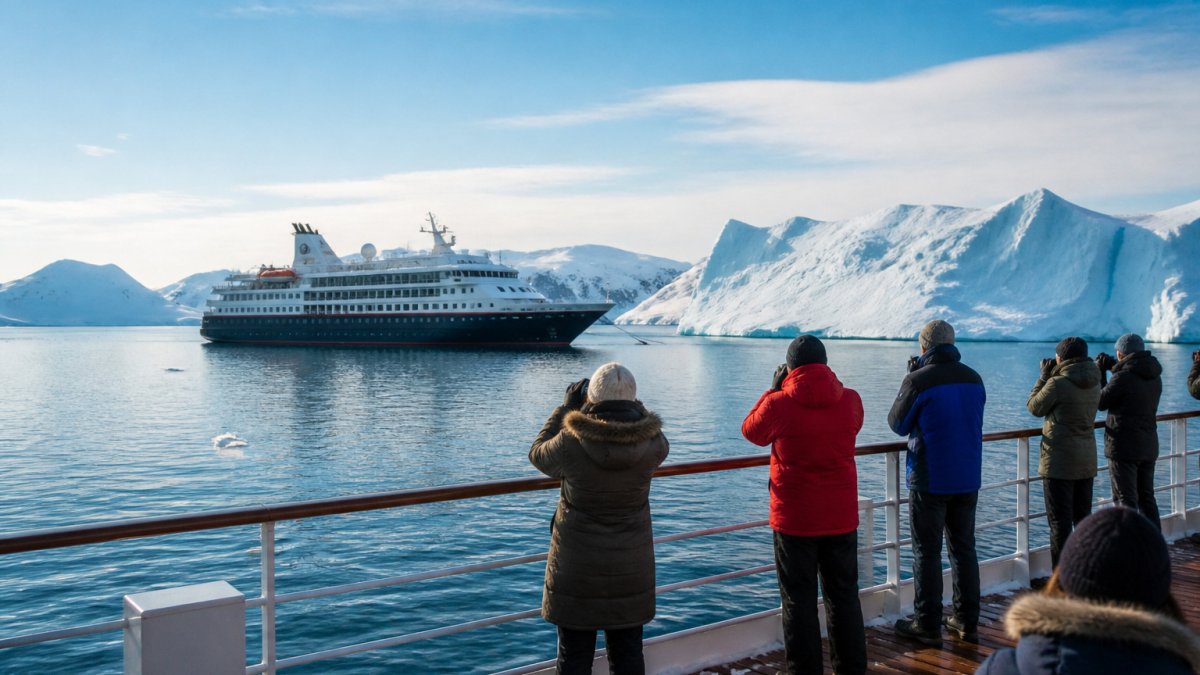
An expedition cruise is a voyage built around exploration. Ships carry far fewer passengers than mainstream liners, and itineraries often include polar regions, Antarctica, the Arctic, and remote coastlines. Expert guides and naturalists join the voyage, and shore excursions frequently involve Zodiac landings and kayaking. You can compare typical expedition itineraries and prices to see what each voyage offers. Traditional cruises focus on onboard entertainment and port days. You can browse remote adventure cruise destinations to get a sense of the expedition experience before deciding. Expedition cruises focus on the destination itself.
That difference suits some travelers far better than others. Nature enthusiasts, experienced travelers who want to see places beyond the usual ports, and couples seeking an intimate trip often find the cost justified. Travelers who want nightly shows, large pools, and a fixed budget may find a traditional cruise a better fit.
Expedition Cruise Cost: What Drives the Price
Expedition cruise pricing depends on several variables, and no single fare applies to every voyage. Destination is the biggest driver. If you are planning a private or chartered vessel, see how the cost to charter a cruise ship is calculated. Antarctica and the Arctic require specialized ships, permits, and extended itineraries, which raise the baseline. Cruise length matters too, since longer voyages cost more in total even when the daily rate is similar.
Ship size and class also shape the fare. Smaller ships spread fixed costs across fewer passengers, so each seat carries a higher share of those costs. Cabin category adds another layer. A suite on a newer, more comfortable vessel costs considerably more than a basic cabin on an older ship.
Departure timing can change the picture. Shoulder-season departures in November or March are often 20-40% less expensive, according to Expeditions Online. Booking early or travelling in off-peak windows can therefore reduce the total meaningfully.
Expedition Cruise vs. Traditional Cruise: Where the Money Goes
The core difference is where the budget is spent. On a traditional cruise, much of the fare covers hotel-style amenities, entertainment, and large-ship operations. On an expedition cruise, a larger share goes toward itinerary logistics, expedition staff, and specialized vessels built for polar waters.
Topflight Travel notes that expedition cruises are generally more expensive than traditional cruises of comparable length. The reason is structural: smaller ships spread fixed costs across fewer passengers. You are paying for access and expertise rather than volume-driven amenities.
This does not automatically mean you overpay. It means the value comes from different things. If your priority is reaching remote places with knowledgeable guides, the spending maps closely to what you want. If your priority is onboard variety, a traditional ship delivers more for the money.
What Is Included in an Expedition Cruise and What Costs Extra
Fare inclusions vary by operator, so read the fine print before comparing headline prices. Core items typically include accommodation, meals, expedition staff presentations, and many shore excursions. Some lines include kayaking and Zodiac landings in the base fare, while others charge extra for them.
Common extras include premium beverages, alcohol packages, specialty dining, gratuities, flights to the departure port, pre- and post-cruise hotel stays, and certain optional excursions. Insurance and visa or permit fees may also apply depending on the destination.
Ask for an itemized list of inclusions and charges before you commit. A fare that looks lower can end up costing more once the add-ons are counted.
Watch out: a low headline fare can hide several paid extras, so compare the all-in total for each option, not the advertised rate.
A Value-for-Money Framework for Expedition Cruising
Judging value means matching the trip to your priorities, and the premium is easiest to justify when the fare buys access and expertise you cannot get another way. Use the framework below to score each option, then compare the scores side by side.
Step 1: Score the access. Can you reach this place another way, or only by a small expedition ship? A destination that is effectively ship-only scores high. A destination with good independent travel options scores lower, because you are paying a premium for convenience rather than unique access.
click here for free consultation →
Step 2: Score the expertise. How much do the guides and naturalists add to what you will see? A high guide-to-guest ratio and specialists in the region’s wildlife, history, and science add real value. A voyage where the staff are generalists scores lower.
Step 3: Score the inclusions. What share of the total cost is included, and what will you pay separately? Compare the all-in total, not the headline fare. A fare that includes excursions, gratuities, and a beverage package can beat a lower fare with several paid extras.
Step 4: Score the comfort fit. Does the cabin standard and onboard space match what you expect? Expedition ships trade large pools and nightly shows for landings and lectures. If you will miss the amenities, the premium buys less for you.
Step 5: Score the timing and flexibility. Does the departure date fit your budget and schedule? Shoulder-season departures are often less expensive, but weather and wildlife timing change what you will see. Weigh the savings against the experience you want.
Traveler scenarios. A wildlife enthusiast who wants repeated landings and expert interpretation usually gets strong value from the premium. A comfort-focused traveler who values onboard variety may get better value from a traditional cruise and a separate nature-focused shore excursion. A solo guest should compare single supplements and solo-friendly cabin categories, because the premium can rise sharply.
If most scores point to unique access and expert guidance, the premium is usually worth paying. If the scores point to comfort and entertainment you could get elsewhere for less, a traditional cruise may deliver better value.
Trade-offs beyond price. Weather can disrupt landings and itineraries, so build in flexibility. Smaller ships have fewer onboard facilities, and seasickness is a real factor on open-water crossings. Activity availability can be limited by conditions and group size. These trade-offs do not cancel the value, but they belong in the decision.
A low headline fare can hide several paid extras. Compare the all-in total for each option, and ask how weather disruption and itinerary changes are handled before you commit.
Realistic Total-Trip Budgets by Destination and Duration
A cruise fare is only part of the total cost, and the gap between the advertised fare and the all-in total is where most budget surprises happen. The table below shows the cost lines to budget for, with typical ranges and clear assumptions. Treat the ranges as planning bands, not quotes: fares vary by operator, cabin category, departure date, and how early you book.
| Cost line | What it covers | Typical planning range | Assumptions and notes |
|---|---|---|---|
| Expedition cruise fare | Cabin, meals, expedition staff, many shore excursions | Varies widely by destination, duration, and cabin; polar voyages carry the highest baseline | Fare is per person, double occupancy; solo travelers often pay a single supplement |
| Airfare to departure port | Round-trip flights and any internal connections | Budget separately; long-haul routes to polar gateway cities are the largest variable | Book early; some operators offer charter flights as an add-on |
| Pre- and post-cruise hotels | One or two nights before and after the voyage | One to two nights at each end is a common pattern | Gateway cities often require an overnight before embarkation |
| Transfers | Airport-to-hotel and hotel-to-ship | Small relative to the fare but easy to overlook | Some operators include group transfers; confirm before booking |
| Travel insurance | Medical, evacuation, and trip cancellation | Required by many polar operators; cost scales with trip price and age | Confirm the policy covers remote-region evacuation |
| Gratuities | Crew and expedition staff tips | A daily amount per guest is a common pattern; some lines include it | Check whether gratuities are built into the fare |
| Drinks and specialty dining | Alcohol, premium beverages, specialty restaurants | Optional; a daily allowance is a useful planning device | Some fares include a beverage package |
| Optional excursions and gear | Kayaking, camping, extra landings, rental parkas and boots | Varies by operator; some activities are included, others are paid | Ask for the itemized activity list before comparing fares |
Sample budget logic by destination and duration. For a short polar voyage, the fare is the dominant line, but flights, hotels, insurance, and gratuities still add a meaningful share because fixed costs are spread over fewer days. For a longer voyage, the fare grows in total but the fixed costs are spread across more days, so the daily all-in rate can look more favorable. A practical approach is to build three totals: fare only, fare plus required extras (insurance, gratuities, transfers), and fare plus all likely extras (drinks, optional activities, pre- and post-cruise stays). Compare operators on the third total, not the first.
Ask each operator for a written inclusions list and a sample onboard account. The sample account shows what past guests actually spent on drinks, excursions, and gratuities, which is more useful than a headline fare.
How to Choose an Expedition Cruise That Fits Your Trip
Start by defining what matters most: destination, comfort, expertise, or budget. You can learn how to balance comfort, pacing, and remote exploration when weighing these priorities. Then shortlist operators whose itineraries and ship classes match those priorities. Expedition cruise lines such as Silversea, Ponant, Lindblad, and Hurtigruten are commonly compared for polar routes, according to Cruise Line’s 2026 roundup.
Next, request a full cost breakdown for each option. Compare inclusions, departure dates, and cabin categories side by side. Finally, check how the ship size and guide ratio will affect your experience on the ground.
Expedition cruising is worth the cost when it gives you access and expertise you cannot easily get otherwise. Superior Cruise and Travel offers personalized planning with no service fees.
Frequently Asked Questions
Why is cruising getting so expensive?
Cruise fares rise for several overlapping reasons: fuel and port costs, higher demand for premium itineraries, and rising prices for shore excursions and onboard extras. Expedition cruises add their own cost drivers. Smaller ships spread fixed costs across fewer passengers, and remote itineraries require specialized equipment, permits, and expert staff. Comparing the all-in price, rather than the base fare alone, shows where your money actually goes.
What is usually included in an expedition cruise fare?
Most expedition fares cover your cabin, meals, and the core shipboard program, including lectures from expedition staff and guided landings. Zodiac excursions and kayaking are often included on many lines but vary by operator and itinerary. Alcohol, specialty dining, premium Wi-Fi, gratuities, airfare to the departure port, and pre- or post-cruise hotel stays are commonly charged separately. Confirm the inclusions list in writing before you book.
How does an expedition cruise differ from a traditional cruise?
A traditional cruise is built around a large ship, entertainment, and multiple port calls, usually at major tourist harbors. An expedition cruise uses a smaller ship that can reach remote destinations such as Antarctica, the Arctic, and the Galapagos, with landings by Zodiac boat and a naturalist-led program. Expedition cruises generally cost more per day than comparable traditional cruises because of smaller capacity and specialized operations.
How much should I budget for an expedition cruise?
Budget for more than the cruise fare. Add round-trip airfare to the departure port, pre- and post-cruise hotel nights, travel insurance, gratuities, optional excursions, and onboard extras. Shoulder-season departures are often priced lower than peak-season sailings, according to some operators’ published comparisons. Get a written quote from a planner or the cruise line that itemizes the fare and the likely extras so you can compare total costs.
Ready to see whether an expedition voyage fits your plans? Contact Superior Cruise and Travel for a free consultation and a personalized itinerary built around your destination, budget, and travel style.