Last Updated: October 28, 2026
Quick Summary
Choosing the right expedition cruise cabin means matching the category and location to how you will actually use the room, not just shopping by price. Book midship on a lower deck if seasickness is a concern, and weigh storage, mudroom distance and view obstruction before you pay. Run a cabin checklist covering category, deck, gear flow and Zodiac boarding distance.
- The best cabin location for seasickness is midship on a lower deck, closest to the ship’s center of motion.
- A balcony costs more but wind, spray and cold limit its use on open-water crossings.
- A cold-weather expedition kit can consume most of a standard cabin’s closet and floor space by day two.
- The mudroom-to-Zodiac sequence can take 20 to 40 minutes on a busy morning and repeats for every landing.
- Check the deck plan for cabins under the dining room, theater or gym, and aft cabins near the engine room.
Table of Contents
- Why Your Expedition Cruise Cabin Choice Matters More Than on a Standard Ship
- Mistake 1: Ignoring the Expedition Cruise Cabin Types Before You Compare Prices
- Mistake 2: Picking the Wrong Cabin Location for Seasickness
- Mistake 3: Assuming an Expedition Cruise Balcony vs Window Is a Simple Upgrade
- Mistake 4: Forgetting That Expedition Gear Changes Your Storage Math
- Mistake 5: Overlooking Zodiac Boarding Logistics and View Obstruction
- Mistake 6: Skipping the Deck Plan and Noise, Vibration, and Elevator Access
- Mistake 7: Booking Without an Expedition Cruise Cabin Checklist
- Frequently Asked Questions
Why Your Expedition Cruise Cabin Choice Matters More Than on a Standard Ship
An expedition cruise cabin is not just a place to sleep. It is your base camp, your gear locker, and your front-row seat for landings that happen on a tight schedule. That changes the math.
On a standard ship, a cabin is mostly about comfort. On an expedition vessel, it is about function. You will dress in layers, board Zodiacs, and store wet gear. Your room has to keep up.
Below, we break down seven mistakes to consider before you book.
Mistake 1: Ignoring the Expedition Cruise Cabin Types Before You Compare Prices
The biggest mistake is shopping by price before you understand the cabin types. Prices only make sense once you know what each category gives you.
Inside, Oceanview, Balcony, and Suite: What Each Category Actually Gets You
- Inside: No window. Darkest and quietest. Best for budget and light sleepers.
- Oceanview: A window or porthole. Natural light without a balcony.
- Balcony: Private outdoor space. Great on calm routes, less useful in rough seas.
- Suite: More square footage, sitting area, and often priority services.
A common mistake is paying for a balcony on a route where you will rarely use it. If you want to see how cabin choice plays out on real voyages, compare Iceland expedition cruise routes and ships before you settle on a category.
Mistake 2: Picking the Wrong Cabin Location for Seasickness
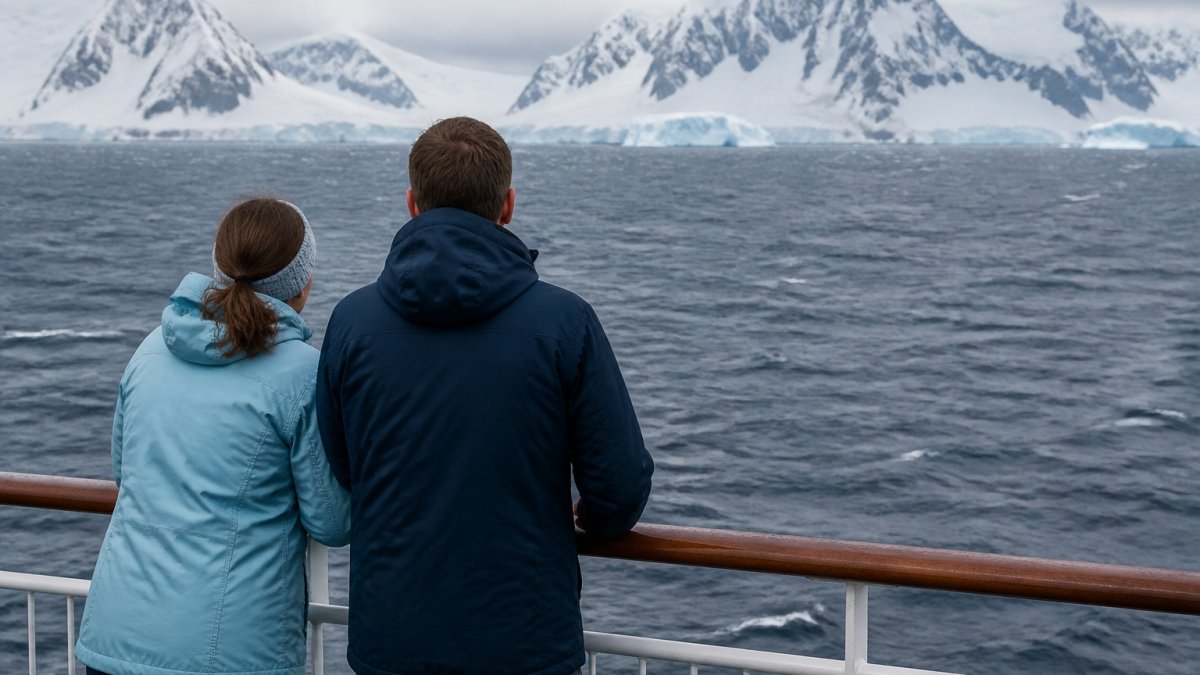
The best cabin location for seasickness is midship on a lower deck. That spot sits closest to the ship’s center of motion, so it moves the least.
Midship, Lower Deck, and the Stabilizer Effect
Stabilizers reduce roll, but they do not remove it. Sea state still wins on rough days. Here is how location plays out:
- Forward cabins: Most pitch. You feel the bow rise and fall.
- Aft cabins: More vibration from the engines and propellers.
- Midship, low deck: The steadiest ride on the ship.
If you are prone to motion sickness, book low and central. Skip the forward suites with the big views. They are stunning until the sea picks up.
Mistake 3: Assuming an Expedition Cruise Balcony vs Window Is a Simple Upgrade
The expedition cruise balcony vs window choice is not a simple upgrade. On many expedition vessels, a balcony costs more but delivers less usable time.
Wind, spray, and cold limit balcony use on open-water crossings. A window gives you light and a view without the price jump. Put that savings toward excursions or a better cabin location.
What most guides miss: on some ships, balcony cabins sit higher and further forward. That means more motion. You can pay more for a rougher ride. To see how ice-class ships handle this trade-off, review Arctic itineraries and vessel types before you decide.
Mistake 4: Forgetting That Expedition Gear Changes Your Storage Math
Expedition gear eats space in a way standard cruise packing does not. A typical cold-weather expedition kit includes a heavy parka, waterproof shell, insulated midlayers, waterproof pants, rubber boots, gloves and liners, a hat and neck gaiter, binoculars, a camera body with a zoom lens, spare batteries, and a dry bag.
Most guides treat cabin storage as a closet-size question. On an expedition vessel, it is a workflow question. Your gear moves through three zones every landing day: the cabin, the mudroom, and the Zodiac. A cabin that stores gear well but sits far from the mudroom still forces you to carry wet boots and dripping parkas through public corridors.
What to check before you book
- Mudroom or gear-drying area: Many expedition ships provide a dedicated mudroom with boot racks, drying hooks, and a changing bench. Ask whether the mudroom is per-deck or shared, and whether wet gear can stay there overnight. If the ship requires you to return gear to your cabin, your cabin’s drying capacity matters far more.
- Closet depth for bulky parkas: A standard cruise closet is often too shallow for a full-length parka on a hanger. Look for closets with full-height hanging space or a dedicated gear alcove.
- Under-bed space for duffel bags: Duffels, not hard-shell suitcases, are the norm on expedition voyages. Confirm that beds are raised enough to slide a duffel underneath, and that the cabin has a place to stow an empty bag once you unpack.
- Hooks and racks near the door: A row of hooks by the entry is the single most useful storage feature on an expedition cabin. It keeps wet layers out of the living space and off the bed.
- Boot storage: Rubber boots do not belong in a closet. Ask whether the cabin has a boot tray or whether boots live in the mudroom.
- Camera and optics storage: A safe or locking drawer is useful on ships that carry high-value camera gear. If not, plan to keep optics in a hard case.
The gear-flow test
Before you commit to a cabin, trace the path from your door to the mudroom to the boarding point. On a well-designed expedition ship, that path is short, covered, and does not cross the dining room or lounge. On a poorly designed one, it runs down two decks and through the main corridor. The difference shows up on every landing day, twice a day, for the length of the voyage.
On gear-heavy routes, storage and gear flow matter more than square footage. A slightly smaller cabin near the mudroom with good hooks and a boot tray will outperform a larger cabin at the far end of the ship. If you are packing for cold-weather landings, compare Alaska small-ship cabin and storage setups to see which ship types fit your gear.
click here for free consultation →
Mistake 5: Overlooking Zodiac Boarding Logistics and View Obstruction
Zodiac boarding logistics decide how much of your day you spend waiting, dressing, and climbing stairs. On a smaller expedition vessel, the boarding point can be several decks from your cabin, and the mudroom sits between them. That pipeline, not the cabin itself, sets the rhythm of every landing day.
How the mudroom-to-Zodiac pipeline works
On most expedition ships, the sequence runs like this: you suit up in your cabin, walk to the mudroom, swap shoes for rubber boots, put on your life jacket, receive a color or group assignment, and wait for your group to be called. Then you move to the boarding station, which is usually a shell door or a stern marina on a lower deck. The whole sequence can take 20 to 40 minutes on a busy morning, and it repeats for every landing.
Cabin location changes that sequence in three ways:
- Distance to the mudroom: A cabin one deck above the mudroom saves stairs and time on every landing. A cabin four decks up adds a climb each way, twice a day.
- Elevator dependency: If you have mobility needs, confirm that the elevator reaches the mudroom and boarding deck. On some older expedition vessels, the boarding deck is reached by stairs only.
- Corridor traffic: Cabins on the main corridor between the lounge and the mudroom see the most foot traffic during call times. Cabins off that corridor are quieter.
A cabin near the boarding deck saves time and stairs. It also keeps you close to the mudroom. This matters most on days with two landings, when the pipeline runs twice and the margin for delay is thin.
Ask the line which deck the mudroom and boarding station sit on, and whether the elevator serves both. On many expedition ships, the answer is not in the brochure.
View obstruction from expedition equipment
Expedition ships carry gear that standard cruise ships do not, and that gear hangs outside the hull. Lifeboats, Zodiac stowage cradles, cranes for launching boats, and research equipment such as CTD rosettes or sonar domes can sit directly outside certain cabins. A cabin marketed as an oceanview may look out at the back of a Zodiac or the side of a lifeboat.
Ask about obstructed view cabins before you pay for a window. The deck plan usually marks them, but the marks are easy to miss. Look for cabins adjacent to lifeboat bays, aft of the bridge, or directly above the marina. On some ships, the best views are on the forward-facing cabins below the bridge, while the cabins beside the marina trade scenery for convenience.
A Galapagos buying guide is a good place to see how landing logistics and vessel layout work together, so check the Galapagos cabin and route guide if that trip is on your list.
Mistake 6: Skipping the Deck Plan and Noise, Vibration, and Elevator Access
The deck plan tells you more than the brochure does. It shows what sits above, below, and beside your cabin.
Look for these red flags:
- Noise levels: Cabins under the dining room, theater, or gym.
- Vibration: Aft cabins near the engine room on smaller vessels.
- Elevator access: A real issue for anyone with mobility needs.
- Proximity: Distance to public spaces and the mudroom.
Check noise insulation and connecting cabins too. A quiet cabin beats a big one. Always read the deck plan before you commit.
Mistake 7: Booking Without an Expedition Cruise Cabin Checklist
An expedition cruise cabin checklist keeps you from missing the details that matter. Discover what a luxury cruise planner does to secure the right cabin and handle the checklist for you. Run through it before you pay.
| Check | Why It Matters |
|---|---|
| Cabin category | Sets price, light, and space |
| Location (midship, forward, aft) | Controls motion and vibration |
| Deck level | Affects noise and elevator access |
| Storage and mudroom | Handles gear and wet layers |
| View obstruction | Protects your scenery |
| Zodiac boarding distance | Saves time on landing days |
| Accessibility needs | Confirms elevator and cabin access |
| Budget fit | Keeps value in the right place |
Superior Cruise and Travel offers personalized, full-service vacation planning without service fees.
Frequently Asked Questions
What should I look for when choosing an expedition cruise cabin?
When choosing an expedition cruise cabin, consider your preferences for location, category, and price. Review the deck plan and ask about the cabin features and ship facilities that matter to you.
Which cabin location is best for avoiding seasickness on an expedition ship?
If you are concerned about motion sickness, ask about cabin locations and discuss your preferences with your travel planner before booking.
Is a balcony cabin worth it on an expedition cruise?
Whether a balcony cabin is right for you depends on your preferences and the itinerary. Consider how you expect to use the cabin and compare the available cabin categories and prices before deciding.
Are expedition cruise cabins smaller than regular cruise cabins?
Cabin size varies by ship and category. Check the cabin details for dimensions and storage information, and consider how much space you want for your belongings when comparing options.
Cabin choice is the one decision you cannot change once the ship sails. Get it wrong, and you spend the voyage working around it. Superior Cruise and Travel pairs a nationwide network of agents with custom itineraries and access to elite suppliers, so your cabin fits your route and your gear. Get started with Superior Cruise and Travel and book the right expedition cruise cabin the first time.