
The weekly rate is only the starting point. Mega yacht charter prices vary by yacht, destination, and season. APA, fuel, taxes, and crew gratuity can add to the final bill, so the total depends on both the charter rate and the expenses tied to your itinerary.
It’s sensible to understand the full budget before planning a week on board. This guide explains how weekly costs vary by destination and what the main extras cover, helping you distinguish the base rate from the likely overall cost.
You’ll also learn how the Advance Provisioning Allowance works, why fuel use and local taxes affect the total, and how crew gratuity is handled. Understanding these details makes it easier to plan your charter with confidence and focus on a yacht and itinerary that suit you.
Key Takeaways
- Understand why a yacht’s weekly base rate is only one part of the overall charter budget.
- See how destination and season can shape weekly rates across the Caribbean and Mediterranean.
- Learn what the Advance Provisioning Allowance covers and how fuel, taxes, and gratuity can affect the final cost.
- Recognize the difference between an all-inclusive charter and a rate that adds expenses separately.
- Explore how a professional can help align yacht options and availability with your upcoming travel plans.
How much does it cost to charter a mega yacht?
The charter cost depends on yacht size, destination, season, and what the quoted rate includes. For a 200-to-350-foot mega yacht, compare the base rate with the full trip budget before choosing dates.
Broker Help With Availability and Pricing
A charter broker helps match your plans with available yachts, dates, and pricing structures. This is useful because two motor yachts in the same destination can differ in size, onboard features, and included expenses.
Share your preferred destination, dates, guest count, and priorities, such as a quiet escape or a busy itinerary. A broker can use these details to narrow the options, explain each quote, and show where your dates or route may affect the total. For a future luxury yacht charter, comparing like-for-like options is more useful than comparing base rates alone.
Mediterranean Rates and VAT
Mediterranean charter pricing varies by yacht, itinerary, and season, while VAT can add a separate tax cost. Some Mediterranean yacht charters, including those in Greece, may be subject to 24% VAT.
That tax is separate from the yacht’s base rate and operating expenses, so it can change the overall budget without changing the advertised rate. Greece offers a broad range of yachts, from smaller vessels to large luxury motor yachts. Ask for a quote that separates the base charter rate, VAT, and other expenses to make the total easier to understand.
APA and All-Inclusive Pricing
An APA charter separates the base rate from an advance allowance for trip expenses, while an all-inclusive charter groups more costs into one quoted amount. This distinction matters because a lower starting rate may not reflect the final spend.
APA, or Advance Provisioning Allowance, covers trip expenses such as provisions and fuel. The captain or crew manages spending against the allowance, and the final accounting reflects actual expenses. An all-inclusive arrangement can simplify budgeting, but check what it includes: compare provisions, fuel, taxes, and gratuity separately. A clear breakdown shows what remains outside the quoted amount.
Destination and Seasonal Price Factors
Destination and season affect yacht availability and charter pricing as demand shifts between cruising regions. The Northern Hemisphere winter is low season for Mediterranean yachts, while the reverse applies in the Southern Hemisphere.
Compare the same dates across destinations before settling on an itinerary. Peak travel periods can mean tighter availability, while shifting your dates may open up other yacht choices. Day charters also vary in duration: in the Whitsundays, options include outings lasting four to six hours, as well as longer trips. Decide whether a short escape or a multi-day itinerary suits your plans, then compare the relevant charter format and expenses.
Caribbean and Mediterranean weekly charter prices
Crewed charters include a captain and full-time crew in the base fee. Bareboat rentals exclude crew, so compare what each quoted rate covers.
How a Broker Compares Weekly Rates and Currency Options
A broker can compare weekly listings by destination, yacht type, guest capacity, amenities, and quoted rate. These filters help narrow the choices to yachts suited to your plans, rather than comparing vessels with different capacities or inclusions.
Currency matters, too. Compare quotes in the currency you’ll use for budgeting, and note the currency shown for each listed price. A rate displayed in dollars may cover different items, so compare the inclusions as well as the figure. For your upcoming trip, a broker can organize relevant options and explain differences between listings.
Starting Rates by Destination
Starting rates offer an initial comparison between destinations, but provisioning and other expenses can change the total.
These figures aren’t directly comparable: the Virgin Islands starting rate excludes provisioning, while the Caribbean range is described as usually all-inclusive.
Examples of Listed Weekly Rates
Individual yacht listings show how much weekly prices can vary, even among high-profile vessels.
These examples show how yacht size, design, and amenities relate to listing prices, but they aren’t destination averages. Before using a listed rate as a budget estimate, compare the destination, guest needs, and included expenses.
Weekly Mega Yacht Price Range
That broad range reflects differences among vessels and itineraries, so one starting figure can’t represent every superyacht charter.
These rates represent different yacht categories and listings, not equivalent options. Compare length, guest capacity, amenities, destination, and inclusions to judge which price fits your upcoming escape.
APA, fuel, taxes, and crew gratuity
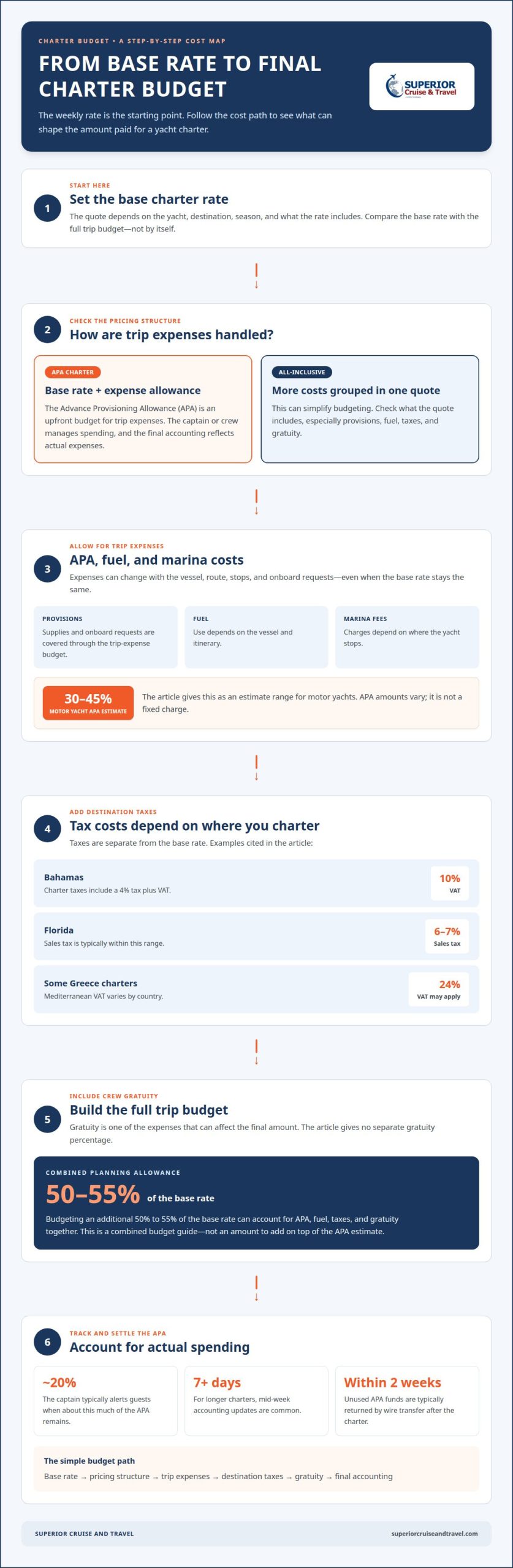
The base rate is only one part of a private yacht charter budget. APA, fuel, destination taxes, and gratuity can significantly affect the final amount.
APA, Fuel, and Taxes
The Advance Provisioning Allowance, or APA, is an upfront budget for trip expenses such as provisions, fuel, and marina fees. These costs vary with the vessel, itinerary, and onboard requests, even when the base rate stays the same.
The APA is an additional budget for charter expenses, and the amount can vary. For motor yachts, estimates can range from 30% to 45%. Budgeting an additional 50% to 55% of the base rate can account for APA, fuel, taxes, and gratuity together.
Fuel depends on the vessel’s use and route, while marina charges depend on where it stops. The captain typically alerts guests when about 20% of the APA remains. For charters lasting seven or more days, mid-week accounting updates are common.
Taxes also vary by destination. In the Bahamas, charter taxes include a 4% tax plus 10% VAT; Florida sales tax is typically 6% to 7%. Mediterranean VAT varies by country, and some charters in Greece may be subject to 24% VAT. Unused APA funds are typically returned by wire transfer within two weeks after the charter.
Crew Gratuities
Crew gratuity isn’t mandatory for yacht charters, but it’s widely accepted as customary. Budget for it separately, since gratuity is generally not included in the base charter fee and may be calculated as a share of that fee.
A common range is 10% to 20% of the charter fee, depending on destination and service. Caribbean and Bahamas gratuities are typically 15% to 20%; Mediterranean and European gratuities are typically 10% to 15%. A broker can explain how the gratuity is treated in the booking estimate, so it’s clear whether your planned total includes it.
What is the average weekly cost to charter a superyacht?
No single weekly figure describes every superyacht charter. Yacht type, charter format, trip length, and planned activities all affect how one quote compares with another.
All-Inclusive and Plus-Expenses Charters
An all-inclusive charter groups specified trip costs into its quoted rate, while a plus-expenses charter lists some costs separately. This matters because the lower advertised rate may not mean a lower overall budget.
For a fair comparison, separate the base rate from provisions, fuel, taxes, and gratuity. Then review what the quote includes, such as onboard meals or planned activities. Two luxury yacht offers may look similar at first, but different inclusions can change what you pay during the trip.
For example, one quote may include meals while another treats provisioning as an extra. That difference affects how you plan onboard dining, not just how you interpret the headline rate. A written breakdown lets you compare the same cost categories before choosing your next charter.
Motor and Sailing Yacht Prices
Motor and sailing yachts have different weekly price profiles, so compare each type with similar vessels and inclusions. Market averages place motor mega yachts above sailing mega yachts in weekly charter price.
This doesn’t mean every motor yacht costs more than every sailing yacht. Size, age, amenities, destination, and season all shape an individual quote. A smaller sailing yacht and a much larger motor yacht aren’t comparable just because both accommodate your planned group.
Also consider how you want to spend time on board. A motor yacht may suit an itinerary focused on moving between destinations, while sailing may be central to the experience. Match the vessel type to your route and activities before making the quoted weekly rate your deciding factor.
Duration changes the kind of charter you’re comparing. A Whitsundays day charter typically lasts four to six hours, while a week-long trip allows overnight stays and a longer cruising itinerary. Day options suit guests planning a shorter outing; overnight charters offer more time aboard and a different pattern of use.
These are different trip formats, not direct equivalents. Consider duration, onboard arrangements, and planned activities when assessing what each quote covers.
For a practical estimate, start with the charter length and yacht type, then compare inclusions and expenses. This makes the weekly rate more meaningful and helps distinguish a full luxury escape from a shorter day on the water.
Mega motor yacht charter prices
For a motor mega yacht, the weekly base rate reflects more than length alone. Vessels measuring 200 feet or more can vary widely in design, onboard amenities, crew arrangements, and itinerary. Compare the full charter proposal, not just its headline rate, to understand how those details shape the cost of an exclusive trip.
A crewed charter generally includes the captain and full-time crew in the base charter fee. Guests receive professional support throughout the voyage, while the route and onboard plans influence other expenses. A captain can shape the itinerary around your cruising preferences, planned stops, and activities, so the same vessel may have different operating needs on different trips.
Motor yachts have a distinct budgeting consideration: how you plan to use the vessel. A route with frequent travel between destinations can require different fuel use from an itinerary focused on longer stays. The captain’s route planning, expected cruising pace, and time underway help explain why a quote should reflect your actual plans rather than a generic route.
Your choice of yacht also affects a quote’s value. Compare length, layout, guest capacity, and amenities, then consider how each suits your group. A larger vessel may offer more space, while the right layout can matter more to guests who prioritize spending time together on board. Identify essentials and preferences before comparing rates.
Ask for a clear breakdown separating the base charter fee from trip expenses, taxes, and gratuity. The total depends on the yacht, destination, season, itinerary, and included services, and is provided after a quote request. This gives you a more useful comparison than treating the base rate as your final budget. It also shows which choices, such as route length or onboard activities, shape the estimate.
For a future charter, organize the details that shape your choice: preferred dates, destination, guest requirements, and the onboard experience you want. A broker can use these preferences to compare options and explain how their features fit your itinerary. If your route is flexible, alternative destinations or dates may open up different yacht choices.
Choose the vessel around the experience, then assess the complete proposal against your plans. For guidance on a tailored private yacht charter, consider how the yacht, crew, and itinerary fit together before making your next selection.
Superior Cruise and Travel: Chartered Cruise Ships
Superior Cruise and Travel can help you decide whether a private yacht or a Chartered Cruise Ship better suits your plans. If you’re looking for a more intimate voyage, a private yacht may fit; for a broader group experience, chartering a cruise ship may be a better option.
Share your preferred destinations, travel dates, group needs, and the experience you have in mind. These details help shape a conversation about suitable options, whether you’re considering a yacht charter, Luxury Cruises, or a World Cruise. The next step is to discuss your plans and choose the travel format that fits them best.
Contact Superior Cruise and Travel to talk through your upcoming trip.
Shape Your Next Journey
Your next voyage can start with the experience you want to create, whether that’s a private escape or a broader itinerary with family and friends. As you plan, consider how the destination, travel style, and time on board should work together. Those priorities can guide the conversation and help turn an ambitious idea into a thoughtful travel plan.
For a different kind of journey, Superior Cruise and Travel offers Luxury Cruises, Chartered Cruise Ships, and World Cruises. The price depends on the trip and is provided after a quote request; the destination, dates, itinerary, and selected travel arrangements shape the details.
When you’re ready to explore the next step, contact Superior Cruise and Travel to discuss your upcoming plans. A thoughtful beginning can make the journey ahead feel closer.
Frequently Asked Questions
What’s Included in a Super Yacht Charter Fee?
A crewed charter’s base fee includes the captain and full-time crew. Other inclusions depend on the charter terms: provisions, fuel, taxes, and gratuity may be listed separately or included in an all-inclusive arrangement. For example, a quote that includes crew but separates provisioning doesn’t cover food and drinks in the same way as a package that includes them. Review each cost category before comparing offers.
How Does a Broker Reserve a Charter, and What Are the Payment Terms?
A broker helps coordinate the reservation and explains the deposit schedule, which can differ by destination. For Caribbean charters booked more than six months ahead, a 25% deposit is required; Mediterranean charters require an initial deposit of 50% of the charter fee at booking. Under the payment schedule for an APA charter, the remaining charter fee and full APA are due eight weeks before the charter.
How Much Should You Budget for APA?
APA is commonly estimated at 25% to 40% of the base charter fee, while motor yacht estimates can range from 30% to 45%. The right allowance depends on the itinerary and expected expenses, including provisions, fuel, and marina charges. A longer route or more time underway can change spending needs. Ask for the APA estimate as a separate line in the charter budget so it remains distinct from the base fee.
How Is the APA Tracked and Settled During a Yacht Charter?
The captain typically alerts guests when about 20% of the APA remains, and charters lasting seven or more days commonly include mid-week accounting updates. These check-ins show how spending compares with the allowance while there’s still time to discuss plans. At the end, the final accounting reflects actual expenses. Unused APA funds are typically returned by wire transfer within two weeks after the charter.
How Much Does It Cost to Charter a Mega Yacht per Day or Week?
Charter costs vary with yacht size, destination, season, trip length, and included expenses, so day and weekly rates aren’t directly comparable. A day charter covers a shorter outing, while a week-long booking involves a longer itinerary and more time aboard. For a useful comparison, first match the yacht type, location, and inclusions, then consider how duration affects the overall budget.
What Is the Average Weekly Mega Yacht Charter Price by Yacht Size?
There’s no average weekly price that applies to every yacht size. Listings cover different vessel lengths, layouts, amenities, destinations, and seasons, so comparing unlike yachts can make an average misleading. Start by grouping options by length, then compare similar itineraries and inclusions within each group. This gives you a clearer view of how size relates to the charter budget.
What Factors Affect Mega Yacht Charter Prices?
The main factors include yacht size and type, destination, season, itinerary, and the expenses covered by the quoted rate. Fuel use and provisioning can change with the route and onboard plans, while local taxes vary by destination. Availability also affects which yachts fit your dates. Comparing options with similar features and trip plans makes it easier to see what drives differences in the quoted total.
Are Crew, Fuel, Food, and Drinks Included in Mega Yacht Charter Prices?
On a crewed yacht charter, the captain and full-time crew are included in the base charter fee. Fuel and provisions, including food and drinks, may be charged separately through APA, depending on the charter terms. Some charters use an all-inclusive structure instead. Read the quote’s itemized inclusions to see whether food, drinks, and fuel are covered or charged as trip expenses.