
The right itinerary reflects what you want to experience, not a one-size-fits-all schedule. Discerning traveler vacation packages can be shaped around your interests, preferred pace, and priority destinations. A travel agent can help refine the plan, suggest experiences, arrange bookings, and sequence visits to make busy days more manageable.
A trip can look perfect on paper yet leave little room for the experiences that matter most. Thoughtful planning balances the details, from cultural discoveries and local food to quieter days between major sights.
This guide explains how travel agents turn your preferences into a practical itinerary, what makes a day feel personal rather than crowded, and how to compare proposals with different options. You’ll also learn how to weigh pace, activities, and travel style to choose a journey that feels considered from the first stop to the last.
Key Takeaways
- Prioritize the experiences that matter most, then use them to shape a realistic route and daily rhythm.
- Adjust visit times and the order of stops to make busy destinations feel more manageable.
- Compare trip proposals by looking at the pace, experiences, and travel style each one offers.
- Review what a package includes so you can understand how its arrangements fit your travel plans.
- Consider whether a luxury cruise, chartered cruise ship, world cruise, or resort vacation best suits your preferred way to travel.
Travel agents and itinerary planning
A travel agent can shape an itinerary around your interests, suggest places to visit, and arrange bookings. The process begins by turning your priorities into a route with a realistic daily rhythm.
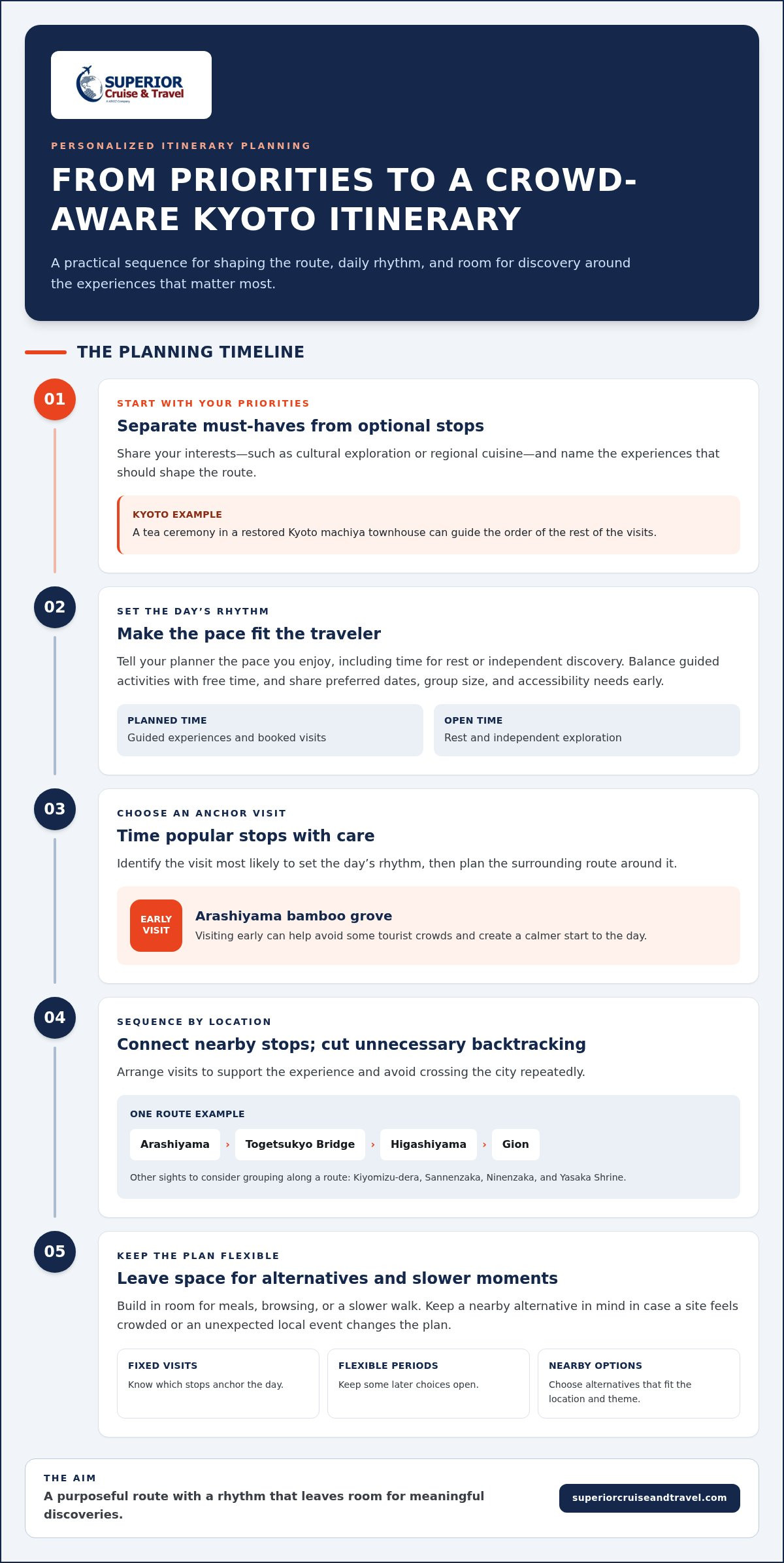
A personal travel planner can start with your preferred pace, interests, comfort needs, and travel dates. Explain which experiences matter most, then separate must-haves from optional stops. For example, someone interested in Japanese culture might prioritize a tea ceremony in a restored Kyoto machiya townhouse. That choice can guide the rest of the itinerary and the order of visits.
Use a few clear steps to make planning more useful:
- Share your main interests, such as cultural exploration or regional cuisine.
- Describe the pace you enjoy, including time for rest or independent discovery.
- Identify the bookings and experiences that should shape the route.
- Keep room for an opportunity such as a local festival near a planned museum visit.
Flexible, tailored planning helps discerning traveler vacation packages match the way you want to travel. Look beyond the destination: review the daily sequence, the balance of guided activities and free time, and how experiences connect. A Kyoto itinerary might pair a private tea ceremony with guided cultural exploration, while a culinary trip could focus on cooking classes, food tours, and local markets.
Travel apps can help you find local attractions, book accommodations, and connect with other travelers. Use one to collect potential stops, then compare each with the planned route. A saved market visit, for example, may fit naturally into a food-focused day, while a local festival could be an alternative to a museum.
Flexible and Tailor-Made Planning
Flexible planning shapes the order and pace of activities around your interests instead of forcing everything into a fixed schedule. When comparing discerning traveler vacation packages, consider the daily rhythm, planned experiences, and time for independent exploration. A tea ceremony followed by cultural visits creates a different day from one focused on markets and cooking classes.
Booking and Traveler Requirements
Booking, payment, and cancellation policies depend on the reservations and supplier terms for each trip. Before committing, read the written conditions for payment timing, cancellation deadlines, and restrictions.
Your dates, group size, and accessibility needs can shape accommodation, transportation, and activity choices. Share mobility requirements and preferred dates early, then review how the proposed route accommodates them. Read through each day to make sure the schedule reflects your priorities and allows suitable time between places.
Avoiding crowds and tourist bottlenecks
A well-paced itinerary accounts for crowd patterns when planning the route. In Kyoto, visiting Arashiyama’s bamboo grove early can help avoid some tourist crowds. That timing can create a calmer start before the day moves on to other places.
Ask your planner to identify the stops most likely to set the day’s rhythm. Schedule those visits at times that suit your priorities, then arrange nearby experiences around them. A Kyoto day could begin in Arashiyama, cross Togetsukyo Bridge, and continue toward Higashiyama and Gion. Sequencing stops thoughtfully helps avoid unnecessary backtracking between districts.
Build flexibility into the route, too. A full schedule leaves little room to adjust if a site feels crowded or an unexpected local event changes your plans. A useful itinerary has a main plan and alternatives that fit the location and theme.
- Schedule Arashiyama’s bamboo grove early, then plan the next stop around the route.
- Group nearby Kyoto sights together instead of crossing the city repeatedly.
- Keep an alternative activity near the planned stop in case the pace needs to change.
- Allow room between major visits for meals, browsing, or a slower walk.
Review the transitions as well as the attractions. A Kyoto route through Kiyomizu-dera, Sannenzaka, Ninenzaka, and Yasaka Shrine can feel more coherent when the order follows the day’s geography. Consider whether each transfer supports the experience or adds an unnecessary crossing. Cutting avoidable movement can make busy districts easier to enjoy.
Think about the kind of experience you want, too. A cultural day built around temples and historic streets needs a different rhythm from a food-focused outing with market stops. Share your preferred pace and priorities, then compare the proposed sequence. A thoughtful plan leaves room for meaningful discoveries without treating every famous sight as a must-see.
Before departure, review the itinerary for fixed visits, flexible periods, and nearby alternatives. A Kyoto day, for example, could keep an early visit to Arashiyama while leaving later choices open. The goal isn’t to avoid every popular place. It’s to choose when and how to experience each one, so the route feels purposeful rather than crowded with competing stops.
Accommodation can shape how a busy day ends, too. When comparing places to stay, distinguish documented amenities from assumptions about the experience they provide. A suite at the resort had a four-bottle bar. The presidential suite amenities listed four bottles of premium liquor. Such details may clarify what a particular suite includes, but they don’t replace checking its location, access, or fit with the route. If a crowded outing leaves you wanting a quieter pause, consider whether returning to your accommodation makes sense before adding another stop. Keep the decision flexible rather than building the day around an amenity alone. A restful break can preserve time for the places that matter most instead of turning every open hour into another transfer. The key question is whether the lodging supports your preferred pace.
Personalized client preferences
A personalized itinerary begins with the choices that make a trip meaningful to you. Name the experiences you value, the pace you prefer, and the settings you enjoy. One traveler might prioritize regional food in Italy, while another wants wildlife conservation experiences in Costa Rica. These priorities give a planner a practical basis for shaping the journey.
Separate must-haves from nice-to-haves before comparing itineraries. A useful planning conversation can cover cultural interests, activity levels, preferred accommodations, dining, and time for independent exploration. Be specific: “I want to learn how local dishes are prepared” gives clearer direction than “I like food.” In Italy, that preference might point to a traditional dinner with a local family and a chance to learn about regional dishes and cooking techniques.
Consider these preference prompts as you prepare:
- Interests: Would you choose a museum, historical site, workshop, or local festival?
- Daily rhythm: Do you prefer a full day of activity or a slower schedule?
- Setting: Would a family-run guesthouse or an eco-lodge suit your travel style?
- Purpose: Are you seeking cultural learning, nature, relaxation, or an exclusive experience?
For travelers drawn to nature, Costa Rica shows how a central interest can shape an itinerary. A wildlife conservation project focused on protecting endangered species could become a meaningful part of the trip. If low-impact lodging matters, an eco-lodge using renewable energy may also suit your preferences. Share both priorities so the planner can consider them together, rather than treating each as a separate add-on.
Traveling with companions calls for clear discussion, especially when interests differ. One person may prefer historical sites, while another favors a workshop or community event. List shared priorities first, then identify activities that can accommodate different interests without splitting up the trip. A culturally focused itinerary, for example, could include a museum, a historical site, and a workshop, with time to choose among them.
Explain what “exclusive” means to you, since it can describe different things. You might mean a smaller-scale cultural experience, an activity rooted in local traditions, or more privacy during the day. Give concrete examples rather than relying on labels. The clearer your preferences, from Italy’s regional traditions to conservation in Costa Rica, the easier it is to judge whether a proposed itinerary fits the trip you have in mind.
Trip proposals and options
A useful proposal connects destinations, travel arrangements, and activities in a clear itinerary. Compare the route and inclusions together to see how each option supports your priorities. Discerning traveler vacation packages should make those differences easy to understand.
Destinations in the Packages
Proposals can reflect different destinations and travel styles. A European cultural journey might connect Paris with Milan or Florence with Rome by high-speed train. An Andean itinerary could combine rail travel with a guided visit to Colca Canyon from Arequipa and a boat trip on Lake Titicaca near Puno. Compare the pace, transfers, and experiences along each route.
Other proposals may explore one region in greater depth. In Bhutan, an itinerary could include Tashichho Dzong in Thimphu and the weekend market near the Wang Chhu River. A helicopter route may depart from Paro and fly over Paro Valley toward Tiger’s Nest Monastery. Similarly, for travel across the United Arab Emirates, regional specialists like City Rise Tourism can craft tailored itineraries combining city landmarks with desert excursions. Consider how each destination fits your interests and preferred travel style, rather than choosing by place names alone.
Package Inclusions and Pricing
Flights, hotels, meals, and activities aren’t automatically included in every package. The proposal should state which arrangements are included, which are separate, and how each fits the itinerary. Package pricing depends on the route, accommodations, transportation, meals, and selected activities, and is provided after a quote request.
Read the proposal line by line before comparing options. A journey with train segments and guided excursions differs from one built around flights and hotel stays. Check how meals and activities fit the schedule and whether each day leaves time to enjoy the destination. This makes the practical differences between proposals easier to see.
Compare the travel rhythm as well as the destination. An Andean rail itinerary with an excursion from Arequipa and a Lake Titicaca boat trip offers a different experience from a city-focused European train journey. Discerning traveler vacation packages are easier to assess when you consider every transfer, activity, and accommodation as part of the whole trip.
Use this review sequence when weighing options:
- Match each route to your preferred destinations and travel pace.
- Separate included arrangements from additional components.
- Compare the activities and transfers that shape each day.
- Choose the proposal whose details best support your priorities.
For a European option pairing Paris and Milan, review the train segment alongside the accommodations and activities. For an Andean option that includes Puno, see how the Lake Titicaca excursion fits the route. These details clarify what each proposal covers and which journey best reflects your preferences.
Options can reflect sustainability and cultural interests, too. Eco-lodges that use renewable energy offer one sustainable accommodation option. Travelers can also incorporate guided nature and heritage outings, using specialized operators like geographic-algarve.com to experience regional natural parks and culture firsthand. In Kyoto, a guided day could begin in Arashiyama, cross Togetsukyo Bridge, and continue to Higashiyama and Gion by way of Kiyomizu-dera, Sannenzaka, Ninenzaka, and Yasaka Shrine. Travelers can build culturally immersive itineraries around local festivals, museums, historical sites, and workshops. Consider whether these choices match the experience you want, alongside the route, stays, and activities.
What is included in a Discerning Traveler vacation package?
A package should clearly describe its arrangements, from the itinerary to the services selected for your trip. Review the written proposal to see which accommodations, transportation, meals, and activities are included and which are separate.
Start with the trip outline. Compare each destination, travel segment, and planned experience with your priorities. For example, a cultural itinerary in Bhutan might identify visits to Tashichho Dzong in Thimphu and the weekend market near the Wang Chhu River. The outline should show how those stops fit together and which arrangements support them.
Review accommodations with the same care. A proposal may describe a resort stay, but the itinerary should clarify which accommodation arrangements are included in that package. Look for the selected stay, the dates it covers, and how it connects to the rest of the trip. This helps you understand the structure of a resort vacation before comparing it with another travel style.
Use this checklist to examine the proposal:
- Transportation: Identify the listed flights, trains, transfers, or other travel segments.
- Accommodations: Review the stays included and where they fit within the route.
- Meals: Note which meals are part of the arrangements and which are not.
- Activities: Separate planned visits and excursions from independent time.
- Travel protection: Review whether it is included as an arrangement or selected separately.
An Andean itinerary, for example, could combine rail segments with a guided visit to Colca Canyon from Arequipa and a boat trip on Lake Titicaca near Puno. Read the details to see which transportation and activities are part of the proposed package. A destination on the itinerary doesn’t, by itself, explain what has been arranged there.
Pay attention to meals and activity timing, too. A plan with a guided cultural visit differs from one that leaves the day open for independent exploration. A listed hotel stay and a listed excursion are also distinct package components. Clear descriptions make it easier to compare proposals by what they include, not just by destination names.
For a leisure trip centered on a resort, explore resort vacation options and consider how travel protection fits your plans. Before choosing, match the included arrangements to your desired pace, destinations, and experiences. A careful review helps you understand what the package covers and how each component supports the journey.
Superior Cruise and Travel: Luxury Cruises
Superior Cruise and Travel can help you explore options when you’re ready to plan a vacation. Its offerings include luxury cruises, chartered cruise ships, world cruises, and resort vacations, giving you different ways to shape a leisure trip around your preferred travel style.
Consider a cruise if you want your journey to center on time at sea, or explore a resort vacation if a destination-based stay better suits your plans. A world cruise may fit an extended voyage. Share the experiences and pace you have in mind to help guide the conversation toward a suitable travel style.
To discuss your travel plans, contact Superior Cruise and Travel or visit Superior Cruise and Travel.
Shape a Journey That Feels Like Yours
Your next step is to turn your travel wishes into a clear direction. Choose the feeling you want to bring home, whether that means a slower pace, a deeper connection with a destination, or time to enjoy each stop without rushing. That intention can help you decide what matters most as you refine discerning traveler vacation packages.
Superior Cruise & Travel offers luxury cruises, chartered cruise ships, and world cruises for travelers considering a voyage as their next escape. Think about the journey you’d most enjoy, then share your priorities and preferred travel style with the team. Start a conversation to explore a direction that suits you.
Contact Superior Cruise and Travel to discuss your travel plans. Your next memorable journey can begin with a clear idea of what matters to you.