
A small ship can make Scotland’s coastline the heart of the journey, rather than simply a view between ports. Scotland luxury cruises can include a 7-night voyage, with island stops and themed itineraries shaping the experience from day to day. The right choice depends on what you want to see and how you’d like to travel.
It’s natural to want comfort and memorable scenery in the same trip, while wondering whether a smaller vessel offers the cabins, onboard experience, and variety of stops you’re looking for. Small-ship voyages bring the route and character of each destination into focus, making itinerary details especially important.
Explore how Scotland itineraries are structured, what to consider when comparing cabins, and how island calls and themed voyages shape your time at sea and ashore. This guide will help you understand the options and picture a voyage that fits your priorities.
Key Takeaways
- Compare routes by the islands and coastal stops they include, not just the overall cruise length.
- Match your cabin choice to the comfort and onboard experience you want during time at sea.
- Look beyond scenery when choosing island stops: castles, historic sites, and local culture can shape the character of each day ashore.
- Choose a themed voyage around your interests, whether that means wildlife, golf, whisky, or heritage.
- Use your priorities for itinerary, accommodation, and voyage style to narrow down the luxury cruise that suits you.
Luxury small-ship cruise itinerary around Scotland
A 7-night voyage can focus on Scotland’s islands and coastal scenery. Compare the route, cabin arrangement, and time ashore before choosing.
Ship Accommodations and Cabin Categories
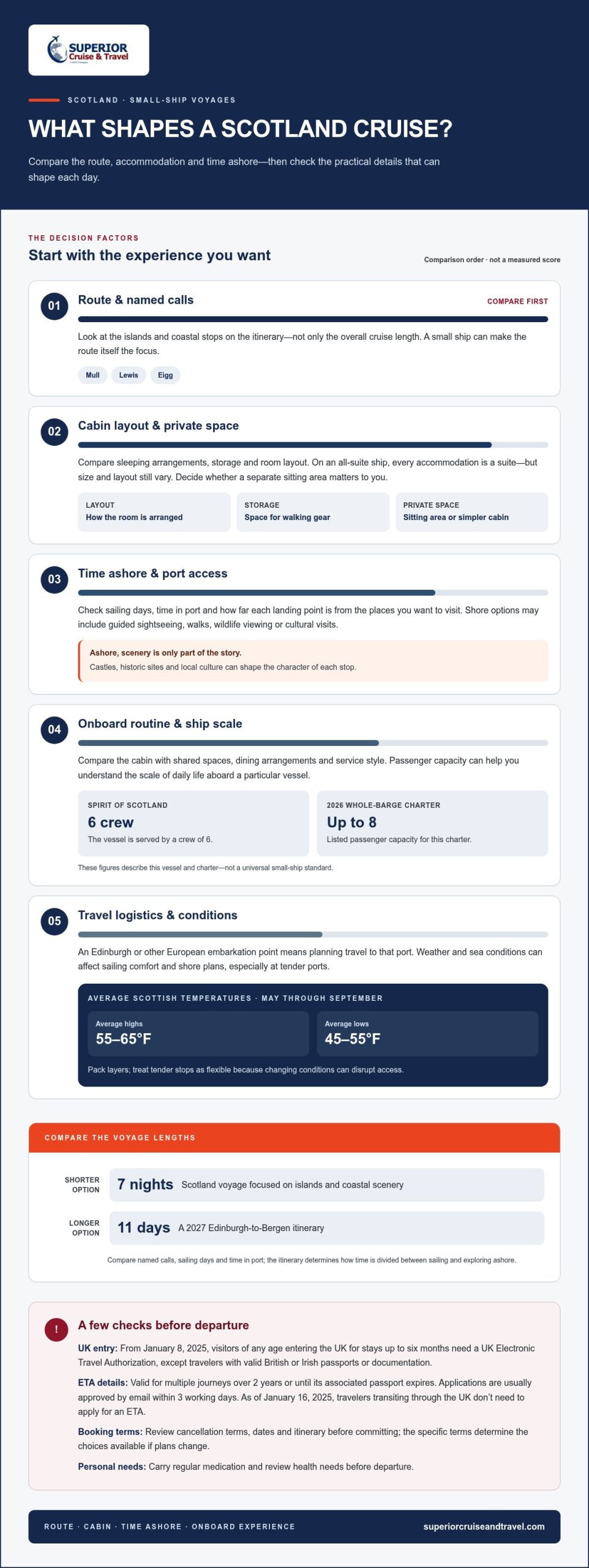
Cabin categories determine where you sleep and how much private space you have onboard. Compare the listed layouts and amenities, then decide whether an all-suite ship suits your priorities. “All-suite” means every accommodation is a suite, though size and layout vary by vessel. Consider whether you value a separate sitting area or prefer a simpler cabin. The ship’s accommodations matter as much as its itinerary.
Itinerary Length, Ports, and Ship Size
Length and route determine how much time you spend sailing versus exploring ashore. A 2027 Edinburgh-to-Bergen itinerary is listed as an 11-day cruise, while a 7-night Scotland voyage offers a shorter option. Small ships can make an island-focused route the priority; compare each itinerary’s named calls, sailing days, and time in port. Before booking, review the cancellation terms alongside the dates and itinerary, since the specific terms determine the choices available if plans change.
Departure Options and Travel Requirements
For US travelers, the departure point determines whether a flight to Europe is needed. If the itinerary begins in Edinburgh or another European port, plan travel to that embarkation point; routes vary. From January 8, 2025, visitors of any age entering the UK for stays up to six months need a UK Electronic Travel Authorization, except travelers with valid British or Irish passports or documentation. An ETA is valid for multiple journeys over 2 years or until its associated passport expires. Applications are usually approved by email within 3 working days; as of January 16, 2025, travelers transiting through the UK don’t need to apply for an ETA. Carry regular medication and review personal health needs before departure.
Port Access and Shore Excursions
Scottish cruise ports vary by route. Compare the itinerary’s named stops and how each arrival point connects to the places you want to visit. Island destinations such as Mull, Lewis, and Eigg offer different ways to experience Scotland’s landscapes and heritage. Excursions may include guided sightseeing, walks, wildlife viewing, or cultural visits. Check the time ashore and the distance between each landing point and the attractions on offer.
Weather, Sea Conditions, and Port Changes
Scottish weather and sea conditions can affect sailing comfort and shore plans, particularly at tender ports. Average highs from May through September range from 55 to 65°F, while average lows range from 45 to 55°F. Pack layers, and treat tender stops as flexible parts of the route because changing conditions can disrupt access. For booking timing, compare the departure dates and cabin categories early; cancellation rights and deadlines are set by the specific booking terms, so read them before committing.
Cabin accommodation and onboard facilities
Cabin layouts affect privacy, storage, and how comfortably you can settle in after time ashore. Compare the room with the shared spaces, dining arrangements, and onboard service style.
Cabin Categories and Suite Accommodation
Start with the cabin category, then compare its layout, sleeping arrangement, storage, and private space. On an all-suite ship, every accommodation is a suite, but layouts still differ. Consider how you’ll use the room between island visits: a separate sitting area may matter if you like to unwind indoors, while practical storage helps keep walking gear organized. Use the vessel’s cabin descriptions to compare options like for like.
Passenger Capacity and Onboard Space
Passenger capacity affects the scale of shared spaces and the feel of daily routines. Spirit of Scotland is served by a crew of 6, and its 2026 whole-barge charter is listed for up to 8 passengers. Those details give a sense of this vessel’s intimate format, not a universal small-ship standard. Compare each ship’s capacity with its lounge, dining room, and outdoor areas to understand how guests share the space.
Dining is part of the onboard experience, not just a break between excursions. A testimonial about Lord of the Highlands describes four- or five-course meals, offering a concrete example of multi-course dining. Menus and service styles vary by voyage, so consider whether you enjoy lingering over dinner or prefer a quicker meal before an evening activity. Ask how dining is arranged for solo travelers and groups.
Shared tables can make conversation part of the journey. One testimonial describes an individual passenger sharing a table with 5-7 other passengers. That example shows how seating can help guests meet, though arrangements differ between ships and sailings. If you value quieter meals, compare dining options and lounge layouts before selecting a cabin and vessel. Glasgow may be a departure or arrival point on some broader travel plans, while the cruise itself shapes your onboard routine.
Use this short comparison to focus your research:
- Cabin: Compare layout, sleeping setup, storage, and private space.
- Dining: Review meal style and seating arrangements, including shared-table examples.
- Lounges: Consider where you’ll relax after walking excursions or watching Scottish scenery.
- Service: Read cruise reviews for specific comments about meals, hospitality, and daily routines.
Reviews are most useful when they describe a particular detail, such as meal pacing or how a lounge works during a full sailing. Use those examples alongside cabin plans, rather than relying on general praise. For help comparing luxury cruise travel options, bring your preferred cabin style and onboard priorities into the planning conversation.
Historic sites, castles, and Celtic culture
Scottish island itineraries can bring together castles, religious heritage, community history, and wildlife. Compare the named stops and shore visits with the stories you most want to explore. A castle visit offers a different perspective from an island walk or wildlife-focused landing, so the route matters as much as its theme.
On Skye, Dunvegan Castle presents 800 years of history. Its long association with the island makes it a compelling stop for guests interested in Scotland’s clan heritage and historic buildings. Check whether a sailing includes time to visit the castle itself, rather than only a scenic call near Skye. The length and timing of a shore visit shape how much you can experience on land.
Iona offers another kind of historic encounter: a restored 12th-century abbey. For travelers drawn to Celtic Christianity, compare an itinerary’s Iona call with its other island stops. A visit can pair architectural interest with time to experience the island’s landscape. Weather and sailing schedules can influence how a day ashore unfolds, so review the planned duration and excursion details together.
Eigg’s history carries a more difficult story. In 1577, MacLeods massacred 395 MacDonalds in a cave on the island. Eigg later became community-owned in 1997, giving visitors a chance to consider both its painful past and its modern community history. Look for an itinerary that provides context for the island’s heritage, rather than treating every landing as a brief photo stop.
St Kilda brings history and wildlife into the same remote setting. People occupied the islands for 5,000 years, and the remaining population, fewer than two score people, left in the 1930s. Nearly a million seabirds nest on the World Heritage-listed islands. A themed voyage that includes St Kilda may appeal to guests who want cultural context alongside seabird viewing, while the route and conditions influence access.
Food can add a further cultural thread. Flavours of the Hebrides was shortlisted for Culinary Cruise Route of the Year at Olive Magazine’s inaugural Travel&Taste Awards, with the shortlist announced on 3rd August 2026. Use that example to identify voyages built around regional cuisine, then compare their island calls and onboard dining focus. A food theme works best when the itinerary connects meals with the places and communities visited.
Before choosing, match your interests to the route:
- Castles: Look for a Skye call that allows time for Dunvegan Castle.
- Religious history: Compare itineraries that include Iona’s abbey.
- Community heritage: Consider whether Eigg’s layered history fits your interests.
- Wildlife: Look for St Kilda and its seabird colonies on the itinerary.
- Local food: Compare culinary themes with the islands visited.
Luxury cruises in Scotland and the Hebrides
The Hebrides comprise two distinct island groups, and routes vary in their balance of coastal scenery, cultural stops, and time aboard. Compare the itinerary’s named islands and embarkation details before choosing a voyage.
Inner and Outer Hebrides Routes
The Inner Hebrides include islands such as Mull, Skye, Iona, and Eigg, while the Outer Hebrides stretch farther into the Atlantic. The Outer Hebrides archipelago extends 130 miles, so a route through this region can involve substantial sailing between calls. Scotland has more than 800 islands, making the itinerary’s specific stops more useful than a broad island-count claim.
For a focused Inner Hebrides trip, look for a route linking nearby islands with time to explore ashore. A voyage that includes Mull and Iona, for example, can pair coastal landscapes with a cultural visit. An Outer Hebrides itinerary may suit travelers seeking a more remote island experience. Compare sailing days, scheduled calls, and the time allocated to each stop.
Comfort aboard also depends on the vessel and the route. A 2026 whole-barge charter of Spirit of Scotland is listed for up to 8 passengers. That intimate capacity is one example, not a standard for every Scottish cruise. Check how the ship’s size, cabin arrangements, and daily schedule fit your preferred balance of privacy and exploration.
St Kilda and Outer Hebrides Itineraries
St Kilda features on some Outer Hebrides routes. Rather than assume you’ll land, check how the itinerary describes the visit: does it plan time for shore exploration or scenic viewing from the vessel? The Outer Hebrides’ far-flung location makes route order and sailing time important considerations.
Use the itinerary to see how St Kilda fits with other islands, such as Lewis. A route combining both can contrast a named island community with a more isolated destination. The schedule also shows whether the voyage prioritizes fewer, longer calls or covers more of the Hebrides. Weather and sea conditions can affect access to exposed locations.
When comparing comfort and experience, note the vessel type, cabin category, and planned time at each stop. A private charter and an individual passenger booking create different onboard arrangements. For example, Spirit of Scotland’s listed 2026 charter capacity gives a concrete point of comparison, while the itinerary shows what the voyage includes geographically.
Cruise Lines Offering Scotland Itineraries
Named small-ship examples for Scotland include Spirit of Scotland and Lord of the Highlands. These are vessel names, so compare the operator, route, cabin options, and included island calls for each itinerary. This helps you assess the voyage itself rather than relying on a cruise-line label alone.
Start with your preferred region, then compare the named ship and departure details with the islands you want to visit. If St Kilda is a priority, look for it in the route and review how the schedule accommodates the remote call. For Inner Hebrides scenery, check for stops such as Mull or Iona. Comparing routes makes the choice between vessels more practical.
Finally, weigh the onboard experience against the itinerary. A small vessel can put the Hebrides at the heart of your trip, while a broader cruise may combine Scotland with destinations beyond the islands. Consider passenger capacity, accommodation style, and time ashore together, so the ship and route support the kind of journey you want.
Golf, wildlife, whisky, and heritage cruises
Themed voyages give a Scotland cruise a particular focus, from wildlife watching to regional food and heritage. Compare the theme with the itinerary’s destinations and time ashore, then consider how much of the experience takes place ashore versus onboard.
For warmer average conditions, May through September is a useful season to consider. Average highs in Scotland during these months range from 55 to 65°F, and average lows range from 45 to 55°F. Your preferred theme can help narrow the timing: wildlife sightings are seasonal, while whisky and heritage interests may shape the route regardless of season.
Late August offers a specific wildlife example: waters off Ardnamurchan can host thousands of gannets and guillemots diving for fish. If seabirds are a priority, look for itineraries that include the area during this late-August feeding activity. Bring binoculars and allow time on deck: wildlife watching depends on being in the right place at the right moment.
A wildlife-focused cruise can also combine observation with landscape and heritage. Compare the route’s named coastal areas, time spent sailing near them, and whether planned shore visits complement onboard viewing. A remote destination may offer a different experience from a port with more developed attractions. Check how the itinerary balances wildlife, walks, and time to take in the scenery.
Golf and whisky can each help guide your choice of destinations. For golf, compare the itinerary’s named stops with the courses or golfing experiences you want to prioritize, and factor in travel time ashore. For whisky, look for a route that includes distillery or regional food visits. The itinerary should show how these interests fit alongside sailing and other excursions.
Heritage voyages can bring together local history, architecture, and cultural visits. Compare a heritage-led route with one centered on wildlife, and note which stops get the most time. If you want several interests in one trip, identify your essential experience first. A voyage built around whisky may still include coastal scenery, but its schedule may differ from a wildlife-focused itinerary.
Use these points to compare themed itineraries:
- Wildlife: Match seasonal sightings, such as late-August seabirds off Ardnamurchan, to the route.
- Golf: Compare named destinations and practical time available ashore.
- Whisky: Look for itinerary details connecting regional food or distillery visits with the voyage.
- Heritage: Review the cultural stops and how much time each visit allows.
Choose your priority, then compare the route and season against it. Explore luxury cruise options to shape a Scotland voyage around the experiences that matter most to you.
Superior Cruise and Travel: Luxury Cruises
Superior Cruise and Travel can help you turn your Scotland priorities into a luxury cruise plan. Share the islands, heritage stops, wildlife interests, cabin style, and travel dates that matter most, then compare voyage options against those preferences. If privacy and a more personal setting are central, a chartered cruise ship may be worth considering; if Scotland is one part of a longer journey, explore how a world cruise fits your plans. The best starting point is a clear sense of what you want from time aboard and ashore. That makes it easier to focus on routes and experiences aligned with your travel goals. To discuss a Scotland voyage, contact Superior Cruise and Travel.
Choose the Voyage That Feels Like Yours
The most useful next step is to turn your interests into a clear travel brief. Decide what matters most: quiet time aboard, close-up wildlife viewing, cultural visits, or a route that combines several priorities. If you’re weighing Scotland luxury cruises, use those preferences to guide your choice instead of trying to fit every possible stop into one voyage.
Superior Cruise and Travel plans luxury cruises, chartered cruise ships, and world cruises. These options offer different ways to shape a Scottish sailing, from a focused cruise to a broader journey. Bring your preferred travel dates, destinations, and onboard priorities to the conversation, then explore the possibilities at a comfortable pace.
Start planning your Scotland cruise and take the next step toward a voyage that reflects what you most want to experience.
Frequently Asked Questions
Ok, So Why Should You Consider Small Ship Scottish Cruises?
Choose a small-ship voyage if you want the route to focus on Scottish islands and coastal destinations. Its key advantage is the potential to align the vessel and itinerary with your interests, whether wildlife, heritage, or island visits. Compare the named stops and onboard setup, then consider which experience you’d regret missing. This helps you choose among scotland luxury cruises based on your priorities, not just the ship’s description.
What luxury cruises visit Scotland, and which ports and destinations do they include?
Small-ship examples include Spirit of Scotland and Lord of the Highlands, with Scottish itineraries featuring destinations such as Skye, Mull, Iona, Eigg, and St Kilda. An 11-day 2027 itinerary runs from Edinburgh to Bergen, combining a Scottish departure with travel beyond Scotland. Treat vessel names and route details separately: compare the actual sailing dates, embarkation port, island calls, and arrival port to see which voyage matches your plans.
What are the main Scottish cruise ports, and how easy are they to reach from attractions?
Scottish cruise ports vary by route. Compare the itinerary’s named stops, time ashore, and distance from each landing point to the attractions you want to visit.