Can a business meeting on a cruise ship deliver focused work without letting the vacation atmosphere take over? It can, when you design the voyage around the meeting’s objectives. Start by assessing the space, technology, connectivity, privacy, and schedule your sessions require, then consider how attendees will balance work and leisure.
Treat the cruise as a coordinated travel and event-planning project, not simply a venue booking. The right setting depends on your group, the meeting’s purpose, and the experience you want attendees to share. With the practical details planned in advance, a cruise can bring people together in a fresh setting while keeping business priorities clear.
This guide explains how to evaluate a ship for your meeting, plan around onboard logistics, and coordinate attendee travel and schedules. You’ll also learn when a chartered ship may be worth considering and how to make room for meaningful connection without losing sight of the agenda. Start with the outcomes you want, then shape the voyage to support them.
Key Takeaways
- Match the cruise setting to your meeting’s purpose, attendee needs, and desired level of shared experience.
- Assess meeting-room access, audiovisual requirements, connectivity, and privacy before settling on a ship.
- Compare a business meeting on a cruise ship with a land-based venue across travel coordination, schedule flexibility, and opportunities for group connection.
- Build a practical event plan by separating essential work sessions from optional activities and informal networking.
- Coordinate cruise selection, group travel, and event priorities as one connected planning process, and consider a charter when your group’s objectives and scale call for a tailored experience.
Is a Business Meeting on a Cruise Ship Right for Your Goals?
Planning a company event means balancing focused work with attendee comfort and a setting that feels worth the journey. A cruise offers a distinctive backdrop, but scenery alone won’t make an event successful. The right choice depends on what the meeting must accomplish, who needs to attend, the itinerary, and how much of the program calls for formal sessions versus shared experiences.
A cruise-ship business meeting is a work event hosted aboard a passenger ship, where the meeting venue and the group’s travel experience take place in the same setting. Unlike a standard land-based venue, the ship is both the location for planned sessions and part of the journey. For general context on passenger ships and their role in tourism, see this cruise ship industry overview.
Which business meeting formats can work at sea?
A business meeting on a cruise ship can suit different formats when the agenda reflects the group’s purpose and practical needs. Hosting a meeting aboard a ship doesn’t automatically mean reserving the entire vessel. A group can plan a ship-based event without making a full-ship charter the default.
- Leadership sessions: Set aside focused time to work through priorities, make decisions, or align on a plan.
- Team meetings: Pair structured discussions with shared time to strengthen working relationships and encourage collaboration.
- Client gatherings: Make room for conversation and relationship-building in a setting distinct from a typical office meeting.
- Company-wide events: Bring employees together around learning, recognition, or a shared direction, with an agenda suited to the group and event format.
When does a cruise setting make sense for a company?
A cruise may be a good fit when shared travel time supports the event’s goals. For example, a team that rarely meets in person could schedule sessions for alignment, then leave room for informal conversation and relationship-building. A client event may benefit from combining planned business time with shared experiences, as long as those experiences complement rather than compete with the purpose of the gathering.
Consider the limits as carefully as the appeal. If attendees need highly predictable schedules, frequent off-ship appearances, or the flexibility to respond to changing work demands throughout the day, an itinerary may add coordination challenges. Map the essential work first, then assess whether the voyage and available time support it. If the business agenda would need to bend around the trip, the format may not be the best fit.
Think through attendee needs, too. The group’s comfort, travel preferences, and ability to participate in planned sessions all shape whether the experience will feel productive and welcoming. Broader cruise considerations, such as choosing a suitable itinerary and planning the overall trip, are covered in this luxury cruise vacation planning guide.
Start with a clear test: can the setting support the work, the people, and the schedule without making any one of them an afterthought? If so, a cruise can bring the meeting and the shared experience together with intention.
How to Make a Cruise Ship Work as a Professional Meeting Venue
Choose a venue based on the work your team needs to do, not just on how appealing a room looks. For a business meeting on a cruise ship, align the meeting format with group travel, the itinerary, and the event arrangements for the selected ship. Assess each requirement against the specific event plan instead of relying on general descriptions.
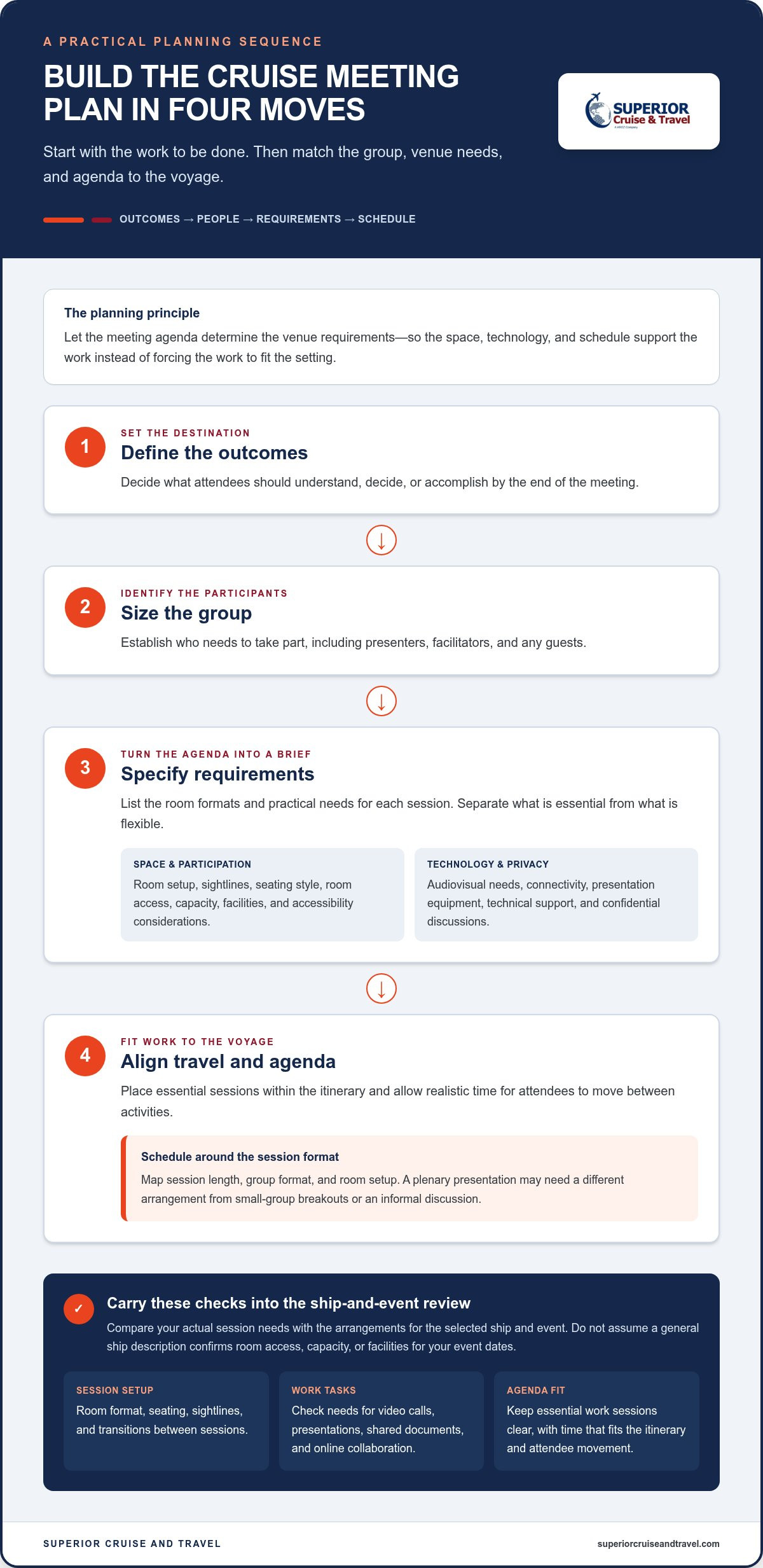
Let the meeting agenda determine the venue requirements, so the space, technology, and schedule support the work instead of forcing the work to fit the setting. Build the plan in sequence:
- Define the outcomes. Decide what attendees should understand, decide, or accomplish by the end.
- Size the group. Establish who needs to participate, including presenters, facilitators, and any guests.
- Specify requirements. Set out room formats, audiovisual needs, connectivity, privacy, and accessibility considerations.
- Align travel and agenda. Place essential sessions within the itinerary and allow realistic time for attendees to move between activities.
Match the ship and meeting space to the agenda
Map session length, group format, and room setup in the event brief. A plenary session, where everyone hears the same presentation, may call for a different arrangement from small-group breakouts or an informal discussion. Note the preferred setup for each session, then identify which requirements are essential and which are flexible.
Describe the practical details that affect participation: sightlines, seating style, access to presentation equipment, and transition time between sessions. Compare those requirements with the arrangements for the ship and event. Don’t assume a general ship description establishes room access, capacity, or facilities for your event dates.
Plan around connectivity, technology, and privacy
List the tasks attendees must complete, not just the devices they might bring. Video calls, presentations, shared documents, and confidential discussions each place different demands on the plan. Identify which sessions require a reliable connection, whether participants need to collaborate online, and what technical support or equipment the format depends on.
Connectivity and technical arrangements can vary by ship, itinerary, and intended use, so make them part of the event plan. For sessions that depend on a live connection, prepare a backup, such as keeping key materials available offline or having an alternative to a video call. For sensitive topics, clarify privacy expectations and choose a format suited to the information being discussed. If a conversation requires discretion, consider limiting attendance and the materials shared.
Keep a written record of the room arrangements, equipment, connectivity expectations, and any conditions affecting session timing. Separate confirmed details from assumptions in the working agenda so the team can plan clearly and adjust early if a requirement changes. Coordinating meeting priorities alongside group travel is part of planning corporate cruise events, connecting the event brief to the wider trip.
Cruise Ship vs. Land-Based Venue: Compare the Meeting Trade-Offs
A memorable setting still needs a realistic work plan. Compare venues against the same priorities before deciding: how attendees will travel, what the schedule demands, what the sessions require, and whether shared time supports the event’s purpose. A cruise isn’t automatically more engaging or practical, just as a land-based venue isn’t automatically easier.
| Planning factor | Cruise ship | Land-based venue |
|---|---|---|
| Travel coordination | Group travel and event planning are connected to the voyage and itinerary, creating a shared journey but requiring coordinated arrangements. | Attendees travel to a fixed location, which may suit a local group but can involve separate arrival plans. |
| Attendee experience | The setting can add a distinctive shared experience around the meeting, depending on the itinerary and event format. | The experience centers more on the venue and planned event, with less travel built into the program. |
| Schedule flexibility | Sessions need to fit the voyage schedule, so timing may be less adaptable to last-minute changes. | A fixed venue may allow easier adjustments to session times, subject to its arrangements. |
| Meeting requirements | Room access, technology, connectivity, and privacy need to fit the ship and planned sessions. | Requirements depend on the selected venue, with arrangements organized around the meeting program. |
| Group connection | Time together during the journey may complement structured sessions and support informal conversation. | Connection can be built through the agenda, meals, and activities, without a shared voyage. |
When a cruise ship may be the better fit
A cruise may suit an event whose goals extend beyond completing a set of presentations. If a company wants structured work alongside time for colleagues or clients to connect, a shared journey can support both when the itinerary leaves room for the agenda. It may also suit a corporate event designed around a unified group experience. The itinerary and meeting requirements should support that purpose, not compete with it.
When a conventional venue may suit the meeting better
A land-based venue may be a stronger match when the schedule changes frequently, attendees need to join locally for only part of the event, or the agenda is a short, single-session meeting. A familiar location can offer a more predictable routine for teams that need straightforward access and flexibility around start times. Choose it for its practical fit, not simply because it feels conventional.
For a business meeting on a cruise ship, the main trade-off is combining a meeting program with a shared itinerary. That can serve the event well when travel adds value, but it can create friction if the work depends on frequent changes or easy off-site attendance.
Venue fit depends on the agenda, attendee needs, and logistics, not on novelty alone. Compare both options against those factors, then choose the setting that makes the work possible and the attendee experience worthwhile.
Plan the Meeting: A Practical Cruise-Event Checklist
A smooth event connects the business purpose with the attendee experience and travel plan. Use one working checklist to track decisions, owners, deadlines, and updates. Make clear which sessions everyone is expected to attend, and leave room for optional experiences so the trip feels welcoming without blurring the meeting’s priorities.
Set objectives, attendee expectations, and success measures
Translate the company’s purpose into outcomes the agenda can deliver. If the goal is alignment, prioritize discussion and decisions. If it’s learning, allow time for instruction and questions. Tell attendees which sessions are essential and which meals, activities, or networking opportunities are optional. Afterward, evaluate the event against practical measures, such as decisions made, follow-up actions assigned, or attendee feedback.
- Purpose and agenda: Record the event’s objectives, priority topics, session owners, and the decisions or outputs each session should produce.
- Attendee profile: Track attendee names, roles, preferred contact details, relevant travel information, and accessibility needs so arrangements reflect the group.
- Travel coordination: Set a process for collecting travel details, sharing key dates and instructions, and communicating updates to attendees in one consistent place.
- Event requirements: Document meeting arrangements, presentation needs, meal plans, and other details that affect participation. Assign an owner to each open item.
- Itinerary alignment: Compare the planned agenda with the voyage schedule. Identify sessions that must happen at a particular time and activities that can be adjusted if plans change.
- Pre-departure communication: Send a concise guide covering the schedule, required sessions, optional activities, travel arrangements, accessibility contacts, and where to find updates.
Coordinate group travel and event details
Keep the business agenda and cruise itinerary connected as decisions are made. If a session depends on the whole group being present, treat its timing as a priority. Flexible networking can sit in a less fixed part of the schedule. Track decision points, who owns them, and when they need resolution. For groups with more involved travel coordination, large-group cruise travel logistics can be part of the planning picture.
Before departure, review the checklist with the people responsible for the agenda, attendee communications, and travel arrangements. Make sure accessibility needs have a clear point of contact and attendees know which sessions are required. This final review can surface gaps while there’s still time to address them.
For guidance on how professional planning can support a coordinated trip, explore professional cruise planning. To bring your event priorities and group travel together, plan your corporate cruise event with a dedicated planning team.
Bring the Business Meeting Together with a Cruise Travel Planner
A successful cruise event takes more than a meeting space. Cruise selection, attendee travel, event priorities, itinerary details, and the overall experience need to work as one plan. Superior Cruise and Travel coordinates these parts so the business agenda stays central and travel arrangements support it.
Superior Cruise and Travel coordinates meetings, corporate events, group travel, and luxury cruises through a global supplier network. The agency plans business meetings on cruise ships around your objectives and attendee needs, connecting the event to the wider trip instead of treating the ship as a venue in isolation.
What a coordinated planning process can bring together
Planning starts with your event goals and attendee profile, then connects cruise arrangements with the travel components that matter to the group. This keeps decisions about the meeting program aligned with the wider journey. Superior Cruise and Travel uses its global supplier network to coordinate planning across those elements and shape arrangements around the event brief.
If your objectives and group scale call for a more tailored experience, Superior Cruise and Travel can arrange a chartered cruise ship. For broader private-charter travel that includes yachts or jets, explore private yacht and jet charter planning. Travel protection options can also be included in a multi-component travel experience, with terms suited to the particular arrangements.
Move from an event idea to a clear planning brief
You don’t need every detail settled to begin shaping the event. A concise brief gives the planning conversation a useful starting point and clarifies which decisions matter most. Include:
- Objectives: What should the group accomplish, learn, or decide?
- Group needs: What’s the approximate attendee profile, and are there accessibility or travel considerations to account for?
- Timing: What dates or general travel window are preferred, and how should the meeting schedule relate to the journey?
- Meeting essentials: Which sessions are required, and what room, technology, privacy, or presentation needs are central to them?
- Experience priorities: Which shared activities matter to the event, and what should remain optional?
With these priorities in view, Superior Cruise and Travel coordinates cruise selection, group travel, and corporate-event planning as connected parts of the project. A chartered ship can be considered when the brief calls for a tailored group experience, while other cruise arrangements may better suit different objectives and attendee needs.
Start with the outcomes you want and the needs of your attendees. Discuss your corporate meeting and cruise planning with Superior Cruise and Travel, and take the next step toward a well-organized event.
Turn Your Meeting Vision into a Clear Next Step
Shape a cruise event before the details become fixed. Start with one practical question: what should attendees be able to do differently after the meeting? The answer can guide the agenda, the experience you build around it, and the decisions your team makes as planning begins.
A business meeting on a cruise ship can be more than a change of scenery when every part of the experience has a purpose. Give your idea room to take shape, even if the itinerary, group needs, or meeting format are still under consideration. A focused conversation about your priorities can help turn an early concept into a workable direction.
Ready to explore what fits your team? Start planning a business meeting at sea with Superior Cruise and Travel. Your next company gathering can bring people together with intention and give them a shared experience to carry forward.
Frequently Asked Questions
Can you hold a business meeting on a cruise ship?
Yes. A company can hold a business meeting aboard a passenger ship by arranging a meeting program alongside the cruise travel. The event might be a leadership session, a client gathering, or part of a broader corporate trip. Before building the agenda, define the decisions or outcomes attendees need to leave with. Then shape the event arrangements around that purpose rather than assuming every itinerary or ship will suit every meeting.
Are cruise ships equipped for business meetings and presentations?
Meeting and presentation spaces, equipment, and connectivity depend on the ship and event arrangements. For a presentation, document what the speaker needs, such as display connections, sound, and a way to share materials with attendees. For a hybrid session, clarify the online participation requirements as well. Treat each technical detail as an event-specific planning item rather than assuming it is standard across ships.
Is a cruise ship a good venue for a corporate retreat or team meeting?
A cruise can work well for a retreat when the team benefits from time together beyond formal sessions. For example, a department launching a new initiative might use the event for planning discussions and relationship-building among colleagues who usually work apart. It may be less suitable if participants need to leave frequently or the retreat depends on changing plans throughout the day. Consider attendee comfort and travel preferences as part of the decision.
How do you keep a business meeting on a cruise ship productive?
Keep the agenda focused and make ownership clear. Assign a facilitator to guide each session, a note-taker to capture decisions, and an owner for follow-up actions. Share materials in advance so meeting time is used for discussion rather than reading documents together. Build short breaks between sessions and plan a backup approach for any work that depends on connectivity. These steps help the group stay engaged and leave with clear next actions.
Can a company charter a cruise ship for a business meeting?
Yes. A company can charter a cruise ship for a corporate meeting or event. A charter may suit an event brief that calls for a tailored group experience or specific priorities for how the voyage and program fit together. It isn’t automatically necessary for a cruise meeting. Compare a charter with other cruise arrangements against the event’s goals, group needs, and planning requirements.
What should planners consider when organizing a corporate meeting at sea?
Start by identifying who is attending, what they need to accomplish, and which travel details could affect participation. Account for accessibility requests, arrival plans, session materials, communication methods, and how attendees will receive schedule updates. Also consider whether participants have responsibilities outside the event, such as time-sensitive work or client commitments. A designated point person for questions helps attendees know where to turn as the event approaches.
How should a company compare a cruise ship with a hotel meeting venue?
Compare the complete attendee experience, not just the meeting room. Consider whether participants are traveling from different places, whether the agenda needs room for last-minute changes, and how much value shared travel adds. A hotel may suit a brief meeting or locally based group, while a cruise may fit an event built around a shared journey. Choose the option that supports the work and makes participation practical.
Can travel protection be included when planning a cruise meeting?
Travel protection options can be included when a cruise meeting involves multiple travel components. The relevant terms depend on the arrangements, so review what applies to the planned trip and protection option before making decisions. Travel protection is distinct from insurance underwriting. If your company is coordinating a cruise alongside other travel elements, include protection in the broader planning discussion rather than treating it as a substitute for event logistics.