
What if the best family vacation isn’t one where everyone follows the same schedule, but one that gives each generation room to enjoy the trip in its own way? Booking multi-generational family vacations can feel like fitting together a complicated puzzle: grandparents may want a gentler pace, children need engaging activities, and adults are balancing preferences, travel details, and room arrangements.
It’s understandable to worry that someone will feel overlooked, or that planning every detail will become a vacation in itself. Start by agreeing on shared priorities, then choose a trip with enough flexibility for different energy levels, interests, and comfort needs.
This guide compares trip formats, including luxury cruises and resort vacations, and walks through the decisions to make before booking. You’ll learn how to discuss budgets and expectations, plan accommodations and activities, and leave room for family time and individual downtime. When coordinating a group feels like a lot to manage, a travel advisor can help bring the moving parts together.
Key Takeaways
- Agree on shared priorities before comparing destinations, so key decisions reflect more than one person’s preferences.
- Capture ages, interests, mobility, comfort, and preferred pace before booking multi-generational family vacations.
- Compare cruises, resort vacations, and guided tours by their structure and flexibility, then choose the format that best fits your group.
- Keep dates, traveler details, room preferences, decision-makers, and trip updates organized in one shared plan.
- A travel advisor can help coordinate family preferences and compare cruise or resort options, making group planning easier to manage.
Booking a Multi-Generational Family Vacation Starts With Shared Priorities
A multi-generational vacation brings relatives from several age groups together on one trip. That might mean grandparents, parents, and children traveling as a group, or relatives across two generations with different routines and expectations. The shared experience can be rewarding, but planning gets complicated when everyone assumes the trip will match their own idea of a perfect getaway.
Set priorities before comparing destinations or trip formats. An early conversation can surface differences around activity levels, privacy, spending expectations, and how much time to spend together. It also helps separate must-haves from preferences that can change. This gives the family a fair basis for decisions, rather than letting the loudest or most available planner set the agenda.
Try this quick prompt: ask everyone to name one shared goal, one personal must-have, and one preference they’re willing to keep flexible. Shared goals might include celebrating a milestone or enjoying unhurried time together. Individual must-haves could include a quiet break, a particular activity, or a room arrangement that supports comfort. Record the answers and look for common ground before moving into logistics.
Agree on what everyone hopes to get from the trip
Invite each generation to share one experience they hope to have and one practical concern, such as long travel days or time to rest. Treat these answers as planning information, not competing demands. Separate experiences the family can enjoy together from individual wish-list activities, then choose one organizer to gather preferences through a shared email thread or group chat.
The organizer doesn’t need to make every decision. Their role is to keep responses visible, summarize areas of agreement, and help the group resolve open questions. If some relatives prefer to share needs privately, give them a direct way to do so before circulating a summary. This makes it easier to include everyone without turning the planning conversation into a debate.
Set expectations for togetherness, privacy, and pace
Talk about the rhythm of a typical day before choosing a trip. Would the group enjoy breakfast together and then split up, or make shared activities the focus? Discuss early starts, downtime, and how much unscheduled time feels comfortable. This can prevent mismatched expectations, such as one traveler anticipating a full itinerary while another expects a slower pace.
Don’t assume relatives of similar ages want the same things. One grandparent may enjoy a full day of exploring; another may prefer a quiet afternoon. Children also vary in energy and interests. A successful trip doesn’t require identical activities or schedules. Aim for a few meaningful moments together, with room for individuals or smaller groups to choose their own pace.
Once the family has a shared picture of success, booking multi-generational family vacations becomes more focused. You can compare options against agreed priorities instead of trying to find one trip that satisfies every preference in exactly the same way.
How to Match a Family Vacation to Different Ages and Needs
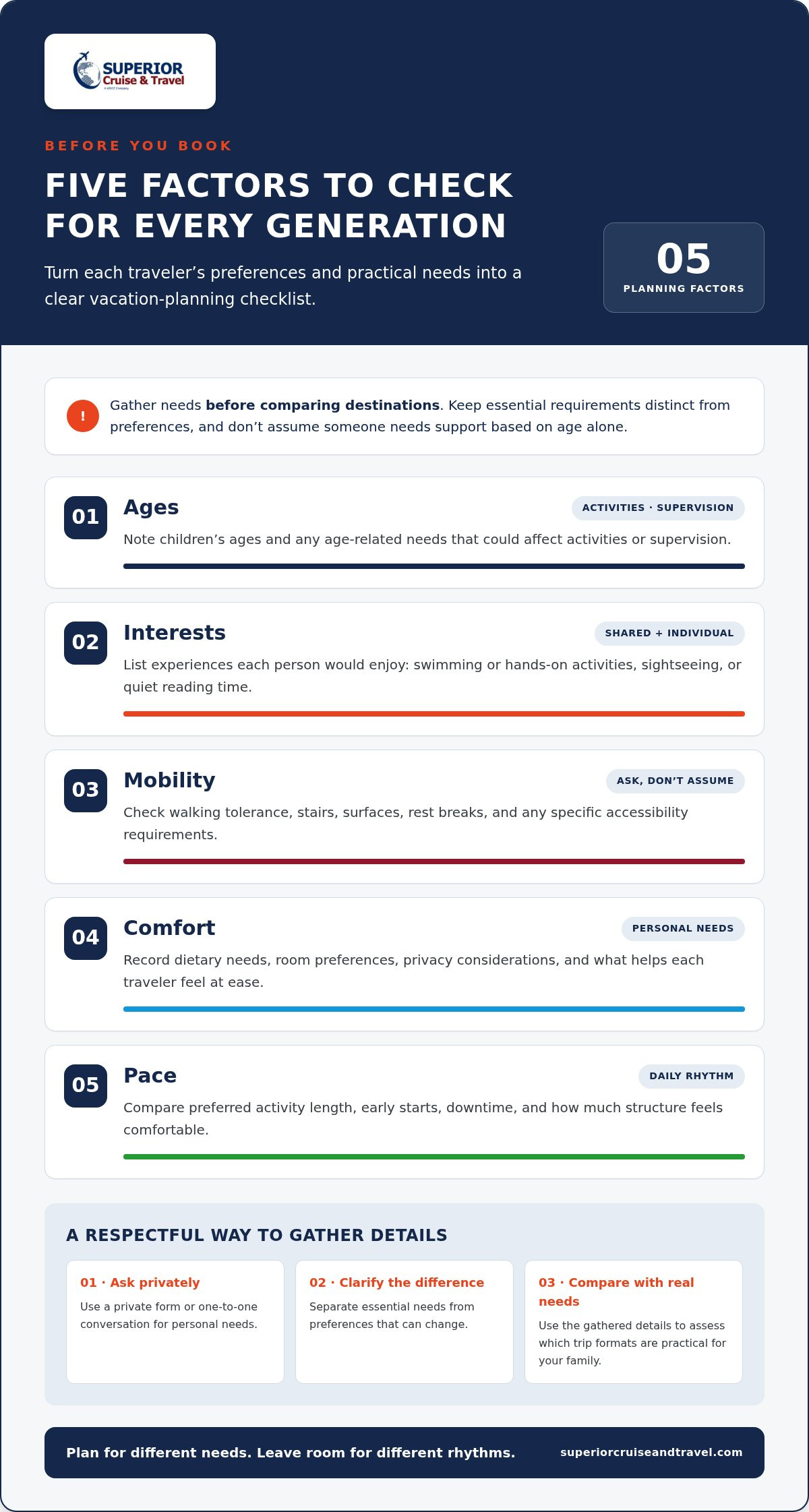
Before comparing destinations, turn the family’s preferences into a practical needs assessment. Ask each traveler what would make the trip enjoyable and what could make it difficult. A private form or one-to-one conversation can help relatives mention mobility, dietary, rest, or rooming needs without feeling they have to explain them to the whole group. Keep essential needs distinct from preferences, and don’t assume someone needs support based on age alone.
Use these five factors as a planning checklist:
- 1. Ages: Note children’s ages and any age-related needs that affect activities or supervision.
- 2. Interests: List experiences each traveler would enjoy, from swimming or hands-on activities to sightseeing or quiet reading time.
- 3. Mobility: Ask about walking tolerance, stairs, surfaces, rest breaks, and specific accessibility requirements.
- 4. Comfort: Record dietary needs, room preferences, privacy considerations, and what helps each person feel at ease.
- 5. Pace: Compare preferred activity length, early starts, downtime, and how much structure feels comfortable.
Align ages, interests, mobility, comfort, and pace before you book. This quick reference makes it easier to compare trip options with actual family needs, rather than relying on a general idea of what suits “all ages.”
Account for mobility, comfort, and daily energy
Ask practical questions without making assumptions: How much walking feels manageable? Are stairs a concern? Would someone benefit from regular rest breaks or shorter activities? A traveler may be comfortable with a full day out but prefer fewer back-to-back days. Another may simply want a quieter room, not an accessibility accommodation. Clarifying the difference helps the group plan respectfully and share relevant needs early, while there’s still time to shape the trip around them.
Include dietary requirements and rooming preferences in the same private needs-gathering step. For instance, a relative may have a particular meal consideration, while another may sleep better with a separate room. These details can influence which trip formats are practical, so capture them before the family starts comparing options.
Balance children’s interests with adult priorities
Children may look forward to swimming, wildlife, interactive experiences, or time to play. Adults may value local culture, scenic outings, relaxed meals, or opportunities to unwind. Look for a mix instead of expecting one activity to delight everyone. Consider age-appropriate options, who will supervise children, and whether the day leaves room to rest between plans.
Build in choice. Some relatives can join an outing while others enjoy downtime, then everyone can reconnect for a shared meal or another activity. This helps prevent any one generation from having to join every group plan. The NYU 2025 U.S. Family Travel Survey offers context on children’s influence in family planning and the affordability considerations families weigh. As you turn your group’s needs into trip choices, Superior Cruise and Travel’s family vacation planning can help bring preferences and options together.
Cruise, Resort, or Guided Tour: Which Trip Style Fits Your Family?
Once you know what the group needs, compare trip formats by how they shape each day. A cruise combines time onboard with scheduled days ashore, a resort stay offers a home base with a choice of on-site activities, and a guided tour generally follows a planned itinerary. None is automatically right for every family. The best match depends on how much structure, variety, and independent choice your relatives want.
| Trip style | Pace | Structure | Flexibility |
|---|---|---|---|
| Cruise | Alternates between time onboard and port days. | Travel and daily options are organized around the sailing schedule. | Relatives may choose different onboard activities or time ashore, within the schedule. |
| Resort vacation | Can be relaxed or activity-filled, depending on the group’s plans. | A shared home base can simplify deciding where to spend the day. | Travelers can often choose from available on-site options or take downtime. |
| Guided tour | Follows the pace of its itinerary and planned outings. | Organized activities create a clearer day-by-day structure. | Free time depends on the itinerary, so compare the planned schedule with the family’s priorities. |
Use the table to identify trade-offs, not to rank the options. A relative who enjoys a full schedule may appreciate organized outings, while someone else may prefer a slower day with fewer plans. Different generations can share one trip without sharing every activity. Choose a format that gives the family meaningful time together and lets individuals opt in or take a break.
When a cruise may suit a multi-generational group
A cruise may work well if the family values a shared travel setting with different ways to spend time. Shared dining can create a natural opportunity to reconnect, while onboard choices and port days may appeal to travelers with varied interests. Consider how scheduled activities and time ashore fit everyone’s energy and mobility, and discuss cabin preferences early. For more detail on the cruise-planning process, explore this guide to planning luxury cruise vacations.
When a resort stay or guided itinerary may fit better
A resort stay may suit a family that wants a home base and the option to shape each day around its interests, meals, and rest time. A guided itinerary may appeal to relatives who prefer organized outings and destination-focused experiences, with less day-to-day planning to handle as a group. Compare the scheduled time and open time with your shared priorities before choosing.
When booking multi-generational family vacations, match each format’s structure to the needs you’ve gathered. If children want activities while adults prefer relaxed mornings, look for a plan that lets those preferences coexist. The goal isn’t a perfect schedule for everyone. It’s a trip where the group can reconnect without requiring every traveler to move at the same pace.
A Practical Booking Plan for Multi-Generational Family Vacations
A clear sequence keeps group decisions manageable and helps prevent small details from becoming last-minute problems. Work through the essentials in order, and record decisions where everyone can find them:
- Confirm dates: Gather each traveler’s availability, flexibility, and scheduling constraints before narrowing down options.
- Set the group size: Identify who is traveling and note relevant details for each person, including ages where they affect planning.
- Summarize shared priorities: Keep the agreed goals and essential needs visible as you compare options.
- Choose a trip style: Compare cruises, resorts, or guided itineraries against the group’s preferred pace and flexibility.
- Discuss room preferences: Record who wants to share, who needs privacy, and any comfort or accessibility considerations that affect room arrangements.
This order matters. Room preferences may affect which options suit your group, while the dates and traveler count help focus the search. Don’t choose a destination based on a striking photo alone. Review the full itinerary and related arrangements, since travel days, transfers, scheduled activities, and free time all shape how comfortable and enjoyable the trip will feel for different relatives.
Coordinate dates, travelers, and room preferences
Choose one organizer to maintain the working record, but make decision-making responsibilities clear. Agree on which choices need group input and who will make the final call if preferences differ. Set a response date for each decision, then share updates through one agreed channel, such as a group email or chat. Store personal details securely and limit access to the relatives involved in planning.
Keep the rooming list practical and current. Note preferred arrangements rather than making assumptions about who will share, and flag needs that could affect comfort or accessibility. If some relatives have flexible dates while others have fixed schedules, record both. That distinction can help the family understand which options are realistic before comparing trip details.
Review trip details and prepare for changes
Before booking, review the itinerary as a group. Look at what arrangements are included, how transfers fit with travel days, when activities take place, and how much free time is available. A busy schedule may suit some travelers but leave others needing more rest. Discuss alternatives for relatives who may prefer to skip an activity, and decide how the group will handle updates if plans change or someone can’t participate.
For trips that combine several arrangements, include travel protection in the planning conversation. Consider the trip as a whole and review the available information and terms rather than assuming what protection applies. Travel protection planning can be part of organizing a more complex vacation.
With the details gathered and decisions documented, booking multi-generational family vacations becomes easier to coordinate. For help bringing cruise or resort plans together, plan your family trip with Superior Cruise and Travel.
Book With a Travel Advisor and Make the Family Trip Easier to Manage
Even after relatives agree on what matters most, coordinating a group vacation can mean comparing trip styles, room preferences, schedules, and multiple travel arrangements. A travel advisor can bring those pieces into one planning process, organize the family’s preferences, and compare cruise and resort options against the group’s goals. This support can make decisions easier to manage without asking every traveler to research every detail.
Superior Cruise and Travel helps families plan cruise and resort vacations, coordinating group travel through a global supplier network. For a family considering a cruise, planning can compare options with the group’s preferred pace and onboard experience in mind. For a resort vacation, it can bring shared goals together with preferences for activities, comfort, and downtime. The right direction depends on the travelers, not a one-size-fits-all formula.
What a full-service advisor can coordinate
A central planning contact can gather preferences, keep key details organized, and help the family compare cruise or resort options. That gives the organizer a consistent place to share updates and helps relatives consider the same information as decisions take shape. For a closer look at how professional support can simplify travel planning, explore the value of professional travel planning.
For trips with more than one travel component, travel protection options can also be part of the planning conversation. Reviewing those options alongside the broader trip helps families consider how they want to prepare for travel uncertainties, without assuming that a particular policy or benefit applies. Superior Cruise and Travel offers travel protection options for multi-component travel experiences.
Start planning around your family’s priorities
To begin, gather a few useful details: how many relatives are traveling, their preferred dates, the trip ideas under consideration, and any must-have comfort or accessibility needs. Some preferences can remain flexible. Sharing what the family already knows gives the planning process a practical starting point, with recommendations shaped around the group’s goals and travel style.
Booking multi-generational family vacations doesn’t have to mean one person carries every detail alone. With a planning partner, the family can work through choices in an organized way, keep shared priorities in view, and make space for different needs across the group.
Ready to turn your family’s ideas into a coordinated plan? Share your family’s travel priorities with Superior Cruise and Travel and take the first step toward planning a cruise or resort vacation that fits your group.
Take the First Step Toward a Family Trip to Remember
A shared vacation doesn’t need a flawless itinerary to become meaningful. Start with one moment your family hopes to create, perhaps a relaxed meal together, a milestone celebration, or time to enjoy one another without the usual routines. Let that intention guide the choices ahead, while leaving room for the trip to take shape around the people who’ll be traveling.
Booking multi-generational family vacations becomes more manageable when planning has a clear starting point. Superior Cruise and Travel is a BBB-accredited full-service travel agency that helps coordinate cruise, resort, and all-inclusive vacation planning for groups. Your family can begin with an idea rather than a finished plan, then shape the next steps around what matters to you.
Start planning a family vacation everyone can look forward to. A thoughtful beginning can make space for shared memories, individual interests, and the downtime your family wants from its time away.
Frequently Asked Questions
How do you plan a vacation for multiple generations?
Start by deciding how the family will make choices, then give each traveler a way to contribute. Agree on who has the final say for major decisions, such as dates and trip format, while letting each household handle its own packing and personal arrangements. Keep a shared record of confirmed plans and open questions to avoid conflicting assumptions as details develop.
What type of vacation is best for a multi-generational family?
The best trip style suits your family’s preferred balance of planned activities and independent time. A family hoping to spend much of the day together may value a shared setting, while relatives eager to explore different interests may prefer more choice. Consider how comfortable the group is with moving between locations, following a schedule, or staying in one place before settling on a format.
How far in advance should you book a multi-generational family vacation?
Start planning as soon as the group has a likely travel window, especially if school calendars, work leave, or a special occasion limit your dates. Larger groups may need more time to coordinate schedules and preferred room arrangements. Beginning early gives relatives time to discuss decisions without pressure. Exact timing depends on the destination, travel season, and trip details, so you can explore options before every small preference is settled.
How can a family vacation include activities for different age groups?
Plan a few shared highlights, then leave parts of the day open for different interests. For example, relatives could meet for breakfast, split into smaller groups for an outing or relaxed afternoon, and reunite for dinner. For children, consider how long an activity holds their interest and who will supervise them. Clear meeting times and locations help everyone enjoy separate plans without losing touch.
Should a multi-generational family book separate rooms or shared accommodations?
Choose room arrangements based on privacy, sleep habits, caregiving needs, and how much personal space each household prefers. Sharing can make it easier for parents or relatives to help with children, while separate rooms may suit travelers with different bedtimes or a need for quiet. Discuss preferences directly rather than assuming relatives will be comfortable sharing. Also consider how close rooms should be for convenient visits and check-ins.
Can a cruise work well for a multi-generational family vacation?
Yes, a cruise can suit a family that wants a shared trip setting with a range of ways to spend the day. Relatives might enjoy meals together while choosing different onboard activities or deciding separately how to spend time ashore. Before booking, discuss cabin preferences and how the group will reconnect if plans differ. A cruise may be less suitable if the family’s priorities depend on spending extended time in one destination.
How can families manage different budgets when booking one vacation?
Agree on a comfortable overall spending range before comparing options, then identify which costs are shared and which belong to each household. For instance, the group might coordinate the main trip together while relatives choose their own optional outings or personal extras. Be clear about who pays deposits, how shared expenses are tracked, and when contributions are due. A transparent plan helps prevent money misunderstandings from overshadowing time together.