
The fullest itinerary isn’t always the best fit for a senior group trip. Thoughtful group travel planning for seniors starts with choosing a pace, activities, and destination that suit the travelers, then organizing practical details to help everyone feel comfortable along the way.
It’s natural to want a trip that feels exciting without making every day tiring or complicated. A well-matched group tour can bring shared experiences and guided logistics together, while the right preparation helps you feel ready for the journey. This guide explains how to prepare, compare destinations, and choose tours based on your interests and abilities.
You’ll also learn what to look for in senior-focused packages, including the itinerary, included arrangements, and pre-trip information. Use these considerations to plan a trip that balances discovery with time to relax.
Key Takeaways
- Choose destinations and itineraries around the group’s interests, preferred pace, and comfort with walking or other activities.
- Compare tour schedules and activity levels so the trip balances sightseeing with time to rest.
- Before booking, review safety information, travel insurance options, and what support is available during the trip.
- Compare package inclusions, such as airfare, meals, and tips, to understand what each option covers.
- Prepare essential travel documents and medications, and pack only what you’ll need for a more manageable journey.
What are the best places to travel for seniors?
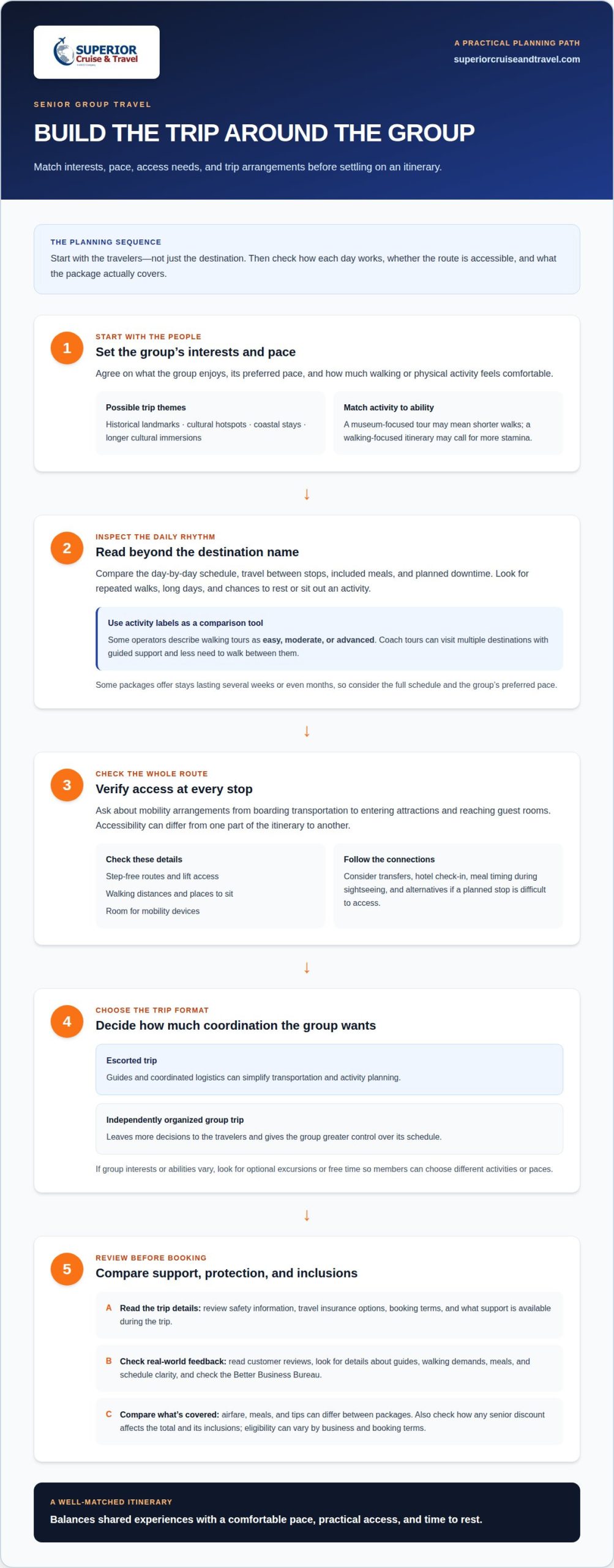
The best destination matches the group’s interests, preferred pace, and comfort with physical activity. Compare each itinerary’s daily schedule, activity demands, transportation, lodging, meals, safety information, and travel protection options.
Senior Tour Destinations and Itineraries
Senior tours can focus on historical landmarks, cultural hotspots, coastal stays, or longer cultural immersions. Some packages allow stays lasting several weeks or even months. Look beyond the destination name: review daily schedules, travel between stops, included meals, and planned downtime. A local-language guide familiar with each destination can help the group navigate unfamiliar places and respond to unexpected situations.
Companies that specialize in older-adult group trips shape itineraries around seniors’ interests and abilities. Compare schedules, included arrangements, and pre-trip information rather than choosing by destination alone.
Activity Levels and Fitness Requirements
Match activities to what group members can comfortably manage throughout the day, not just during one outing. Some operators label walking tours as easy, moderate, or advanced; use those descriptions to compare routes and exertion. For example, a museum-focused tour may suit travelers seeking shorter walks, while a walking-focused itinerary may call for more stamina.
Coach tours can visit multiple destinations with guided support and less need to walk between them. Balance sightseeing with time to rest, and review the schedule for repeated walks, long days, and opportunities to sit out an activity.
Accessibility and Mobility Services
Ask about mobility arrangements at each stage, from boarding transportation to entering attractions and reaching guest rooms. Useful details include step-free routes, lift access, walking distances, places to sit, and room for mobility devices. Accessibility can differ between a hotel, a coach, and a historic site, so assess the full itinerary rather than one venue.
A travel planner can coordinate transportation, lodging, and meals around the itinerary and the group’s stated needs. Consider how transfers fit with hotel check-in, where meals fall during sightseeing days, and what alternatives are available if a planned stop is difficult to access.
Before booking, review the planned activities, safety information, and travel protection options. Read customer reviews, check the Better Business Bureau, and examine booking terms before committing or paying a deposit. Compare package inclusions carefully: airfare, meals, and tips can make two itineraries quite different. These steps make group travel planning for seniors more practical and help everyone understand what the trip involves.
Choosing tours that suit interests and physical abilities
Choose a trip by matching its main activities with the group’s interests, energy, and preferred pace. A good fit leaves room to enjoy shared experiences without making every day feel demanding.
Guided Tours and Included Services
Guided group trips can coordinate transportation, meals, and sightseeing, leaving travelers more time to enjoy the destination. Guides handle directions and day-to-day logistics, which can make unfamiliar places easier to explore. Compare the itinerary with what’s included: a history-focused trip, for example, may prioritize landmark visits, while a culinary itinerary centers on local food experiences.
Escorted and Independent Trip Formats
Escorted trips include guides and coordinated logistics, while independently organized group trips leave more decisions to the travelers. The first can simplify transportation and activity planning; the second gives the group more control over its schedule. Choose based on how much coordination members want to handle and whether they prefer a planned experience or greater flexibility.
Start with the group’s shared interests, then identify activities that suit different abilities. One group might favor historic sites and guided cultural visits; another might prefer gentle nature outings or a food-focused itinerary. If interests vary, look for schedules with optional excursions or free time, so members can choose activities without requiring everyone to follow the same pace.
Consider how each day unfolds, not just its headline attraction. A morning walking tour followed by an afternoon excursion can feel quite different from one guided visit with a long break. Compare time spent standing, walking, and riding between stops, and consider whether members can skip an activity and rejoin the group later.
Group trips can bring companionship through conversations, meals, and experiences with fellow travelers. That social element may be especially welcome for someone traveling without a companion. Guides can help the group stay oriented, while coordinated transportation makes moving between activities simpler.
Customer reviews can reveal how an itinerary feels in practice. Look for specific comments about guides, walking demands, meals, and how clearly the schedule was explained. Compare several reviews for consistent details instead of relying on a single account.
Senior discounts on group travel, hotels, and attractions vary by business and booking terms; age criteria, travel dates, and eligible services may differ. Ask how any discount affects the package total and its inclusions. Tour prices also vary with airfare, lodging, transportation, meals, and fees. The price depends on the trip and is given after a quote request, with those inclusions shaping the total.
As you compare options, travel protection can be part of considering how to prepare for unexpected travel disruptions.
Pre-trip information and emergency assistance
Good preparation starts with a clear picture of the schedule, transportation, and support arrangements. Before departure, organize travel documents and medication, and make sure everyone understands how the group will communicate and respond to changes.
Review pre-trip information for meeting points, transfer details, daily schedules, and emergency procedures. A useful itinerary explains how the group moves between places, who leads guided tours, and what to do if a member becomes separated. Ask how travelers will receive updates if a departure time or activity changes. Clear details help friends traveling together stay coordinated.
Discuss safety protocols before booking, including how the group handles illness, missed connections, or an unexpected change in plans. Ask whether emergency assistance is available during the trip and whether the group provides 24/7 support. Clarify who travelers should contact, how they can reach that person, and what help the tour’s arrangements cover. Keep these instructions with essential travel documents.
Trip length should suit the group’s energy and preferred pace. A longer itinerary can allow more time to experience local culture, while a shorter trip may suit travelers who prefer fewer days away. Compare each day’s activity level with time spent in transit. For example, a full sightseeing day after a long transfer may feel less comfortable than a schedule with a break between travel and activities.
Group size and format also shape the experience. A smaller group may make it easier to coordinate meals and transfers, while a larger group can bring more fellow travelers and shared interests. Since group sizes vary, consider how the format handles head counts, meeting points, and transportation. Ask how the schedule accommodates someone who needs extra time between the coach and an attraction.
Match activities to the group’s abilities across the entire itinerary. A guided walking tour followed by another extended outing can be tiring, even if each activity seems manageable on its own. Look for planned rest periods, comfortable transportation between stops, and options to skip an excursion. The right balance keeps participation flexible without unnecessarily separating friends.
For easier coordination, keep a shared trip folder with the itinerary, transportation and lodging details, emergency contacts, and copies of necessary documents. Each traveler should pack medication and travel documents and carry the daily schedule. This simple routine helps the group find key details quickly, whether visiting familiar places in America or exploring somewhere new.
Destinations and itinerary choices
Choose a destination by matching its sights and pace to the group’s interests. A culture-minded group may prefer museums, historic districts, and local performances, while travelers seeking scenery may favor coastlines or countryside. For Europe, compare the time spent in each place with the travel between stops. The destination matters, but the daily plan determines how much of it the group can comfortably enjoy.
Read itineraries day by day before choosing a trip. Note the scheduled activities, time spent traveling, and whether free time falls between outings. For example, a city itinerary with several guided visits may suit travelers who enjoy structured sightseeing. A slower plan with fewer stops may better fit a group that wants unhurried meals and time to explore independently.
Consider whether the trip stays in one place or moves between destinations. A single-base itinerary can reduce repeated packing and transfers, while a multi-stop route can introduce varied sights and regional culture. Compare hotel changes, transfer days, and the order of destinations. If a long journey follows a full day of sightseeing, the group may have less time to rest before the next activity.
Longer stays can offer a deeper cultural experience. Some tour packages allow travelers to stay for several weeks or even months, with more time to experience local routines and explore beyond headline attractions. Review how the itinerary balances organized outings with independent time, and how meals, lodging, and transportation fit into the schedule.
Use a simple comparison for each destination: list the group’s interests, the main sights, the daily pace, and the support available. Then identify trade-offs. A remote setting may offer distinctive scenery but require more transfers; a city stay may provide frequent attractions but involve more walking. This helps align the itinerary with what travelers value most.
Assistance matters as plans move from one place to another. Look for clear transfer arrangements, practical meeting instructions, and guidance for navigating unfamiliar areas. A local guide can explain cultural context and help travelers find their way. Before choosing, make sure the itinerary explains what happens on travel days, how schedule changes are communicated, and where travelers can find support.
Finally, shape the itinerary around the group rather than trying to cover every attraction. Select a few priority sights, allow time between activities, and keep optional outings distinct from core plans. This approach gives travelers room to follow different interests without losing the shared experience. For a future trip, such as a 2027 or 2028 departure, start by agreeing on the destination style and preferred pace.
Senior-focused travel packages
Senior-focused packages bring trip arrangements together around a destination, shared interests, and a suitable pace. To compare trips for seniors, look beyond the package label: examine the activities, included arrangements, flexibility, and support available to travelers. A clear comparison helps adults choose a trip for discovery, relaxation, or both.
Start by identifying what the group wants to discover. A learning-focused itinerary might center on history, art, or local culture, while a nature trip could include scenic outings or hiking. Match those interests to the physical demands and daily schedule. For example, a hiking itinerary should explain route difficulty and how each walk fits alongside other planned activities.
Then review what the package actually covers. Group trips may offer discounts on accommodations, excursions, and activities. Compare those elements alongside transportation, meals, and sightseeing arrangements, since packages can combine them differently. If one itinerary includes guided excursions and another emphasizes independent time, consider which format better suits the group’s preferences and planning style.
Check the rhythm of the trip, not only its featured attractions. A schedule with several outings each day offers a different experience from one with open time between activities. Look for opportunities to rest, adjust plans, or choose optional excursions. For instance, a group with varied interests can share a destination while selecting different activities during free periods.
Read package descriptions closely before deciding. Note the itinerary, lodging arrangements, planned activities, and any terms explaining changes or cancellations. Compare each package using the same questions: What is included? How much free time is scheduled? Which activities require walking or sustained effort? A consistent checklist makes differences easier to spot without relying on broad marketing language.
Group travel also creates shared moments for adults who enjoy meeting fellow travelers. A cooking demonstration, guided visit, or cultural performance can offer a common experience without making every activity strenuous. Choose a package whose social opportunities match the group’s interests, rather than assuming every senior traveler wants the same schedule or style of trip.
If you’re looking for a package that fits your group, narrow the choice by destination, pace, preferred activities, and included arrangements. Then consider whether a cruise or resort-based itinerary offers the setting your group wants. Explore travel protection options as part of preparing for a senior group trip.
Superior Cruise and Travel
Superior Cruise and Travel can help turn your group’s priorities into a coordinated vacation plan. If the group is considering a cruise or resort stay, the agency offers Luxury Cruises, Chartered Cruise Ships, World Cruises, and Resort Vacations. The right option depends on the destination, preferred pace, interests, and kind of shared experience your group wants.
Bring together your preferred travel dates, destination ideas, activity level, and any mobility considerations. These details help shape a trip that reflects the group’s needs, whether you’re drawn to a shorter cruise experience, a longer voyage, or time at a resort. Thoughtful planning can make it easier to compare suitable options and decide on a comfortable next step.
For help shaping a group vacation, contact Superior Cruise and Travel.
Shape a Trip Your Group Will Remember
Start planning around the shared experience your group wants to create. Thoughtful group travel planning for seniors gives everyone a chance to voice priorities, from a relaxed pace to a destination that inspires curiosity. With those preferences in view, it becomes easier to turn a broad idea into a personal trip.
For groups considering a voyage, Superior Cruise and Travel offers Luxury Cruises, Chartered Cruise Ships, and World Cruises. These options can help shape a shared journey around the group’s interests and travel style.
Take the next step when you’re ready to explore possibilities together. Contact Superior Cruise and Travel to discuss a trip that fits your group’s vision. The right journey begins with a conversation, and your next shared adventure can start with that first idea.
Frequently Asked Questions
How can I best prepare myself to travel?
Prepare by organizing your trip details into one easy-to-carry folder. Keep your itinerary, booking confirmations, identification, emergency contacts, and medication information together, with digital copies accessible separately. Before departure, review the first day’s arrangements, including where to meet and how you’ll reach your accommodation. Pack only what you expect to use, and keep essential items in your carry-on so they’re available during transit.
How can seniors choose a trip pace and itinerary that fits their group?
Choose a pace by comparing a typical day with the group’s energy and interests. For example, if travelers want museums and relaxed meals, avoid stacking several long excursions into one day. Ask each member to name a priority activity, then build the schedule around shared interests and leave some choices flexible. A realistic itinerary gives the group room to enjoy an unplanned discovery without feeling behind schedule.
What health, medication, and emergency planning is needed for senior group travel?
Before departure, make a personal list of medications, relevant health information, and emergency contacts, and keep it accessible during travel. Pack medication in your carry-on and bring the documents needed for the trip. Agree on a simple group response plan: who stays with a traveler needing help, who contacts the designated emergency contact, and where the group reconnects if separated. Share essential information with a trusted companion.
What travel insurance is best for seniors on group trips, and what does it cover?
No single travel protection plan suits every group. Compare the plan wording with your trip arrangements, paying attention to covered situations, exclusions, limits, and how to request assistance. For a trip combining multiple components, such as transportation and lodging, Superior Cruise and Travel offers travel protection options. Review the applicable terms before choosing, since the plan documents explain what protection applies to your arrangements.
What safety risks should seniors consider when traveling in a group?
Consider practical risks such as losing sight of the group in a busy terminal, missing a transfer, or becoming tired during a packed day. Agree on a recognizable meeting point and backup contact method before entering crowded places. Keep valuables secure and avoid carrying every travel document together. If plans change, pause in a safe, public place and use the group’s agreed communication plan.
What steps should an organizer follow to plan a senior group trip?
Begin by gathering members’ destination preferences, activity interests, mobility needs, and travel dates. Use those priorities to compare itineraries, transportation, lodging, meals, and trip terms. Once the group selects an option, share one itinerary and collect essential contact details for coordination. Before departure, circulate meeting instructions, emergency procedures, and a packing reminder. This sequence helps members make informed choices and understand the plan.
Which travel companies specialize in group tours for older adults?
Look for companies that shape itineraries around older adults’ interests and abilities, and compare their schedules, included arrangements, and pre-trip information.