The booking is only one part of a corporate travel program. A full service travel agency for corporations can coordinate transportation and accommodations while helping manage negotiated rates, traveler support, meetings, pricing, and cancellations. The U.S. Bureau of Labor Statistics describes corporate travel agents as booking transportation and accommodations for employees traveling for business or conferences.
When teams travel, the details add up. Plans need to work for employees, budgets, and business goals, while changes can require quick coordination. Bringing these moving parts together makes travel planning easier to manage.
In this article, you’ll learn what full-service corporate travel support can include, how agencies approach rates and pricing, and what happens when plans change. We’ll also explain how meeting and corporate event support fits into a broader travel program, so you can see which needs an agency can help address.
Key Takeaways
- Review travel patterns and booking needs to identify where negotiated rates may support your program.
- Define how travelers can get help and what information they should have ready when plans change.
- Plan meeting logistics as part of the broader trip, so attendee travel and event arrangements work together.
- Compare pricing by looking at what each option includes, not just its headline fare.
- Understand cancellation terms before booking, since flexibility depends on the arrangements selected.
Corporate travel savings and negotiated rates
A corporate travel program can reduce avoidable spending by shaping how employees book flights and hotels. A full service travel agency for corporations can bring booking choices, supplier arrangements, and travel policy into one coordinated process. That gives travel managers a clearer view of where spending occurs and which decisions affect it.
Start by reviewing the company’s travel patterns. Group bookings by destination, travel dates, preferred hotel locations, and booking lead time. Recurring trips to the same city, for example, may reveal demand that can inform discussions about corporate hotel rates. Negotiated terms can vary by destination, room availability, season, and expected booking volume.
Hotel networks may provide access to preferred options, but the lowest displayed rate isn’t automatically the best value. Compare the full conditions: location, included amenities, cancellation terms, and whether the room suits the traveler’s schedule. A hotel near a meeting venue may reduce ground transportation needs, even if its nightly rate differs from another property.
Fare forecasting helps inform when to book and which travel dates to consider. A travel manager can review route, season, demand patterns, and schedule flexibility before approving an itinerary. Shifting a departure by a day, for example, may offer a different fare or hotel option. Forecasts guide planning, while the options available at booking determine the final selection.
Corporate travel agencies differ from online booking tools and in-house teams in how they combine booking workflows with travel management support. Online booking can give employees direct access to options, while an in-house team may coordinate policy and approvals. An agency can add booking assistance and supplier coordination, depending on the program’s needs.
Corporate travel policy and expense management can cover booking classes, preferred hotels, approval steps, and receipt handling. A travel program can apply those rules to booking decisions and organize transaction details for review. For example, a policy might direct employees toward preferred hotels in a particular destination while routing exceptions for approval.
Duty-of-care planning focuses on knowing who is traveling, where their itinerary places them, and how to communicate relevant changes. Travel agencies may support itinerary visibility and traveler communication through the tools used in a company’s program. Define the records and communication process your company needs before choosing these features.
Switching to a corporate travel management agency starts with mapping current bookings, policy rules, approval steps, and expense workflows. Then decide which processes will move into the new program and how employees will book. A phased transition can introduce the booking process, explain policy changes, and gather traveler feedback before broader adoption.
Time savings come from consolidating repeated tasks such as searching, booking, and coordinating itinerary changes. Clear policy steps can also reduce avoidable approval delays. To assess hotel value, review preferred properties by destination and trip purpose, then compare location and terms with traveler needs, not just the nightly rate.
Traveler support and response times
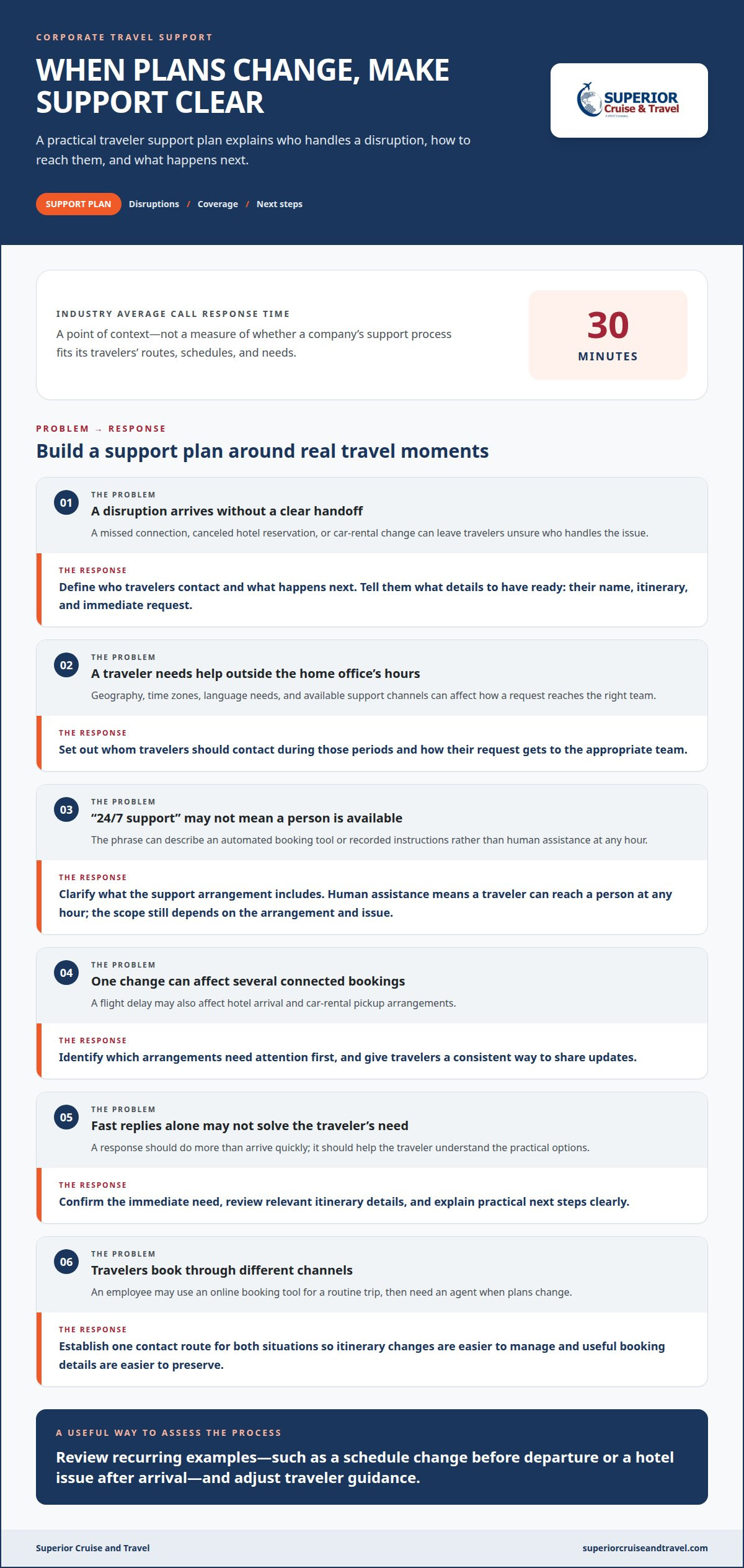
A traveler support plan should explain who handles a disruption, how travelers reach them, and what happens next. The industry average call response time is 30 minutes. That figure offers context, but the useful measure for a company is whether its process fits its travelers’ routes, schedules, and needs.
Start by mapping common situations: a missed connection, a canceled hotel reservation, or a change to a car rental. For each example, define the information an agent needs, such as the traveler’s name, itinerary, and immediate request. A clear process helps agents identify the issue and explain practical next steps.
Agent coverage can depend on geography, time zones, language needs, and the support channels included in a travel program. A team traveling from the United States to a global destination may face disruptions outside its home office’s working hours. Set out whom travelers should contact during those periods and how the request reaches the appropriate team.
Some programs advertise 24/7 human travel support. The phrase should mean travelers can reach a person at any hour, rather than only access an automated booking tool or recorded instructions. Human assistance can help clarify a changed itinerary and explain options. The scope still depends on the support arrangement and the issue involved.
Round-the-clock traveler support is especially relevant when an itinerary crosses time zones or includes several connected bookings. A flight delay, for example, may affect a hotel arrival and a car rental pickup. A clear process identifies which arrangements need attention first and gives travelers a consistent way to share updates.
Support also needs to work for travelers who book in different ways. An employee may use an online booking tool for a routine trip, then need an agent when plans change. The company can establish one contact route for both situations, making itinerary changes easier to manage and useful booking details easier to preserve.
Response quality involves more than speed. A useful interaction confirms the traveler’s immediate need, reviews relevant itinerary details, and explains practical options clearly. Companies can assess their process through recurring examples, such as a schedule change before departure or a hotel issue after arrival, then adjust their guidance.
Travel protection may be relevant to a company’s broader trip planning, but it is distinct from agent assistance during a disruption. Consider it alongside the itinerary and the company’s travel needs. Travel protection options can be part of that planning conversation.
Consider it alongside travel expertise: the Travel Leaders search for executive corporate and luxury travel agents in California returned 177 agents. Tammy Suhetskis, a travel agent in Davis, California, has 25+ years of experience.
Corporate meetings and meeting planning
A corporate travel agency can coordinate flights, hotels, ground transportation, and meeting arrangements around one itinerary. For example, it can align arrival times with a conference schedule and hotel location.
Meeting Planning
Meeting planning begins with the purpose, attendee list, destination, preferred dates, and meeting format. A travel management company can use those details to organize travel alongside venue and accommodation arrangements. Before booking, consider how room setup, meeting times, hotel location, and arrival schedules fit together. A personalized plan connects each travel decision to the event’s practical needs.
For a sales meeting, attendees may arrive from different cities and need a shared venue schedule. Coordinating flights with hotel check-in and ground transportation can reduce gaps between arrival and the first session. A planning partner can organize these components as one travel program instead of treating each booking as a separate task.
Establish decision points early. Identify who approves the destination, which dates suit attendees, and which meeting requirements matter most. Then organize the booking sequence around those choices. If the venue determines the location, select nearby hotels before finalizing travel details. If attendees’ schedules drive the dates, use those dates to guide venue and transportation planning.
Events and Incentives
Corporate events may include conferences, team gatherings, or recognition trips. Incentive planning adds another consideration: the experience should reflect the occasion and participants. A travel partner can help coordinate destination, accommodations, group travel, and event arrangements, while the company defines its goals and audience. Review the proposed schedule for practical transitions between travel, hosted activities, and free time.
For an incentive trip, a company might prioritize a memorable destination and shared group experience. For a working event, convenient access to meeting facilities may matter more. Those goals shape the itinerary, accommodation choices, and timing. A negotiated arrangement may also be considered when group requirements and supplier terms align, but review those terms as part of the full plan.
Flights, hotels, and ground transportation should support the meeting agenda. A late arrival, for instance, may conflict with an early session, while a distant hotel may complicate transfers. A coordinated itinerary brings these details into view before booking, helping organizers spot conflicts and make informed adjustments.
When assessing planning support, consider the scope of coordination, approval process, and how itinerary updates are shared. Ask how the travel program connects meeting logistics with traveler bookings. Clear responsibilities help organizers understand which decisions remain theirs and which arrangements the travel management company handles.
Finally, match the event format to its purpose. A leadership retreat may need a quieter setting and structured group time; a conference may prioritize convenient access and attendee flow. Define those priorities first, then use them to shape the destination, booking plan, and event schedule.
Competitive pricing and negotiations
Competitive corporate travel pricing starts with a like-for-like comparison. Review the complete itinerary, including the fare, hotel terms, rental needs, and booking conditions. A lower fare may come with a schedule that adds an overnight stay, while a more direct option may better fit the traveler’s working day. Compare the total expense and practical fit, not just one line item.
Before discussing supplier terms, organize the travel program’s booking patterns by destination, dates, trip purpose, and preferred arrangements. A company with recurring stays in one city can use that pattern to guide hotel negotiations. A business with varied destinations may prioritize flexible booking options instead. The right negotiating approach depends on the company’s actual travel needs.
Ask how proposed rates apply to the company’s routes and booking channels. Assess a hotel offer alongside its location, room terms, and cancellation conditions. For air travel, compare schedules, fare conditions, and the flexibility employees need. For rentals, review pickup location and itinerary fit. These comparisons show whether a negotiated option suits the trip.
Corporate travel management also means understanding the service behind a price proposal. Clarify how bookings are handled, which expenses appear in reporting, and how exceptions fit the travel policy. If an employee needs a different hotel because of the meeting location, for example, determine how that booking is recorded. Clear reporting helps managers interpret program spending.
Before signing a corporate travel agency contract, ask what booking and support services it covers, how charges are structured, and how changes or cancellations are handled. Also ask how supplier arrangements apply, what reporting is provided, and how the agreement can adapt when travel needs change.
Personalized service matters when a company’s itinerary doesn’t fit standard booking patterns. A team attending a meeting may need arrival times coordinated with the agenda, while an employee traveling alone may value different options. Explain these needs during planning so the proposed process reflects actual trips rather than a generic travel profile.
Review flexibility closely. Compare the terms attached to each option, including changes, cancellations, and any restrictions that affect the traveler. If a lower-priced booking has stricter conditions, weigh that trade-off against the company’s schedule and policy. The best choice balances trip requirements, expense visibility, and usable terms.
Use a clear negotiation sequence: summarize travel patterns, identify priorities, review proposed terms, and compare options using the same criteria. Then document the agreed booking process for travelers and approvers. This gives the company a practical way to assess whether the arrangement continues to serve its travel program as destinations and business needs evolve.
Cancellation flexibility
Cancellation flexibility depends on the terms attached to each booking, not simply the destination. Flights, hotels, and rental cars can each have separate change and cancellation conditions. Before approval, travel managers can review those terms together and note what happens if a traveler cancels, changes dates, or misses a connection.
For flights, compare the ticket’s change rules, refund conditions, and any restrictions on using a credit. A traveler whose meeting shifts by a day, for example, may need a date change rather than a full cancellation. Travel agents can explain the options available for that booking, so the employee understands the next step before authorizing a change.
Hotel terms need the same attention. Check the cancellation deadline, whether the reservation is refundable, and how a change affects the stay. An international itinerary may include a hotel arrival that depends on a flight connection. If that flight changes, the traveler may need to adjust both bookings, so recording each supplier’s terms helps coordinate the request.
Build a practical review into the booking workflow:
- Record the change and cancellation terms for each flight, hotel, and rental.
- Identify the booking contact and the information needed to locate the reservation.
- Share relevant deadlines and conditions with the traveler and approver.
- Document the updated itinerary after a change or cancellation.
This process helps a company distinguish a cancellation from a schedule adjustment. If an employee’s meeting moves, for instance, an agent can review whether changing the flight and hotel better suits the revised dates. If the trip is no longer needed, the company can use the cancellation terms to guide the request and account for any refund or credit.
A corporate travel program can also set approval steps for cancellations. It might require the traveler to notify a manager before canceling a trip, then share booking details with the travel team. Clear responsibilities reduce confusion when several suppliers are involved. A travel network can help coordinate communications, while the booking terms determine which actions are available.
Travel solutions should make terms easy to find, not obscure them in separate confirmations. Keep itinerary records together, including supplier details and updates. For a trip with connecting flights and multiple hotel stays, one organized record helps agents and travelers see which arrangements need attention after a change.
Consider exploring travel protection options as part of planning, alongside each booking’s cancellation terms. Review how those options fit the trip and the company’s travel process before decisions are made.
Superior Cruise and Travel
Superior Cruise and Travel helps businesses and their teams explore travel options for group occasions and corporate events. If your plans call for a distinctive group experience, consider how a luxury cruise, chartered cruise ship, world cruise, or resort vacation could fit the occasion. The right choice depends on your destination, travel goals, and the experience you want to create.
Bring your event concept and key preferences into the conversation, including the intended destination, travel style, and group priorities. This helps shape a travel plan around the experience you have in mind. Contact Superior Cruise and Travel to discuss travel options for your corporate group or event.
Shape a travel program around your team
Your next step is to turn your company’s travel priorities into a clear plan. Decide which trips involve meetings or group experiences, what matters most to your travelers, and where coordinated planning would help. A full service travel agency for corporations can bring those needs into focus, while the right arrangements depend on each trip’s purpose and preferences.
For corporate gatherings that call for a distinctive setting, Superior Cruise and Travel offers Luxury Cruises, Chartered Cruise Ships, and World Cruises. These options may suit organizations considering a shared travel experience alongside their event goals.
Start a conversation about your plans and the kind of experience you want to create. Contact Superior Cruise and Travel to discuss your corporate travel needs. A thoughtful plan can give your team a welcoming way to travel together.
Frequently Asked Questions
What services does a full-service corporate travel agency provide?
A full service travel agency for corporations can coordinate business-trip bookings, supplier arrangements, traveler assistance, and meeting travel. For example, when employees attend a company event in another city, one coordinated itinerary can align flight arrivals, hotel stays, and ground transportation with the agenda. Depending on the program, support may also include policy workflows, expense reporting, and cancellation assistance. The precise scope depends on the services included.
How much do corporate travel management companies charge?
Corporate travel management pricing varies by case and is provided after a quote request; cost factors include booking volume, service scope, support arrangements, and reporting needs. A company should distinguish agency support charges from travel spending paid to airlines, hotels, or other suppliers. For example, an agreement may describe how booking activity and meeting coordination are handled. Compare the written pricing structure with the work required instead of assuming every program uses the same model.
What should companies look for when choosing a corporate travel agency?
Companies should look for written scope that matches their travel patterns, event needs, and internal approval process. A useful comparison explains who handles itinerary changes, what traveler information is used, how reports organize bookings, and which requests fall outside the arrangement. A business with recurring conferences, for example, may value coordinated group planning, while a company with dispersed trips may prioritize consistent booking workflows. Clear responsibilities make the agreement easier to assess.
How do agencies provide 24/7 support and handle travel disruptions?
A 24/7 support arrangement means travelers can reach a human agent at any hour through the channels defined for the program. During a disruption, such as a delayed flight before a hotel check-in, the agent reviews the itinerary, identifies affected bookings, and explains available next steps. The traveler should share the booking reference and immediate problem. Any changes follow the supplier’s terms and available options.