
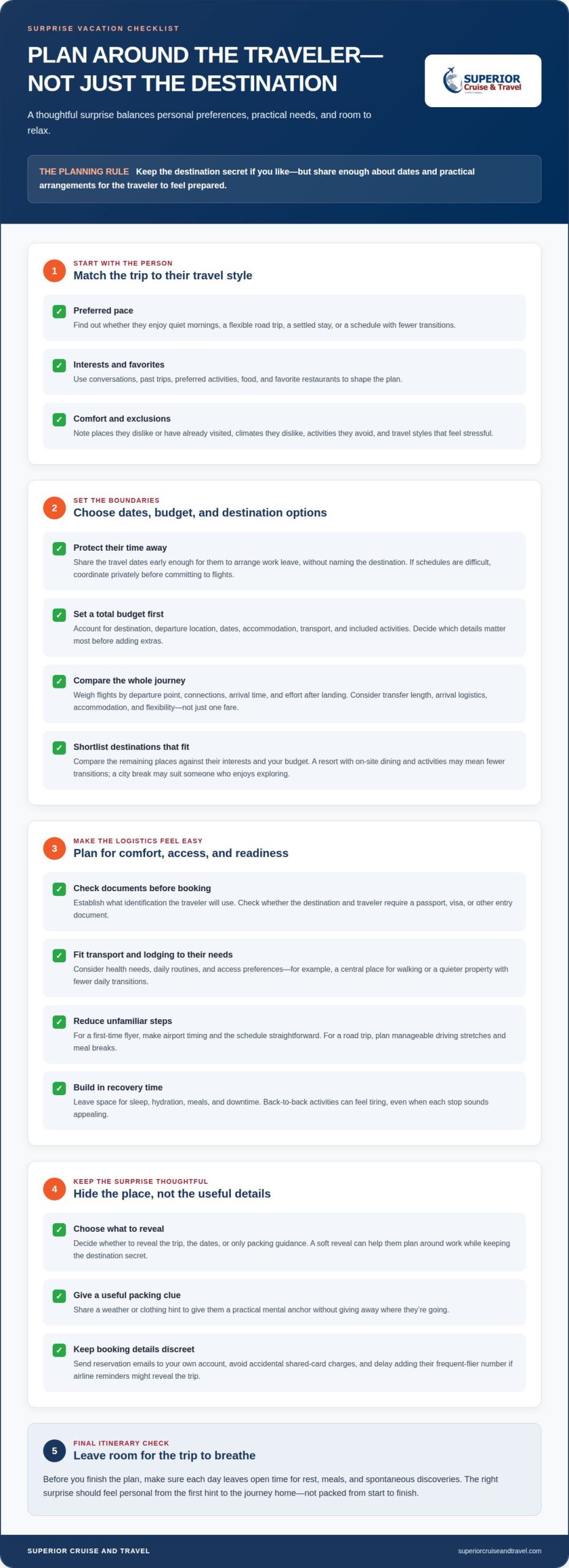
The best surprise destination matches their idea of a good trip, not simply the place you’re most excited to visit. To plan a surprise vacation well, start with their preferred pace, interests, comfort with travel, and any places they’d rather avoid. Then choose dates and a budget that fit their commitments, keeping practical details in mind.
It’s natural to want to keep every detail secret, but a thoughtful surprise also gives the traveler what they need to feel comfortable and ready. Weigh destinations against their preferences, set dates and a budget, and arrange travel and accommodations around their routines. Share useful packing clues without giving away the destination, and build anticipation while protecting the surprise. With a little discretion and room to relax, the trip can feel personal from the first hint to the journey home.
Key Takeaways
- Choose a destination around the recipient’s interests, preferred pace, comfort with travel, and places they’d rather avoid.
- Keep the surprise while sharing enough about dates and practical plans to protect work commitments and travel comfort.
- Build in open time for meals, rest, and spontaneous discoveries instead of filling every moment with activities.
- Use small weather or clothing clues to help them pack without revealing where they’re going.
- Plan booking decisions around your dates, flexibility, destination, and the travel arrangements that matter most.
Arranging travel and accommodations around the recipient’s needs
Build the travel plan around the person’s routines, comfort, and interests, not just the destination. A thoughtful itinerary leaves room for rest, meals, and changes of pace.
Sharing Travel Preferences and Budget
Keep the destination secret, but share the travel dates early enough for the recipient to arrange time away from work. Ask about preferred activities, food, accommodation style, and travel pace without revealing why you’re asking. If they enjoy quiet mornings and a favorite restaurant, those details can shape the itinerary better than a packed list of attractions.
Learn about their interests through conversations, past trips, and plans they’ve enjoyed. A road trip may suit someone who likes flexible stops, while a direct flight and settled accommodation may feel easier for a traveler who prefers fewer transitions. Account for the departure location too, since the distance to the airport or starting point affects travel time and convenience.
A trip’s price depends on the destination, departure location, dates, accommodation, transport, and included activities; a quote reflects those choices. Set a total budget before choosing extras, then decide which details matter most, such as a comfortable room or a special restaurant booking. This keeps the surprise aligned with the recipient’s preferences and your spending limit.
Travel Needs and Required Documents
This part of planning covers comfort, energy, and the documents needed for the route. Before booking, establish what identification the traveler will use and whether their destination and citizenship require a passport, visa, or other entry document. Requirements depend on the destination and traveler, so build the relevant document checks into the plan before departure.
Consider health needs and daily routines when arranging flights, accommodation, and activities. Leave time for sleep, hydration, meals, and downtime. An itinerary with no space to recover can leave travelers feeling run down by the second day. Back-to-back activities may feel tiring, even when each stop sounds appealing.
Match transport and lodging to the traveler’s experience. The planner’s partner’s parents had flown only as many times as she could count on one hand, so unfamiliar airport steps deserved special attention. For a first-time flyer, explain when to leave for the airport and keep the schedule straightforward. For a road trip, plan manageable driving stretches and meal breaks.
Keep the surprise practical, too. Send reservation emails to your own account, and avoid accidental charges on a shared credit card. If airline reminders could reveal the trip, delay adding the recipient’s frequent-flier number. Build open time into each day rather than filling all 48 hours with activities, and reveal any essential packing or travel details before they become a source of stress.
Choosing travel dates, budget, preferences, and destinations to exclude
Set practical boundaries before choosing a destination. The right dates, budget, and exclusions make the surprise easier to enjoy.
Destination and Trip Disclosure Choices
Choose an easy-to-navigate destination by weighing transfer length, arrival logistics, and how much help the property provides with practical details. A resort with activities and dining on site may suit someone who prefers fewer transitions, while a city break may appeal to a traveler who enjoys exploring. For a mystery trip, share a weather or clothing clue to give them a useful mental anchor.
List destinations the recipient dislikes or has already visited, then use their interests to narrow the options. Keep the destination secret, but decide whether to reveal the trip itself, the dates, or only packing guidance. A soft reveal, such as saying a trip is coming without naming the place, can help them plan around work while preserving the surprise.
Flights, Accommodations, and Booking Prices
Compare flights by departure location, connections, arrival time, and the effort required after landing. Match accommodations to their preferred pace and access needs, such as a central location for walking or a quieter property with fewer daily transitions. The best fit balances travel convenience with the kind of stay they actually enjoy.
Booking prices vary with dates, destination, departure point, flight options, accommodation, and flexibility. Compare the full itinerary rather than focusing on one fare: a lower flight price may involve a longer transfer or an inconvenient arrival. Seasonal demand and remaining room or seat choices can also affect the options, so build the budget around priorities instead of assuming one booking window suits every trip.
Choose dates discreetly by sharing the travel period without naming the destination, giving the recipient time to request leave. If work schedules are difficult, coordinate privately with a supervisor before committing to flights. A trip during a busy work period, for example, may be less memorable than a simpler getaway on dates they can comfortably take off.
Make a short list of exclusions: places they’ve visited, climates they dislike, activities they avoid, and travel styles that feel stressful. Then compare the remaining destinations against the budget and their interests. Short transfers, straightforward arrival steps, and accommodations that handle practical details can reduce friction, especially for a traveler who prefers a simple itinerary.
Include travel protection as part of the overall planning decision, alongside the dates and arrangements that shape the trip.
Selecting a destination based on preferences, flights, activities, and cost
Choose a destination by matching the traveler’s interests and preferred pace with the season’s weather and available activities. Nonrefundable bookings can lock in unsuitable dates or arrangements, so reduce the risk by choosing carefully and keeping essential details flexible before paying.
Matching the Destination to the Traveler
Start with what the traveler enjoys, then shortlist places that suit those interests during the planned season. A beach-focused traveler may prefer warm-weather relaxation, while someone drawn to museums may value a destination with varied indoor activities. Consider how the climate affects what they can comfortably do, and exclude destinations that conflict with their preferences.
Also weigh the journey itself. A destination with straightforward transfers may suit someone who dislikes complex travel days, while an experienced traveler may welcome a more adventurous route. Small clues can offer helpful mental anchors without disclosing the destination. For example, share clothing guidance or one of four weather scenarios, then let the surprise remain intact.
Flights, Activities, and Trip Cost
Compare each flight’s departure time, connections, arrival airport, and transfer needs with the activities planned after landing. An easy arrival followed by a relaxed first day may suit a traveler who finds long journeys tiring. The best destination isn’t necessarily the one with the fullest schedule. Include activities they genuinely enjoy and leave room to explore.
Estimate the overall trip budget from the travel dates, departure location, flight choices, accommodation, transport, and selected activities. Compare complete itineraries rather than judging destinations by one flight fare. If one option requires extra transfers or costly activities to make the trip appealing, another destination may be a better fit.
Airport procedures can affect when to reveal the destination. For many international flights, travelers may need to check in at the counter for a passport check before security. Carry-on luggage can help avoid the check-in counter, but be ready to reveal the destination sooner if check-in or security requires it. Keep required travel details accessible rather than relying on secrecy at the airport.
Nonrefundable travel can mean losing the value of a booking if dates, traveler details, or plans need to change. Before committing, make sure the recipient can travel on the selected dates, confirm the arrangements match their needs, and review the cancellation terms. Settle the trip’s most important choices before payment, and avoid adding optional activities until the core itinerary fits.
For the reveal, choose clues that build anticipation without causing confusion. A message about likely weather or suitable clothing gives practical help while preserving the mystery. Share the destination before an airport step requires it, so excitement never interferes with a smooth departure.
Building anticipation while keeping the trip secret
A surprise trip feels personal when anticipation grows through thoughtful details, not a trail of accidental hints. Choose what to share, when to share it, and which small moments will make the traveler feel known. A note tucked into a passport or a playlist for the first drive can make the reveal part of the experience.
Start with a “soft surprise” if complete secrecy could make the traveler uneasy. Tell them a trip is planned while keeping the destination and itinerary private. Then offer one useful detail at a time, such as what shoes to bring or whether they’ll need a light jacket. This preserves the mystery while giving them room to prepare.
A short pre-trip survey can collect preferences without exposing the destination. Ask about comfort, food, activities, and what they’d rather skip. Keep questions broad: “Would you prefer a relaxed afternoon or a guided activity?” or “What’s one favorite meal you’d enjoy on a trip?” If a travel companion is in a shared group chat, send the survey privately to avoid revealing the plan.
Use the answers to add surprises throughout the trip. A favorite dessert after arrival, a restaurant reservation that reflects their tastes, or a small activity connected to somewhere they’ve visited can make the itinerary feel carefully chosen. Keep extras simple and spaced out. A planned surprise at dinner, for example, leaves the rest of the day open for rest or spontaneous exploring.
- Before departure, give practical packing details without naming the destination.
- On arrival, leave a personal note where the traveler will find it.
- During the trip, add one thoughtful detail that connects to their interests.
For a more playful reveal, make the announcement an experience. One planner hid a poker-themed trip announcement in a piñata, and the recipient’s in-laws took half an hour to piece it together. Use a puzzle only if the traveler enjoys games; a simple card or spoken reveal is kinder for someone who prefers direct information.
Timing matters. A week before departure, packing scenarios can provide useful guidance without naming the place. Offer a few possible weather conditions and let the traveler choose suitable clothes. Save a personal touch, such as a first-night playlist, for the journey itself. These small steps build excitement while keeping essential travel details clear.
When should you book flights and hotels for the best prices?
There isn’t one booking date that delivers the best price for every surprise trip. Airfare and hotel rates respond to different factors, including destination, travel dates, seasonal demand, route options, and room availability. Start by fixing the dates the traveler can take off, then compare complete travel plans rather than relying on a universal booking rule.
For flights, compare several departure days around the preferred travel period, if the recipient’s schedule allows flexibility. Look at the full journey: departure airport, connections, arrival time, and ground transport can affect the trip’s overall value. A slightly different travel day may offer a more convenient connection, while an inexpensive flight with a difficult arrival may add stress or extra arrangements.
Hotel rates also depend on location, room type, stay dates, and what the traveler values. Compare properties that fit the intended itinerary, not simply the lowest displayed rate. A central hotel may reduce transport needs for a city visit, while a resort may suit someone who wants downtime and on-site activities. Consider the whole stay before deciding.
Use this sequence to make a considered booking decision:
- Set the travel window. Account for work commitments, school schedules, and any important personal dates.
- Compare complete options. Review flight times, connections, accommodation, transfers, and planned activities together.
- Revisit flexibility. Check whether shifting dates or choosing another departure airport improves convenience or value.
- Review booking terms. Understand cancellation and change conditions before committing, especially when the traveler doesn’t know the destination.
For a surprise, timing also depends on when you can safely share practical details. Booking early may give you more choice among routes or rooms, while waiting may suit a plan with flexible dates and several destination options. Neither approach guarantees a lower rate. Weigh the available choices against your fixed dates, preferred accommodation, and comfort with changes.
Keep a private record of the options you compare, including when you viewed them and the itinerary details. If a fare changes, you can judge the new option against the same departure time, connection, and arrival airport. Save hotel details separately from shared email accounts or calendars, where a confirmation could reveal the surprise.
For complex itineraries or a special occasion, get help planning your surprise trip around the dates, travel arrangements, and stay that suit the recipient.
Superior Cruise and Travel
Superior Cruise and Travel can help turn your recipient’s interests, preferred pace, and travel dates into a memorable getaway. Its offerings include luxury cruises, chartered cruise ships, world cruises, and resort vacations, with options for a restful resort stay or a voyage built around the journey itself. Bring your preferred dates, departure location, budget, and any destinations or activities to avoid into the planning conversation. These details help shape an itinerary around the traveler rather than a generic surprise. If you’re considering a cruise or resort vacation and would value support coordinating the trip, contact Superior Cruise and Travel to discuss your plans.
Turn your idea into a thoughtful first step
The next step is to clarify the experience you want to give. Think about whether the recipient would enjoy time at sea, a longer voyage, or a stay focused on unwinding. That distinction can help you decide what kind of trip to shape before getting caught up in individual details.
Knowing how to plan a surprise vacation also means leaving room for the recipient’s comfort and personality. Keep the meaningful details in view as you move from inspiration to arrangements, and make the reveal feel like a natural beginning to the experience. For a trip built around a cruise, Superior Cruise and Travel offers luxury cruises, chartered cruise ships, and world cruises.
If you’re ready to explore an idea that fits the person you have in mind, contact Superior Cruise and Travel to discuss your plans. A thoughtful beginning can lead to a wonderful surprise.
Frequently Asked Questions
Where will I end up?
You’ll end up wherever the planner chose to match your interests, travel style, and trip budget. If the destination is still secret, ask for practical clues rather than the location itself, such as the expected climate or whether you’ll need comfortable walking shoes. These details help you prepare without spoiling the reveal. A staged announcement can preserve the mystery while giving you enough context to feel ready for the journey.
How do you plan a surprise vacation step by step?
To plan a surprise vacation, first identify the traveler’s preferences and dates, then choose a destination and outline the main travel arrangements. Set a spending limit, account for required documents, and keep confirmations private. Before departure, share practical details the traveler needs, such as clothing guidance and when to be ready. Leave some itinerary space unplanned, so a delay or an appealing discovery doesn’t turn the trip into a race.
How can you find out someone’s travel preferences without spoiling the surprise?
Use ordinary conversations to learn what they enjoy, then ask broad questions that don’t point toward a specific destination. For example, ask whether they prefer a quiet morning, active outings, or time to explore independently. A short preference form can also ask about food, mobility needs, and activities they’d rather avoid. If you involve a friend or family member, choose someone discreet who understands which details must stay private.
What budget should you set for a surprise vacation, including flights, lodging, meals, and activities?
Set a total limit based on what you can comfortably spend, then divide it among transportation, lodging, meals, local travel, and activities. Compare full trip plans rather than judging by airfare alone; a convenient hotel location may reduce the need for extra transport. Keep some room within your limit for incidental expenses, and decide which experience matters most. That priority helps guide choices if the preferred itinerary costs more than planned.
How can you arrange time off work and childcare without revealing the trip?
Share the travel dates without naming the destination, and explain that the details will come later. If appropriate, ask a trusted colleague or supervisor to help coordinate time away discreetly. For childcare, arrange the dates and practical handover with the caregiver, including who can be reached and the child’s usual routine. Avoid revealing event names in shared calendars or group messages the traveler might see.
What should you pack or prepare for the traveler, and how do you handle luggage?
Prepare a packing list around the trip’s length, forecast, planned activities, and the traveler’s everyday needs. Share clothing suggestions or possible weather scenarios if they’ll pack for themselves. If you pack on their behalf, include familiar essentials and leave room for personal choices. For air travel, organize luggage so important documents and items needed during the journey are easy to access, without assuming the traveler’s preferred bag or clothing size.
How do you reveal the surprise and handle unexpected schedule or travel changes?
Choose a reveal that suits the traveler, such as a personal note, a simple announcement, or a small clue followed by the full itinerary. Share essential details before they need to make a decision or complete an airport step. Keep confirmations and key contact information accessible, and identify which planned activities can move if a delay disrupts the schedule. A flexible plan lets you adjust the day without making every change feel like a failed surprise.