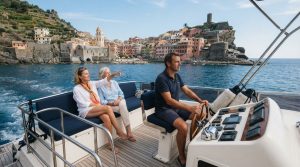
The closest wildlife encounters aren’t necessarily the best ones; patience, responsible viewing and the way an expedition is run matter just as much. On polar expeditions, no more than 100 guests are permitted ashore at one time, and luxury expedition cruises combine small-group exploration with onboard comfort. There’s no single distance that defines a wildlife encounter: the experience depends on the setting, the animals and how the expedition approaches them.
It’s natural to wonder how close you might get to penguins, seals, or whales on luxury expedition cruises. Wildlife viewing happens on nature’s terms, so a rewarding trip is about more than proximity. Learn how ship categories shape the journey, what influences wildlife encounters, and how onboard experts and expedition equipment support exploration.
From the ship itself to time spent ashore, each element affects the feel of a polar voyage. This guide explains what to compare so you can choose an expedition that balances discovery, comfort, and thoughtful wildlife viewing.
Key Takeaways
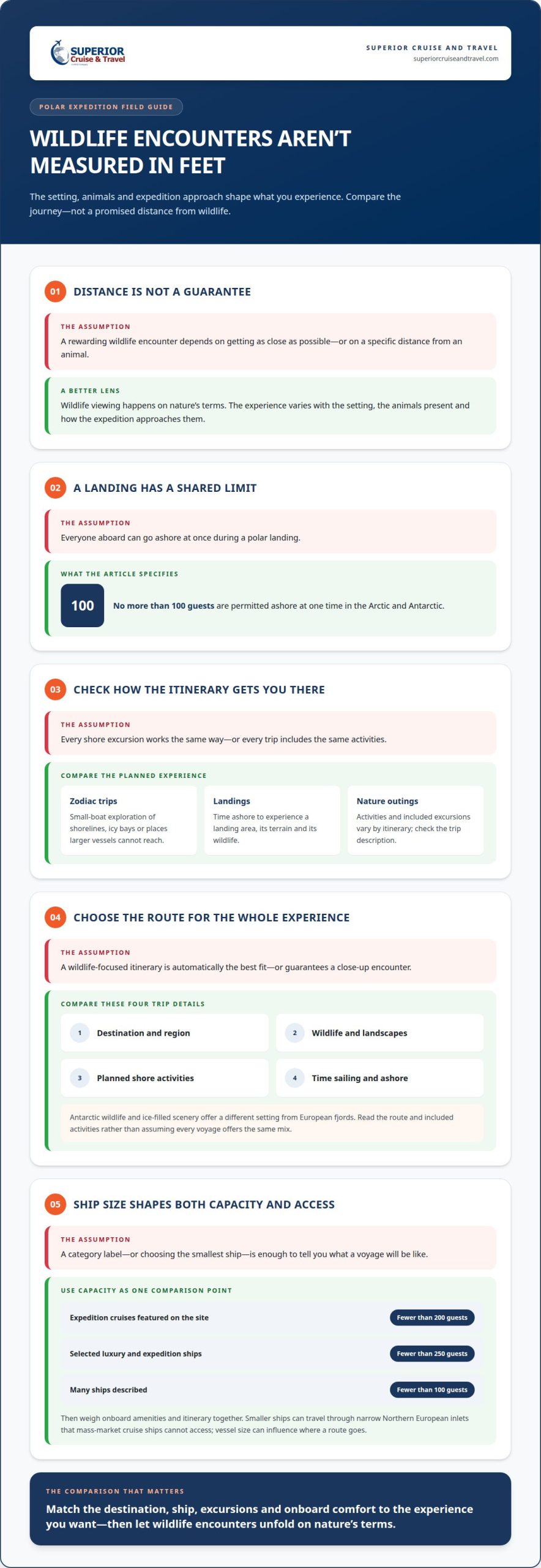
- Compare ship categories by guest capacity: expedition ships featured here carry fewer than 200 guests, while selected luxury and expedition ships have fewer than 250, and many have fewer than 100.
- Think of wildlife viewing as an encounter shaped by the setting and expedition approach, not a guaranteed distance from animals.
- Consider how Antarctic landscapes and wildlife viewing fit your interests, from penguin colonies to ice-filled scenery.
- Look at how onboard specialists and expedition equipment support learning and exploration throughout the voyage.
- Smaller vessels can reach narrow waterways and remote destinations, so ship size can influence where an itinerary can go.
Luxury, expedition-luxury, and expedition ship categories
A ship’s category shapes the balance between onboard comfort and time spent exploring. Compare guest capacity, amenities, and the destinations each vessel can reach.
Ship Categories and Cruising Styles
Luxury ships prioritize onboard comfort, while expedition ships are designed around exploration. Expedition-luxury combines the two, pairing a comfortable setting with access to remote destinations. Small-ship and boutique cruising describe a more intimate scale, but the label alone doesn’t tell you what a voyage includes. Compare the itinerary, onboard amenities, and opportunities for discovery in Antarctica or elsewhere.
What are the best luxury expedition cruise lines and ships? There’s no single best choice for every traveler. The right ship depends on the destinations, expedition style, guest capacity, and level of onboard comfort you prefer. Compare these features together rather than relying on a category label.
Capacity, Amenities, and Fjord Access
Expedition cruises featured on the site use ships with fewer than 200 guests. Selected luxury and expedition ships have fewer than 250 guests, and many have fewer than 100. A smaller guest count can shape the atmosphere, while amenities determine how comfortably you spend time aboard between outings. Consider which onboard comforts matter to you, then weigh them against the itinerary’s focus on exploration.
Vessel size can affect access. Small ships can travel through Northern Europe’s narrow inlets, which mass-market cruise ships can’t access. If fjords or remote coastlines are central to your plans, compare the route with the vessel’s size and cruising style. The goal is to match access with the experience you want, not simply to choose the smallest ship.
Choosing Luxury Expedition Ships
Start with the destinations and experiences that matter most, then compare ships by capacity, amenities, and route. A vessel with fewer than 100 guests may suit travelers seeking a smaller onboard setting, while a larger ship may offer a different balance of space and expedition travel. Read the itinerary as carefully as the ship description.
What are the age, health, and mobility requirements for expedition cruises? These considerations depend on the ship, itinerary, and planned activities. Focus on transfers, landings, and the mobility they require. For remote areas, the Centers for Disease Control and Prevention advises travelers to consider additional insurance covering health care and emergency evacuation.
What should passengers pack for an expedition cruise? Pack for the destination, planned activities, and changing conditions. Use the operator’s trip-specific packing guidance to choose clothing and personal essentials. What safety risks and travel insurance requirements apply? Remote travel can make access to health care and emergency evacuation important considerations, so review coverage for those needs before departure.
How close can guests get to wildlife during polar expeditions?
Wildlife viewing happens from the ship, a Zodiac, or a landing site, depending on the itinerary and conditions. In the Arctic and Antarctic, no more than 100 guests are permitted ashore at one time.
Zodiac Excursions and Landings
A Zodiac is a small boat used to travel between an expedition ship and places the larger vessel can’t reach. On a polar voyage, that might mean approaching a shoreline, exploring an icy bay, or reaching a landing area. The distance from wildlife varies by location and encounter, so the experience isn’t measured by a guaranteed number of feet.
Before choosing a voyage, see how the itinerary describes Zodiac excursions and shore landings. Check which locations are planned for boat exploration, which include time ashore, and how flexible the schedule is. These details show whether a trip emphasizes observing wildlife from the water, exploring on land, or combining both.
Expedition Teams and Shore Excursions
Expedition teams coordinate shore excursions and help guests understand the places they visit. Briefings can explain how to move through a landing area, what natural features to notice, and how to observe wildlife without making an encounter the only measure of an outing. A landing, for example, may offer a chance to see the coastline’s terrain as well as its animals.
Excursion inclusions vary by itinerary, so read the trip description for the activities included in the voyage. Note the planned Zodiac trips, landings, and nature outings, and identify which experiences are part of the schedule. This makes it easier to compare trips without assuming every shore excursion works the same way.
Wildlife Viewing and Itinerary Choices
What should travelers look for when choosing an expedition cruise itinerary? Start with the region, wildlife, and landscapes named in the route, then compare planned Zodiac excursions and landings. A wildlife-focused trip may suit one traveler, while another may prefer a broader mix of natural scenery and exploration.
A European fjord itinerary offers a different setting from a polar journey to Antarctica. Consider the kind of adventure you want, how the route divides time between sailing and excursions, and whether the itinerary clearly describes its included activities. Wildlife encounters depend on where the expedition travels and which animals are present, so choose a route for the overall experience rather than a promised close-up.
Use a simple comparison: destination, wildlife interests, shore activities, and time aboard. Then read the itinerary for each point. For help matching a comfortable voyage with your travel priorities, explore luxury cruise options as you plan.
Antarctic landscapes and wildlife viewing
An Antarctic voyage brings together wildlife viewing and a distinctive polar landscape. Compare the region’s scenery, animal encounters, and route to decide which destination best fits your interests.
Antarctica’s landscapes can include glaciers, icebergs, and narrow straits. Smaller expedition yachts can navigate narrow Antarctic straits and bring guests close to glaciers and icebergs. The view from the water can be an important part of the experience, alongside time ashore. When comparing itineraries, look for the places named along the route and how the voyage balances scenic cruising with landings. A route focused on coastal passages offers a different perspective from one emphasizing time at shore sites.
Wildlife is another key part of the destination. There are 19 penguin species to see in the wild, but that count doesn’t mean every species appears on an Antarctic itinerary. Read the route for named wildlife interests, and consider how excursions are described. A wildlife encounter may be one element of a broader day that also takes in ice, coastline, and the surrounding natural environment. Choose an itinerary for its overall range of experiences, rather than a single hoped-for sighting.
The Arctic and Antarctic are distinct cruise regions, not interchangeable versions of one polar trip. An Arctic itinerary may include fjords and other northern coastal scenery, while an Antarctic voyage focuses on the southern continent and its surrounding waters. Compare destinations by the landscapes and wildlife named in each route. If fjords are a priority, check whether the itinerary identifies them. If Antarctic ice and wildlife are central, look for those features in the route description.
When is the best time to take an expedition cruise to Antarctica or the Arctic? The best departure is the one with an itinerary that matches your priorities for wildlife, scenery, and time ashore. Compare the destination and planned excursions for each departure, since the route determines which region and experiences shape the voyage.
Use the itinerary as a practical guide. First, identify whether the destination is the Arctic or Antarctica. Next, note the landscapes and wildlife highlighted by the route. Then compare the planned balance of scenic cruising and shore visits. These steps help you see whether the voyage suits your interests, without treating the word “polar” as a complete description of the experience.
For a considered choice, weigh the continent or Arctic region, scenery, and wildlife focus together. A route that names glaciers and icebergs may appeal to travelers drawn to Antarctic landscapes, while an itinerary featuring fjords may better match northern interests. The right destination is the one whose route and excursions align with the kind of discovery you want from a polar voyage.
Expedition experts and onboard specialists
On an expedition journey, onboard specialists can connect what guests see with the natural and cultural context of each destination. Their knowledge adds depth to remote travel, whether the itinerary explores Antarctica, the Galapagos, or another region. Compare the expertise described for each voyage and consider how it supports your interests, from wildlife observation to local history.
The expedition team’s role extends beyond presentations. Briefings can prepare guests for planned outings, while onboard talks provide context before or after time ashore. For example, a naturalist’s explanation of a habitat can help travelers notice how wildlife relates to the surrounding landscape. Read the itinerary’s description of onboard learning and excursions to understand how each journey combines exploration with interpretation.
Specialists can also make an intimate voyage feel more connected to its destination. In the Galapagos, cultural and natural experiences may both shape how travelers understand the islands. On an Antarctic itinerary, discussions about ice, wildlife, and landscapes can enrich the view from the ship. Rather than simply counting talks, consider whether their subjects connect with the places and experiences named in the route.
Booking experience matters too. Read the booking terms alongside the itinerary, paying attention to what the voyage describes, which activities it includes, and what conditions apply to participation. If accreditation is mentioned, identify the organization and the specific activity or service it covers. Accreditation is meaningful only when you understand its scope; the word alone doesn’t explain the standards it represents.
Use a short comparison process:
- Match the listed specialist expertise to your interests, such as wildlife, local culture, or polar landscapes.
- Compare the itinerary’s onboard presentations with its shore and nature excursions.
- Read booking terms for the details that affect participation and included activities.
- Review any accreditation by its named organization and stated scope.
These steps help distinguish a polished description from the details that shape the actual journey. A voyage focused on remote discovery may suit travelers seeking an extraordinary learning experience, while another itinerary may emphasize scenery or time ashore. Choose the combination that fits your priorities, and treat the experts’ role as part of the destination experience, not an onboard extra detached from it.
For example, compare two itineraries by listing their named destinations, specialist subjects, and planned excursions. Then consider whether the onboard learning supports the places you’ll visit. This simple exercise clarifies the differences without assuming every expedition ship offers the same program. The most suitable journey brings expert insight, cultural discovery, and itinerary together naturally.
Expedition ships and onboard equipment
Equipment, onboard learning, and daily comforts all shape how an expedition ship supports exploration. Compare the itinerary’s details with the experiences you want, from Zodiac outings to quiet time between excursions.
A Zodiac can carry guests from the ship toward shore or along a coastline, making it part of the expedition experience. The equipment and preparation available for these outings can affect how guests take part, so read the vessel and itinerary descriptions together. Look for clear details about how excursions operate and what equipment is provided, rather than assuming every ship offers the same setup.
Equipment also influences how guests experience the environment without leaving the vessel. For example, an expedition yacht’s private marina can provide access to the sea for swimming or paddleboarding. That feature suits an itinerary where time on the water is part of the appeal, while a polar route may place greater emphasis on Zodiac outings and observing penguins from appropriate viewpoints. Match the equipment to the activities named for your voyage.
Use these practical comparison points:
- Identify the equipment the ship description connects to planned excursions.
- Compare Zodiac outings with other activities named in the itinerary.
- Look for details about how equipment supports participation and comfort.
- Check whether the vessel’s features match the places and activities on your route.
Onboard lectures and workshops can make time between excursions more immersive. A talk about polar wildlife, for example, can add context to the landscapes and animals guests may encounter later. Compare the subjects with your interests, and consider whether workshops offer a hands-on complement to presentations. The value lies in how the onboard program connects with the itinerary, not simply in the number of activities listed.
Comfort and dining matter during the hours spent aboard. Read the ship description for the spaces and dining arrangements it identifies, then consider whether they fit your preferred pace. A day that includes exploring by Zodiac may feel different from one spent mostly sailing, so compare onboard comforts with the rhythm of each itinerary. Avoid assuming that “luxury” means identical amenities across ships.
For an organized comparison, note each ship’s stated equipment, excursion style, onboard program, and dining details. Then weigh those features against the destinations and activities you value most. To consider a chartered cruise ship for a tailored voyage, explore the option as part of your planning.
Superior Cruise and Travel: Luxury Cruises
Superior Cruise and Travel can help you explore luxury cruise options as you plan your next voyage. Turn to the team once you’ve clarified your priorities, such as destinations, onboard comfort, and your preferred style of exploration, and are ready to consider the right cruise experience.
For travelers weighing a polar expedition against a broader itinerary, luxury cruises, chartered cruise ships, and world cruises offer different ways to spend time at sea. Resort vacations are another option when you want to pair a voyage with a land-based stay. Consider which format best fits your destination and travel plans, then discuss your preferences with Superior Cruise and Travel.
Contact Superior Cruise and Travel to discuss your cruise plans.
Make Your Next Voyage Your Own
Choose your next step by deciding how you want the journey to feel: focused on remote exploration, shaped around a special occasion, or part of a longer travel plan. That priority can help you assess which luxury expedition cruises and wider cruise options deserve a closer look. Keep your preferred destinations and onboard experience in mind as you consider the possibilities.
Superior Cruise and Travel offers Luxury Cruises, Chartered Cruise Ships, and World Cruises. These options suit different travel plans, from a cruise vacation to a privately chartered voyage or an extended itinerary. Use your priorities to guide the conversation and take the time you need to find a direction that feels right.
Contact Superior Cruise and Travel to discuss your travel plans. Your next voyage can begin with a clear idea of what matters most.
Frequently Asked Questions
What level of comfort can I expect in extreme environments?
Comfort varies by ship, cabin, and itinerary, with onboard spaces offering a retreat between time outdoors. For a practical comparison, review the cabin description, dining arrangements, and shared areas, then consider how much of each day is scheduled ashore or aboard. If you’re sensitive to cold or motion, weigh those factors when choosing a route and ship rather than relying on “luxury” as a single standard.
How much do luxury expedition cruises cost per person?
The per-person price depends on the itinerary, cabin, voyage length, and included components; it’s provided after a quote request. Departure timing can also affect the fare. For luxury expedition cruises, compare options using the same route and cabin type, then review what each fare says it covers. This is more useful than comparing headline totals alone, since fare inclusions can differ.
What destinations do luxury expedition cruises visit?
These voyages visit Arctic and Antarctic regions, while expedition itineraries can also focus on other remote destinations. The route determines the landscapes and experiences along the way, so read each itinerary for its named stops and planned activities. Decide whether you’re drawn to polar scenery, wildlife, or a different natural environment, then use those priorities to narrow your destination choices for luxury expedition cruises.
What is included in luxury expedition cruise fares?
Each fare’s stated terms determine what’s included. Review the itinerary and fare details for meals, shore excursions, transfers, onboard activities, and other named components. Don’t assume an item is included simply because it appears in the trip description. For an apples-to-apples comparison, separate included services from optional arrangements and note whether the fare covers each part of your planned journey.
How do luxury expedition cruises compare with standard luxury cruises?
The main difference is the itinerary’s purpose. An expedition cruise is organized around reaching and exploring specific natural or remote destinations, while a standard luxury cruise may emphasize shipboard leisure and conventional port calls. Compare the daily schedule, shore activities, and onboard program, not just the ship’s comfort. This helps you decide whether you prefer active discovery or a voyage centered more on time aboard.
What are the best luxury expedition cruise lines and ships?
There’s no single best choice for every traveler. Compare destinations, expedition style, guest capacity, and onboard comfort to find the ship that suits you.