A sales incentive trip can reward strong performance and bring colleagues together for a shared experience. Incentive travel companies help organize travel, accommodations, recognition, and group activities so the reward feels memorable and the logistics run smoothly.
A destination alone is not enough: the trip should recognize achievement, support company goals, and give employees time to connect. A well-planned program can combine celebrations with meetings or team activities, while leaving room for participants to enjoy the trip at their own pace.
This article explains what sales incentive trips can include, how travel can motivate employees, and what to consider when planning a reward, meeting, or retreat. You’ll also learn how a travel partner can bring the experience together, from shaping the trip around your goals to coordinating its moving parts.
Key Takeaways
- Set clear eligibility rules and connect the reward to goals employees can understand and influence.
- Shape the itinerary around the group, balancing recognition, shared experiences, scheduled activities, and personal downtime.
- Plan meetings and retreats with a defined purpose so business sessions complement, rather than overwhelm, the travel experience.
- A travel partner can coordinate key logistics and help align the destination and format with your program’s goals.
- Consider cruises and resort vacations as options for bringing a team together in a memorable setting.
Sales, performance, recognition, and team incentive programs
Effective programs connect a clear business goal with a reward employees understand. They combine fair qualification rules, purposeful travel, and meaningful recognition.
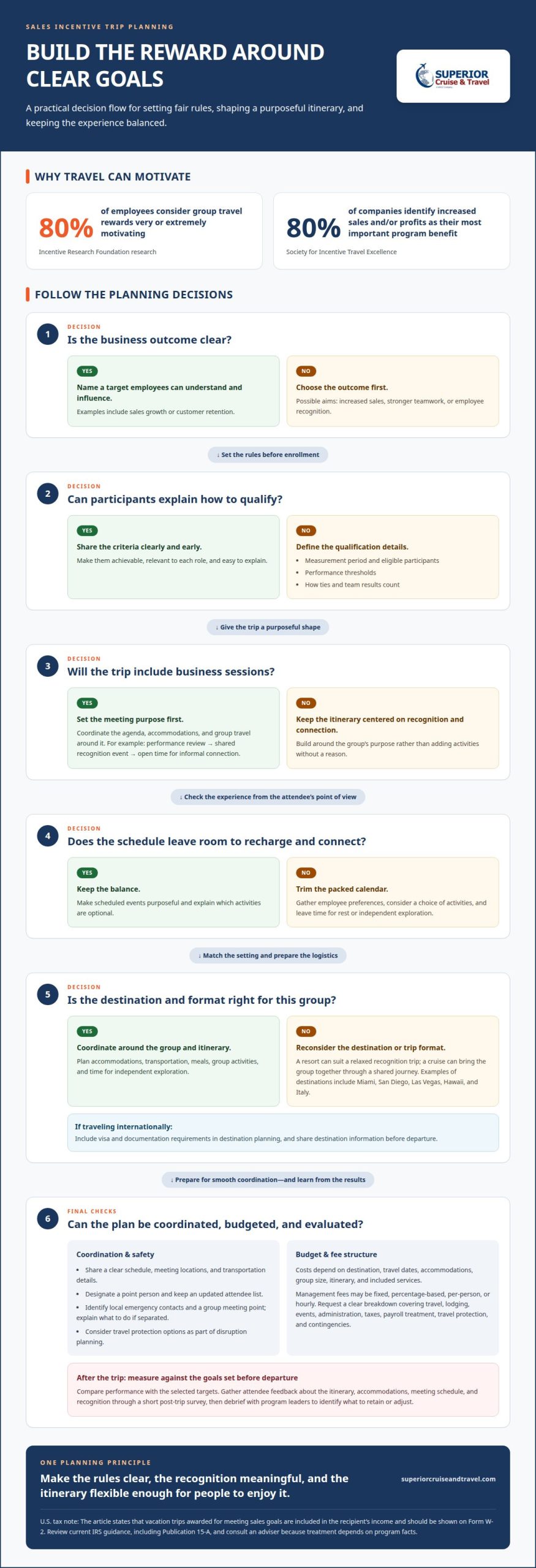
Travel can motivate employees while making achievement a shared experience. Incentive Research Foundation research found that 80% of employees consider group travel rewards very or extremely motivating. Build the program around specific performance targets, such as sales growth or customer retention, then explain how individual and team contributions count. A transparent reward gives participants a clear reason to engage.
How do incentive travel companies compare by services and destinations? Compare whether each handles planning, accommodations, group activities, meetings, and trip coordination, then consider whether its destination options suit your goals. A resort can work well for a relaxed recognition trip, while a cruise can bring the group together through a shared journey.
Program Goals and Qualification Criteria
Start by choosing the outcome the program should support, such as increased sales, stronger teamwork, or employee recognition. Then define a measurement period, eligible participants, performance thresholds, and how ties or team results count. Make the criteria achievable, relevant to each role, and easy to explain before enrollment. Clear rules help employees understand how their effort connects to the reward.
For full-service corporate meeting program management, align business sessions with the recognition experience. Set the meeting purpose first, then coordinate the agenda, accommodations, and group travel around it. For example, a sales team could start with a performance review, recognize achievers at a shared event, and leave open time for informal connection. This keeps work and celebration purposeful.
Measure success against the goals established before the trip. Compare performance against the selected targets, then gather attendee feedback about the itinerary, accommodations, meeting schedule, and recognition. Use a short post-trip survey and a debrief with program leaders to identify what to retain or adjust. The Society for Incentive Travel Excellence reports that 80% of companies identify increased sales and/or profits as their most important program benefit.
Program Costs and Agency Fees
Program costs depend on the destination, travel dates, accommodations, group size, itinerary, and included services. Incentive travel companies may structure management fees as fixed fees, percentage fees, per-person rates, or hourly rates. Build a complete budget for travel, lodging, events, administration, taxes, payroll treatment, travel protection, and contingencies. Request a clear breakdown so each expense aligns with a program element.
What rules and tax considerations apply to employee incentive travel in the United States? According to the Internal Revenue Service, vacation trips awarded for meeting sales goals are included in the recipient’s income and should be shown on Form W-2. Employers should review current IRS guidance, including Publication 15-A, and consult an adviser because treatment depends on program facts. Include this review in planning, not after awards are announced.
Itinerary planning and employee experiences
An effective incentive-trip itinerary balances shared activities with time to recharge. Start with the group’s purpose, destination, and travel schedule, then plan experiences around achievement instead of filling every hour.
How do companies choose an incentive travel company? They compare planning support, destination options, group coordination, and how activities can be shaped around program goals. A useful partner can explain how those choices affect the itinerary and attendee experience.
What are popular incentive travel destinations for U.S. companies? The choice depends on the group, travel dates, and desired experience. Examples in incentive-trip planning include Miami, San Diego, Las Vegas, Hawaii, and Italy, rather than a single destination that suits every team.
Plan the journey in stages. First, establish the trip’s purpose and likely attendee needs. Next, choose a destination and accommodations suited to the group and itinerary. Then coordinate transportation, meals, group activities, and time for independent exploration. For international trips, include visa and documentation requirements in destination planning. Build in flexibility, too: a free afternoon lets employees rest or explore at their own pace.
A common mistake is scheduling too many activities, leaving little time for genuine connection or rest. Another is choosing experiences without considering who will attend. A team with varied interests may appreciate a choice of activities, while a close-knit sales group may prefer shared experiences. Make each scheduled event purposeful, and explain what’s optional so employees can plan their time comfortably.
On-site support helps keep the itinerary coordinated as the group moves between events. Prepare a clear schedule, share meeting locations and transportation details, and designate a point person for questions. For example, an arrival briefing can cover the day’s plan and the next meeting location. Keep an updated attendee list and a straightforward way to communicate schedule changes.
Safety planning belongs in the preparation, not as an afterthought. Identify local emergency contacts, establish a group meeting point, and communicate what employees should do if separated. For international incentive trips, account for documentation needs and share destination information before departure. Travel protection can also be part of the planning conversation; travel protection options may help companies consider how to prepare for travel disruptions.
Strong engagement comes from thoughtful choices, not a packed calendar. Gather employee preferences before choosing activities, then ask for feedback after the trip. A short survey can show whether the pace felt comfortable, which experiences encouraged team connection, and what to adjust next time. Use the responses to refine future incentive trips and make recognition feel personal as well as well-earned.
Corporate meetings and retreats
A corporate retreat works best when its meeting agenda serves a specific organizational purpose. Start by naming the desired outcome, such as aligning department leaders, introducing a new strategy, or strengthening relationships with business partners. Then choose a format and destination that support that goal. A planning session needs quiet, focused spaces, while a partner gathering may benefit from shared meals and informal conversation.
Separate internal work from recognition and social time in the agenda. For example, a company introducing a new sales strategy could open with leadership presentations, move into small-group planning, and close with a hosted dinner. This sequence gives employees time to understand the strategy, contribute ideas, and connect beyond the meeting room. Share the agenda in advance so attendees know which sessions require preparation.
Match the setting to the work. A resort can offer a change of pace for a leadership retreat, while a cruise brings attendees together through a shared journey. Consider how the destination affects travel arrangements, meeting space, meals, and opportunities to gather. A tailored plan should account for organizational priorities, attendee needs, and practical transitions between scheduled sessions.
- Strategy retreat: Reserve focused sessions for planning, followed by facilitated discussion and informal networking.
- Partner meeting: Create space for presentations, relationship-building, and shared meals.
- Team gathering: Pair a clear business purpose with group activities that encourage participation.
Define roles before invitations go out. The internal planning team can set objectives, approve the agenda, and identify key attendees, while event partners coordinate travel details and meeting requirements. For example, assign one contact to collect dietary requests and another to consolidate presentation materials. Clear ownership helps prevent missed details and conflicting instructions.
Plan the meeting environment as carefully as the destination. Confirm that the room setup supports the agenda: a boardroom layout suits discussion, while smaller groups may need separate breakout spaces. Prepare presentation equipment, printed materials, and a backup plan for sessions that rely on technology. Include transitions between locations in the schedule so attendees can move from a working session to dinner without confusion.
After the retreat, connect attendee feedback to the original objective. Ask which sessions helped clarify decisions, where discussions stalled, and whether the setting supported the work. For example, if a strategy workshop produced useful ideas but lacked follow-through, assign owners and next steps in the meeting summary. This turns a tailored gathering into practical progress for the organization, rather than a standalone event.
Benefits of using an incentive travel company
The best incentive travel companies in the United States are those whose services, destination options, and planning approach match your program goals. There is no single best fit for every organization, so compare how each partner handles logistics, attendee experience, meetings, and trip coordination.
The clearest benefit is one planning process that connects details otherwise handled by separate teams. A travel partner can coordinate transportation, accommodations, scheduled experiences, and group communications around the same itinerary. For example, if a recognition dinner follows a daytime activity, coordination helps align arrival times, transfers, and the event schedule.
That structure can also help internal teams protect time for their own work. Instead of separately managing attendee details, travel arrangements, and event schedules, the organization can use a shared plan with assigned responsibilities. A planning lead might focus on eligibility and recognition, while the travel partner coordinates trip details. Clear ownership reduces the risk of conflicting instructions.
Employee experience is another advantage. A memorable reward feels considered when the destination, pace, and activities suit the audience. For instance, a group with varied interests might appreciate optional experiences alongside shared events. Attendees can choose how to spend some free time, while the program still creates opportunities for colleagues to connect and celebrate achievement.
Good coordination supports loyalty and recognition by making the reward feel connected to employees’ efforts. A thoughtful welcome, organized arrival, and well-timed recognition moment can make the trip’s purpose clear. Details matter: if award recipients arrive at different times, a shared schedule and clear event information help each person feel included.
A travel partner can also help companies anticipate planning challenges. Build a timeline that tracks decisions, attendee information, travel arrangements, and event requirements. Then identify who handles each item and how changes reach the group. For example, a revised transfer schedule should reach attendees and the on-site team through a consistent communication channel.
To assess whether a partner adds value, review the planning process as well as the final itinerary. Look for clear responsibilities, destination recommendations tied to your goals, and a practical way to manage updates. Afterward, gather attendee feedback and compare it with the program’s original objectives. This gives the organization useful direction for improving future rewards.
The main takeaway: choose support that makes the experience easier to coordinate without losing sight of the trip’s purpose. When the itinerary, recognition, and logistics work together, the reward can feel personal to employees and purposeful for the business.
The best choice is a company whose services, destination options, and planning style fit your program goals. Compare its ability to coordinate logistics, attendee experiences, meetings, and on-trip support, along with clear responsibilities and a practical process for handling updates.
What do incentive travel companies do?
Incentive travel companies help organizations turn a business reward into a coordinated group trip. Their work can include shaping the travel experience, organizing trip details, and aligning the itinerary with the program’s purpose. For example, a sales recognition trip might combine destination planning, accommodations, shared activities, and an awards event. The organization sets its business goals and award criteria, while the travel partner coordinates the arrangements around them.
Planning often begins with a discussion of the audience, preferred destinations, timing, and desired experience. The planner can then develop an itinerary and coordinate its components. A company might envision a resort gathering with a recognition dinner or a cruise itinerary with scheduled group events. The right format depends on the organization’s goals, attendee needs, and plans for the experience.
Coordination can include accommodations, travel information, group activities, and consistent event details. A clear communication plan helps participants understand arrival arrangements, schedules, and where to find updates. For international trips, destination documentation requirements also belong in the planning process. Companies may consider travel protection when preparing for possible disruptions.
- Program design: Match the trip format and destination to the intended reward and audience.
- Travel coordination: Bring accommodations, schedules, activities, and attendee communications into one plan.
- Event support: Coordinate group gatherings, recognition moments, or corporate meeting elements.
- Review: Gather attendee feedback and assess the experience against the program’s goals.
Defined responsibilities help each planning stage move forward. The organization provides direction on its audience, priorities, and recognition, while the planner coordinates logistics and consolidates trip details. For example, internal leaders can identify award recipients and approve the event schedule, while the travel partner organizes accommodation information and group arrangements. This division gives teams clear roles and helps prevent trip details from being overlooked.
Before settling on a format, establish what the experience should accomplish and which elements matter most. A company seeking team connection may prioritize shared experiences, while a business gathering may need time for presentations and discussion. When comparing incentive travel companies, consider how each translates those priorities into an itinerary and manages coordination. Review the proposed schedule, responsibilities, and attendee communications as one connected plan.
After the trip, attendee feedback can guide improvements. Ask participants about the schedule, activities, accommodations, and recognition experience. Compare their comments with the original goals, such as celebrating achievement or encouraging connection. That review gives the organization practical direction for future programs and helps planning decisions reflect what participants valued.
To discuss coordinated group travel for your organization, contact Superior Cruise and Travel.
Superior Cruise and Travel
Superior Cruise and Travel can help your organization explore group travel options for an employee reward or corporate gathering. If you’re considering a cruise or resort experience, the team can shape the trip around your goals and preferred style of travel.
Options include Luxury Cruises, Chartered Cruise Ships, World Cruises, and Resort Vacations. Each offers a different setting for bringing participants together, from a shared voyage to a destination-based stay. The right fit depends on the experience you want to create and how the trip supports your recognition plans.
When you’re ready to discuss a group travel idea, contact Superior Cruise and Travel.
Shape the Next Step for Your Team
Give your program a clear starting point: decide what the experience should mean to employees and how it should fit your organization. As you consider incentive travel companies, look for an approach that can translate those priorities into a travel concept while keeping the experience and practical planning aligned.
Superior Cruise and Travel can help you explore group travel formats, including Luxury Cruises, Chartered Cruise Ships, and World Cruises. Share the recognition experience you have in mind, the goals it should support, and the travel style that suits your team. Those priorities can guide a productive planning conversation without locking you into a format too soon.
Contact Superior Cruise and Travel to discuss your group travel plans and take the next step toward a reward your team can look forward to.
Frequently Asked Questions
What do sales incentive trips entail and why are they important?
Sales incentive trips reward employees for achieving defined business goals through a planned group travel experience. They may include transportation, accommodations, shared activities, and recognition moments. Their value lies in connecting performance with a memorable reward employees can experience together. For example, a company might recognize qualifying salespeople at a group dinner, making their achievement visible and helping participants understand what the organization values.
What is an incentive trip?
An incentive trip is travel offered to recognize meeting a business goal or earning an award. Its main purpose is to reward achievement, although the itinerary may also include meetings or team activities. A company could offer a resort stay to employees who qualify under a sales program. The organization determines the eligibility criteria, while the trip gives recipients a shared experience tied to their accomplishment.
How much do incentive travel programs cost per person?
Per-person costs vary with the destination, travel dates, trip length, accommodations, activities, and group arrangements. To create a useful budget, identify which expenses are shared and which apply to each traveler. Then account for administrative, tax, payroll, protection, and contingency considerations. For example, a program with group events and scheduled activities has different planning needs from a simple itinerary. Build the estimate around the actual program rather than a generic figure.
What fees do incentive travel companies charge?
Different incentive travel companies may use fixed fees, percentage-based fees, per-person rates, or hourly rates for program management. The structure depends on the work included, such as attendee coordination, event planning, or travel arrangements. Review each proposal’s scope and how additional work is handled. This helps distinguish management costs from trip expenses and makes proposals easier to compare without assuming one fee model suits every program.
What services are included in incentive travel planning and management?
Planning and management can include destination research, itinerary development, travel coordination, accommodations, attendee communications, group activities, and event logistics. The scope depends on the organization’s needs and agreed responsibilities. For example, internal staff may determine award eligibility while a travel partner coordinates participant arrangements and trip information. Clarifying responsibilities early helps everyone understand who handles each part of the experience.
What risks and insurance should companies consider for incentive travel?
Companies should consider travel disruptions, participant needs, and destination documentation for international itineraries. Travel protection options may be considered for multi-component travel arrangements, but protection and insurance underwriting are different services. Review the trip components and how a disruption could affect the overall itinerary. Clear attendee communications, destination information, and a plan for sharing updates also help the group respond calmly if arrangements change.
How far in advance should a company book an incentive travel program?
Start planning when your organization has a likely travel period, destination preferences, and a clear outline of the experience. There is no single booking window that fits every program. International travel, complex group arrangements, and travel during popular periods may require more coordination. Early planning gives the team time to align dates, accommodations, attendee information, and program decisions before invitations and schedules are finalized.