
The grandest setting doesn’t always make the most memorable trip. Five-star travel experiences feel special when thoughtful details, meaningful choices, and a sense of discovery come together around what matters to you. A quiet retreat can invite rest, while an immersive journey can make exploration the heart of your vacation.
Comfort and attentive service matter, but they’re only part of the picture. Being present, taking part, and choosing how to spend your time can turn a beautiful trip into something personal and lasting. This article explores what makes travel feel extraordinary, how different experiences create different kinds of meaning, and what to consider when choosing a journey that feels right for you.
Key Takeaways
- Identify the personal choices and thoughtful details that can make a trip feel extraordinary, beyond its setting or level of service.
- Understand which elements shape the cost of a luxury stay or vacation, so you can focus your budget on what matters most.
- Consider how destination, travel style, and priorities influence the value you get from a luxury journey.
- Learn how planning ahead and matching the experience to your preferences can help you pursue upgrades or attractive offers.
- Explore how different kinds of journeys create different meanings, from a restorative resort stay to a longer voyage.
Non-ordinary experience
A memorable trip changes more than your surroundings; it gives your time a distinct purpose. A private island stay, a long voyage, and a city retreat can each feel extraordinary for different reasons.
Consider what you want to experience, not just what you want to see. If you’re seeking quiet, you may value an unhurried resort stay. If you’re drawn to discovery, a journey with varied destinations may suit you better.
Luxury Travel Value by Destination
Luxury travel value comes from how well a destination’s setting, activities, and comforts match your priorities. A remarkable trip isn’t defined by a destination’s reputation alone.
Season and region help shape the experience. A winter visit to the Caribbean might center on warm-weather relaxation, while a summer journey through Alaska could emphasize dramatic scenery and time outdoors. Spring in Japan can suit travelers interested in gardens and cultural landmarks; an autumn visit to the Mediterranean may appeal to those drawn to coastal towns and historic sites. These are examples, not universal rankings. The best choice depends on what you want to do.
To compare destinations, start with your main priority. If privacy matters most, look for an itinerary with room to rest. If variety matters, consider how the route combines landscapes and experiences. A resort vacation can create a settled rhythm, while a cruise can bring several destinations into one journey. The best fit is the format that gives your time the meaning you want, not simply a location that sounds exclusive.
Season also affects what a destination offers during your visit. Consider the experiences available at that time, the pace you prefer, and whether the trip’s main activity suits your interests. A beach escape and a cultural itinerary can both feel special, but they serve different goals. Match the region and season to the experience you want to remember.
Costs of Five-Star Stays and Vacations
The cost of a five-star stay or luxury vacation reflects the trip’s components, not one universal rate. Understanding those components helps you decide what to prioritize.
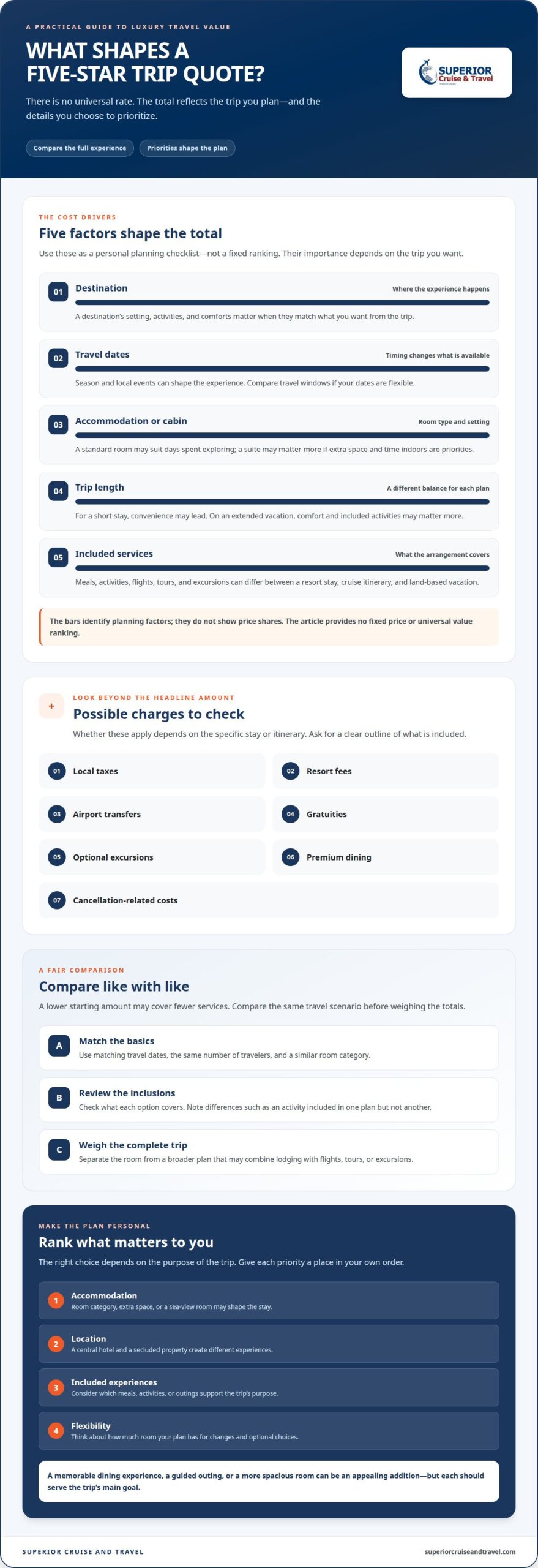
The total depends on the trip, including its destination, travel dates, accommodation or cabin, length, and included services. A resort stay with meals and activities arranged differs from a plan with separate dining, transfers, and excursions. Cruise itineraries and land-based vacations also have different inclusions. Compare the full experience, not just the headline rate.
Watch for charges that may sit outside the central booking amount. Examples include local taxes, resort fees, airport transfers, gratuities, optional excursions, premium dining, and cancellation-related costs. Whether any apply depends on the specific stay or itinerary. Ask for a clear outline of what the quoted arrangements include, then consider which optional extras matter to your plans. That makes it easier to distinguish essential comforts from appealing additions.
Before choosing, rank your priorities: accommodation, location, included experiences, and flexibility. If a sea-view room matters more than a private excursion, make that preference central to your comparison. If convenience matters most, assess the complete itinerary rather than one component. This approach helps shape the trip around its purpose and reduces the risk of overlooking details.
How much do five-star hotels and luxury vacations cost?
There’s no single price for a five-star hotel or luxury vacation. The final amount depends on the specific trip and is given after a quote request. Destination, travel dates, accommodation, trip length, and included services all affect the total. A two-night city stay and a week-long beach escape are different plans, even when both promise an upscale experience.
Understand what the quoted amount covers
Start by separating accommodation from the rest of the vacation. A hotel booking may cover the room, while a complete travel plan can combine lodging with flights, tours, or excursions. When comparing resort stays, identify which arrangements each includes. A lower starting amount may cover fewer services, rather than offer better overall value.
Compare the same travel scenario: matching dates, the same number of travelers, and a similar room category. Then review the inclusions side by side. If one option includes an activity and another doesn’t, note the difference before comparing the totals. This like-for-like approach makes the trade-offs easier to see.
Choose the parts that matter most
Room category can change the character of a stay. A standard room may suit travelers who plan to spend their days exploring, while a suite may matter more to guests who value extra space and time indoors. Location also shapes the experience: a central hotel can make a city visit feel very different from a secluded property outside town. Decide which features matter before choosing upgrades.
Trip length changes the balance, too. For a short stay, a convenient location may matter more than a long list of amenities. On an extended vacation, comfort and included activities may play a larger role. A couple planning a coastal retreat might prioritize an ocean-facing room, while a family could prefer a layout with space to unwind.
Plan around timing and priorities
Travel dates influence which accommodations and arrangements fit your plans. A visit during a popular local festival may feel different from a quieter week. If your dates are flexible, compare possible travel windows and consider how each affects the itinerary. No season automatically offers the best value; the right timing depends on what you want to do.
Set a clear priority before considering optional additions. Decide whether a memorable dining experience, a guided outing, or a more spacious room matters most. This gives each potential extra a purpose. If an addition doesn’t support your trip’s main goal, it may not belong in your plan.
Use a short review before settling on an itinerary:
- Compare the same dates, traveler count, and accommodation category.
- Separate included arrangements from optional additions.
- Identify the room, location, or activity that matters most.
- Review the complete trip total, not only its starting amount.
When choosing between a city hotel and a resort, compare the experience each makes possible. The city option may support museum visits and nearby dining, while the resort may make relaxation the central purpose. Neither is automatically less expensive; the itinerary and inclusions determine how each fits your priorities.
A useful budget is more than a spending limit. It helps align your travel arrangements with the experience you value. Compare equivalent plans, prioritize what matters, and assess the complete itinerary before deciding. This brings clarity to a luxury vacation beyond the headline rate.
Which destinations offer the best value for luxury travel?
No destination offers the best value for every traveler; value depends on how well a place matches your priorities. A city stay in Singapore, a wildlife journey in Kenya, and a coastal escape in Portugal create different kinds of luxury. Compare what each destination lets you experience, rather than relying on reputation alone.
Match the destination to the experience
Start with the trip’s main purpose, then shortlist places that suit it. For architecture and food, consider Lisbon or Kyoto; for wide-open landscapes, consider Patagonia or the Canadian Rockies. These examples represent different travel styles, not a price ranking. A destination is a better fit when its setting and activities support the memories you want to bring home.
Next, compare the itinerary’s shape. A stay in Marrakech can focus on one city and its surrounding landscapes, while a journey through the Greek islands can emphasize changing coastal scenery. Travelers who prefer fewer transitions may find more value in a single-base itinerary. Those eager for variety may welcome a route connecting distinct places.
Consider season and regional character
Season changes what a destination can offer, so align your travel dates with your interests. A fall visit to New England can focus on changing foliage, while a spring trip to Washington, D.C., can center on gardens and museums. These experiences suit different preferences. A destination delivers more personal value when its seasonal character supports your plans.
Regional differences matter within the same country, too. In Italy, a stay in Rome offers a city-centered visit, while the Amalfi Coast suggests a coastal itinerary. In Japan, Tokyo and Hokkaido offer contrasting settings and activities. Rather than treating a country as one experience, compare regions by pace, scenery, and the interests they bring together.
Compare the complete journey
Look beyond the hotel or resort when comparing destinations. Connections, transfers, excursions, and the time between stops all shape the experience. A remote lodge in Tanzania may appeal to travelers focused on wildlife, while a resort near a well-connected city may suit guests seeking both relaxation and cultural visits. The right choice depends on which arrangements serve your purpose.
A simple scorecard can make comparisons practical. List each destination, then assess how well it supports your priorities, such as privacy, cultural discovery, cuisine, or outdoor activities. Note the trip’s pace and included experiences, too. If Costa Rica offers the nature-focused itinerary you want, it may fit better than a famous city, even if both promise high-end comfort.
Use these questions to narrow your shortlist:
- Which setting best supports the trip’s purpose, such as a beach retreat or a cultural visit?
- Does the season suit the activities you hope to enjoy in places like Iceland or Morocco?
- Would you prefer one base, such as a resort in Bali, or a route with several stops?
- Do the journey’s connections and excursions leave enough time for the experiences you value?
Best value is personal, not a fixed list of destinations. A luxury journey through New Zealand may appeal to travelers seeking varied landscapes, while a stay in Paris may better suit those drawn to museums and dining. Compare what each place makes possible, the pace it requires, and how closely it fits your priorities. That’s more useful than choosing by name alone.
How can travelers book five-star experiences and find upgrades or deals
Start with the experience you want, then build the booking around it. For a quiet escape, a resort with included dining may suit you better than a city hotel. For a cultural trip, a centrally located stay can make museums and restaurants easier to reach. Clear priorities help you compare options by what they provide, not by labels alone.
Build a booking brief
Before reviewing options, write down your destination, preferred travel dates, room needs, and must-have experiences. A couple planning a coastal stay might prioritize an ocean view and relaxed dining. A family visiting Rome might value convenient access to historic sites and room arrangements that suit their plans. Specific details make it easier to shape a trip around real preferences.
Then separate essentials from nice-to-have extras. Decide whether a room upgrade, private excursion, or flexible schedule matters most. For a resort stay, consider whether included activities are central to your trip. For a cruise, weigh the itinerary and cabin category together. This gives your planning conversation a clear direction.
Compare the whole offer
Review what each proposed arrangement includes before comparing overall value. A hotel offer might include breakfast, while another may cover the room alone. A cruise itinerary may package accommodation and onboard experiences differently from a land-based vacation. Read the details, including inclusions, exclusions, cancellation terms, and payment conditions, so you understand what the offer covers.
Look for offers that fit your dates and priorities, rather than treating every promotion as a saving. A discounted room far from the places you want to visit may not suit a trip centered on walking through central Paris. An included excursion can be useful if it matches your interests, but less valuable if you’d choose another activity. Compare the complete arrangements for the experience you want.
Ask about upgrades with clear expectations
When considering an upgrade, name the specific change you’d value. You might prefer a higher-floor room, a larger cabin, or accommodation with a view. Ask how the change affects the full booking and what conditions apply. Treat an upgrade as an option to consider, not as part of the reservation until it’s confirmed.
Timing and flexibility can shape which options suit your plans. If your dates can shift, compare nearby travel windows and destinations before settling on a plan. If your dates are fixed, focus on room categories and inclusions that fit them. A traveler set on attending a festival in New Orleans, for example, may prioritize location over flexible dates.
Keep your booking organized with a short checklist:
- Record the dates, destination, traveler details, and essential preferences.
- Compare the same room or cabin category across proposed options.
- Review included meals, activities, transfers, and cancellation terms.
- Ask for the details of any upgrade before adding it to the plan.
- Keep the final itinerary and booking terms together for easy reference.
For a complex itinerary, such as a stay in Barcelona followed by a Mediterranean cruise, keep connections and timing in view. Each part should support the next, rather than create rushed transitions. A well-planned reservation brings accommodation, activities, and travel schedules into one coherent experience. Focus on details that serve your priorities, and choose an upgrade or offer only when it improves the trip you want.
Superior Cruise and Travel
Superior Cruise and Travel helps travelers shape luxury journeys around the experiences that matter most. If you’re weighing a resort escape against an extended voyage, personalized travel planning can bring your priorities, destination, and preferred pace together in one considered itinerary.
Options include Luxury Cruises, Chartered Cruise Ships, World Cruises, and Resort Vacations. Each can create a different kind of memorable trip, from discovering multiple destinations at sea to settling into a resort setting. Share what you hope the journey will feel like, whether that means cultural discovery, time to unwind, or a more expansive itinerary, and planning can start with those priorities.
For help turning your ideas into a tailored luxury trip, contact Superior Cruise and Travel.
Shape the Journey Around What Matters
Let the feeling you want from a trip guide your next decision. Perhaps you’re drawn to the freedom of time at sea, a longer voyage with changing horizons, or the privacy of a journey planned for a group. The right choice makes room for your interests and gives the experience personal meaning.
Superior Cruise and Travel can help you explore Luxury Cruises, Chartered Cruise Ships, and World Cruises as ways to shape your journey. Share what you hope to experience, and let those priorities guide the planning conversation. A thoughtful starting point can clarify the possibilities, whether you’re imagining a brief escape or a more expansive adventure. The most memorable five-star travel experiences begin with a vision that feels like yours.
Contact Superior Cruise and Travel to begin discussing your travel ideas. Your next remarkable journey can start with a simple conversation.
Frequently Asked Questions
What defines a five-star travel experience?
A five-star travel experience combines exceptional comfort and attentive service with choices that feel personal. The star label alone doesn’t define its meaning; the details should support the reason for the trip. A traveler celebrating an anniversary, for example, might value a thoughtfully paced itinerary and memorable setting more than a packed schedule. The experience feels special when its details work together and reflect what matters to the traveler.