A trip feels truly VIP because of more than its price tag. Exclusive access travel experiences stand out through special entry, smaller groups, private or expert-led tours, and carefully arranged moments that a standard itinerary may not include. Their value comes from bringing access, comfort, and thoughtful planning together.
It’s natural to want more than a crowded photo stop or rushed visit, especially when a destination matters to you. The right experience can bring you closer to a landmark, cultural tradition, or remote retreat while making the practical details easier to manage.
Here, you’ll learn what VIP access can include, explore sought-after destinations with distinctive experiences, and understand how to assess inclusions and plan your booking. We’ll also look at what affects the overall price, from the type of access to the services arranged around it, so you can decide which experiences fit your priorities and travel plans.
Key Takeaways
- VIP access can mean quieter entry, smaller groups, or experiences that bring you closer to a place and its culture.
- Compare what each experience includes, such as meals, drinks, guided access, and group size, rather than judging value by the headline alone.
- Explore distinctive options, from early-morning access at the Vatican to private viewing of the Royal Quarters at Versailles.
- Plan travel packages 9 to 12 months ahead, or earlier for high-demand holiday departures.
- Match the experience to your priorities, then shape the wider trip around the destinations and pace you want.
Access to sought-after destinations
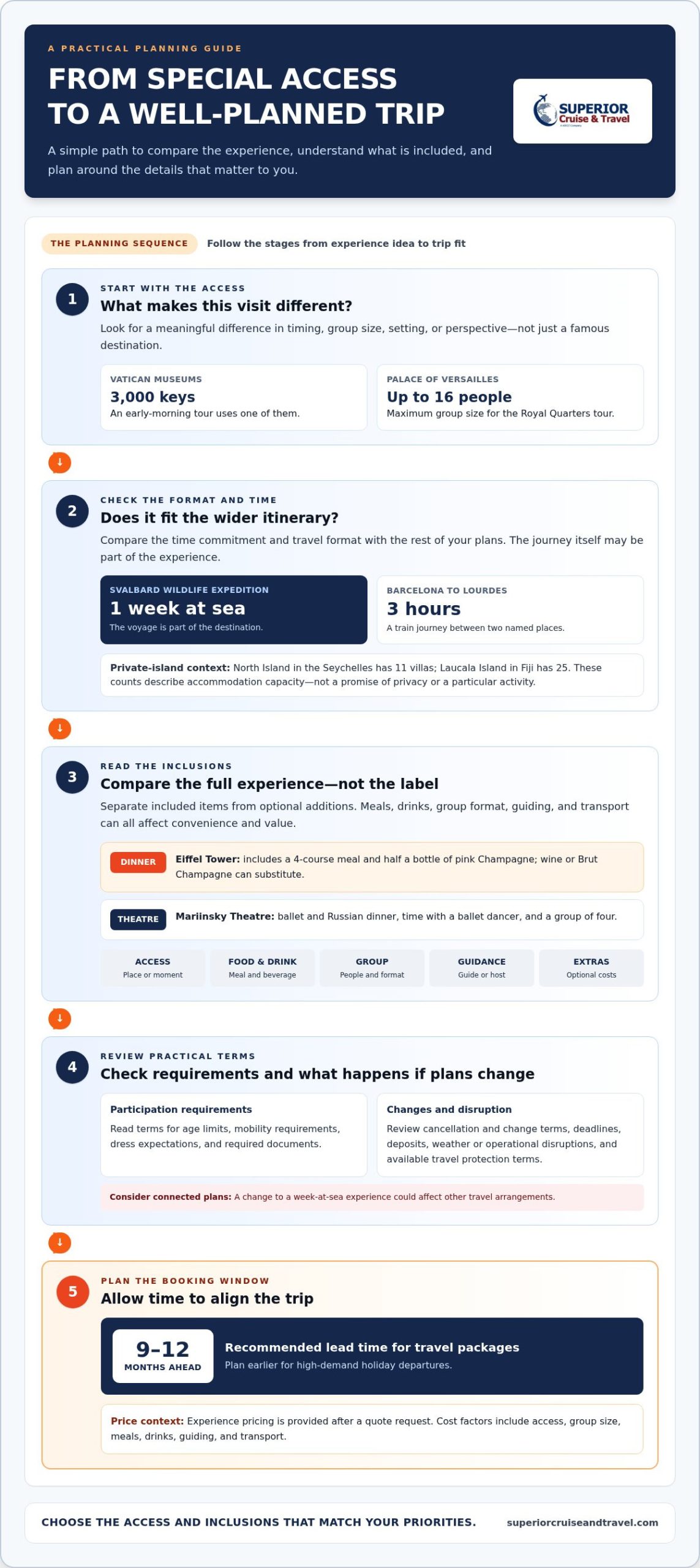
Special access can change the timing, scale, or perspective of a visit. At the Vatican Museums, an early-morning tour uses one of 3,000 keys. That detail offers a glimpse into the practical meaning of exclusive entry: the experience is shaped around access, not simply a stop at a famous destination. Around the world, look for what makes each visit distinct, such as timing, group size, or a setting unavailable on a standard itinerary.
At the Palace of Versailles, the Royal Quarters tour has a maximum group size of 16 people. A smaller group can make a visit feel more focused, but the specific benefit depends on the itinerary and what spaces it includes. Before choosing, compare the tour’s named areas with the public rooms you already plan to see. That step helps you decide whether the special access adds a meaningful perspective to your day in France.
For a private-island stay, villa counts help show the scale of the setting. North Island in the Seychelles has 11 villas, while Laucala Island in Fiji has 25 villas. These figures describe accommodation capacity, not a promise of privacy or a particular activity. Compare the island’s location, stay format, and planned nature experiences. For a trip focused on africa, use the same approach: identify the destination first, then look for experiences that connect with its landscape and culture.
Some sought-after experiences take place far from a city landmark. The Svalbard wildlife expedition described here lasts one week at sea, making the voyage itself part of the destination. A Barcelona-to-Lourdes train journey takes 3 hours, offering a different kind of access through the route between two named places. Compare the time commitment and travel format with your wider itinerary before deciding what fits.
What eligibility rules, age limits, or restrictions apply? Rules vary by experience, so read the participation terms for age limits, mobility requirements, dress expectations, and required documents. Before booking, for example, check whether a walking tour or remote nature outing suits everyone traveling.
What risks, cancellation policies, and consumer protections should travelers consider? Review the written cancellation and change terms, including deadlines, deposits, and what happens if weather or operations disrupt the experience. For a week at sea in Svalbard, consider how a change could affect connected travel plans, then review available travel protection and its terms.
Use a simple comparison before committing: note each option’s access feature, location, group format, time needed, and restrictions. A Vatican early-morning tour, a Versailles visit, and a remote island stay offer very different kinds of access. Choosing based on what you value most helps make a sought-after destination a good fit for your trip.
Experience prices and included amenities
Compare the full itinerary, not just the headline attraction. An Eiffel Tower dinner and a ballet evening in St. Petersburg show how meals, drinks, group format, and cultural access can shape an experience.
Included Amenities
Inclusions can combine access with hospitality, such as a meal, a drink, or a guide. The Eiffel Tower dinner experience includes a 4-course meal and half a bottle of pink Champagne; wine or Brut Champagne can substitute. Read each itinerary line by line, and distinguish included items from optional additions. That makes it easier to compare what the experience actually delivers.
Other formats offer different kinds of access. The Mariinsky Theatre ballet and Russian dinner pairs a performance with a meal and time with a ballet dancer, in groups of four. For an expedition, review the named activities and services alongside the journey itself. Check whether guides, transport, meals, or equipment are included, as those details affect convenience and overall value.
Price and Value
Price depends on the experience and is provided after a quote request; cost factors include access, group size, meals, drinks, guiding, and transport. Compare those elements with the experience you want instead of relying on the luxury label. A private viewing, hosted meal, and guided expedition offer distinct value, so prioritize what matters most to you.
Are exclusive access experiences worth the price? They can be worthwhile when the access or hospitality included matches your priorities. If a meal, smaller group, or expert context matters less to you than the destination itself, a simpler visit may be a better fit.
Use this quick comparison before booking:
- Access: Identify the specific place or moment included.
- Food and drink: Note the meal format and beverage details, as with the Eiffel Tower dinner.
- Group format: Compare group size, including the Mariinsky experience’s group of four.
- Guidance: Look for named guides or hosts and the role they play.
- Extra costs: Separate included services from optional additions in the itinerary.
Then consider how the experience fits the wider trip. A dinner booking may stand alone, while an expedition can shape several days of travel. Luxury is most meaningful when the inclusions support your own priorities, not simply when the itinerary sounds exclusive. If a cruise is part of your plans, explore luxury cruise planning as a way to consider the wider journey alongside individual experiences.
Recommended booking lead time
Travelers are advised to book a travel package 9 to 12 months in advance, or earlier for high-demand holiday departures. That window gives you time to align the destination, travel dates, and special activities before the itinerary fills with fixed commitments. Start with the experience that matters most, then build the surrounding journey around its timing and location.
For a holiday departure, decide which dates are essential before comparing destinations. A fixed celebration, school break, or seasonal event can narrow your options, so make those dates the starting point. Then identify experiences tied to a particular place or schedule. This order helps you avoid arranging flights and stays around an activity that doesn’t fit the occasion.
Turn your priorities into a short planning brief. Include the destination, preferred travel period, must-have activities, group needs, and flexibility around departure dates. For example, someone planning a Paris visit around a special dinner can make that reservation the itinerary’s anchor. A traveler considering Svalbard can first decide how the expedition fits into the wider trip.
Use this sequence to keep planning clear:
- Set the anchor: Choose the destination or activity that gives the journey its purpose.
- Mark fixed dates: Record holiday departures, celebrations, and other commitments.
- Rank priorities: Separate essential experiences from activities that can move.
- Shape the route: Arrange destinations and travel days around the anchor experience.
- Review the itinerary: Check that each planned activity fits the pace and purpose of the trip.
This sequence matters because one special booking can affect the rest of the route. A Versailles visit may shape the timing of a Paris stay, while a remote expedition can influence how travelers organize the days around it. Identify these anchor experiences early, then add flexible sightseeing and meals. That keeps the itinerary focused without making every moment depend on one booking.
For a group, gather everyone’s priorities before settling on dates. One traveler may value a private cultural visit, while another prefers nature or unstructured time. A shared list makes those differences clear and helps you choose a destination and pace that work for the whole party. It also gives the group a basis for deciding which activities need attention first.
Keep the planning brief current as decisions take shape. If the preferred departure dates change, revisit the route and the activities connected to them. If a must-have experience changes, reassess the destination before adding more arrangements. Beginning with the 9-to-12-month booking window, and planning earlier for high-demand holiday departures, gives travelers a practical framework for organizing the trip from its most important moment outward.
Which companies offer exclusive access travel experiences, and what do they include?
Special access can come through different kinds of travel companies, each handling a different part of the experience. Specialist tour operators may focus on guided visits, while destination planners can coordinate experiences with transport and lodging. Cruise companies can arrange shore activities within a wider voyage. Compare the provider’s role with the access you want, rather than relying on a broad VIP label.
For a museum visit, a specialist tour operator may arrange entry and a guide, while the venue controls access to its spaces. The Vatican Museums VIP tour has groups of 20 people or fewer. That group limit is one concrete detail to compare; it doesn’t, by itself, tell you the tour’s timing, route, or included services. Read the itinerary for those details.
Some providers build experiences around a destination or theme. A destination-focused planner may combine a local activity with transport and accommodation, while an expedition operator centers the journey on a remote setting—for instance, adventure specialists like Adrenalin Rush Trail coordinate guided motorcycle routes with full logistical support. A cruise line may offer organized activities ashore, with the voyage connecting several destinations. The provider’s specialty can clarify which parts it arranges and which remain separate.
Use the itinerary to identify exactly what a package covers. An access-focused visit might include an admission arrangement, guided route, or host. A broader trip could also combine transport, meals, lodging, or activities. These elements vary by experience, so treat each as an itinerary detail, not an automatic feature of VIP travel.
- Access: Identify the named venue, area, or activity included.
- Guidance: Look for a guide or host and the role they play.
- Logistics: Separate arranged transport and lodging from the access itself.
- Timing: Note when the visit takes place and how it fits the day.
- Group format: Compare the stated group limit, such as the Vatican Museums tour’s 20-person maximum.
Consider how the experience fits into your wider itinerary. A guided museum visit, for example, can be one activity within a city stay, while a cruise connects the visit to a longer journey. A specialist provider may focus on the activity; a travel planner may coordinate it with the rest of the trip. The right fit depends on how much coordination your plans need.
Before booking, compare the written itinerary, inclusions, exclusions, and cancellation terms. Check that the named access matches your priorities, then see whether transport, meals, or other arrangements support it. This makes it easier to distinguish a focused guided visit from a larger travel package and choose a company whose role suits the experience you want.
How can travelers book exclusive access experiences, and how far ahead should they plan?
Start with the experience that will shape your trip, then arrange the surrounding travel. Travelers are advised to book a travel package 9 to 12 months in advance, or earlier for high-demand holiday departures. This gives you a planning framework for coordinating dates, access, and the wider itinerary.
First, write down your destination, preferred dates, group size, and essential activities. Add practical needs, such as mobility considerations or preferred pace, so the itinerary reflects the travelers. For a city visit, note which experiences need a specific time slot. For a remote expedition, consider how its departure and duration fit with the rest of the journey.
- Set your priorities: Name the experience or destination that matters most.
- Choose date flexibility: Separate fixed commitments from dates you can adjust.
- Build the trip: Arrange connected travel around the experience’s location and timing.
- Review inclusions: Read the itinerary for access, meals, transport, and guiding.
- Save the details: Keep booking terms, schedules, and confirmations together.
Before booking, compare the itinerary with your priorities. A guided visit may need to fit within a city stay, while an expedition can shape the route and travel days around it. Check that the named experience, timing, and included services match your plans. This review can reveal conflicts before other arrangements are fixed.
Read the booking and cancellation terms carefully, including conditions for changes and any stated deadlines. Keep copies of the itinerary and payment records with your trip documents. If you have connected arrangements, such as separate lodging or transport, consider how changing one booking could affect the others. Travel protection is another consideration for a package; review its terms against your travel needs.
For high-demand holiday departures, begin earlier than the recommended 9-to-12-month window. Use that extra planning time to compare possible dates and shape the itinerary around your priorities. If dates are flexible, keep alternate travel periods in mind while you organize the experience and related arrangements. A clear preference list helps you make decisions without losing sight of the trip’s main purpose.
Once your choices are clear, bring the destination, dates, group needs, and preferred activities together in one planning brief. This gives the booking process a practical starting point and makes it easier to shape a coherent journey. Start planning your travel package around the experiences you want to include.
Superior Cruise and Travel: Luxury Cruises
Superior Cruise and Travel can help plan a wider trip around the destinations and experiences you value. Turn to the team when you want to explore a luxury cruise, world cruise, chartered cruise ship, or resort vacation as part of your plans.
These options suit different priorities: a cruise can connect multiple destinations, while a resort vacation centers the stay in one location. If exclusive access is central to your plans, share the places and experiences you want to prioritize so they can be considered alongside the wider itinerary.
For help planning your next journey, visit superiorcruiseandtravel.com.
Shape a Journey Around What Matters to You
Let the experience you’ll remember most guide your next journey. Decide how you want the trip to feel, then consider which destinations and travel style bring that vision together. A thoughtfully planned itinerary can make the journey part of the experience, not just a route between special moments.
For travelers planning time at sea, Superior Cruise and Travel offers Luxury Cruises, Chartered Cruise Ships, and World Cruises. Each gives you a different way to build a trip around your preferred pace and destinations. Start with a clear idea of what you want from the experience, whether it’s one memorable voyage or a broader travel plan.
Take the next step at a pace that feels right for you. Contact Superior Cruise and Travel to discuss the journey you have in mind. Your next travel experience can begin with one simple conversation.
Frequently Asked Questions
What Makes A Travel Experience Extra VIP?
A travel experience feels more VIP when access changes what you can see, when you can see it, or how you engage with it. A private guide who adapts a museum visit to your interests offers something different from a standard group route. Look for a specific feature, such as tailored timing or an expert host, and decide whether it improves the moment that matters to you.
How much do exclusive access travel experiences cost?
There is no single cost for exclusive access travel experiences; the total depends on what the booking includes. Access type, group size, location, guide or host, meals, transportation, and lodging can all affect the cost. Compare complete itineraries rather than headline rates, and distinguish included services from optional additions. For a multi-day trip, consider how the experience fits with your other arrangements.
How do private tours, VIP access, and luxury travel experiences compare?
A private tour describes the group format, VIP access describes special entry or an experience, and luxury travel refers to a trip’s broader style. They can overlap, but they aren’t interchangeable. For example, a private walking tour may offer personal attention without special venue access. VIP entry may be part of a shared group visit, while luxury planning can shape transport, lodging, and activities across the itinerary.
What are the best exclusive access experiences by U.S. destination?
The best choice depends on what you want from each U.S. destination. For a city break, look for guided access connected to cultural venues or distinctive architecture. For a nature-focused trip, prioritize experiences that bring you closer to the landscape—such as a luxury stargazing getaway at Skylo Farm—with suitable amenities and a pace that fits your plans. Start by naming your main interest, then compare the access, format, and inclusions available there.