
What makes booking a cruise for a large group easier is agreeing on a few shared priorities before comparing sailings. Travelers may have different budgets, cabin preferences, and ideas of the perfect trip, while the organizer is trying to keep decisions and reservations connected. A clear process lets the group make shared choices without requiring everyone to want the same experience.
It helps to decide early when to gather input and when to move forward. Coordinate too little, and separate reservations can make it harder to connect the group’s plans. Try to settle every preference at once, and decisions can stall. This guide explains how to compare booking approaches, what to organize before reservations, and how to balance shared plans with individual choices.
You’ll also learn how advisor support can reduce the organizer’s coordination workload, from clarifying priorities to coordinating group travel and cruise arrangements. The goal is a practical path from the first conversation to the next decision.
Key Takeaways
- Clarify the trip’s purpose and shared priorities before comparing sailings or discussing reservations.
- Collect traveler names, contact details, cabin preferences, and accessibility needs securely and consistently.
- Compare direct reservations with advisor support by considering the organizer’s workload and the group’s coordination needs.
- Track sailing preferences, traveler information, cabin needs, and communication plans with one practical checklist.
- Booking a cruise for a large group is more manageable when one clear process makes room for different traveler preferences.
Booking a Cruise for a Large Group: What Makes It Different?
As the organizer, you’re bringing people, preferences, and decisions together while trying to keep the trip enjoyable to plan. Booking a cruise for a large group means coordinating travel plans and reservations for multiple travelers on the same sailing. A shared destination and departure date give the group a common foundation, but travelers can still have different cabin preferences, budgets, and ways of traveling.
Coordinated group booking means aligning the group’s shared cruise plans while keeping each traveler’s reservation details and preferences clear. Coordination does not mean choosing for everyone or assuming that group benefits will apply. It means setting an orderly process for making shared decisions and gathering the information needed for individual reservations.
A cruise ship brings travelers together in a shared setting, while individual bookings may still reflect different needs. For a general cruise ship industry overview, see Wikipedia’s background on cruise ships and their operations. This guide focuses on the organizer’s booking task: keeping decisions and reservation information connected. Planning activities once the sailing is underway is a separate part of the trip and can be handled through resources devoted to the onboard experience.
Why group cruise bookings need an early shared plan
One traveler may prioritize a particular sailing date, another may need a specific cabin setup, and someone else may have a firm budget. If these preferences surface at different times, the organizer may have to revisit questions, relay changing details, and wait for decisions without knowing what the group has agreed on.
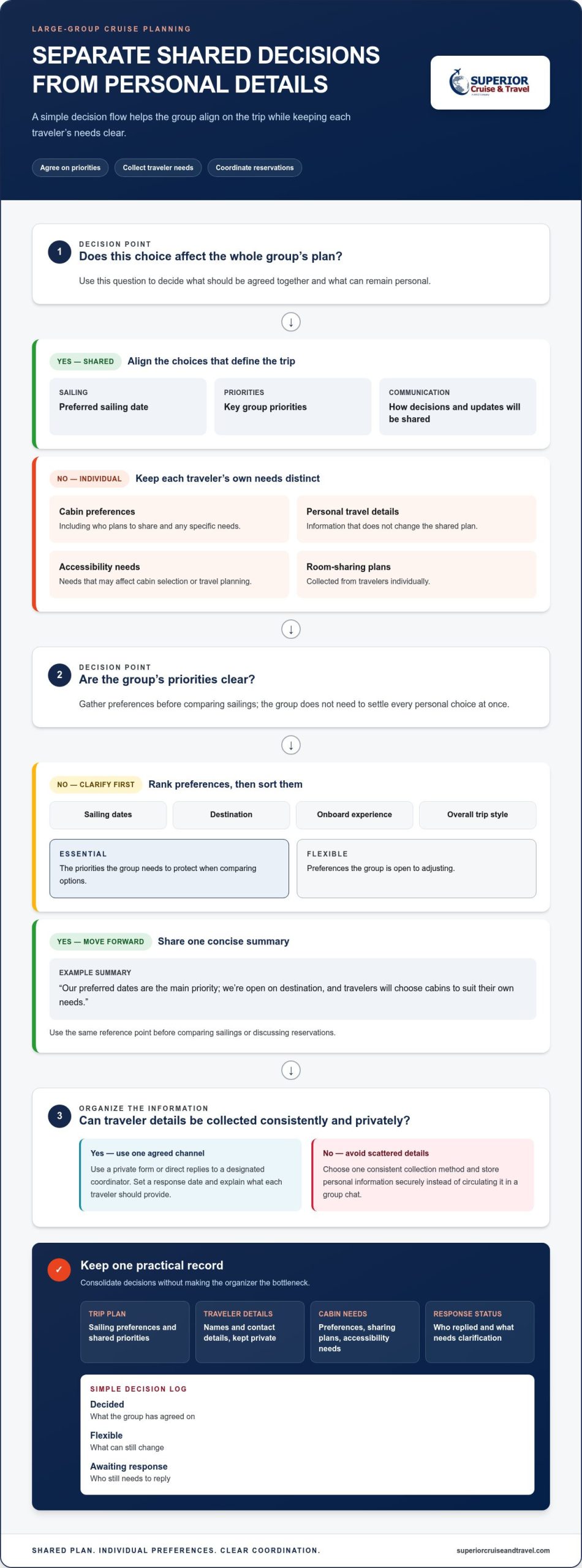
Choose one communication channel and make the decision process visible. Share a short summary of the preferred sailing dates and the choices still open, then give travelers a clear way to submit their own needs. Keep a simple record of what’s decided, what’s flexible, and who still needs to respond. A travel advisor can help coordinate group travel and reservations, easing the work that would otherwise fall to the organizer.
Which group decisions should be shared, and which can stay personal?
Agree on the choices that define the shared trip, such as the sailing date and the group’s broad priorities. Let travelers provide personal details individually, including cabin preferences, room-sharing plans, and travel requirements. This creates a common plan without expecting everyone to choose the same experience.
Ask travelers to share their requirements through the agreed channel. Keep the distinction clear:
- Shared: sailing preference, key group priorities, and how decisions and updates will be communicated.
- Individual: cabin needs, personal travel details, and preferences that don’t affect the shared plan.
With these boundaries in place, group members can take the same cruise while making some choices independently. The organizer keeps shared decisions moving and ensures individual details are collected accurately and privately.
How to Organize the Details Before Booking a Group Cruise
Preparation makes it easier to compare cruise options without asking everyone to decide everything at once. Use a simple sequence: define the purpose of the trip, gather preferences, agree on priorities, and decide how reservations will be coordinated. This gives the organizer a practical next step at each stage and helps travelers understand what information is needed.
Set the group’s priorities before comparing sailings
Start with the reason for the trip. A family celebration, friends’ getaway, and company gathering may call for different priorities. Ask travelers to rank their preferences for sailing dates, destination, onboard experience, and overall trip style. Then sort the responses into essential and flexible. If dates matter more than destination, for example, make that clear before comparing sailings. The Cruise Lines International Association is another source of general cruise-industry information as you learn about cruise options.
Once responses are in, send one concise summary of what matters most. For example: “Our preferred dates are the main priority; we’re open on destination, and travelers will choose cabins to suit their own needs.” This gives everyone the same reference point before the group compares sailings or discusses reservations. If a luxury experience is central to the trip, luxury cruise vacation planning can help you define the style of cruise the group wants.
Collect traveler details without making the organizer the bottleneck
Choose one consistent way to collect information, such as a private form or direct replies to a designated coordinator. Set a response date and explain what each traveler needs to provide. Gather only the details needed for planning and reservations, and store them securely instead of circulating personal information in a group chat.
A practical record can include:
- Traveler names and contact details, recorded accurately and kept private.
- Cabin preferences, including who plans to share and any specific needs.
- Accessibility needs that may affect cabin selection or travel planning.
- Response status, so you can see who has replied and what needs clarification.
Booking a cruise for a large group is easier to coordinate when one person consolidates decisions, but the organizer doesn’t have to chase every detail alone. Name a decision-maker, define which choices they’ll bring together, and send brief updates on settled priorities and outstanding questions. An advisor-supported process can also help organize group decisions and reservations. Superior Cruise and Travel coordinates group travel and luxury cruise planning, providing a planning partner as you shape the trip. Explore group cruise planning support as you consider your next steps.
Group Cruise Booking Options: Direct Reservations or Advisor Support?
No single booking route suits every group. If the group has agreed on a sailing and the organizer is comfortable managing the details, direct reservations may be a good fit. When travelers have varied needs or the organizer wants help keeping decisions and reservations aligned, advisor support adds structure. The right booking route depends on the group’s coordination needs and how much planning work the organizer wants to manage.
Use this comparison to consider the work involved, not to assume that one route guarantees a particular rate, benefit, or cabin arrangement. Cruise-line booking processes vary, and every group has different needs.
| Consideration | Direct cruise-line reservations | Advisor support |
|---|---|---|
| Organizer workload | The organizer gathers information and coordinates the group’s booking steps. | An advisor can help organize group travel decisions and reservations, easing some coordination work. |
| Communication | The organizer sets up how travelers will share updates and booking details. | An advisor can help keep planning conversations focused on decisions and next steps. |
| Preference coordination | The organizer brings traveler preferences together before or during the reservation process. | An advisor can help organize preferences around the group’s priorities and individual needs. |
| Planning support | The organizer manages the planning process directly with the cruise line. | An advisor provides a planning partner to coordinate the group’s cruise arrangements. |
When direct booking may fit a straightforward group plan
Direct booking may suit a group whose shared choices are clear and whose organizer is comfortable managing the reservation process. For example, the travelers may have agreed on a sailing, and the organizer may be ready to coordinate the remaining steps. The group still needs a reliable way to share instructions, updates, and booking details so each traveler knows what to do. Direct booking does not guarantee a specific rate or group benefit.
How an advisor can ease complex group coordination
When preferences differ or the organizer wants help managing the moving parts, an advisor can gather priorities, clarify decisions, and bring planning into a more manageable sequence. Superior Cruise and Travel coordinates group travel and cruise planning around the group’s priorities, while recognizing that travelers may have different needs. This support can help keep conversations and reservation steps organized.
For a broader look at an advisor’s role in trip planning, explore the value of professional travel planning. When booking a cruise for a large group, consider who will manage questions, keep information organized, and help the group move from preferences to next steps. If advisor support fits your needs, group cruise planning support can help bring those decisions into focus.
A Practical Group Cruise Booking Checklist for Organizers
Before requesting cruise options or placing reservations, bring the key decisions and details into one record. This checklist focuses on booking readiness, not onboard activities. Use it to spot missing information and give the organizer and travelers a shared view of what’s decided, what remains open, and what needs a response.
What to have ready before requesting group cruise options
Start with the broad outline of the trip, then collect the details that will shape the comparison. Booking a cruise for a large group is easier to coordinate when the request reflects the group’s actual priorities instead of assumptions about what everyone wants.
- Sailing preferences: Note the preferred travel period, destination interests, and type of cruise experience. Mark what is essential and where the group can be flexible.
- Group composition: Record the expected travelers and how they’re connected, such as family, friends, or colleagues. This helps clarify the trip’s purpose without requiring identical choices.
- Traveler information: Set up a secure way to collect accurate names and contact details. Keep personal information private and limit access to people who need it for planning.
- Cabin and accessibility needs: Gather each traveler’s cabin preferences, sharing arrangements, and relevant accessibility requirements. Don’t rely on assumptions or share sensitive details in a broad group chat.
- Budget priorities: Ask travelers to share their comfort range or budget considerations privately, then compare options with the group’s priorities and applicable booking terms. Don’t assume group rates, amenities, or other benefits will apply.
- Communication plan: Name the person who will consolidate decisions and send updates. Choose a clear method for questions and explain how travelers should share their information.
Before moving forward, summarize the group’s preferences and unresolved questions. Cruise-line booking rules, terms, and deadlines vary, so review the current requirements for the sailing and reservation approach you’re considering. Keep those details with your planning notes rather than relying on old messages or assumptions.
How to keep decisions and updates clear after booking
After reservations are made, maintain a central record of confirmed choices, outstanding questions, and who is responsible for the next step. Send each traveler their relevant reservation information directly, and avoid circulating personal booking details to the full group. That keeps updates useful and protects individual information.
Changes after booking depend on the applicable cruise-line terms, so keep those conditions easy to find. If the trip combines a cruise with other travel components, include travel protection among the planning considerations for the overall experience.
A well-kept checklist makes next steps easier to manage, especially when one organizer is coordinating several travelers. For help organizing group cruise decisions and reservations, explore group cruise planning support.
Plan Your Group Cruise with Superior Cruise and Travel
Bringing a group together for a cruise can be a rewarding project, but comparing preferences and organizing reservations takes time. Superior Cruise and Travel is a full-service travel agency that coordinates group travel and luxury cruise planning. An advisor can help turn the group’s priorities into a clearer planning conversation, so you can get started before every detail is settled.
With a global supplier network supporting vacation planning, the agency can help shape the conversation around what matters to your travelers. Start with the trip’s purpose, preferred travel period, and the experience the group wants, rather than assuming there is one right choice for everyone. Specific cruise terms and arrangements depend on the applicable options, so planning support helps organize decisions without promising a particular rate, benefit, or cabin availability.
What to share when beginning a group cruise conversation
You don’t need a finished itinerary to begin. A useful overview gives an advisor context about the group and helps guide the next planning steps. Share what you know and note which choices are still open.
- Purpose of the trip: Explain whether the cruise is for a family gathering, friends’ vacation, or another shared occasion.
- Travel period and destinations: Provide preferred dates or a general travel window, along with destinations that interest the group.
- Group overview: Share an estimated traveler count and details that shape the group’s broad needs.
- Cabin preferences: Summarize preferred cabin arrangements and important accessibility or planning considerations.
- Shared priorities: Note what matters most, such as a particular travel style, and where the group may be flexible.
This outline gives the advisor a useful starting point. As preferences become clearer, the planning conversation can separate shared decisions from individual choices and keep next steps manageable for the organizer.
Make the next planning step feel simple
Bring your priorities, not a perfect plan. If travelers haven’t agreed on every detail, say so. Superior Cruise and Travel can organize the group’s planning around what is known, clarify which decisions still need input, and coordinate group travel. The process can stay clear while leaving room for different traveler preferences.
If the cruise is part of a trip that combines multiple travel components, travel protection options can be considered as part of planning the overall experience. Travel protection is a planning consideration, not a promise about the terms of a particular trip.
Booking a cruise for a large group doesn’t require every traveler to agree on every choice from the start. Begin with the trip’s purpose and its most important priorities, then work through the remaining decisions one at a time. Begin planning your group cruise with Superior Cruise and Travel.
Give Your Group a Clear First Step
The first planning conversation doesn’t need to settle every cabin choice or answer every traveler’s question. It needs to turn a shared idea into a starting point: what kind of trip the group wants, which preferences matter most, and what still needs discussion. From there, decisions can take shape at a comfortable pace, with room for individual needs.
Booking a cruise for a large group feels more manageable when the organizer isn’t carrying every decision alone. Bring the priorities you’ve gathered, even if some details remain open, and use the planning process to clarify what comes next. A thoughtful beginning gives the group a shared direction.
Start planning your group cruise with Superior Cruise and Travel, and take the next step toward bringing everyone together.
Frequently Asked Questions
How many people count as a large group for a cruise booking?
There’s no single passenger count that defines a large cruise group across every cruise line. Group eligibility may depend on cabins as well as travelers: current industry guidance indicates that many major cruise lines use a threshold of eight cabins, or 16 passengers, while some luxury and river lines may offer group arrangements at lower cabin counts. Treat these figures as general guidance, not a universal rule, and compare them with the current terms for the specific sailing.
Is it better to book a cruise group directly or through a travel advisor?
Direct booking can suit an organizer who’s comfortable managing the group’s questions and reservation steps. An advisor can help when preferences vary, travelers need different kinds of support, or the organizer wants help keeping the process on track. When booking a cruise for a large group, consider who will handle follow-up and how travelers will receive clear updates. The best fit depends on the group’s needs and the organizer’s preferred workload.
Can everyone in a group choose a different cabin on the same cruise?
Travelers can often have different cabin preferences while joining the same sailing, but exact choices depend on the cruise line’s booking process and what’s available when reservations are made. One household, for example, may prefer a balcony cabin while another wants a different setup. Share cabin requirements individually, and have each traveler review their reservation details so preferences and names are recorded accurately.
How far in advance should you start planning a group cruise?
Starting 12 to 18 months ahead is a practical planning horizon for a group cruise, especially when travelers need time to compare dates, coordinate schedules, and make decisions together. It also gives the organizer time to review options before choosing a sailing. This is a planning recommendation, not a booking deadline or guarantee of cabin availability. If your group has a fixed travel window, begin organizing preferences as early as possible.
Can cruise travelers book separately and still travel as a group?
Yes, travelers may make separate reservations for the same sailing, but separate bookings can make it harder to keep the group’s plans connected. Share the exact sailing details and name one person to track who has booked and which questions remain. Then review the cruise line’s process for associating reservations, if that option applies. Don’t assume separate reservations will automatically be treated as one group for communication or booking purposes.
What information should an organizer gather before booking a group cruise?
Gather each traveler’s accurate name and contact details, along with cabin preferences, sharing arrangements, and accessibility needs relevant to planning. Note the group’s preferred travel period and destination interests as well. Use a secure collection method and limit access to people who need personal information for coordination. Before submitting reservation details, give each traveler the chance to check their own information for accuracy.
Does booking a cruise as a group guarantee a discount or special benefits?
No. Group booking doesn’t guarantee a discount, onboard credit, or other special benefit. Cruise lines set their own qualification rules and terms, which can differ by sailing and may change. Some group offers may depend on specific conditions, so don’t build the trip budget around an assumed perk. Compare the actual terms available to your group and decide whether the sailing still fits if an anticipated benefit isn’t offered.