
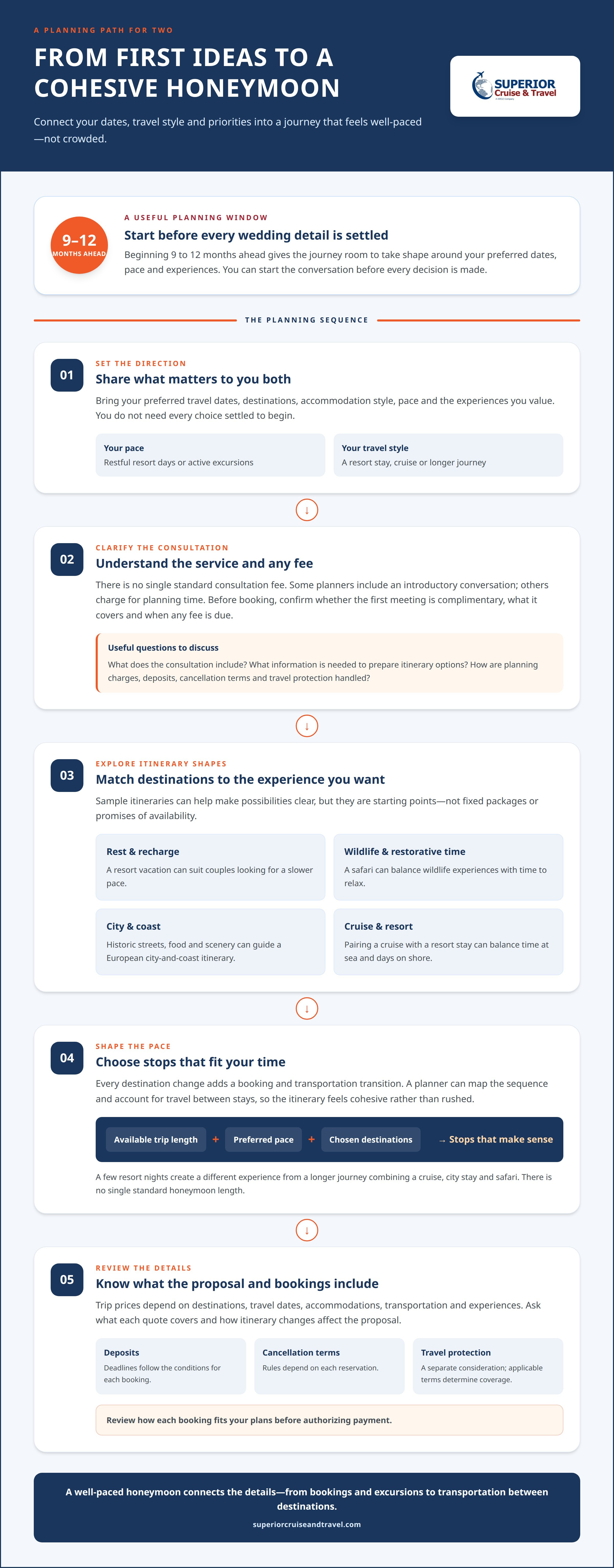
The best honeymoon plans often begin before every wedding detail is settled. A practical time to start is 9 to 12 months ahead, giving a luxury honeymoon planner room to shape the trip around your preferred dates, pace and experiences. You don’t need every decision made to begin discussing what matters most to you both.
A honeymoon can be a restful resort stay, a cruise or a longer journey. The right length depends on your schedule and the experience you want. Careful planning connects the moving parts, from bookings and excursions to transportation between destinations, so the itinerary feels cohesive rather than crowded.
This guide covers how to choose a trip length, what to discuss during a planning consultation and how planning costs work. You’ll also learn how an advisor can coordinate the details and what information helps shape a well-paced honeymoon for your next chapter together.
Key Takeaways
- Start planning 9 to 12 months ahead to give your upcoming honeymoon room to take shape around your preferred dates and travel style.
- Choose a trip length based on the pace and experiences you want, rather than trying to fit in every possible stop.
- Understand what a consultation covers and how any planning fee is handled before moving into itinerary details.
- Bring excursions, bookings and transportation together in one itinerary to make the journey feel cohesive.
- Look for a planner whose approach fits your priorities and can coordinate the kind of honeymoon you have in mind.
How long do your luxury honeymoons last?
There’s no single standard length for a luxury honeymoon; the right trip depends on your available time, pace and chosen destinations. A few nights at a resort creates a different experience from a longer itinerary combining a cruise, city stay and safari. For an upcoming 2027, 2028 or 2029 celebration, planning 9 to 12 months ahead gives more time to shape the journey and coordinate its details.
A travel advisor can arrange bookings and other travel components, while a honeymoon planner focuses that expertise on a couple’s celebration, preferences and shared itinerary. The roles can overlap, but honeymoon planning starts with what matters to you both, whether that means quiet resort days or active excursions.
Choose a destination that reflects how you both like to spend your time. Couples seeking rest may prefer a resort vacation at a slower pace, while wildlife enthusiasts may consider a safari. If you’re drawn to historic streets, food and scenery, a European city-and-coast itinerary could be a better fit. These examples are starting points, not fixed formulas.
Multi-destination itineraries can combine distinct experiences, but every move adds a booking and transportation transition. A cruise paired with a resort stay, for example, can balance time at sea with days on shore. A planner can map the sequence, account for travel between stays and avoid a rushed schedule. Your available trip length, preferred pace and destinations determine how many stops make sense.
Destination and resort recommendations should match the couple’s priorities, not just a photograph or trend. A planner can discuss resort setting, desired atmosphere, dining preferences and the activities that matter most, then connect those choices to a destination. For a safari-focused honeymoon, the balance between wildlife experiences and restorative time can shape both the resort choice and itinerary.
Deposits and cancellation terms follow the conditions for each booking. Your planner can explain payment deadlines and cancellation rules for each reservation. Travel protection is a separate consideration, and the applicable terms determine what it covers. Review how each booking fits your plans before authorizing payment.
A destination wedding or vow renewal can also shape the trip’s length and structure. You might plan a resort stay around the ceremony, then add a cruise or another destination. Your planner coordinates the travel arrangements within the broader itinerary, while you share preferred dates, guest needs and priority experiences. That gives the planning conversation a clear direction from the start.
Is the honeymoon consultation free?
There isn’t one standard consultation fee across honeymoon planning. Some planners include an introductory conversation, while others charge for planning time; the service’s terms determine what applies. Before booking, clarify whether the first meeting is complimentary, what it covers, and when any planning fee is due. That helps you understand the process before sharing detailed preferences or moving into reservations.
A useful consultation turns broad ideas into a clear planning brief. Discuss your travel dates, preferred destinations, accommodation style, pace and the experiences you both value. For example, if you’re considering Hawaii, Tahiti or Fiji, compare a single-island stay with an itinerary combining two islands. Your planner can use those choices to outline possible journeys and identify the decisions to make next.
Ask these questions before booking: What does the consultation include, and is there a fee? How are planning charges, deposits, cancellation terms, and travel protection handled? What information do you need from us to prepare itinerary options? Clear answers help you understand the planner’s role and the next steps.
Sample itineraries can help you picture a destination, but treat them as starting points rather than fixed packages. A Hawaii itinerary might pair a resort stay with a special dinner; a Tahiti example could focus on a private villa and relaxed days. Fiji might suggest a different balance of island stays and excursions. These examples show possible structures, not a promise that a particular property or activity will be available.
Custom itineraries let couples adjust a sample’s pace, accommodation preferences and experiences. A planner can replace a busy sequence with more downtime or adapt a multi-stop journey to reflect your priorities. Luxury itinerary design means coordinating those choices into a coherent trip, not simply adding premium-sounding activities. The details should work together, from the order of destinations to the transitions between stays.
Trip prices depend on the destinations, travel dates, accommodations, transportation and experiences you choose. A sample itinerary is an illustration of structure, not a price promise. Ask what each quote covers and how itinerary changes affect the proposal. This makes comparisons more useful without reducing an unforgettable trip to a headline figure.
For a cruise-centered honeymoon, a luxury cruise itinerary can be one starting point for shaping your plans. A planning conversation can then focus on the destinations, onboard pace, and land experiences that fit your upcoming celebration.
Curated excursions and experiences
A curated excursion should suit your pace, interests and destination, not simply fill an open day. In Thailand, an itinerary might pair Bangkok’s cultural landmarks with time in Chiang Mai or Phuket. Your planner can shape these choices around your preferred balance of activity and downtime. The aim is a personal vacation, with each experience connected to the wider honeymoon journey.
Thailand offers contrasting settings to consider. Bangkok can anchor a city stay, while Chiang Mai may appeal to travelers interested in northern Thailand’s culture. Phuket offers a coastal setting for resort time and excursions. For couples extending their Southeast Asian journey into neighboring countries, arranging entry paperwork early through Apply Evisa Vietnam ensures smooth transitions between stops. Your planner can arrange these destinations in a practical order, taking travel transitions and available trip time into account. You can then decide whether a multi-stop itinerary suits you or one destination deserves more attention.
Personalize the trip by sharing useful details, such as your preferred pace, interests and the memories you want to create. You might prioritize local food and a carefully chosen dinner, or prefer time outdoors and quiet hours at your hotel. Sharing these priorities helps your planner distinguish meaningful experiences from activities that don’t fit. Leave room for unplanned moments, too.
For each proposed excursion, consider its timing, location and relationship to other bookings. A full-day outing after a late arrival, for example, may make the itinerary feel demanding. Grouping experiences near your hotel can reduce unnecessary transfers. These practical choices keep travel days coherent while leaving room for rest between scheduled plans.
Ask for precise details about exclusive experiences rather than relying on vague promises. A proposal might identify a private guide, reserved dining experience or smaller-group activity, where offered. It should explain what the booking covers and how the experience fits into the day’s schedule. You can then choose based on the details that matter, not just an impressive label.
A thoughtful plan can account for different preferences within the couple. If one partner wants a cultural visit and the other prefers a relaxed afternoon, the itinerary might fit both into the same day without overloading the schedule. In Thailand, for example, a morning city experience in Bangkok could leave free time later. This kind of design protects shared time while respecting individual interests.
Before finalizing excursions, review their sequence alongside hotel stays and transportation arrangements. Identify must-have experiences, then leave optional activities flexible. This makes the honeymoon easier to follow and gives each booking a clear purpose. The result is a considered journey shaped around memorable experiences, not a packed checklist.
What services does a luxury honeymoon planner provide?
A luxury honeymoon planner turns a couple’s preferences into a coordinated travel plan. Start with a conversation about dates, pace, destination interests and priorities. You may want quiet mornings and elegant dining, while another couple might prefer active days and varied stops. Those details guide recommendations instead of applying a standard itinerary to every trip.
Destination research connects your priorities with suitable places to stay and travel experiences. A Mediterranean cruise, for example, can appeal to couples who want to visit several ports without arranging a separate hotel at each stop. A resort vacation may suit those who prefer one home base. Your planner considers the trip’s purpose and flow, then develops options that reflect your choices.
Itinerary design brings the pieces together in a practical sequence. Your planner can map arrival and departure arrangements, accommodation nights, excursions and travel between destinations. If you combine a city stay with a cruise, the itinerary needs to account for the transition between them. Reviewing the order helps identify rushed days, unnecessary transfers and gaps that could affect the experience.
Booking coordination brings selected reservations into one organized plan. Depending on your itinerary, this may include accommodations, cruise arrangements, transportation and experiences. Your planner tracks details that connect each booking, such as arrival timing and the location of a planned excursion. You share your preferences and make decisions; your planner uses those choices to coordinate the next steps.
Your planner can also shape special moments around your priorities. An anniversary dinner, private sailing outing or quiet day after a busy travel leg might become a meaningful part of the itinerary. The value comes from fitting the experience into the wider schedule, not simply adding activities. A well-paced plan leaves room for both planned highlights and time together.
If you’re considering a cruise, your planner can explain how a voyage fits your preferred pace, destinations and onboard experience. A route with several ports creates a different rhythm from a resort stay, so the choice affects the rest of your itinerary. Your planner can coordinate the cruise with related travel arrangements, helping you understand how each part connects before you make booking decisions.
Planning support continues with clear itinerary details and coordination of selected arrangements. Share any changes in your priorities, then review how they affect timing or the sequence of bookings. This process turns a broad vision for your honeymoon into a usable plan. Your planner organizes the moving parts, explains your options and keeps the journey aligned with what you value most.
How do I choose a reputable luxury honeymoon planner
A reputable luxury honeymoon planner should make the process clear, attentive and tailored to both partners. Look for a professional who listens, explains how recommendations fit your priorities and organizes practical details in a way you can understand. If you want a quiet resort stay with a few excursions, for example, the itinerary should reflect that balance rather than fill every day with activities.
Review relevant experience and the kind of trips the planner handles. A professional familiar with cruises, resort stays or multi-destination travel can explain how each option shapes the itinerary. The Knot describes some vetted luxury travel advisors as having a 100% five-star-rating batting average within a text group. Treat ratings as one signal, alongside clear communication and a planning approach that suits you.
Credentials and protection matter, too. Elsewhere co-founder Craig Zapatka says travel advisors and agents should be licensed and insured. Look for practical guidance that demonstrates experience, such as an explanation of how travel between a resort and cruise affects your schedule. Recommendations should address your destination and plans, rather than make broad claims that every honeymoon will be effortless.
Notice how the planner turns your preferences into recommendations. A useful discussion might compare a single resort base with a cruise itinerary, then explain the different pace each creates. The planner should describe what each option involves, show how bookings connect and make the next decision clear. This helps you assess both their expertise and whether their working style feels comfortable.
Before you commit to a proposal, understand its terms. Ask how any planning fee works, what a quoted price covers, when deposits are due, and which cancellation conditions apply to each booking. Clarify how changes to travel dates or itinerary choices affect arrangements. A clear explanation helps you understand the financial and logistical commitments without relying on assumptions or verbal shorthand.
Strong planning includes an itinerary you can use. Arrival details, accommodation changes, excursions and transportation should be easy to follow. If your plan combines a cruise with time at a resort, the connection between those stays should be clear. This organization helps you see how the journey fits together before making decisions about your celebration.
Consider whether the planner’s recommendations reflect your shared priorities, communicate terms plainly and connect bookings thoughtfully. Those qualities offer a more useful basis for choosing than polished descriptions alone. If you’re ready to discuss your next trip, start planning your upcoming journey.
Superior Cruise and Travel: Luxury Cruises
Superior Cruise and Travel can help couples shape a honeymoon around a luxury cruise. If you’re drawn to an extended voyage, a world cruise offers a different journey from a shorter cruise paired with resort time. Chartered cruise ships are another option for couples considering a private sailing experience.
Your next step depends on the trip you have in mind. Share your preferred travel dates, destinations and pace, and say whether you’re considering a cruise, resort vacation or combination. These priorities help focus the conversation on suitable arrangements and how each option fits your plans.
For a honeymoon built around a luxury cruise, world cruise, chartered cruise ship or resort vacation, contact Superior Cruise and Travel to discuss your plans.
Shape the next chapter of your journey
Your honeymoon can reflect how you want to begin married life together. Before making your next decision, consider which travel style feels most like you: a focused escape, a sweeping voyage or a celebration built around the sea. A luxury honeymoon planner can help turn those preferences into a direction for your trip.
Superior Cruise and Travel offers Luxury Cruises, Chartered Cruise Ships and World Cruises for couples drawn to life at sea. Each option gives you a different starting point for shaping the experience around your shared priorities.
When you’re ready to explore possibilities for your upcoming honeymoon, contact Superior Cruise and Travel to begin a conversation about your plans.
Your next journey can start with one thoughtful decision and grow into a celebration that feels distinctly yours.
Frequently Asked Questions
How far in advance should I plan my honeymoon?
Start planning 9 to 12 months before your honeymoon when possible. This gives you time to consider destination options and coordinate travel around your wedding dates. For example, if your celebration falls during a busy travel period, early planning can help you consider different dates or itinerary structures. Begin with your preferred travel window and the experiences you value most, then shape the next decisions around those priorities.
How much does a honeymoon travel advisor cost?
Advisor charges vary by planning service and pricing model. Superior Cruise and Travel provides full-service vacation planning with no planning charge. The trip itself has costs based on the travel arrangements you select, such as flights, hotels, cruises, tours or excursions. A resort stay and a cruise itinerary involve different components, so their quoted trip prices will differ.
How much does a luxury honeymoon planner cost?
Trip prices vary because destinations, travel dates, accommodations and chosen arrangements shape the total. Superior Cruise and Travel provides full-service vacation planning with no planning charge; the selected travel components are quoted separately. If you’re considering a cruise and hotel stay, distinguish the price of those arrangements from the planning support. Review the proposed trip components to understand what the quote covers.
How far in advance should I hire a honeymoon planner?
Start planning once you have a likely wedding date or travel window, especially if your honeymoon involves multiple bookings. This gives the conversation a useful starting point without requiring every detail to be decided. If you’re choosing between a resort stay and a cruise, for example, you can discuss both before settling on an itinerary. If your dates are flexible, share the possible windows and your priorities first.
Do luxury honeymoon planners charge planning fees or earn commissions?
Payment arrangements vary, so ask how the planner is compensated and what each quote covers before proceeding. Superior Cruise and Travel provides full-service vacation planning with no planning charge. That applies to planning, not the cost of travel arrangements. For your trip, ask how reservations, deposits and cancellation conditions are presented.
Can a honeymoon planner arrange flights, resorts, excursions, and special experiences?
Yes, full-service vacation planning can coordinate flights, hotels, cruises, tours and excursions within a trip plan. For example, if you’re flying to a resort, your planner can coordinate arrival travel with a planned tour and hotel stay. Share the experiences that matter most, such as a cultural outing or special dinner, so the itinerary can account for them. Travel Protection is also available for eligible multi-component travel experiences.