
A honeymoon budget should account for the unexpected, not just add up the bookings. During planning, set aside an additional 15-20% of your planned budget, then build the rest around your priorities for travel, accommodations, dining, and experiences. An expert travel planner for honeymoons can help shape those choices into a trip that fits your budget and the way you want to travel.
It’s natural to want a honeymoon that feels special without letting costs become a source of stress. Set a clear budget first, then use it to compare destinations, decide where to spend more, and choose how much planning support you want.
Here, you’ll learn how to set your budget, find an advisor whose approach fits your plans, schedule a consultation, choose an itinerary, and understand the support that may be part of the planning process. The goal is to make each decision feel more manageable, from the first conversation to your time away together.
Key Takeaways
- Start planning 6-9 months ahead, and allow more time when you’re traveling during a peak season.
- Match an advisor to your priorities by discussing your preferred pace, destination style, and budget.
- Use a pre-designed itinerary as a starting point, then shape the trip around what matters most to you as a couple.
- Clarify what planning support covers before booking so you know how changes and travel arrangements will be handled.
- Compare cruise and resort options when deciding which kind of honeymoon experience best fits your plans.
Advisor matching and trip-planning process
The right advisor can turn your priorities into a practical plan, from destination ideas to trip length. An expert travel planner for honeymoons helps match the itinerary to your travel style and budget.
Matching With a Honeymoon Advisor
Start by describing the experience you both want: a quiet beach stay, city exploration, or a mix of destinations. Compare the advisor’s approach with your priorities, including pace, comfort, and how much planning you want to handle yourselves. A relaxed resort stay, for example, calls for different planning than a trip with several stops.
Use the first conversation to explain what would make the trip personal to you. Share destination ideas, important dates, and firm limits, then notice whether the advisor turns those details into useful options. A good fit means the advisor understands how you make decisions and clearly explains the next step.
Luxury and Hassle-Free Planning
Luxury planning means choosing the details that matter most, not adding extras for their own sake. You might prioritize a memorable setting, comfortable travel between stops, or more time to unwind. Explain which elements would make the trip special, then ask how each recommendation supports that goal.
For a smoother planning process, agree on who will manage each task. An advisor can organize the itinerary and coordinate its moving parts, while you share preferences and make key decisions. Ask how changes are handled during planning, so you know how to provide feedback before bookings are finalized.
Planning Steps and Trip Duration
Begin with your wedding date, likely travel window, destination preferences, and budget. Next, compare trip styles and draft an itinerary before settling its details. A typical honeymoon lasts 10-14 days, but the ideal length depends on destination and travel style. A maxi-moon is a getaway of 10 days.
You can travel within days of the wedding or wait a few weeks or months to rest, plan, and choose a season that suits your destination. If your wedding season doesn’t align with the destination’s best weather, consider a mini-moon after the wedding and plan the main honeymoon later. That keeps the celebration close while giving the longer trip a better-fitting travel window.
Questions for a Travel Planner
Ask direct questions about how the advisor will shape the itinerary around your needs. Discuss how destination, travel pace, and trip length affect the plan. The answers can help you decide whether the advisor’s process matches your expectations.
- How will you match destinations and trip styles to our priorities?
- What information do you need from us to shape an itinerary?
- How do you balance our preferred experiences with our budget?
- What planning decisions should we make first?
How do you budget for your honeymoon?
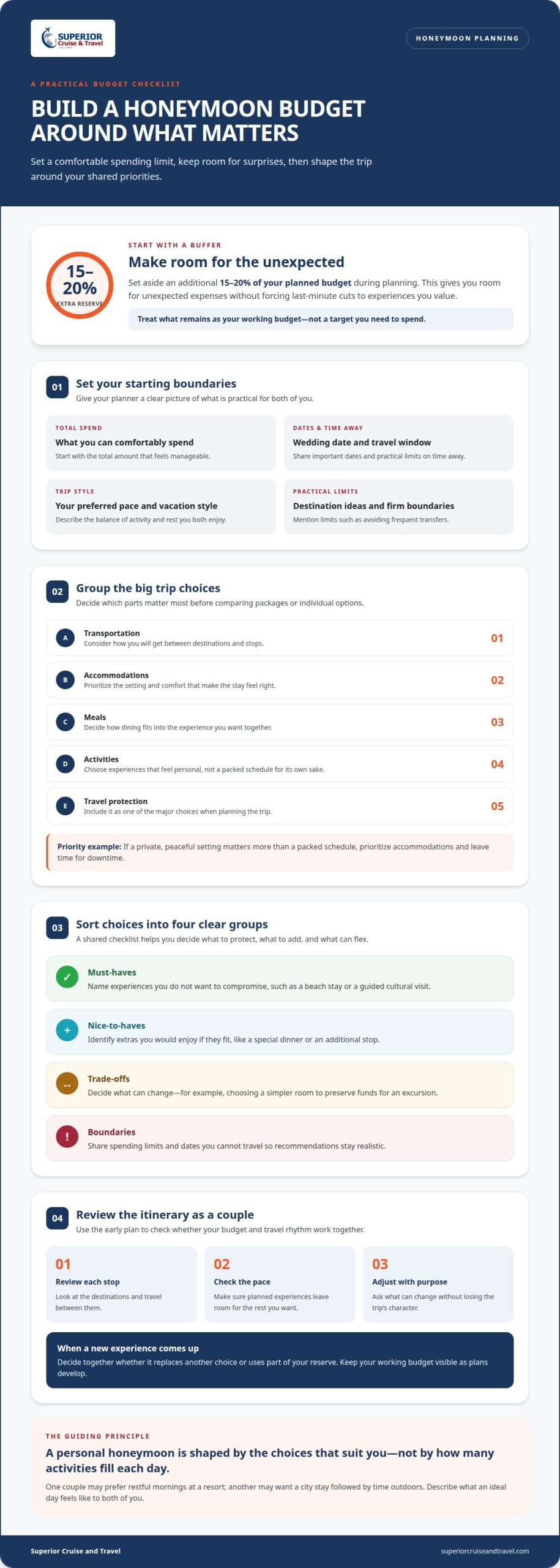
Start with the total amount you can comfortably spend, then reserve an extra 15-20% during honeymoon planning. This buffer gives you room for unexpected expenses without forcing last-minute cuts to the experiences you value. Treat the remaining amount as your working budget, not a target you need to spend.
Give your honeymoon planner your wedding and travel dates, budget, and most-wanted experiences. Explain your preferred vacation style, destination ideas, and practical limits, such as time away or a preference to avoid frequent transfers. These details help the planner suggest an itinerary that reflects both partners.
Next, divide the trip into major choices: transportation, accommodations, meals, activities, and travel protection. Decide which categories matter most before comparing packages or individual options. If a private, peaceful setting matters more than a packed schedule, for example, prioritize accommodations and leave time for downtime.
- Must-haves: Name the experiences you don’t want to compromise, such as a beach stay or a guided cultural visit.
- Nice-to-haves: Identify extras you’d enjoy if they fit, like a special dinner or an additional stop.
- Trade-offs: Decide what can change, such as choosing a simpler room to preserve funds for an excursion.
- Boundaries: Share spending limits and dates you can’t travel, so recommendations stay realistic.
A personalized honeymoon isn’t defined by how many activities fill each day. It reflects choices that suit your personalities. One couple might prefer a resort vacation with restful mornings; another might want a city stay followed by time outdoors. Tell the planner what an ideal day looks like, including your preferred balance of activity and rest.
Use an early itinerary to see how the budget and travel rhythm work together. Review each stop, transfer, and planned experience, then ask what can be adjusted without losing the trip’s character. If the wedding date is fixed but the destination isn’t, compare destination seasons and travel windows before making bookings.
Keep your working budget visible as plans develop. When a new experience is proposed, decide together whether it replaces another choice or uses part of your reserve. If a resort-focused trip is on your shortlist, explore a tailored resort vacation plan as one way to shape your honeymoon around shared priorities.
Consultation scheduling and booking requirements
Couples should begin honeymoon planning 6-9 months ahead, or closer to a year for peak-season travel. Schedule a consultation early enough to compare destinations, accommodations, and travel dates before booking.
Consultation Timing and Hiring
Bring an advisor into the process once you know your wedding date and can discuss a travel window. Planning 6-9 months ahead gives couples time to shape the itinerary; peak-season trips call for starting closer to a year ahead. In your consultation, share destination preferences, budget, trip length, and decisions you’ve already made. That gives the planner practical details for tailored recommendations.
Seasonal Booking Considerations
The Atlantic hurricane season runs from June 1 to November 30, and most Caribbean storms hit in September and October. If your honeymoon dates fall in that period, discuss how seasonal timing affects destination choices and the shape of your itinerary. Festive-season travel also needs early attention: many Caribbean resorts book up a year in advance. A flexible date or destination can help you compare alternatives.
Use the consultation to agree on a booking sequence instead of choosing flights and hotels separately. First, settle on the destination and travel dates. Then review hotel options that fit your priorities and budget. Confirm the accommodation before finalizing flights, so your air travel aligns with where you’ll stay. If a particular resort is central to the trip, for example, choose it before building flight plans around it.
- Share your wedding date, possible travel dates, and any schedule limits.
- Discuss destination preferences, trip length, budget, and the experiences you want.
- Compare hotel options and secure the preferred accommodation.
- Finalize flights around the confirmed stay and agreed itinerary.
Before booking, ask the planner to walk you through the itinerary from arrival to departure. Check that connections between hotels, travel days, and activities are realistic. If the plan includes several stops, discuss how transfers affect the pace. This helps you catch a rushed schedule before arrangements are finalized.
Use the consultation to clarify which decisions need your approval and how you’ll review booking details. Keep a shared record of confirmed dates, hotel choices, flight plans, and outstanding decisions. If you’re considering travel protection, discuss it separately as part of the trip planning. A clear process helps both partners see what’s settled and what remains to decide.
Customizable pre-designed honeymoon itineraries
A pre-designed itinerary can provide a useful starting structure without becoming a fixed script. Choose a sample that matches your preferred pace, then adjust destinations, resort time, and activities to suit your honeymoon. For example, you could pair a few days exploring a city with a slower coastal stay, if that balance appeals to you.
Start by identifying the experience you most want from your honeymoon destination. Couples drawn to European food, history, and city walks might consider Italy, Greece, or France from April through June. If wildlife and island relaxation appeal more, East African safaris and Mediterranean islands are suggested options from July through September, where specialized operators like Astro Safaris and Tours Ltd design custom routes to suit couples. Use these as starting points, then tailor the route to your interests.
Season can help narrow your options. The Caribbean, South Africa, Australia, and New Zealand are suggested for January through March; Southeast Asia, the Maldives, and Costa Rica for October through December. For couples considering New Zealand or Thailand, hotel collections like U Hotel Group offer diverse accommodation options to fit different honeymoon travel styles. Within your chosen region, compare how much time you want in each place and whether transfers support the kind of vacation you imagine. A resort-centered plan has a different rhythm from a trip with several stops.
- Keep: Choose the features that made the sample appealing, such as a coastal setting or cultural visits.
- Change: Swap a stop or activity that doesn’t fit your interests, energy, or travel window.
- Rebalance: Add slower days between active excursions, or focus the route on one area.
- Personalize: Add meaningful details, such as time for a favorite cuisine or a shared outdoor activity.
For an international itinerary, assess each stop as part of the whole journey. A route across several countries can offer varied experiences, but each transition takes time and attention. Ask whether an added destination provides a distinct experience or simply shortens your stay elsewhere. For a far-flung trip, include CDC-recommended immunizations in your pre-trip planning.
Review the tailored itinerary together before making final decisions. Mark each day as active, relaxed, or flexible, then see whether the balance works for both partners. If the schedule combines a resort stay with sightseeing, decide which days should remain open. This review can turn a polished sample into a personal plan without filling every minute of your honeymoon.
Planning service inclusions and travel support
A honeymoon travel planner organizes trip decisions into one connected plan. The planner can shape the itinerary around your priorities, coordinate travel arrangements, and explain the planning services included.
A planner’s fee and travel protection are separate. Whether a planning fee is refundable follows the fee terms, while protection applies only to losses covered by its plan terms. Don’t assume trip protection reimburses an advisor’s fee.
During wedding planning, a travel advisor can turn your destination ideas, dates, and budget into a proposed itinerary. This may involve comparing trip options, coordinating bookings, and organizing details to match your preferred pace and experiences.
Define the support you want before arrangements are finalized. Ask which tasks the planner handles, which decisions need your approval, and how you’ll receive booking details. For example, agree on whether you’ll review hotel and flight information together or receive separate updates for each arrangement.
Changes and unexpected disruptions call for clear communication and coordinated decisions. A planner can help review available options and communicate with travel suppliers, although the options depend on booking terms and circumstances. Before departure, agree on how to reach the planner and where to find booking confirmations, supplier details, and key trip documents.
- Itinerary coordination: Check how destination choices, travel days, and planned experiences are organized.
- Booking details: Keep confirmations and important supplier information in one accessible place.
- Change process: Understand how proposed adjustments are shared and approved.
- Travel protection: Review what the plan covers, its exclusions, and how claims are handled.
Travel protection is separate from an advisor’s planning work and doesn’t automatically cover every trip expense. Read the plan terms for covered events and exclusions, and keep them with your booking records. This distinction helps you understand which support relates to planning and which relates to eligible travel losses.
For an unforgettable honeymoon, agree on the practical details before wedding travel begins: who handles each booking, how changes are communicated, and where essential documents are stored. If you want help arranging travel protection alongside your trip planning, explore travel protection options as part of your preparation.
For Hawaii, April and May, as well as September and October, are considered months with better weather. Use that timing as a starting point for discussion, not the only factor in choosing dates. Ask how your preferred travel window fits the itinerary you want, and review proposed arrangements and terms before approving them. If your dates are flexible, explain what matters most so you can compare itinerary options against your priorities.
Agree on how you want to receive planning updates, and keep a record of the choices you approve. If a date option changes, ask what else would need to be reconsidered before deciding. Clear expectations make it easier to judge whether the proposed support suits the trip you have in mind.
Superior Cruise and Travel: Luxury Cruises
Superior Cruise and Travel can help couples plan a luxury cruise or resort vacation around their honeymoon priorities. If you’re drawn to time at sea, explore luxury cruises, chartered cruise ships, or world cruises. For a land-based escape, consider a resort vacation.
Bring your preferred travel style, destination ideas, and budget to the planning conversation. These details help shape a trip around the experience you want, whether that means a cruise-focused celebration or time at a resort. Couples considering a longer voyage can also discuss whether a world cruise fits their plans.
If you’re planning a cruise or resort honeymoon, contact Superior Cruise and Travel to discuss your trip.
Make Your Next Planning Decision
You don’t need to settle every honeymoon detail at once. Choose the experience you want to build around, then let that priority guide the next decisions. A cruise, resort escape, or blend of both can give your itinerary a clear starting point.
An expert travel planner for honeymoons can turn your preferences into a personal, considered trip plan. Keep the conversation focused on what you most want to remember together, whether that’s time at sea, a carefully chosen destination, or room to slow down.
For a cruise-centered honeymoon, Superior Cruise and Travel can help you explore luxury cruises, chartered cruise ships, and world cruises. Take the next step at your own pace by sharing the kind of trip you have in mind.
Explore honeymoon travel options and start shaping a celebration that feels like yours.
Frequently Asked Questions
How long should a honeymoon last?
A typical honeymoon lasts 10-14 days, though the best length depends on the destination and travel style. For a shorter trip, focus on one destination and limit time-consuming transfers. If you have more time, consider whether extra days add experiences you both value or simply extend the schedule. Your available vacation days, travel distance, and preferred pace can help you decide what feels worthwhile.
What is the biggest mistake couples make when choosing a honeymoon destination?
A common mistake is choosing a destination for its image without considering how you want to spend your days there. A scenic resort may sound ideal but not suit couples who prefer museums, dining, and active excursions. Talk through what you both enjoy, your preferred pace, and experiences you’d regret missing. Choose a destination that fits your shared priorities, not just one that looks appealing in photos.
What’s the best way to split relaxation and adventure?
Choose a rhythm that leaves room for planned activities and unstructured time. Pair a guided excursion with a quieter day, for example, rather than scheduling demanding outings back to back. Consider how each activity affects travel time and energy, especially when it involves a transfer or an early departure. Agree on your priority experiences, then leave flexibility around them so rest doesn’t feel like another item on the itinerary.
How to find a reputable honeymoon travel planner?
Look for an advisor who understands the destinations and travel style you’re considering, communicates clearly, and explains how planning and bookings work. Ask about relevant experience, how recommendations are tailored, and what happens if plans change. Travelers are also advised to work with licensed and insured travel advisors and agents. Notice whether the advisor listens to both partners and offers practical answers, not just appealing destination ideas.
Honeymoon travel planner vs booking a trip yourself: pros and cons
A travel planner can help match destinations and experiences to your priorities and budget, organize the itinerary, and may offer 24/7 support if plans change. Booking yourself means handling the comparisons and coordination, including securing hotel availability before finalizing flights.