
The best European cruise may be the one with fewer ports. When every destination looks tempting, it’s easy to focus on how many places an itinerary visits. But a fuller schedule can leave less time to enjoy each stop. If “cruise vacation europe” is guiding your search, start with the experiences and pace you want from the trip.
You may be drawn to Mediterranean coastlines and historic cities, Northern Europe’s dramatic scenery, or the slower rhythm of a river voyage. The right fit also depends on how long you have, how much time you want ashore, and how cruise dates align with flights and any extra nights away. This guide compares Europe’s cruise regions and travel styles, explains the tradeoffs between itinerary lengths and port schedules, and helps you plan around your priorities. Coordinating the cruise with connected travel arrangements can make choosing a route more manageable.
Key Takeaways
- Compare Mediterranean, Northern Europe, British Isles, and Baltic itineraries by the experiences you want, not by a simple ranking.
- Choose a cruise vacation Europe itinerary by weighing destination mix, time ashore, sea days, and the pace that suits you.
- Look beyond port counts: arrival and departure times help determine how much of each destination you can enjoy.
- Compare options in a clear sequence, coordinate flights and time ashore, and research entry documents through official sources.
- A professional travel partner can help bring your cruise and connected travel arrangements together around your priorities.
Which European cruise region fits your vacation style?
A European cruise can bring different cultures, coastlines, and historic settings into one vacation. Choose a route for the experiences you want, rather than trying to fit in the greatest number of ports. A port list is a useful starting point, but the hours ashore and the rhythm between stops shape the trip just as much.
Use this regional comparison to narrow your options. Each area offers a different balance of cultural sightseeing and scenery. The right match depends on how many days you have and how you like to travel.
Region | Often suits | Scenery | Planning consideration
Mediterranean: History, food, island visits | Coastal towns, islands, historic city centers | Check how many hours you’ll have in each port.
Northern Europe: Dramatic landscapes and maritime cities | Fjords, rugged coastlines, northern islands | Compare scenic sailing time with time ashore.
British Isles: Historic towns and varied local culture | Island coastlines, countryside, working harbors | Review the specific mix of stops across the islands.
Baltic Sea: Cultural sightseeing and historic city centers | Coastal capitals and northern shorelines | Compare port schedules to see how much time is available for visits.
Mediterranean cruises for history, coastlines, and lively port days
Mediterranean itineraries can connect historic cities, islands, and coastal scenery in a single voyage. Rome and Athens offer gateways to layers of history; Santorini brings island views, while Barcelona and Dubrovnik offer distinct coastal-city settings. These are examples, not a standard checklist: no single itinerary necessarily includes them all. Compare the specific ports and hours ashore, especially if visiting major sights is central to your plans.
Northern Europe, the British Isles, and Baltic routes for contrasting scenery
For travelers drawn to dramatic landscapes, Norway’s fjords and Iceland’s distinctive terrain offer a different focus from the historic towns and island settings of the British Isles. Baltic Sea itineraries can emphasize cultural sightseeing in maritime cities and historic centers. These aren’t competing rankings, but different ways to spend your time. Check whether the schedule allows more time for scenic sailing, city visits, or a mix of both.
There’s another choice of scale, too. River and canal cruises travel through inland waterways rather than linking ocean ports. The European Waterways Wikipedia page offers background on a company specializing in that style of travel. If a slower, waterway-focused journey appeals, distinguish it from a sea-going itinerary when comparing routes.
For a cruise vacation europe travelers will enjoy, start with the experiences they most want, then check whether the itinerary’s port calls and schedule make room for them. A region’s name sets the scene; the detailed route sets the pace.
What makes a European cruise itinerary feel rewarding?
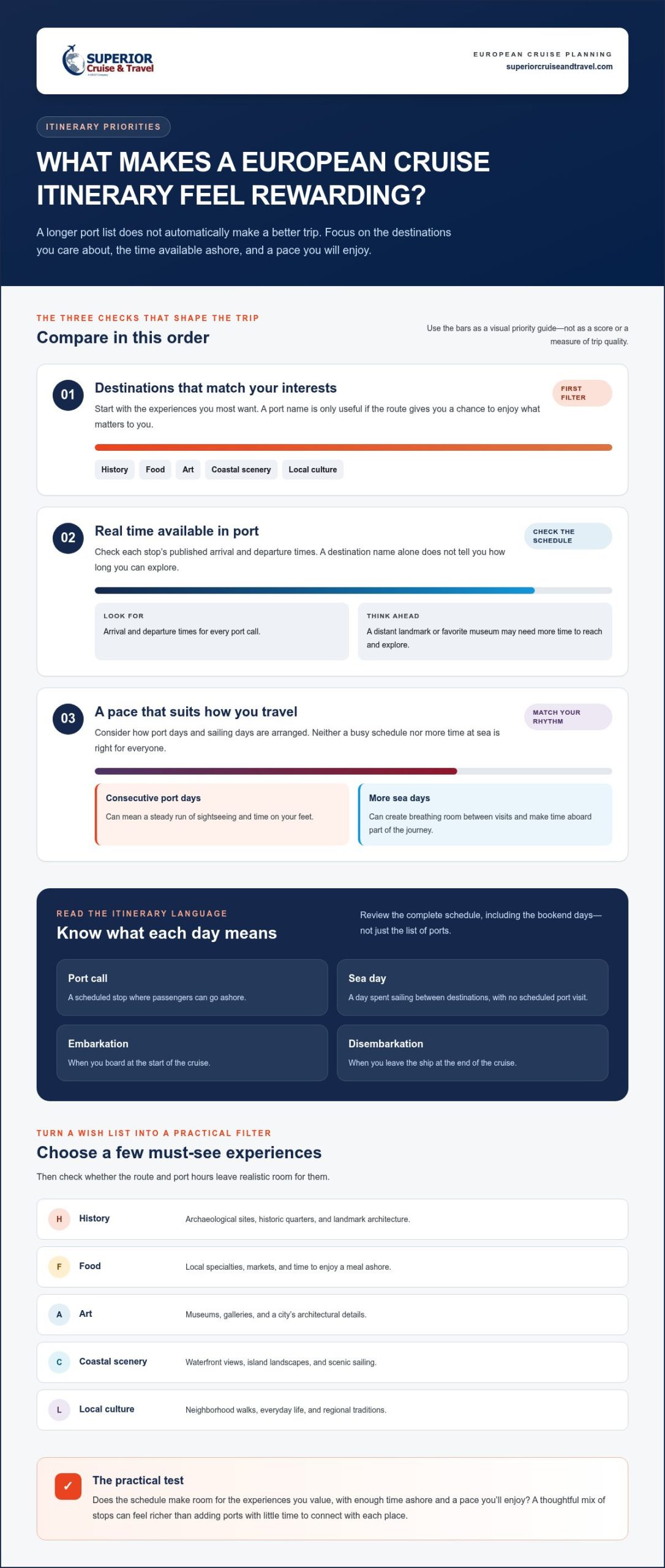
A rewarding itinerary isn’t simply the one with the longest list of destinations. It’s the one that offers places you want to visit, enough time to enjoy them, and a pace that fits the way you like to travel. A port name may sound enticing, but it doesn’t tell you how long the ship stays or what you can realistically do ashore.
A well-matched itinerary balances the destinations you care about with a pace that leaves room to enjoy them. Keep that in mind as you compare schedules instead of assuming more stops automatically mean a better trip.
How port time and sea days shape the journey
A port call is a scheduled stop where passengers can go ashore. A sea day is spent sailing between destinations, with no scheduled port visit. The itinerary also identifies embarkation, when you board at the start, and disembarkation, when you leave at the end. These bookend days may have a different rhythm from a full day in port, so review the complete schedule.
Consecutive port days can mean a steady run of sightseeing and time on your feet. More sea days can create breathing room between visits and make time aboard part of the journey. Neither pattern suits everyone. Read the published arrival and departure times for each stop, and don’t infer visit length from a destination’s name alone.
Matching destinations to personal interests
Before comparing individual itineraries, decide what you most want to experience. This short list can help turn a broad wish into a practical filter:
- History: Archaeological sites, historic quarters, and landmark architecture.
- Food: Local specialties, markets, and time to enjoy a meal ashore.
- Art: Museums, galleries, and a city’s architectural details.
- Coastal scenery: Waterfront views, island landscapes, and scenic sailing.
- Local culture: Neighborhood walks, everyday life, and regional traditions.
Choose a few must-see experiences, then check which schedules give them realistic room. If a favorite museum or distant landmark is a priority, consider whether the port hours leave enough time to reach it and explore. A route with a thoughtful mix of stops may feel richer than one that adds ports but leaves little opportunity to connect with each place.
That’s the practical test for a cruise vacation europe travelers can shape around their priorities: does the schedule support the experiences they value, at a pace they’ll enjoy? Superior Cruise and Travel’s cruise planning can help coordinate itinerary choices with the rest of your travel plans.
How to compare European cruise itineraries without getting overwhelmed
Once you’ve narrowed down the kind of experience you want, compare a few itineraries side by side instead of browsing every route at once. Record the same details for each option: region, total cruise length, port mix, sea days, and pace. This makes differences easier to spot and helps keep an appealing list of destinations from distracting you from how the trip actually unfolds.
Port count alone is a poor measure of itinerary fit because it says nothing about how long you’ll stay or how the journey is paced. Two routes with the same number of stops can feel quite different if one includes longer port calls and the other has more short visits or sailing days.
Use this comparison framework:
Region: Which area best matches your interests?
Trip length: How many days does the cruise take from embarkation to disembarkation?
Port mix: Which destinations are included, and are they places you genuinely want to explore?
Sea days: How much time is spent sailing between scheduled stops?
Preferred pace: Does the schedule feel leisurely, active, or balanced?
Compare trip length, route shape, and time ashore
Start and end points matter as much as the middle of the route. Compare the embarkation and disembarkation locations with the full itinerary, then consider how they fit your flight plans. A longer cruise doesn’t necessarily include more destinations, and a shorter sailing may have a concentrated series of stops. Check the arrival and departure times for each port, then consider whether there’s enough time for the experiences you have in mind. Don’t judge a stop by its name alone.
Also consider ship size and onboard style as part of the overall fit, not as a ranking. You’ll spend sailing time aboard, so think about the atmosphere and onboard experience you prefer alongside the shore schedule. A useful comparison keeps both parts of the vacation in view.
Balance cruise days with time on land
Pre- or post-cruise nights can create breathing room if you’d rather not fly in and board on the same day, or if you want time at the end of the trip before returning home. Those nights add arrangements to coordinate, including flights, transfers, and hotels. Consider the complete journey, not just the days listed on the cruise itinerary.
For a broader look at coordinating these details, the guide The Ultimate Guide to Planning Luxury Cruise Vacations in 2026 explores how cruise plans connect with the rest of a trip. A clear side-by-side comparison can help you narrow your options and plan a cruise vacation europe that feels considered from departure through your time ashore.
How to plan a European cruise vacation with fewer surprises
Planning before booking can make the whole journey more manageable. Think beyond the sailing itself: the route, flights, hotel nights, excursions, and travel documents all affect how the vacation fits together. For a “cruise vacation europe” plan, work through the decisions in sequence, while leaving room to adjust dates or preferences if a better-fitting itinerary emerges.
Set priorities before selecting dates and routes
Begin with what matters most, then use those priorities to guide your search. Separate non-negotiables from extras: a preferred region or comfortable trip length may be essential, while a particular excursion or onboard feature may be optional. Flexibility with dates or departure points can give you more routes to compare while keeping the experiences you care about in focus.
- Name your priorities. Write down the region you’re drawn to, the experiences you hope to have, and a trip length that feels comfortable.
- Sort essentials from preferences. Mark what would make the vacation worthwhile, then list optional excursions, onboard features, and other nice-to-haves separately.
- Compare complete itineraries. Review cruise length, port schedule, sea days, and embarkation and disembarkation points together. Check whether the schedule gives your must-see experiences enough time.
- Coordinate the surrounding trip. Match flight plans with sailing dates, then consider transfers, hotel stays, and any time you’d like ashore before or after the cruise.
- Review documents and trip protection. Research entry and passport requirements for your circumstances through official government and destination sources. If your plans include connected arrangements such as flights, stays, and a cruise, consider travel protection options as part of the overall trip planning.
Coordinate flights, stays, excursions, and travel protection
Flight timing can shape the feel of embarkation day. Arriving shortly before boarding may leave little flexibility if travel plans are disrupted, while a pre-cruise stay can create a calmer transition and time to settle in. Post-cruise nights can also give you space to enjoy a final destination rather than arranging an immediate departure. Weigh the added arrangements against the breathing room they provide.
Keep the pieces connected. Flight arrival times, transfer plans, hotel check-in, and excursion schedules all influence the pace of the vacation, so consider them together rather than as separate bookings. Entry document requirements depend on your citizenship, destinations, and travel dates. Use official government and destination websites for current guidance, and revisit them as your trip approaches.
Coordinating multiple travel components can feel intricate, but a clear sequence helps each decision support the next. Superior Cruise and Travel coordinates cruise planning with connected travel arrangements to bring your preferences and trip components into one considered plan.
Make your European cruise plan personal and easy to manage
Your shortlist becomes more useful when you consider the whole experience, not just the sailing. Bring together four decisions: the region that interests you, the pace you enjoy, the time available in port, and the travel arrangements around the cruise. That combination can turn an appealing route into a practical plan.
A well-matched cruise vacation europe itinerary reflects your priorities, whether that means spending more time ashore, enjoying a particular style of ship, or adding days before departure. You don’t need every detail settled before you start planning. A few clear preferences can make the next conversation more focused.
What a full-service travel advisor can coordinate
Superior Cruise and Travel specializes in luxury cruise planning and coordinates leisure travel through a global supplier network. Depending on your plans, that can mean considering the cruise alongside flights, hotel stays, transfers, group needs, and other trip components. Bringing these elements into one coordinated plan can simplify managing separate arrangements while keeping choices centered on your preferred experiences and pace.
As a BBB-accredited, full-service travel agency, Superior Cruise and Travel offers a professional planning relationship as you shape your trip. The focus is on matching your priorities with suitable travel arrangements, not promising a particular upgrade or outcome.
Turn your shortlist into a confident next step
Before planning, gather your preferred regions, possible travel dates, comfortable trip length, and a few must-see experiences. Note which preferences are essential and where you’re open to alternatives. If you’re traveling with others, include shared priorities and group considerations so the plan reflects what matters to everyone.
If you’re weighing the value of working with an advisor, the article Are Travel Agents Worth It? Myth-Busting the Value of Professional Planning in 2026 offers another perspective on professional planning. If your travel ambitions extend beyond a regional sailing, World Cruises and Grand Voyages: The Ultimate Guide to Global Exploration in 2026 can help you explore longer-voyage possibilities.
With your preferences in hand, you can move from browsing to a more personal plan. Share the experiences and travel rhythm you have in mind, and let those priorities guide your choices. Superior Cruise and Travel can help you plan your European cruise vacation and bring the separate pieces of your journey into clearer focus.
Let your European cruise plans take shape
Your next step doesn’t need to be a perfect itinerary. Start with one clear preference: the kind of place you want to experience, the pace that feels comfortable, or the amount of time you’d like to spend ashore. That first choice can turn a broad search into a more personal direction.
A cruise vacation europe plan can also take shape as you consider the journey beyond the ship, including how you’d like to arrive, whether you want extra time before or after sailing, and which travel arrangements matter most. A thoughtful plan leaves room for those choices without losing sight of what drew you to the trip.
Superior Cruise and Travel can help you explore luxury cruise options and coordinate connected travel components around your priorities. Bring your preferred regions, dates, or experiences together, then take the next step with a clearer sense of the trip you want.
Plan your European cruise vacation with Superior Cruise and Travel and start shaping a journey that feels distinctly yours.
Frequently Asked Questions
What is the best time of year to take a cruise vacation in Europe?
The best time depends on the region and the kind of trip you want. Compare sailing dates for your preferred destinations, then consider seasonal weather, daylight, and how busy ports may feel. For example, a traveler prioritizing long daylight hours may weigh dates differently from someone focused on Mediterranean coastal visits. Conditions vary by route and year, so use itinerary details and current destination information when narrowing your choices.
How many days should I plan for a European cruise vacation?
Choose a trip length that fits both your available time and the route you want. For a cruise vacation europe itinerary, compare total sailing days with the number and timing of port visits; two cruises of similar length can offer different amounts of time ashore. Also account for travel days to and from the embarkation point. If your schedule is tight, decide which experiences matter most before comparing shorter options.
Which European cruise region is best for first-time visitors?
There’s no single best region for every first-time visitor; the right choice depends on what you most want to see. The Mediterranean may suit travelers interested in historic cities and coastlines, while Northern Europe, the British Isles, or the Baltic may better fit other scenery and cultural interests. If you’re undecided, write down two or three experiences you’d be disappointed to miss, then use them to compare routes.
Can I see several European countries on one cruise?
Yes, some European cruise itineraries include ports in multiple countries, though the exact route varies by sailing. Read the schedule for each port, including arrival and departure times, and note which days are spent at sea. A port visit offers a chance to experience a destination, but it isn’t the same as staying there overnight. Choose a route whose stops match your interests rather than treating the country count as the main measure of value.
Do I need to book flights separately from a European cruise?
Flight arrangements depend on your cruise booking and the broader trip plan, so review how each part is organized before finalizing travel. Pay close attention to the scheduled embarkation time and your expected arrival, allowing flexibility for travel delays. Some travelers choose to arrive earlier and stay overnight near the embarkation point, which can make the start of the trip feel less hurried. Consider flights, transfers, and lodging together.
What should I compare when choosing between European cruise itineraries?
Compare the route, cruise duration, embarkation and disembarkation points, port timings, and sea days. Then consider practical details such as how you’ll reach the departure point and whether you want extra nights before or after sailing. For instance, a route with a favorite destination may still be a poor match if its scheduled visit doesn’t allow enough time for your plans. A side-by-side comparison can make those tradeoffs clearer.
Is travel protection available for a European cruise vacation?
Travel protection options may be relevant when your vacation combines a cruise with other travel arrangements, such as flights or hotel stays. Before choosing, read the applicable plan documents carefully and review covered events, exclusions, eligibility, and purchase conditions. Protection doesn’t mean every disruption or expense will be covered. Consider the specific components in your trip and the terms that apply, so your decision reflects your plans rather than assumptions.