
A smaller ship isn’t automatically a calmer one, and a luxury sailing isn’t the only way to avoid feeling swept up in crowds. If you’re looking for cruises for people who don’t like crowds, the details matter: a busy pool deck, packed dining room, or hectic embarkation can shape how a trip feels just as much as the ship’s passenger count.
You can look for more breathing room without giving up the destinations, comfort, or activities that make a cruise appealing. The best fit depends on how ship design, itinerary, and travel dates work together, not on one feature alone. This guide explains how to compare those choices, from larger ships with quieter corners to smaller vessels built around destination-focused travel. You’ll also learn how sailing outside peak periods may affect the onboard atmosphere, so you can plan with realistic expectations instead of counting on a crowd-free guarantee.
Key Takeaways
- Compare the amount and accessibility of public space, not just passenger capacity, to get a better sense of how busy a ship may feel.
- Consider how a ship’s style balances a quieter atmosphere with the amenities and activities you want onboard.
- Look at port sequence, time ashore, sea days, and flexible travel dates when comparing cruises for people who don’t like crowds.
- Rank your priorities, such as quiet spaces, dining choice, destination time, activities, and privacy, before comparing sailings.
- Use expert cruise planning to weigh ship, itinerary, and date trade-offs, then confirm sailing-specific details before booking.
What makes a cruise feel crowded, and what can you control?
A cruise can feel busy even when the ship isn’t full. The impression often comes from how many passengers use the same space at once. A buffet rush, elevator line, or packed pool deck can be more noticeable than the ship’s overall passenger count. Ship layout and the amount of accessible public space matter too. A cruise ship can be designed around very different onboard experiences, so compare more than capacity when deciding what may suit you.
A less-crowded cruise means fewer moments of concentrated demand in the spaces you care about, not a sailing with empty shared areas. You can reduce your exposure to busy periods by choosing a ship, itinerary, and schedule that fit your preferences. You can’t control every passenger’s routine, and no ship, season, or route guarantees quiet throughout the voyage.
Which cruise moments tend to feel busiest?
Embarkation and disembarkation bring passengers together in shared areas. Meal periods can create short-lived lines at buffets and elevators. Pool decks may draw more guests during popular hours, while onboard events and sought-after excursions can concentrate demand at particular times.
These patterns aren’t identical on every sailing. The ship’s layout, daily schedule, itinerary, and passengers’ routines all influence where and when activity gathers. A port day may shift some attention off the ship, but the effect depends on the day’s plans and how passengers spend their time. Ask about schedules and excursion arrangements for the specific sailing rather than assuming the same pattern applies to every cruise.
What does ‘less crowded’ realistically mean?
Passenger count is only one part of the picture. A ship with fewer guests may still feel busy in a small dining area or around a popular pool, while a larger vessel may offer more places to spend time. Look at the public spaces you expect to use and how easy they are to access, not just the ship’s capacity or occupancy.
Lower density can make shared areas feel more comfortable and give you more room to choose where to relax. It doesn’t eliminate demand for popular venues, and quieter spaces may only be quiet at certain times. For travelers comparing cruises for people who don’t like crowds, the practical goal is to reduce the pinch points that matter most, not to expect a crowd-free sailing.
Compare cruise ship styles to find a calmer onboard experience
Ship scale shapes the onboard feel, but it’s a trade-off rather than a simple small-is-better rule. A smaller vessel may have fewer passengers sharing its spaces, while a larger ship may offer more venues to spread out across. For cruises for people who don’t like crowds, compare how each vessel uses its public areas and whether its activities and atmosphere match what you want from the trip.
| Ship style | Potential advantages | What to weigh |
|---|---|---|
| Smaller cruise ship | Fewer passengers may create a more intimate feel in shared areas. | There may be fewer venues, activities, or dining choices. Check the specific vessel’s layout and onboard offerings. |
| Larger cruise ship | A broader range of venues may offer more choices for spending time onboard. | Popular facilities can draw people at the same time. Look at public-space access, not capacity alone. |
| Private yacht or chartered cruise ship | A private arrangement may better suit travelers seeking a more tailored group experience. | Group size, itinerary, services, availability, and planning needs vary by arrangement. |
Use the table as a starting point, not a promise about how a sailing will feel. The onboard experience varies by vessel and sailing, so verify current capacity, public-area details, amenities, and availability before deciding.
Are smaller cruise ships always less crowded?
No. Fewer passengers can reduce the number of people sharing a space, but they don’t guarantee privacy or an empty lounge. A smaller ship may also have fewer places to dine, relax, or take part in activities, which can concentrate guests in the venues it does have. Ask about the specific vessel and the spaces you expect to use instead of relying on the label “small ship.”
When might a private yacht or charter suit you?
A private yacht or charter can be worth exploring if privacy and a shared experience with a chosen group matter more to you than the range of options on a regular cruise. Consider who’s traveling, the itinerary you have in mind, which onboard services are important, and how much coordination you’re comfortable managing. Confirm arrangements and availability for the specific trip.
Superior Cruise and Travel specializes in private yacht bookings and chartered cruise ships, and can help compare these possibilities with other cruise styles based on your priorities. Explore cruise planning options if you’d like support weighing the trade-offs.
Choose an itinerary and sailing time that reduce crowd pressure
A ship’s schedule influences how crowded it feels from day to day. On a sea day, more passengers may be onboard and choosing among the same pools, lounges, and dining venues. During a port call, guests disperse ashore, but crowd pressure can shift to excursion meeting points, transport, and popular attractions. The order of ports, length of each stop, and timing of excursions all help shape the pace.
Ship size sets the stage, but itinerary and timing shape when and where passengers gather. If you’re comparing cruises for people who don’t like crowds, first decide how much time you want onboard versus ashore. Then check the details of each sailing instead of relying on a general rule.
How can sea days and port days change the feel of a cruise?
Sea days can bring more activity to onboard venues because guests aren’t going ashore. A port call may ease pressure on some ship spaces, but a popular destination or excursion can feel busy in its own right, especially when several groups arrive at similar times. Check how long the ship stays in port, when excursions depart, and whether the itinerary leaves time to explore independently. Your preferred balance of onboard relaxation and time ashore matters.
Does choosing different dates guarantee fewer crowds?
No date guarantees a quieter sailing. School breaks, holidays, and seasonal demand can influence passenger mix and activity, but patterns vary by route and departure. Late April through May and early June in the Caribbean, and May and September in Alaska and Europe, are periods you can compare when considering travel dates. Treat them as options to investigate, not promises of lower occupancy. Confirm demand and details for the specific sailing.
Compare the calendar alongside the itinerary:
- Check whether your dates overlap with school holidays or major travel periods.
- Review port schedules and excursion departure times for the days you’ll be ashore.
- Compare sea-day patterns and time in port across the sailings you’re considering.
- Ask for current, sailing-specific information rather than assuming a month or route will be quiet.
Calendar flexibility can widen your options, but weigh it against the destinations and onboard rhythm you actually want. A date that looks quieter in general may still coincide with a busy port or popular excursion. Compare the ship, route, and departure together, then choose the balance that fits your trip.
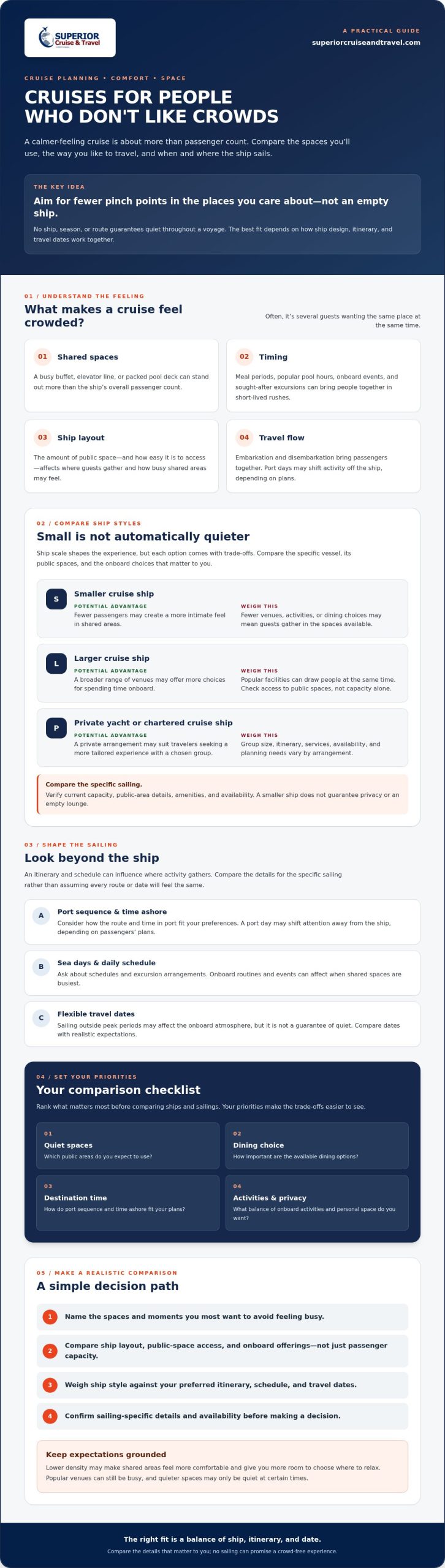
Use this checklist to compare cruises for people who don’t like crowds
A useful comparison starts with your own definition of comfort. For cruises for people who don’t like crowds, rank the features that matter most, then use the same questions to assess each sailing. This keeps one appealing detail, such as a small passenger count, from overshadowing a mismatch in activities, dining, or destination time.
- 1. Name your pinch points. Which situations would you most like to avoid: busy pool areas, meal queues, crowded elevators, or packed embarkation periods? Note whether you want quieter spaces throughout the day or simply a calm place to retreat to.
- 2. Compare the vessel and public areas. Check current passenger capacity alongside the layout and access to lounges, dining venues, and outdoor spaces. Ask which facilities are available and whether the ship’s size and onboard choices suit your preferred pace.
- 3. Match onboard options to your routine. Review schedules for dining, events, and activities. If you prefer a slow morning and flexible meals, find out whether the sailing offers choices that support that rhythm.
- 4. Review the itinerary closely. Compare port order, time ashore, sea days, and excursion arrangements. Decide how much of the trip you want to spend exploring destinations versus using the ship’s shared spaces.
- 5. Compare dates and rank your priorities. Consider quiet, activities, dining choice, destination time, and privacy in order of importance. Then compare actual sailing dates and verify current vessel details, schedules, excursion plans, and relevant supplier policies before booking.
What should you ask before choosing a sailing?
Be specific about what you hope to avoid and what you want instead. Ask which venues may suit a quieter break, what the daily schedule looks like, and how excursion departures are arranged. Confirm that the information applies to your selected vessel and sailing. Current, sailing-specific answers are more useful than broad descriptions of a ship or itinerary.
How do you balance quiet with choice?
A smaller-scale experience may offer a more intimate atmosphere, but it may also mean fewer venues or a narrower activity selection. Decide which trade-offs you can accept rather than searching for a ship that promises everything. For broader trip considerations, explore a guide to planning luxury cruise vacations as you compare your priorities.
If you’d like help weighing vessel, itinerary, and date options, explore personalized cruise planning with Superior Cruise and Travel.
Plan a more comfortable cruise with expert comparison and support
A more comfortable cruise starts with matching the ship’s scale, itinerary, and travel dates to the way you want to spend your time. For cruises for people who don’t like crowds, weigh quieter spaces against the activities, dining choices, and destinations you value. An advisor can help compare those trade-offs across supplier options, then coordinate details for the cruise you select. No planning approach can promise empty public areas, but a clear understanding of your priorities can help you choose with realistic expectations.
What can a cruise travel advisor help you compare?
An advisor can help you review vessel details, sailing dates, itinerary structure, and available arrangements, then connect those details to your preferences. For example, if you want a slower onboard pace but still value a range of activities, ask how each option balances those needs. Superior Cruise and Travel specializes in luxury cruise planning and draws on a global supplier network to compare possibilities. If you’re also evaluating who to work with, a guide to choosing a cruise travel agency can help you consider what matters in that relationship.
What information should you bring to a planning conversation?
A few clear preferences make the comparison more useful. Before discussing options, note:
- Your preferred travel dates and how flexible they are.
- Who’s traveling, including your group size.
- The pace you enjoy, such as relaxed days onboard or more time exploring ashore.
- The crowd-related situations you most want to limit, along with any must-have amenities.
- Which trade-offs you’d accept, such as fewer onboard venues in exchange for a smaller-scale experience.
Ask for current information about the specific vessel and sailing, including availability, itinerary details, onboard inclusions, and relevant supplier policies. If travel protection is a consideration, review the available options and what they cover as part of your trip planning.
Bring your priorities, questions, and flexibility. Superior Cruise and Travel can help compare cruise possibilities and coordinate selected details around the experience you’re seeking. To discuss your preferences and start planning a cruise, take the next step when you’re ready.
Choose the cruise that fits your pace
A more comfortable cruise isn’t about finding a sailing with empty public spaces. It’s about choosing a ship whose layout and atmosphere suit you, then weighing the itinerary and dates against the moments you’d most like to keep calm. Compare access to the venues you’ll use, the balance of sea and port days, and the details of the specific sailing before booking.
For cruises for people who don’t like crowds, the right choice comes down to your priorities: quiet, activities, dining variety, destination time, or privacy. No single ship style or travel date can guarantee a crowd-free experience, but clear preferences make it easier to compare options with realistic expectations.
Superior Cruise and Travel is a BBB-accredited full-service travel agency specializing in luxury cruise planning, with a global supplier network to draw on when comparing possibilities. If you’re ready to discuss what would make your trip feel right, explore personalized cruise planning. A thoughtful match can help you look forward to the journey with greater confidence.
Frequently Asked Questions
Are smaller cruise ships less crowded?
Smaller cruise ships often have fewer passengers, which can make shared areas feel more intimate, but they aren’t automatically less crowded. The layout and accessibility of public spaces, onboard schedules, and popularity of particular venues all matter. For cruises for people who don’t like crowds, check the specific vessel’s capacity and public areas, and consider whether its selection of dining venues and activities suits you.
Which cruise lines have the fewest crowds?
There isn’t one cruise line that will be least crowded on every sailing. Premium and luxury lines may offer more space per passenger and a calmer atmosphere, but the experience still depends on the vessel, itinerary, date, and onboard routines. Compare specific ships rather than relying on a line’s category alone. Ask about passenger capacity, accessible public spaces, venue choices, and current information for the departure you’re considering.
Can you avoid crowds on a cruise ship?
You can reduce how often you encounter busy periods, but you can’t count on avoiding other passengers entirely. Consider dining outside peak meal times, choosing less-popular lounges, or spending time onboard while many guests are ashore. Check the ship’s daily schedule so you can plan around popular events and meal periods. These choices may make the trip feel more comfortable, though crowd patterns can change from day to day.
What is the best time to take a cruise to avoid crowds?
No month guarantees a quieter sailing. School breaks, holidays, and seasonal demand can affect passenger mix, so compare the actual dates and itinerary. Late April through May and early June in the Caribbean, and May and September for Alaska and Europe, are periods to consider when comparing dates. Treat them as starting points, not promises of lower occupancy. Confirm current demand for the specific sailing before booking.
Are luxury cruises less crowded than mainstream cruises?
Luxury cruises may have more space per passenger and a calmer onboard atmosphere than mainstream options, but the category alone doesn’t determine how busy a sailing feels. Compare each vessel’s passenger capacity with its public-space layout, venue access, and daily schedule. Consider whether the ship offers the activities and dining choices you value. A specific ship and sailing are better guides than the word “luxury” by itself.
Are private yacht cruises a good choice for people who dislike crowds?
Private yacht cruises may suit travelers who want a more private experience with a chosen group, but the right fit depends on group size, itinerary, onboard services, and availability. Charter arrangements differ from regular cruise sailings and may require more planning around the group’s preferences. Compare the arrangement with other cruise options, and confirm what is included before making a decision. Privacy may be appealing, but it isn’t the only factor to weigh.
How can I find out how crowded a cruise ship will be?
Ask for current, sailing-specific information rather than relying on general ship descriptions. Compare passenger capacity with the public spaces you plan to use, and review venue access, onboard schedules, itinerary, and excursion arrangements. Occupancy can vary by departure, and crowd patterns shift during the day, so no single figure tells the whole story. For cruises for people who don’t like crowds, verify vessel details and availability before booking.